A few years ago, working from home felt like a distant dream for most professionals—something reserved for freelancers, entrepreneurs, or those lucky few with exceptionally flexible employers. Then everything changed. What started as a necessity became a preference, and now remote work has fundamentally reshaped how we think about where and how we do our jobs.
According to Pew Research Center, nearly 60% of workers with jobs that can be done remotely are now working from home all or most of the time. And it's not just because they have to—it's because they want to. A Buffer survey found that 98% of remote workers would like to continue working remotely, at least some of the time, for the rest of their careers.
But working from home isn't all pajama pants and midday yoga sessions. Like any work arrangement, it comes with genuine advantages and real challenges. Understanding both—and knowing how to maximize the benefits while navigating the downsides—is what separates people who thrive remotely from those who struggle.
Here's an honest look at what working from home actually offers, and how to make it work for you.
The Real Benefits of Working From Home
1. You Get Your Time Back
The average American commute is about 27 minutes each way—that's nearly an hour every day, or roughly 200 hours per year, spent getting to and from work. When you work from home, that time is yours again.
Those reclaimed hours add up quickly. You could use them to sleep a little longer, exercise, spend time with family, pursue a hobby, or simply start your workday feeling calmer instead of frazzled from traffic. For many remote workers, eliminating the commute is the single biggest quality-of-life improvement.
2. Greater Flexibility in How You Structure Your Day
Working from home often means more control over your schedule. Need to take a midday break for a dentist appointment? No problem. Want to start early so you can pick up your kids from school? Doable. Prefer to tackle deep work in the morning and handle meetings in the afternoon? You can design your day around your natural rhythms.
This flexibility is particularly valuable for women juggling professional responsibilities with caregiving, household management, or simply the mental load that comes with keeping a life running. Remote work doesn't eliminate those demands, but it does make them easier to manage.
3. Significant Cost Savings
Working from home can save you thousands of dollars annually. According to FlexJobs, remote workers save an average of $6,000 per year when accounting for reduced costs in commuting, professional wardrobe, meals out, and incidental expenses like coffee runs and parking fees.
Think about it: no gas or public transit fares, fewer dry cleaning bills, less temptation to grab expensive lunches, and reduced need for a full professional wardrobe. Those daily small expenses that barely register individually can add up to serious savings over time.
4. A Workspace Tailored to You
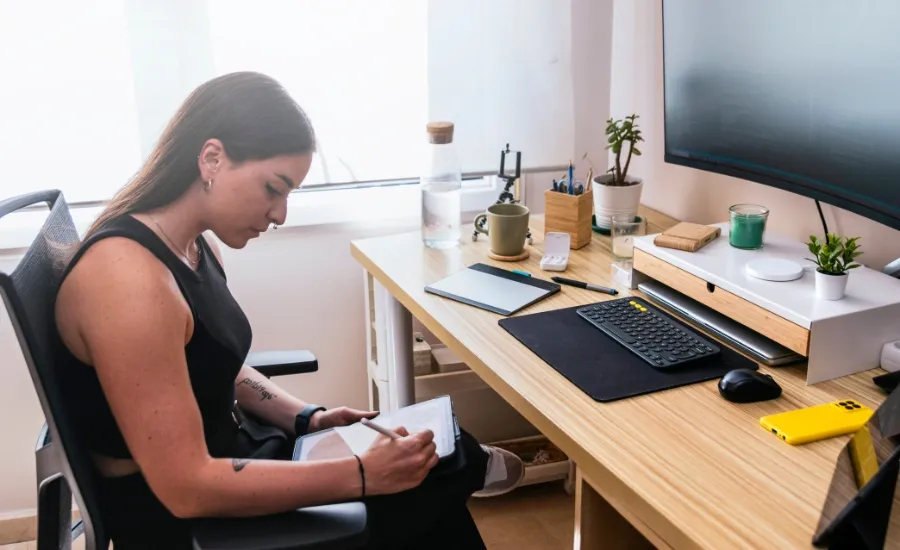
In a traditional office, you work with whatever setup you're given—the desk, the chair, the lighting, the temperature that someone else controls. At home, you can create an environment optimized for how you work best.
Maybe that means an ergonomic chair that actually fits your body, a standing desk, natural light from a window, plants on your desk, or a space quiet enough for deep concentration. You can adjust the temperature, play background music if it helps you focus, or work in complete silence. Your workspace, your rules.
5. Fewer Interruptions and Distractions
Open-plan offices were supposed to foster collaboration, but they often create constant interruption instead. Colleagues stopping by your desk, impromptu conversations you can't escape, the ambient noise of dozens of people working in one space—it all fragments your attention.
At home, you can control your environment to minimize distractions. Close the door, silence notifications during focus time, and create the conditions for deep work. Research from Stanford found that remote workers were 13% more productive than their in-office counterparts, partly due to a quieter work environment.
6. Better Work-Life Integration
Notice I said integration, not balance. The idea of perfectly balanced scales—work on one side, life on the other—isn't realistic for most people. What remote work offers instead is the ability to weave work and life together more seamlessly.
You can throw in a load of laundry between meetings, be present when a package arrives, or eat lunch with your partner who also works from home. These small moments of integration can reduce the feeling that work and life are constantly competing for your attention.
7. Healthier Eating Habits
When you work from home, you have full access to your own kitchen. That means you can prepare healthy meals and snacks instead of relying on whatever's available near your office—which is often fast food, vending machines, or expensive takeout.
You can meal prep on Sunday and actually eat what you prepared. You can make a real lunch instead of grabbing something quick because you only have 30 minutes. For people with dietary restrictions or health goals, this control over food is invaluable.
8. More Time for Movement and Exercise

The time you save on commuting can become time for physical activity. Many remote workers find they can finally fit in that morning workout, take a walk during lunch, or do a quick yoga session between meetings.
Plus, without the social pressure of office norms, you're free to move throughout the day—stretch at your desk, take standing breaks, or work from different positions. Your body isn't meant to sit in the same chair for eight hours straight, and remote work gives you permission to honor that.
9. Reduced Stress and Better Mental Health
For many people, the daily commute is one of the most stressful parts of working. Sitting in traffic, dealing with crowded public transit, rushing to make it on time—it all takes a toll. Eliminating that stress can significantly improve your overall well-being.
Remote work also allows you to manage your environment in ways that support your mental health. You can take breaks when you need them, step outside for fresh air, or create a calming workspace. For people who find open offices overstimulating or anxiety-inducing, working from home can be genuinely transformative.
10. Location Independence
Remote work means you're no longer tethered to a specific city because of your job. You can live somewhere more affordable, closer to family, or simply somewhere you've always wanted to be. Some remote workers take this further, traveling while they work or relocating internationally.
Even if you're not planning a major move, the flexibility to work from different locations—a coffee shop, a library, a friend's house—can break up the monotony and provide fresh energy.
11. Environmental Benefits
When millions of people stop commuting, the environmental impact is significant. Remote work reduces carbon emissions from transportation, decreases energy consumption in large office buildings, and cuts down on the waste generated by traditional workplaces.
Research from Global Workplace Analytics suggests that if everyone who could work remotely did so just half the time, it could reduce greenhouse gas emissions by 54 million tons annually. Your decision to work from home isn't just good for you—it's good for the planet.
12. Increased Autonomy and Trust
Working from home requires—and often builds—a foundation of trust between employees and employers. When you're not being physically monitored, you're trusted to manage your own time and deliver results. For many professionals, this autonomy is deeply motivating.
The shift from measuring "time in seat" to measuring actual output can be liberating. You're judged on what you accomplish, not on whether you look busy. This results-oriented approach often brings out people's best work.
The Honest Challenges of Remote Work
Working from home isn't perfect, and pretending otherwise doesn't help anyone. Here are the real challenges—and how to address them.
Isolation and Loneliness
Without the natural social interactions of an office, remote work can feel isolating. You miss the casual conversations, the lunch outings, the sense of being part of a team physically working together.
How to address it: Be intentional about connection. Schedule virtual coffee chats with colleagues. Work from a coffee shop or coworking space occasionally. Make plans with friends outside of work hours. Join online communities related to your profession or interests.
Difficulty Unplugging
When your home is your office, the boundary between work and personal life can blur. It's tempting to check email at 10 PM "since you're right there" or to work longer hours because there's no commute signaling the end of the day.
How to address it: Create clear boundaries. Set specific work hours and stick to them. Have a dedicated workspace you can physically leave at the end of the day. Close your laptop and put it away. Create end-of-day rituals that signal the transition from work to personal time.
Communication Challenges
Without in-person interaction, miscommunication is more common. Tone gets lost in text. Quick questions that would take 30 seconds in person become longer email chains. Collaboration can feel more effortful.
How to address it: Over-communicate, especially about tone and intent. Use video calls when nuance matters. Be explicit about expectations and deadlines. Check in with teammates regularly, not just about work tasks.
Distractions at Home
While you escape office interruptions, home has its own distractions—household chores calling your name, family members needing attention, the refrigerator beckoning, the temptation to "just quickly" do something that isn't work.
How to address it: Create a dedicated workspace, even if it's just a corner of a room. Communicate boundaries with household members during work hours. Use time-blocking techniques to maintain focus. Treat your work hours as non-negotiable, just as you would if you were at an office.
Making Remote Work Actually Work
Success with remote work isn't automatic—it requires intention and structure. Here are the habits that make the biggest difference:

-Establish a morning routine. Even though you don't have to commute, having a consistent morning routine helps you transition into work mode. Get dressed (yes, real clothes help), have your coffee ritual, and signal to your brain that it's time to focus.
-Create a dedicated workspace. Having a specific place for work—even if it's just a particular chair at your dining table—creates a mental boundary between work and home life.
-Take real breaks. Step away from your desk. Go outside. Move your body. Breaks actually improve productivity, not diminish it.
-Set boundaries and communicate them. Let your household know your work hours. Let your colleagues know when you're available. Protect your time on both ends.
-End your workday intentionally. Create a shutdown ritual—review tomorrow's tasks, close your laptop, leave your workspace. This mental closure helps you actually rest.
Is Working From Home Right for You?
Working from home isn't universally better or worse than working in an office—it depends on your role, your personality, your living situation, and your preferences. Some people thrive with the autonomy and flexibility; others genuinely miss the structure and social connection of a traditional workplace.
The good news is that remote work is no longer an all-or-nothing proposition. Many companies now offer hybrid arrangements that let you capture the benefits of both worlds. The key is understanding what you need to do your best work—and advocating for the arrangement that supports it.
Whatever your situation, remote work skills—self-management, clear communication, intentional boundary-setting—are valuable regardless of where you physically work. These are the skills of the modern professional, and developing them will serve you well throughout your career.
FAQs About Working From Home
How do I stay productive working from home?
Create a dedicated workspace, establish a consistent routine, minimize distractions during focus time, take regular breaks, and set clear boundaries between work and personal time. Structure is your friend.
How much money can I save working from home?
Estimates vary, but studies suggest remote workers save between $4,000-$6,000 annually on commuting, meals, professional clothing, and related expenses. Your actual savings depend on your previous commute and spending habits.
How do I combat loneliness when working from home?
Be proactive about connection. Schedule regular video calls with colleagues, work from public spaces occasionally, maintain relationships outside of work, and consider joining professional communities or coworking spaces.
Is working from home bad for my career?
Not inherently. However, remote workers need to be more intentional about visibility, communication, and relationship-building. Make your work visible, stay connected with colleagues and leadership, and don't let "out of sight" become "out of mind."
How do I set boundaries when working from home?
Communicate your work hours clearly to both colleagues and household members. Have a dedicated workspace you can leave at the end of the day. Create rituals that signal the start and end of work. Learn to close your laptop and actually stop working.
What equipment do I need to work from home effectively?
At minimum: reliable internet, a computer, and a comfortable workspace. Beyond that, consider an ergonomic chair, external monitor, good lighting for video calls, and noise-canceling headphones. Invest in what supports your specific work needs. Check our guide “Remote Work Essentials” to get inspiration.