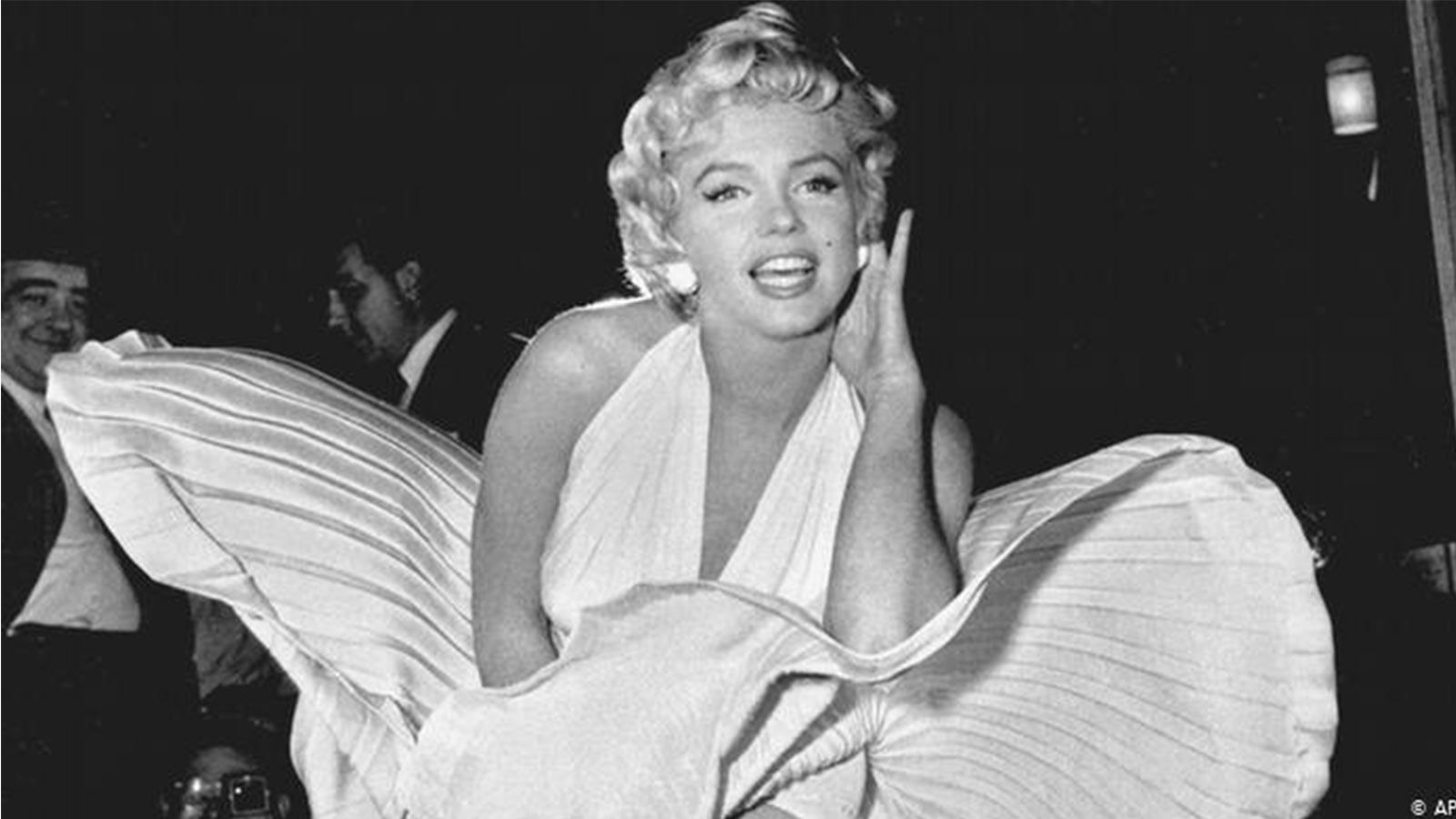
The world thought it knew Marilyn Monroe. The breathy voice. The white dress billowing over a subway grate. The "dumb blonde" who married a baseball star and then a playwright. The tragic beauty who died too young.
But the real Marilyn Monroe was far more complex than the image Hollywood created—and she knew it. "I'm not interested in money," she once said. "I just want to be wonderful." And she was. Not in the way the studio system wanted her to be, but in ways that were entirely her own.
Marilyn Monroe was a shrewd businesswoman who started her own production company when female executives were virtually unheard of. She was a voracious reader with a personal library of over 400 books. She studied acting with the most rigorous teachers of her time. She fought for better roles, better pay, and creative control in an industry designed to keep actresses powerless.
This is the story of who she really was.
The Early Years: Norma Jeane
Norma Jeane Mortenson was born on June 1, 1926, in Los Angeles. Her mother, Gladys Pearl Baker, worked as a film cutter at RKO Studios but struggled with mental illness throughout her life. Norma Jeane never knew her father.
When Gladys was institutionalized, Norma Jeane entered a childhood that would shape her forever. She spent years bouncing between foster homes and orphanages—twelve different families in total. She later spoke of being molested, neglected, and made to feel unwanted. "I was never used to being happy," she said, "so that wasn't something I ever took for granted."
At 16, she married James Dougherty, a 21-year-old neighbor—largely to avoid returning to another foster home or orphanage. When Dougherty shipped out with the Merchant Marines during World War II, Norma Jeane took a job at a munitions factory. There, a photographer from the Army's First Motion Picture Unit spotted her and suggested she try modeling.
It was the beginning of everything.
The Rise: Becoming Marilyn
The modeling led to a screen test at 20th Century Fox. Norma Jeane dyed her hair blonde, and studio executives suggested a new name. She chose "Marilyn" after Broadway star Marilyn Miller, and took her mother's maiden name, Monroe. By 1946, Marilyn Monroe existed—at least on paper.
Her early years in Hollywood were a grind: small parts, contract disputes, and constant pressure to be more sexual, more available, more compliant. In 1949, desperate for money, she posed nude for a calendar—photos that would later become famous and nearly destroy her career.
When the photos surfaced in 1952, just as her career was taking off, studio executives panicked. Conventional wisdom said she should deny everything. Instead, Monroe did something revolutionary: she told the truth. In a series of interviews, she explained that she had needed the money ($50) to pay her rent. She expressed no shame. The public loved her honesty, and the scandal that was supposed to end her career made her more famous than ever.
By 1953, Marilyn Monroe was one of the most marketable stars in Hollywood. "Gentlemen Prefer Blondes," "How to Marry a Millionaire," and "The Seven Year Itch" made her an international icon. The image of her standing over that subway grate, white dress flying, became one of the most famous photographs of the 20th century.
The Businesswoman Hollywood Didn't See Coming
Here's what the "dumb blonde" narrative conveniently ignores: Marilyn Monroe was a groundbreaking businesswoman who understood her value better than the men who ran the studios.
In 1954, Monroe did something almost unheard of for an actress at the height of her fame: she walked away from her contract with 20th Century Fox. The studio was paying her $1,500 per week while her films grossed millions. She was being cast in the same "dumb blonde" roles over and over. She wanted more—better scripts, more money, and creative control.
So she moved to New York and, with photographer Milton Greene, founded Marilyn Monroe Productions. This made her one of the first women in Hollywood history to run her own production company. She was 28 years old.
The studio system was designed to keep actors powerless—under contract, underpaid, and interchangeable. By starting her own company, Monroe wasn't just fighting for herself; she was challenging the entire structure of Hollywood. And she won. After a year-long standoff, Fox came back to the table with a new contract: $100,000 per picture, director approval, and the right to make films with her own production company. It was an unprecedented victory.
The first film under her new contract was "Bus Stop" (1956), in which she gave one of her most critically acclaimed performances. "Some Like It Hot" (1959) and "The Misfits" (1961) followed—roles that showcased her dramatic range far beyond the comedies she'd been pigeonholed into.
The Intellectual Behind Closed Doors
Monroe was acutely aware of the gap between her image and her intellect. "I'm trying to find myself as a person," she said in an interview. "Sometimes that's not easy to do. Millions of people live their entire lives without finding themselves. But it is something I must do."
When she moved to New York, Monroe enrolled at the Actors Studio to study with Lee Strasberg, the father of Method acting. She approached the craft with intense seriousness, something her Hollywood handlers found inconvenient. She read constantly—Dostoyevsky, Freud, Joyce, Whitman. Her personal library, auctioned after her death, contained over 400 books.
She was in psychoanalysis for years, seeking to understand the trauma of her childhood and the depression that haunted her. In an era when mental health was deeply stigmatized, her willingness to seek help was quietly radical.
"I restore myself when I'm alone," she once wrote. "A career is born in public—talent in privacy." The woman who seemed to exist only for the camera's gaze was, in private, deeply introspective.
Love, Marriage, and the Search for Home
Monroe married three times, each marriage reflecting a different chapter of her life.
Her first marriage to James Dougherty at 16 was an escape from the foster system. It ended when her modeling career began pulling her toward Hollywood and a life Dougherty couldn't understand.
In 1954, at the peak of her fame, she married baseball legend Joe DiMaggio. The marriage lasted only nine months—DiMaggio struggled with her sexuality being so public, and reportedly became controlling and jealous. But he remained devoted to her even after the divorce, and after her death, he sent roses to her grave twice a week for 20 years.
Her marriage to playwright Arthur Miller (1956-1961) represented her desire to be taken seriously intellectually. Miller was one of America's most respected dramatists; their union seemed to bridge Hollywood glamour and New York intellectualism. But the marriage was troubled from the start, strained by Monroe's insecurities, miscarriages, and the difficulties of her career. Miller later wrote "The Misfits" for her—their final collaboration and her final completed film.
The Struggles She Couldn't Escape
Beneath the radiant smile, Monroe battled demons that fame and fortune couldn't touch. The trauma of her childhood never fully healed. She struggled with depression, anxiety, and insomnia. She became dependent on barbiturates and alcohol—substances that were freely prescribed by Hollywood doctors more interested in keeping stars functional than healthy.
In 1961, she was briefly institutionalized at the Payne Whitney Psychiatric Clinic, an experience she described as traumatic. "They had me locked up with all these poor nutty people," she wrote to a friend. "I'm sure to be a nut too by the time I get out of here." DiMaggio helped secure her release.
Her final months were marked by professional turmoil. She was fired from her last film, "Something's Got to Give," for absences and lateness—though she was clearly unwell. The studio system that had profited from her for years showed little interest in her wellbeing.
On August 4, 1962, Marilyn Monroe was found dead in her Brentwood home. She was 36 years old. The official cause was "acute barbiturate poisoning"—ruled a probable suicide, though conspiracy theories have swirled for decades.
Why She Remains Inspirational
Marilyn Monroe could have been content to be a pretty face. She could have taken the roles the studios gave her, smiled for the cameras, and collected her checks. Instead, she fought—for better roles, for fair pay, for respect, for the right to be more than what others decided she should be.
She was a woman who refused to let her past define her. Born into poverty and instability, she transformed herself into the most famous woman in the world. When an industry tried to limit her to one dimension, she started her own company and proved she could do more.
She was also, crucially, honest about her imperfections. In an era of carefully managed public images, Monroe admitted to her insecurities, her mistakes, her struggles. "I'm selfish, impatient, and a little insecure," she said. "I make mistakes. I am out of control and at times hard to handle. But if you can't handle me at my worst, then you don't deserve me at my best."
That radical honesty—the willingness to be vulnerable in public—made her beloved in a way that mere beauty never could have. She gave other women permission to be complicated, to be ambitious, to be both strong and struggling.
Marilyn Monroe Quotes That Still Resonate
Monroe was endlessly quotable—her words captured on film, in interviews, and in her personal writings. Some of these quotes have become so famous they've been misattributed, mangled, or invented entirely. Here are the ones we can confidently attribute to her:
"Keep smiling, because life is a beautiful thing and there's so much to smile about."
"A wise girl knows her limits, a smart girl knows that she has none."
"We should all start to live before we get too old. Fear is stupid. So are regrets."
"I'm selfish, impatient, and a little insecure. I make mistakes, I am out of control, and at times hard to handle. But if you can't handle me at my worst, then you sure as hell don't deserve me at my best."
"One of the best things that ever happened to me is that I'm a woman. That is the way all females should feel."
"Imperfection is beauty, madness is genius, and it's better to be absolutely ridiculous than absolutely boring."
"Give a girl the right shoes, and she can conquer the world."
"I am good, but not an angel. I do sin, but I am not the devil. I am just a small girl in a big world trying to find someone to love."
"I don't mind living in a man's world, as long as I can be a woman in it."
"It's better to be unhappy alone than unhappy with someone."
Essential Marilyn Monroe Films
Gentlemen Prefer Blondes (1953): The film that made her a superstar. Her performance of "Diamonds Are a Girl's Best Friend" is iconic, but watch closely—there's intelligence and irony beneath the glamour.
The Seven Year Itch (1955): Home of the famous white dress scene. A comedy that showcases her impeccable timing and the chemistry she created with the camera.
Bus Stop (1956): Her first film after forming her own production company, and one of her most critically acclaimed performances. She plays a saloon singer with dreams—and brings real depth to what could have been a one-note character.
Some Like It Hot (1959): Frequently named one of the greatest comedies ever made. Monroe is luminous as Sugar Kane, a ukulele player with a weakness for saxophone players. Her comedic timing is perfection.
The Misfits (1961): Her final completed film, written for her by Arthur Miller. A darker, more dramatic role that shows what she might have accomplished had she lived longer. Co-starring Clark Gable in his final film as well.
Frequently Asked Questions
What was Marilyn Monroe's real name?
Marilyn Monroe was born Norma Jeane Mortenson on June 1, 1926. She later took her mother's surname, becoming Norma Jeane Baker. The name "Marilyn Monroe" was created when she signed with 20th Century Fox—"Marilyn" after Broadway star Marilyn Miller, and "Monroe" from her mother's maiden name.
How did Marilyn Monroe die?
Marilyn Monroe died on August 4, 1962, at age 36 in her Brentwood, Los Angeles home. The official cause of death was acute barbiturate poisoning, ruled a probable suicide. The circumstances have generated conspiracy theories for decades, but the official ruling has never been changed.
Who was Marilyn Monroe married to?
Marilyn Monroe was married three times: to James Dougherty (1942-1946), baseball legend Joe DiMaggio (January 1954-October 1954), and playwright Arthur Miller (1956-1961). Despite their brief marriage, DiMaggio remained devoted to her and sent roses to her grave twice weekly for 20 years after her death.
Did Marilyn Monroe have children?
No, Marilyn Monroe did not have children. She reportedly suffered multiple miscarriages, including during her marriage to Arthur Miller, and an ectopic pregnancy. She expressed a desire to be a mother and was reportedly devastated by her inability to carry a pregnancy to term.
What was Marilyn Monroe's IQ?
While her exact IQ is not verified, Monroe was reported to have an IQ of 168, though this figure is disputed. Regardless of the specific number, she was demonstrably intelligent—she read extensively, studied acting seriously with Lee Strasberg, and was savvy enough to start her own production company and negotiate groundbreaking contracts with major studios.
What is Marilyn Monroe's most famous movie?
"Some Like It Hot" (1959) is often considered her finest and most famous film, frequently appearing on lists of the greatest comedies ever made. However, "Gentlemen Prefer Blondes" (1953) and "The Seven Year Itch" (1955) also remain iconic, with the white dress scene from the latter becoming one of the most famous images in cinema history.
Why is Marilyn Monroe considered a feminist icon?
Monroe challenged the studio system by starting her own production company (Marilyn Monroe Productions) in 1954, making her one of the first women to do so. She negotiated for better pay and creative control, fought against being typecast, and spoke openly about women's equality. She once said, "One of the best things that ever happened to me is that I'm a woman. That is the way all females should feel."
Related Reading
Explore more stories of remarkable women:
Angelina Jolie: From Hollywood Rebel to Global Humanitarian
The Fascinating Life of Frida Kahlo
Margaret Thatcher: From Grocer's Daughter to the Iron Lady
Sources
Biography.com - Marilyn Monroe Britannica - Marilyn Monroe Smithsonian Magazine - The Private Marilyn Monroe The Guardian - Marilyn Monroe's Library