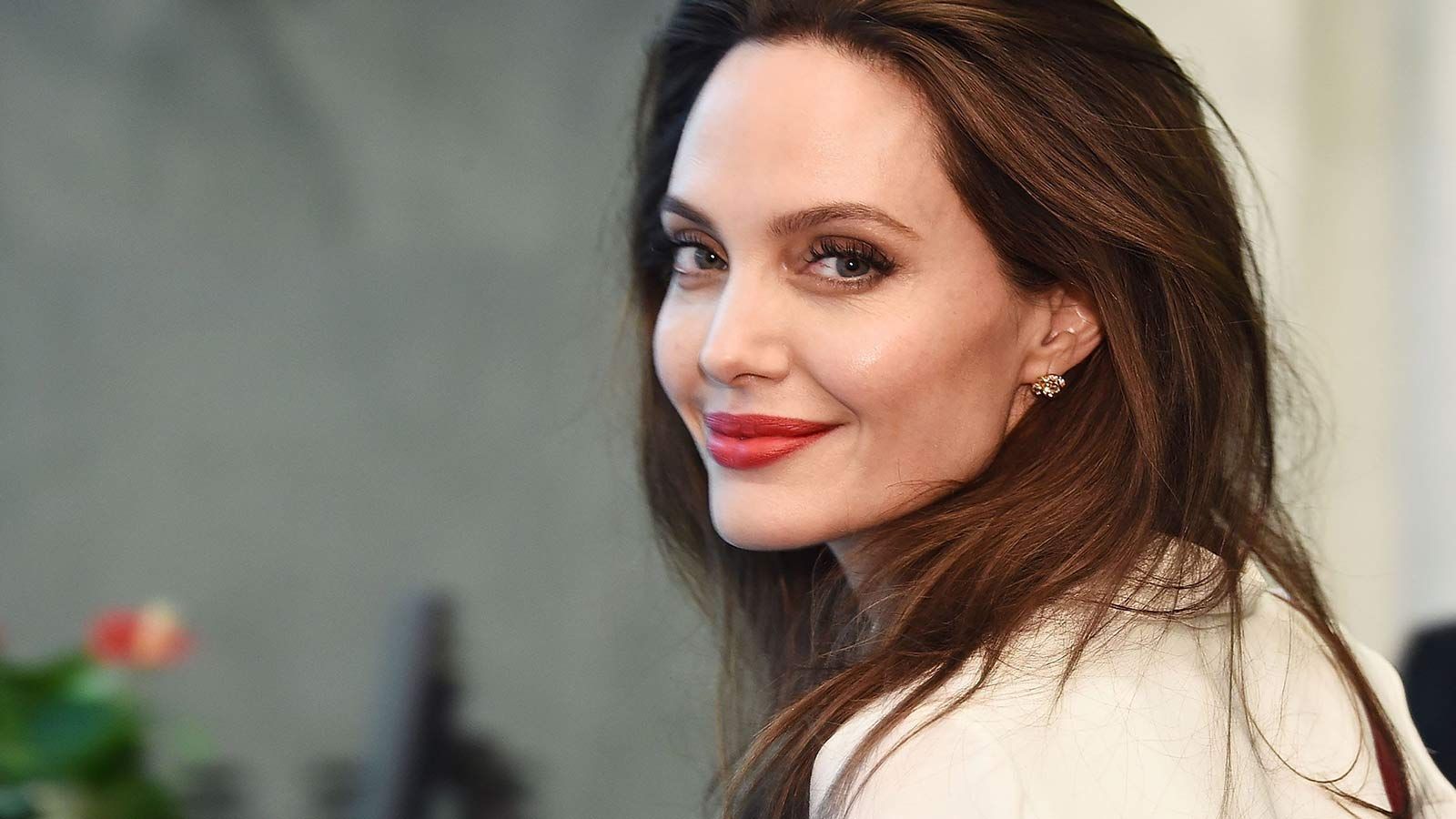
There's a version of Angelina Jolie's story that reads like tabloid headlines: the wild child, the vials of blood, the marriages, the scandals. That version exists, and it's not entirely wrong. But it's profoundly incomplete.
The fuller story is of a woman who transformed herself—publicly, messily, and genuinely—from a self-destructive teenager into one of the most influential humanitarians in the world. A woman who used her fame not just to open doors for herself, but to shine light into refugee camps most people would rather forget exist. A woman who, when faced with an 87% chance of developing breast cancer, made the radical decision to share her preventive surgery with the world, potentially saving countless lives in the process.
Angelina Jolie is complicated. She's made mistakes, some of them very public. But what makes her genuinely inspirational isn't perfection—it's the way she's consistently chosen to use her privilege and platform for something larger than herself.
A Difficult Beginning
Angelina Jolie Voight was born on June 4, 1975, in Los Angeles. Her parents were both actors—her father Jon Voight, an Oscar winner, and her mother Marcheline Bertrand, a lesser-known actress who largely gave up her career to raise her children. When Angelina was just a year old, her father left the family for another woman. The abandonment would shape her for decades.
Growing up in the shadow of her father's fame while feeling his absence created a complicated relationship with Hollywood from the start. Her mother, whom Angelina has described as the most important person in her life, raised her and her brother James in more modest circumstances than their father's celebrity might suggest.
By her own account, Jolie's teenage years were difficult. She was bullied at school for her appearance—her full lips and thin frame made her a target. She began wearing black, experimenting with self-harm, and struggling with depression. At 14, she moved in with a boyfriend. By her late teens, she was using drugs. "I went through heavier, darker times and I survived them," she later said. "I didn't die young. So I'm very lucky."
This period of her life is often sensationalized, but it's important context for understanding who she became. Jolie didn't grow up protected from pain. She grew up swimming in it—and eventually learned to channel it into something else entirely.
Finding Herself Through Acting
Acting, perhaps unsurprisingly given her lineage, became Jolie's way out. She trained at the Lee Strasberg Theatre Institute and began landing roles in the mid-1990s. Her breakthrough came with the 1998 HBO film "Gia," in which she played Gia Carangi, a supermodel who died of AIDS-related complications. The role earned her a Golden Globe and showcased her willingness to take on dark, complex characters.
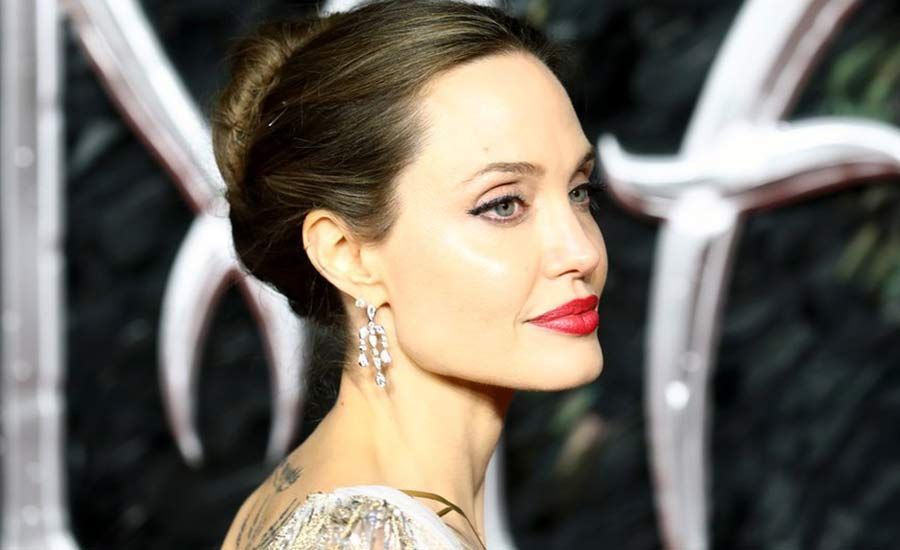
But it was "Girl, Interrupted" in 1999 that changed everything. Playing Lisa Rowe, a charismatic sociopath in a psychiatric hospital, Jolie delivered a performance so magnetic that she won the Academy Award for Best Supporting Actress. She was 24 years old. In her acceptance speech, she declared her love for her brother (they had arrived holding hands), fueling tabloid speculation that would follow her for years.
The early 2000s saw her become an action star with "Lara Croft: Tomb Raider," a role that made her one of the highest-paid actresses in Hollywood. But something happened during the filming of that movie that would prove far more significant than the box office returns: the production took her to Cambodia, and what she saw there changed the trajectory of her life.
The Work That Defines Her
In Cambodia, Jolie witnessed poverty and the aftermath of conflict on a scale she had never imagined. She returned home different. "I just felt so empty," she later explained. "I didn't know what I was doing with my life." She began educating herself about humanitarian crises and reached out to the United Nations High Commissioner for Refugees (UNHCR).
In 2001, at age 26, Jolie was appointed a UNHCR Goodwill Ambassador. Some celebrities accept such titles and make a few appearances. Jolie did something different: she showed up. Over the next two decades, she would complete more than 60 field missions to refugee camps and conflict zones in over 30 countries. She visited Darfur during the active genocide. She met with refugees in Syria, Iraq, Afghanistan, Pakistan, and dozens of other countries. She went to places cameras don't usually go—and crucially, she went when cameras weren't watching.
In 2012, she was elevated to the position of Special Envoy, a role that gave her direct access to senior UNHCR leadership and expanded her responsibilities to include representing the agency at the diplomatic level. She has addressed the United Nations Security Council, testified before the U.S. Congress, and met with world leaders to advocate for refugee rights.
The cynical interpretation—that it's all publicity—doesn't hold up to scrutiny. Jolie has donated millions of her own money to humanitarian causes. She has personally funded schools, clean water initiatives, and conservation projects. One-third of her income from each film has reportedly gone to charity. Most importantly, she has consistently used her platform to draw attention to crises the world would prefer to ignore.
"You can either spend your time thinking about how empty everything is," she has said, "or you can try to do something." She chose to do something.
Fighting Sexual Violence in Conflict
In 2012, Jolie partnered with former British Foreign Secretary William Hague to launch the Preventing Sexual Violence in Conflict Initiative (PSVI). The campaign aimed to end the use of rape as a weapon of war—a practice that has devastated communities in conflicts from Bosnia to the Democratic Republic of Congo to Syria.
In 2014, they co-hosted the Global Summit to End Sexual Violence in Conflict in London, the largest gathering ever held on the issue. Representatives from 123 countries attended. The summit resulted in a landmark international protocol for documenting and investigating sexual violence in conflict zones.
This wasn't celebrity photo-op activism. It was substantive policy work that changed how the international community approaches wartime sexual violence. The protocol developed from this initiative has since been used to train investigators and document crimes in multiple countries.
The Decision That Sparked a Movement
In May 2013, Jolie published an op-ed in The New York Times titled "My Medical Choice" that would have an impact far beyond Hollywood. She revealed that she carried a mutation in the BRCA1 gene, which dramatically increased her risk of developing breast and ovarian cancer—the same cancers that had killed her mother, grandmother, and aunt.
Her doctors estimated her risk of breast cancer at 87%. Rather than wait, she chose to undergo a preventive double mastectomy, reducing her risk to under 5%. Two years later, she had her ovaries and fallopian tubes removed after early signs of possible cancer were detected.
The decision to share this publicly was extraordinary. In an industry that profits from female bodies and where actresses face enormous pressure around appearance, Jolie openly discussed removing her breasts and reproductive organs. She did it, she said, because knowledge is power—and because she hoped other women facing similar decisions would know they weren't alone.
The impact was immediate and measurable. Researchers documented what they called "The Angelina Effect"—a dramatic spike in genetic testing for BRCA mutations following her announcement. Studies showed that referrals for genetic counseling doubled. Awareness of hereditary breast cancer increased significantly. Medical experts credited her with potentially saving lives by encouraging early detection and preventive care.
"I do not feel any less of a woman," she wrote. "I feel empowered that I made a strong choice that in no way diminishes my femininity." For countless women facing similar decisions, those words mattered.
Behind the Camera
As Jolie has grown older, she has increasingly moved behind the camera. Her directorial debut, "In the Land of Blood and Honey" (2011), was a war drama about the Bosnian War that she wrote and directed. It wasn't a safe choice—it was a difficult, subtitled film about ethnic cleansing and wartime rape, shot in Serbo-Croatian with local actors.
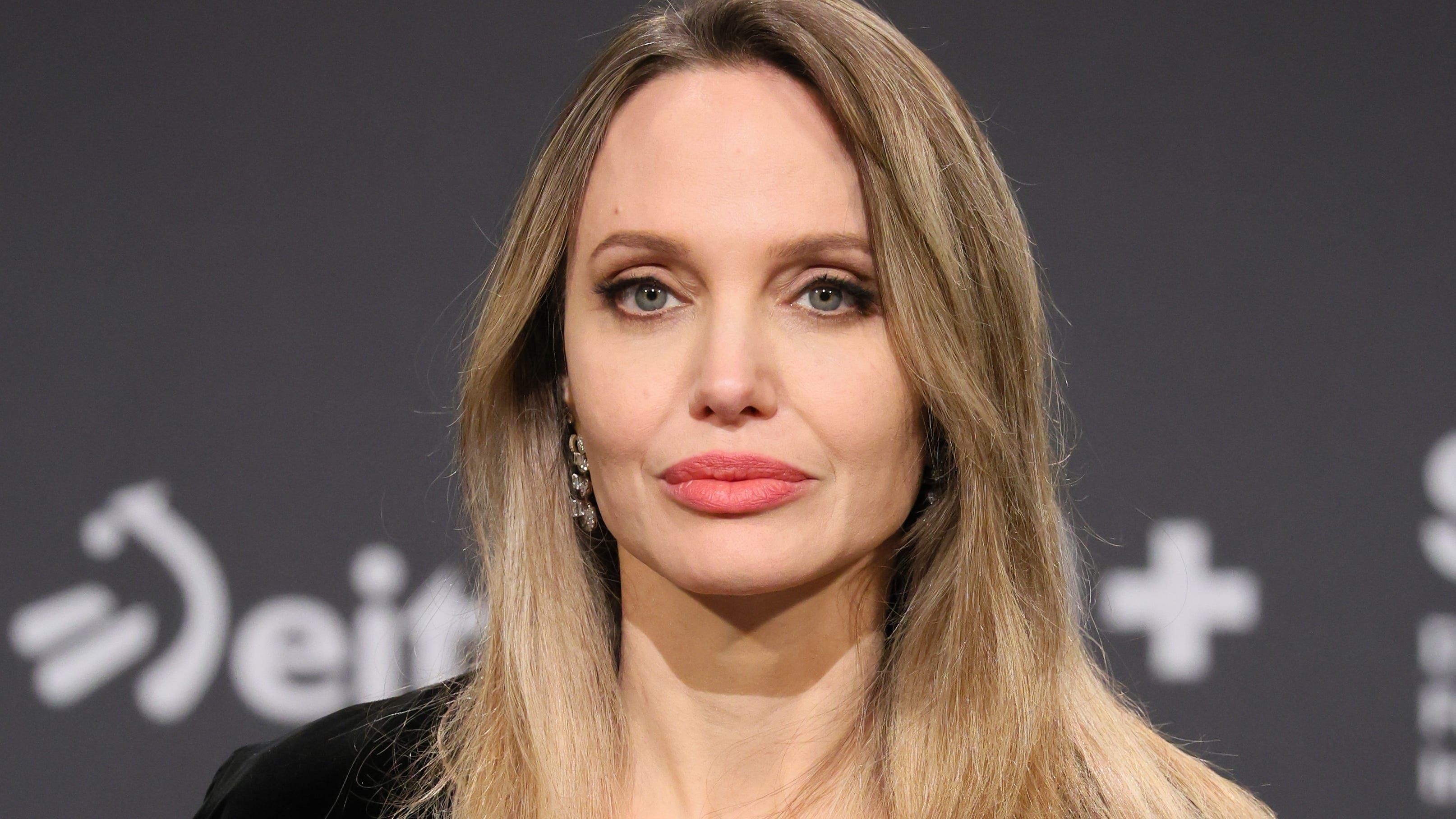
She followed it with "Unbroken" (2014), the true story of Olympic athlete Louis Zamperini, who survived a plane crash, 47 days adrift at sea, and years in Japanese prisoner-of-war camps. The film was both a commercial success and a demonstration that she could helm a major studio production.
"First They Killed My Father" (2017), based on the memoir of Cambodian human rights activist Loung Ung, was perhaps her most personal directorial project. Set during the Khmer Rouge regime, it was filmed in Cambodia—the country that first opened her eyes to humanitarian work and where she adopted her first son. The film was Cambodia's official submission for the Academy Awards.
Her directorial choices consistently reflect her humanitarian interests: stories about war, survival, human rights, and resilience. She's not interested in making safe entertainment; she's interested in telling stories that matter.
Building a Family
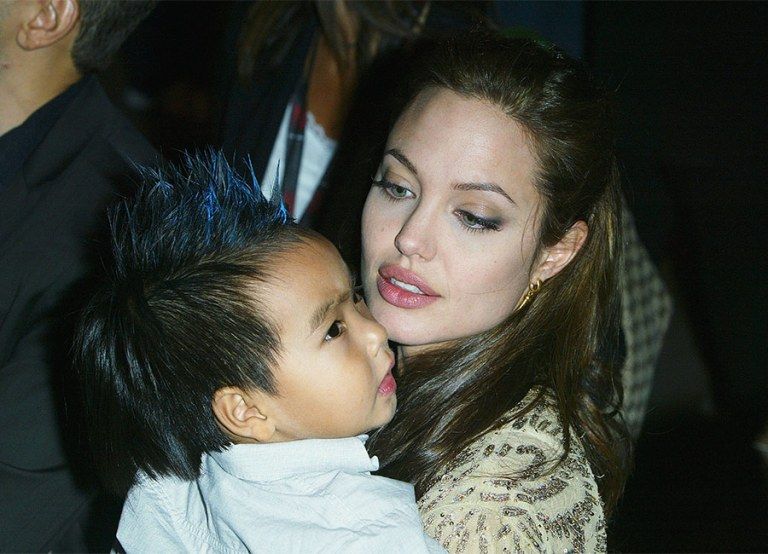
Jolie is mother to six children—three adopted internationally and three biological. Her approach to adoption was deeply connected to her humanitarian work. She adopted Maddox from Cambodia in 2002, Zahara from Ethiopia in 2005, and Pax from Vietnam in 2007. Her biological children—Shiloh and twins Knox and Vivienne—were born in 2006 and 2008 respectively, during her relationship with Brad Pitt.
She has spoken openly about wanting her children to understand both privilege and responsibility—to see the world beyond Hollywood and to engage with global issues. Her children have accompanied her on humanitarian missions and grown up with an awareness of global inequality that few celebrity kids experience.
Her divorce from Pitt, filed in 2016, was painful and public. The custody battle dragged on for years. Through it, Jolie largely refused to engage publicly, focusing instead on her children and her work. It's a reminder that her life hasn't been charmed—she's faced real struggles, publicly and privately, and has had to navigate them while the world watched.
What We Can Learn From Her
Angelina Jolie's story isn't inspirational because she's perfect. It's inspirational because she isn't—and she's done remarkable things anyway.
She shows us that your past doesn't have to determine your future. The troubled teenager who experimented with drugs and self-harm became a woman who has addressed the UN Security Council and changed international policy on sexual violence. Transformation is possible, even from difficult beginnings.
She demonstrates what it looks like to use privilege purposefully. Many people with her level of fame and resources do nothing meaningful with them. Jolie has consistently chosen to leverage her platform for causes larger than herself—not occasionally, but as a central focus of her life.
She modeled vulnerability as strength. Sharing her preventive surgeries publicly—in an industry that punishes women for aging, let alone for removing body parts associated with femininity—was an act of courage that helped millions of women feel less alone in their own medical decisions.
And she proves that evolution is possible at any stage of life. The Angelina Jolie of 1999, accepting her Oscar with blood in a vial around her neck, seems like a different person from the Angelina Jolie testifying before Congress about refugee policy. Both are her. People can grow.
In Her Own Words
"Without pain, there would be no suffering. Without suffering, we would never learn from our mistakes. To make it right, pain and suffering is the key to all windows; without it, there is no way of life."
"If you don't get out of the box you've been raised in, you won't understand how much bigger the world is."
"I've been reckless, but I'm not a rebel without a cause."
"We have a choice about how we take what happens to us in our life and whether or not we allow it to turn us."
"Life comes with many challenges. The ones that should not scare us are the ones we can take on and take control of."
Essential Viewing
Girl, Interrupted (1999): The Oscar-winning performance that showcased her extraordinary talent. Her portrayal of Lisa Rowe remains one of the most memorable supporting performances of its era.
A Mighty Heart (2007): Jolie plays Mariane Pearl, the wife of journalist Daniel Pearl who was kidnapped and murdered in Pakistan. A powerful, restrained performance that demonstrated her range beyond action roles.
Changeling (2008): Directed by Clint Eastwood, this true story earned her an Oscar nomination for Best Actress. She plays a mother whose son goes missing and who is then told the child returned to her isn't actually hers.
First They Killed My Father (2017): Her directorial work at its most personal. Essential for understanding the connection between her art and her humanitarian concerns.
Frequently Asked Questions
What humanitarian work has Angelina Jolie done?
Jolie served as UNHCR Goodwill Ambassador from 2001 to 2012, then was elevated to Special Envoy. She has completed over 60 field missions to more than 30 countries, donated millions to refugee causes, and co-founded the Preventing Sexual Violence in Conflict Initiative with former UK Foreign Secretary William Hague.
Why did Angelina Jolie have a preventive mastectomy?
Jolie carries a mutation in the BRCA1 gene that gave her an estimated 87% risk of developing breast cancer. She chose a preventive double mastectomy in 2013 to reduce her risk to under 5%. She later had her ovaries and fallopian tubes removed as well. Her mother, grandmother, and aunt all died from cancer.
How many children does Angelina Jolie have?
Jolie has six children: three adopted (Maddox from Cambodia, Zahara from Ethiopia, and Pax from Vietnam) and three biological (Shiloh and twins Knox and Vivienne) with Brad Pitt.
What films has Angelina Jolie directed?
Jolie has directed several films including "In the Land of Blood and Honey" (2011), "Unbroken" (2014), "By the Sea" (2015), and "First They Killed My Father" (2017). Her directorial work often focuses on themes of war, survival, and human rights.
What awards has Angelina Jolie won?
Jolie won the Academy Award for Best Supporting Actress for "Girl, Interrupted" (1999) and received a Best Actress nomination for "Changeling" (2008). She has won three Golden Globe Awards and received the Jean Hersholt Humanitarian Award from the Academy in 2013.
What is the 'Angelina Effect'?
The 'Angelina Effect' refers to the documented increase in genetic testing for BRCA mutations following Jolie's 2013 op-ed about her preventive mastectomy. Studies showed that referrals for genetic counseling doubled after her announcement, potentially saving lives through earlier detection and prevention.
Related Reading
More stories of remarkable women:
Margaret Thatcher: From Grocer's Daughter to the Iron Lady
The Fascinating Life of Frida Kahlo
Inspirational Women: Meryl Streep
The Global Fight for Reproductive Rights
Why Is Taylor Swift Inspirational? Career Lessons from Her Success