In 2021, a 30-year-old Polish woman named Izabela died of septic shock at a hospital after her unborn baby's heart stopped beating. Her doctors, terrified of Poland's near-total abortion ban, waited too long to terminate the pregnancy—resulting in her death.
That same year, thousands of miles away, Argentine women flooded the streets of Buenos Aires wearing green scarves—their symbol of hope—as their Congress voted to legalize abortion after decades of grassroots activism. They had won.
These two stories capture the reality of reproductive rights in our world: a landscape of victories and devastating setbacks, of progress and regression, of women fighting for the right to make decisions about their own bodies—and sometimes paying with their lives when that right is denied.
According to the Center for Reproductive Rights, 40% of women worldwide still live in countries with restrictive abortion laws. Each year, the World Health Organization estimates that 39,000 women die from unsafe abortions—deaths that are almost entirely preventable.
This is the story of where we are, how we got here, and the women who are changing the narrative.
The Global Picture: Progress and Pushback
The past fifty years have been marked by an unmistakable trend: the liberalization of abortion laws worldwide. Since 1994, more than 60 countries have expanded access to abortion care, recognizing reproductive rights as fundamental to women's health, economic opportunity, and equality.
In 2024, France became the first country in the world to explicitly protect abortion rights in its constitution—a historic milestone. As of 2025, 67 countries have legalized or decriminalized abortion on request.
But progress is not linear. While most of the world has moved toward expanded access, some countries have moved in the opposite direction—restricting rights that women once had, or enforcing existing restrictions with new severity.
Here's what the data reveals: in countries where abortion is generally legal, abortion rates have declined by 43% since 1990. In countries with severe restrictions? Rates have increased by 12%. Restrictions don't stop abortions—they just make them dangerous.
Countries Where Abortion Remains Illegal or Severely Restricted
Currently, 24 countries completely prohibit abortion under any circumstances—even to save a woman's life. These include Andorra and Malta in Europe, El Salvador and Honduras in Central America, Senegal and Egypt in Africa, and the Philippines and Laos in Asia.
Approximately 90 million women of reproductive age—5% of the global total—live in countries with complete bans. Many more live in countries where abortion is only permitted under very narrow circumstances.
El Salvador: The Most Punitive Laws
El Salvador has gained international attention for the severity of its abortion laws. In 1998, after campaigning from conservative sectors of the Catholic Church, the country enacted a total ban on abortion with no exceptions. The Constitution was later amended to recognize life as beginning at conception.
The consequences have been devastating. Dozens of women have been convicted of "aggravated homicide" for pregnancy-related emergencies—including miscarriages. One woman, a gang-rape victim, was incarcerated after giving birth to a stillborn son and being accused of attempting an illegal abortion. Some have received sentences of up to 30 years.

In 2024, thousands of Salvadoran women marched to demand that the ban be eased to allow abortions in cases of rape, when the fetus is not viable, or when the woman's life is at risk. The fight continues.
Poland: Europe's Strictest Laws
Poland's story is one of rights gained and then lost. In 2020, the country's Constitutional Tribunal ruled that abortions in cases of fetal impairment are unconstitutional—eliminating the grounds for the vast majority of legal abortions performed in the country.
The ruling sparked the largest protests Poland had seen since the fall of communism in 1989, with hundreds of thousands taking to the streets. But the decision remains in effect. Polish law now allows abortion only in cases of rape, incest, and life-threatening pregnancies—and even then, doctors have been reluctant to perform legal abortions, fearing prosecution. They face up to three years in prison if the government determines they performed an unlawful procedure.
Izabela's death became a rallying cry for protesters who saw it as the direct consequence of these restrictions. Her story illustrates what happens when laws prioritize ideology over women's lives.
United States: A Country Divided
In 2022, the U.S. Supreme Court overturned Roe v. Wade, ending the constitutional right to abortion that had been protected for nearly fifty years. The decision put the United States at odds with the global trend toward expanded access.
The result has been a patchwork of state laws. Some states have enacted near-total bans with limited exceptions; others have moved to enshrine abortion rights in their state constitutions. Women in restrictive states now face the choice of traveling hundreds of miles to access care or carrying pregnancies they don't want to term.
Notably, when abortion has been directly on the ballot in state elections since 2022, voters have chosen to protect reproductive rights every single time—suggesting a disconnect between legislatures and public opinion.
The Victories: How Women Won
For every story of restriction, there's a story of women organizing, marching, and winning. These victories didn't happen by accident—they were the result of decades of activism, coalition-building, and refusing to accept the status quo.
Argentina: The Green Wave
Argentina's path to legalizing abortion in 2020 is a masterclass in grassroots organizing. The movement began after the country's military dictatorship ended in 1983 and grew steadily for decades. In 2018, the "Marea Verde" (Green Wave) movement emerged, with millions of women taking to the streets wearing green scarves—a symbol that dated back to mothers protesting state violence during the dictatorship.
The activists were strategic. They built coalitions with labor unions, LGBTQ+ rights groups, and movements against gender violence. They emphasized the class dimension of abortion bans with a powerful chant: "The rich abort. The poor die." They worked to engage rural areas and working-class voters, broadening their appeal beyond the capital and professional women.
Women legislators in the Argentine Congress proposed legalization bills in 2007, 2010, 2012, 2014, and 2018. Each failed, but each gained more support than the last. When the 2018 bill was defeated in the Senate, it triggered massive protests—and in 2020, a new bill finally passed. Argentina became the largest country in Latin America to legalize abortion on request.
The green scarves of Argentina have since been adopted by reproductive rights movements across Latin America. The victory showed the world what sustained, organized activism can achieve.
Ireland: From Catholic Country to Constitutional Change
Ireland's transformation is equally remarkable. For decades, abortion was constitutionally banned—enshrined in the Eighth Amendment since 1983. Ireland was considered one of the most Catholic countries in Europe, and change seemed impossible.
In 2012, everything changed when Savita Halappanavar, a dentist originally from India, died of sepsis after being denied a life-saving abortion at an Irish hospital. Her husband later said a midwife told them they couldn't receive an abortion because Ireland was "a Catholic country." Savita's death ignited a movement.
Tens of thousands took to the streets. Activists launched bold campaigns around the reality that Irish women were already having abortions—either by traveling to Britain or by taking abortion pills obtained online. They made clear that the law wasn't preventing abortions; it was just making them harder, more expensive, and more dangerous.
In 2018, Ireland held a referendum on whether to repeal the Eighth Amendment. The result was decisive: 66.4% voted in favor of repeal. Among young women, 90% voted yes. Working-class communities—the same communities that had voted for marriage equality in 2015—put the referendum over the top.
Colombia and Mexico: Recent Wins
The momentum has continued. In 2022, Colombia's Constitutional Court decriminalized abortion during the first 24 weeks of pregnancy—a landmark ruling for Latin America. Mexico has followed a similar path, with its Supreme Court ruling in 2021 that criminalizing abortion is unconstitutional, though implementation varies by state.
These victories show that change is possible even in countries with strong Catholic traditions and histories of conservative governance. What matters is organizing, persistence, and building broad coalitions.
Why Reproductive Rights Matter Beyond Abortion
Reproductive rights aren't just about abortion. They're about the fundamental question of whether women have autonomy over their own bodies and futures.
Research consistently shows that laws restricting reproductive choices directly impact women's educational attainment, economic opportunities, and ability to participate in public and political life. When women can decide if and when to have children, they can pursue education, build careers, and achieve financial independence. When that choice is taken away, opportunities narrow.
Studies also demonstrate that expanding abortion rights correlates with stronger democratic institutions. In Argentina, the reproductive rights movement strengthened civil society, increased women's political participation, and forged new forms of solidarity between marginalized groups. The fight for one right often builds capacity for fighting for others.
Conversely, restricting reproductive freedom often signals broader attacks on democratic participation and human rights. The pattern holds across continents: where women's bodily autonomy is under attack, other freedoms tend to be as well.

The Fight Continues
The global landscape of reproductive rights is neither simple nor static. Progress in one country can inspire movements elsewhere; regression in one place can embolden restrictions in another. This is not a battle that gets won once and then stays won—it requires ongoing vigilance, organizing, and solidarity across borders.
But there's reason for hope. The trend over the past fifty years has been toward greater freedom, driven by women who refused to accept that their governments had more authority over their bodies than they did. When women organize, they win—not always immediately, not always easily, but persistently.
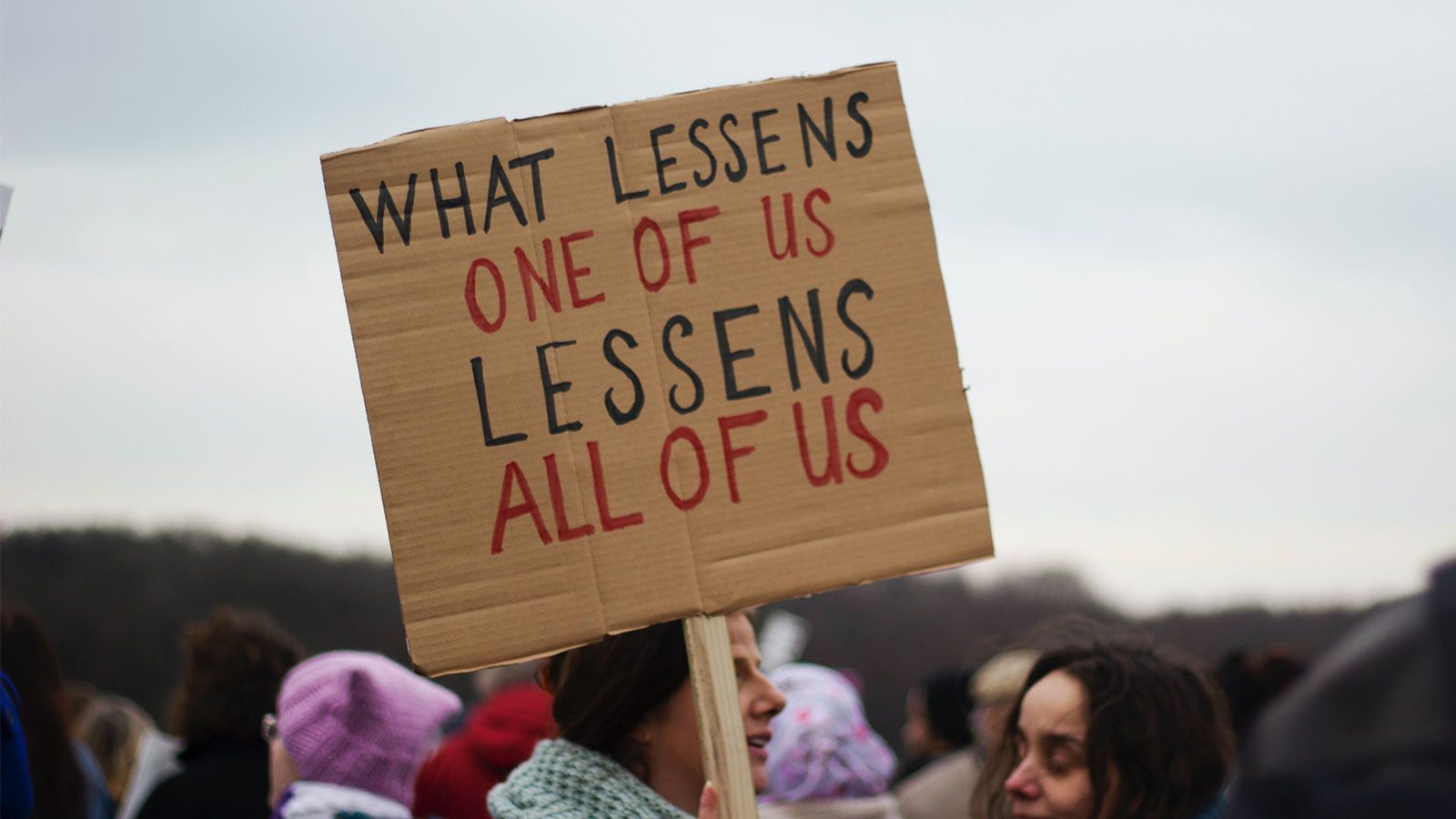
The green scarves of Argentina. The "Repeal" sweaters of Ireland. The protest signs held aloft in Warsaw. These are symbols of a movement that spans continents and generations—a movement that says women's bodies belong to women, and that this fundamental truth is worth fighting for.
The fight continues. And so do we.
An Important Distinction: Abortion Is Not Contraception
While advocating for reproductive rights, it's important to address something honestly: abortion is not—and should never be treated as—a form of contraception.
This isn't a moral judgment. It's a health reality. Every medical procedure carries risks, and abortion—while safe when performed properly—is no exception. Repeated abortions can increase the risk of complications in future pregnancies, including preterm birth and placenta problems. There are also emotional and psychological dimensions that shouldn't be dismissed.
The goal of reproductive rights advocacy isn't to make abortion common—it's to make it safe, legal, and rare. The "rare" part matters. Countries that have successfully reduced abortion rates haven't done so through bans (which don't work); they've done it through comprehensive sex education, affordable access to contraception, and support systems that help women prevent unintended pregnancies in the first place.
When women have access to reliable contraception and the knowledge to use it effectively, abortion rates drop dramatically. This is why reproductive rights organizations consistently advocate for the full spectrum of reproductive healthcare—not just abortion access, but contraception, education, prenatal care, and family planning services.
Defending abortion rights doesn't mean celebrating abortion or treating it casually. It means recognizing that when prevention fails—when contraception doesn't work, when circumstances change, when a woman faces an impossible situation—she deserves access to safe medical care rather than being forced into dangerous alternatives. It means trusting women to make serious decisions about serious matters, with full information and proper medical support.
The most effective way to reduce abortion isn't to criminalize it. It's to give women the tools and support to prevent unintended pregnancies—and to build societies where women who do choose to become mothers have the resources they need to do so safely and with dignity.
That's what a truly comprehensive approach to reproductive health looks like: prevention first, safe options when needed, and respect for women's autonomy throughout.
Related Reading:
• Simone de Beauvoir: The Feminist Who Changed How We Think About Women
• Inspirational Women: The Fascinating Life of Frida Kahlo
Sources:
• Center for Reproductive Rights: The World's Abortion Laws
• Council on Foreign Relations: Abortion Law Global Comparisons
• Harvard International Review: Abortion Rights in Argentina and Poland