
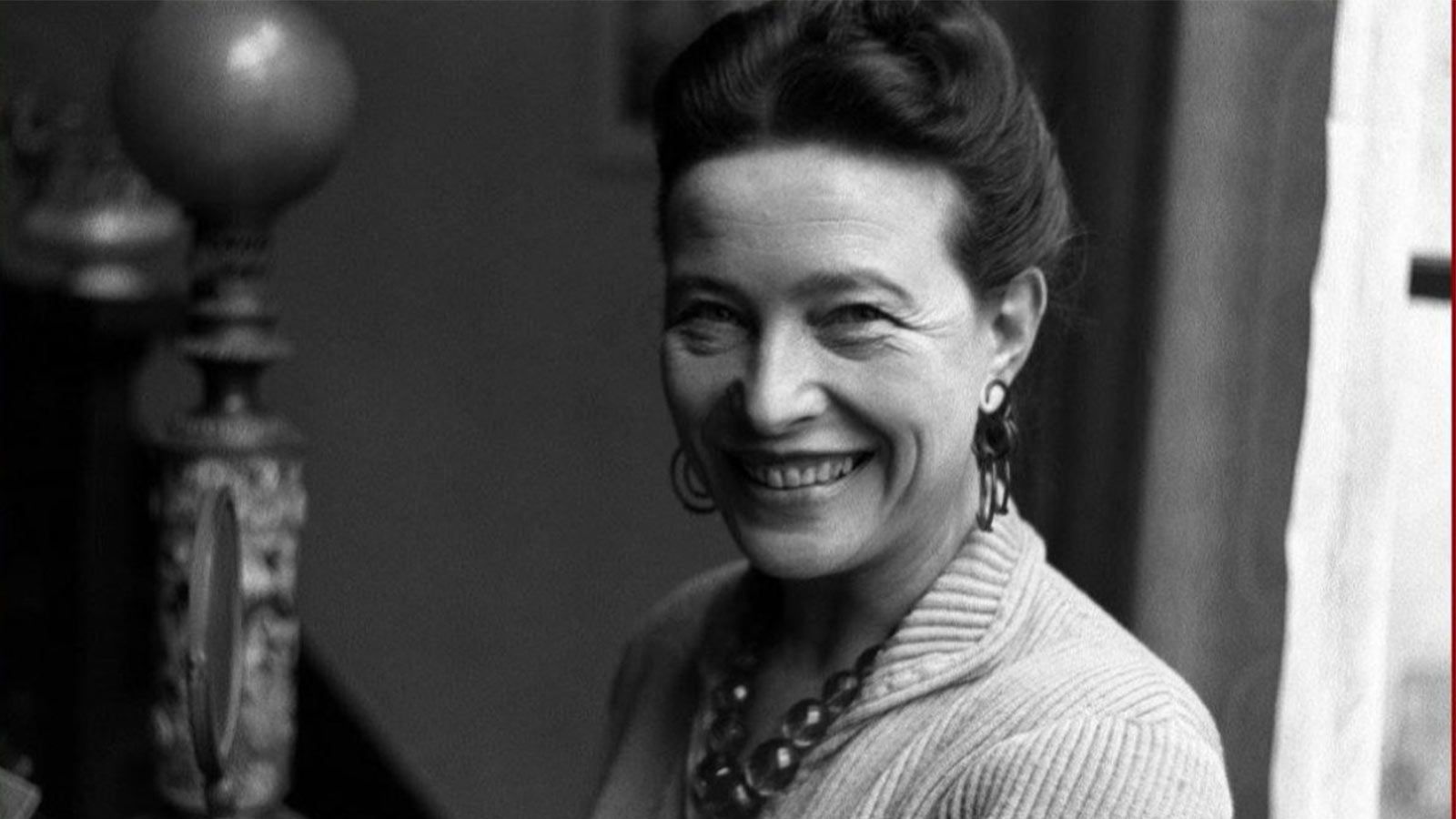
Have you ever stopped to question why society treats women differently than men? Why are certain behaviors considered "feminine" while others are "masculine"? We have one brilliant French philosopher to thank for sparking that conversation: Simone de Beauvoir.
If you've never heard of her, you're about to discover the woman who fundamentally changed how we understand gender, feminism, and what it means to be a woman in the modern world. Her revolutionary ideas from the 1940s still shape conversations about equality, identity, and women's rights today.
Who Was Simone de Beauvoir?
Simone Lucie Ernestine Marie Bertrand de Beauvoir was a French existentialist philosopher, writer, political activist, feminist, and social theorist who lived from 1908 to 1986. Born in Paris to a middle-class family, she was a deeply religious child who initially dreamed of becoming a nun. But at age 14, she experienced a profound crisis of faith and became an atheist—a transformation that would spark her lifelong exploration of existentialism and what it truly means to be human.
Here's what makes her story remarkable: at just 21 years old, Beauvoir became the youngest person ever to pass the agrégation, France's notoriously difficult teaching certification exam. She placed second—right behind Jean-Paul Sartre, who would become her lifelong partner (though they never married and maintained an unconventional open relationship that scandalized their generation).
But Beauvoir was far more than just Sartre's companion. She was a formidable intellectual force in her own right, whose ideas would ultimately prove just as influential—if not more so—than his.
Why Is Simone de Beauvoir Inspirational?
She Invented the Concept That Gender Is Socially Constructed
Beauvoir's most groundbreaking contribution came in 1949 when she published The Second Sex (Le Deuxième Sexe). This wasn't just a book—it was an intellectual earthquake that fundamentally changed how we think about gender.
Her most famous line? "One is not born, but rather becomes, a woman" ("On ne naît pas femme, on le devient").
Think about that for a moment. What Beauvoir was saying—decades before it became mainstream thinking—is that femininity isn't biological destiny. It's something society teaches us, shapes in us, and often forces upon us. She articulated what scholars now call the sex-gender distinction: the difference between biological sex and the socially constructed roles and stereotypes we call gender.
This single idea became the foundation of modern feminism and gender studies. Every conversation we have today about gender roles, stereotypes, and equality traces back to this revolutionary insight.
She Challenged the Patriarchy When It Was Dangerous to Do So
Writing The Second Sex in 1949, France was no small act of courage. The book was immediately condemned by the Catholic Church and added to the Vatican's Index of Prohibited Books. Critics were outraged. Men threw the book across rooms. People mocked Beauvoir in restaurants. Albert Camus reportedly reacted with "typical Mediterranean machismo," furious that she had "ridiculed the French male."
Why? Because Beauvoir dared to speak openly about female sexuality, women's oppression, and the systematic ways society kept women subordinate. She wasn't polite about it. She was direct, scholarly, and uncompromising.
But here's what's inspiring: she didn't back down. She continued writing, speaking, and fighting for women's rights for the rest of her life.
She Demonstrated That Women Are Complete Human Beings
At the heart of Beauvoir's work is a powerful argument: women have been defined as "the Other"—as secondary, incomplete, and existing only in relation to men.
She pointed out that Aristotle described women as "female by virtue of a certain lack of qualities." Thomas Aquinas called women "imperfect men" and "incidental" beings. Throughout history, as Beauvoir wrote, "Humanity is male, and man defines woman, not in herself but in relation to himself."
But Beauvoir's philosophy was ultimately hopeful. She asserted that women are as capable of choice as men. Women can choose to elevate themselves, moving beyond passive acceptance (what existentialists call "immanence") to active self-creation and responsibility (what they call "transcendence"). In other words: you don't have to accept the limiting definitions society places on you. You can create your own meaning, your own purpose, your own identity.
This message of empowerment resonates today with every woman navigating workplace bias, societal expectations, or the pressure to be "everything to everyone."
Read also: Why Women Are Underrepresented in Leadership Positions?
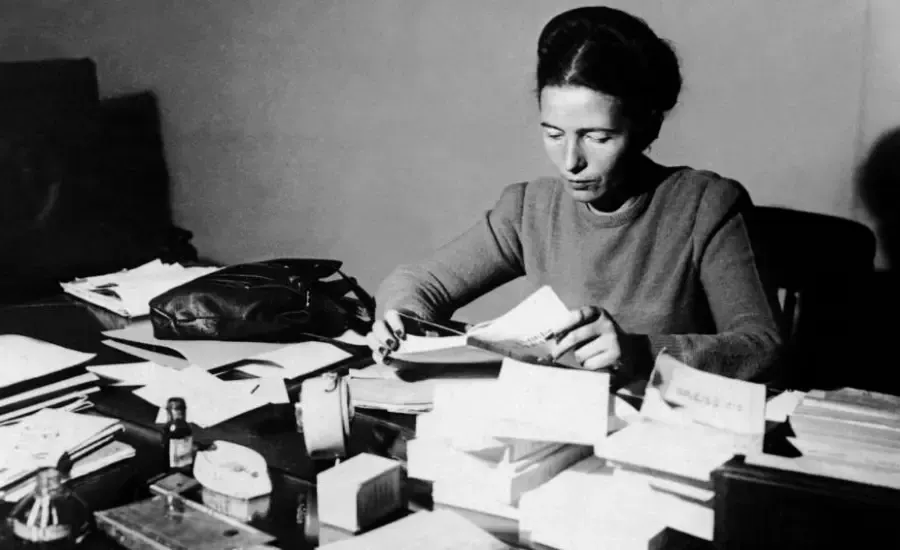
What Is Simone de Beauvoir Most Famous For?
The Second Sex: The Book That Launched Modern Feminism
The Second Sex is Beauvoir's magnum opus—a detailed, interdisciplinary analysis of women's oppression spanning history, biology, psychology, sociology, and mythology. It's over 1,000 pages of thoroughly researched argumentation about why women have been systematically oppressed and what can be done about it.
The book became a catalyst for the second-wave feminist movement in the 1960s and '70s. Feminist icons like Betty Friedan, Kate Millett, Germaine Greer, and Gloria Steinem all cited Beauvoir as a major influence. Betty Friedan specifically said The Second Sex "led me to whatever original analysis of women's existence I have been able to contribute to the Women's movement."
Her Activism and Political Engagement
Though Beauvoir initially resisted identifying as a feminist (she believed socialism would automatically solve women's oppression), she publicly declared herself a feminist in a 1972 interview. From that point forward, she became actively involved in the women's liberation movement in France.
In 1971, she signed the Manifesto of the 343, a public declaration by 343 French women—including prominent actresses, writers, and intellectuals—admitting they had illegal abortions. This courageous act helped bring about abortion law reform in France. She also founded a feminist section in the influential journal Les Temps Modernes and spent her later years fighting for divorce law reform, women's rights in the Iranian Revolution, and sexual equality.
Simone de Beauvoir's Most Inspirational Quotes
Beauvoir's writing is filled with wisdom that feels remarkably relevant to modern working women. Here are some of her most powerful quotes:
On Women's Potential: "Women are not the victims of some mysterious fate: our ovaries do not condemn us to a lifetime of submission."
On Ambition: "I am awfully greedy; I want everything from life. I want to be a woman and to be a man, to have many friends and to have loneliness, to work much and write good books, to travel and enjoy myself, to be selfish and to be unselfish… You see, it is difficult to get all that I want. And then when I do not succeed, I get mad with anger."
On Taking Action: "Change your life today. Don't gamble on the future, act now, without delay."
On Independence: "I am too intelligent, too demanding, and too resourceful for anyone to be able to take charge of me entirely. No one knows me or loves me completely. I have only myself."
On Self-Knowledge: "Self-knowledge is no guarantee of happiness, but it is on the side of happiness and can supply the courage to fight for it."
On Freedom: "I wish that every human life might be pure transparent freedom."
On How Society Defines Women: "Humanity is male, and man defines woman, not in herself but in relation to himself."
Simone de Beauvoir's Legacy Today
Beauvoir's influence extends far beyond academic philosophy. Her ideas permeate contemporary conversations about:
- Gender identity and expression: The understanding that gender is socially constructed rather than biologically determined
- Intersectional feminism: Her analysis of how different forms of oppression overlap
- Women's autonomy: The idea that women should define themselves rather than be defined by others
- Work-life balance: Her writings on how domestic roles have limited women's potential
- Sexual freedom: Her frank discussions of female sexuality and desire
In 2018, French culture celebrated Beauvoir's manuscripts of The Second Sex being published, and her memoirs were added to the prestigious Pléiade collection—a sign of her permanent place in the literary and philosophical canon. Modern scholars continue to discover new dimensions of her thought, from her phenomenological approach to her intersectional analysis before the term even existed.
Why Simone de Beauvoir Matters for Working Women Today
As modern working women, we owe Beauvoir an enormous debt. Every time we:
- Question why household labor falls disproportionately on women
- Negotiate for equal pay
- Refuse to apologize for our ambition
- Choose careers over traditional roles
- Define success on our own terms
- Speak up against sexism in the workplace
...we're living out the freedom Beauvoir fought to secure.
She showed us that conventions are not destiny. That we are not "the Other" or "the second sex"—we are complete, autonomous human beings capable of transcendence, of creating our own meaning, of choosing our own paths.
Beauvoir rejected the idea that women must choose between career and personal life, between ambition and femininity, between intellectual pursuits and relationships. She lived authentically, wrote prolifically, loved passionately, and changed the world fundamentally.
The Bottom Line
Simone de Beauvoir transformed how we understand gender, paved the way for modern feminism, and demonstrated through both her work and her life that women are complete, necessary, autonomous human beings. Her most powerful message? You are not what society says you are. You become who you choose to become.
In a world that still places limiting expectations on women, that's a message worth remembering—and celebrating.
References
Simone de Beauvoir Is The Badass Inspiration You Need To Keep Going
6 feminist quotes by Simone de Beauvoir