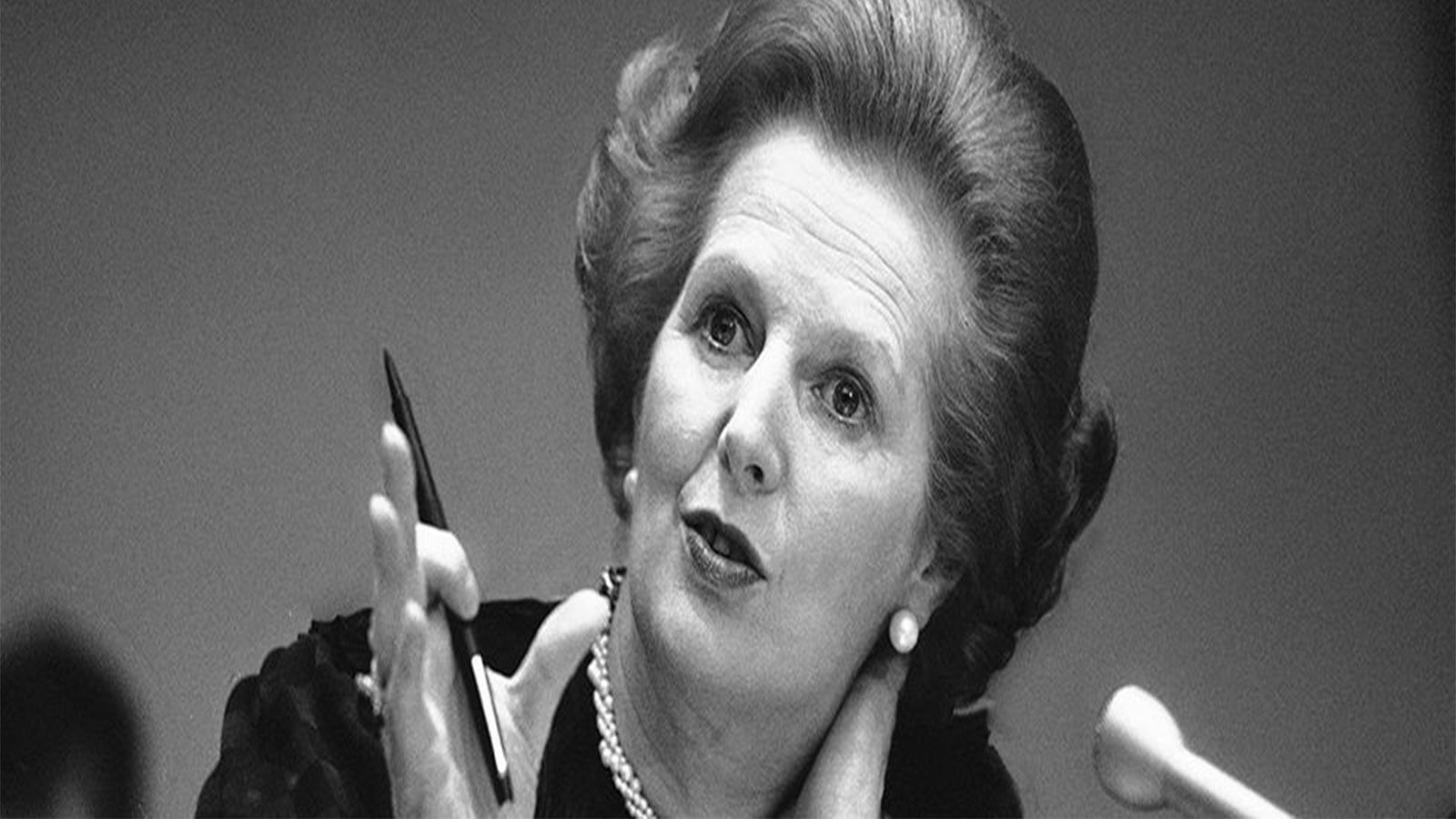
From Grocer's Daughter to the Iron Lady
On May 4, 1979, Margaret Thatcher stood on the steps of 10 Downing Street and recited the Prayer of Saint Francis: "Where there is discord, may we bring harmony." The irony would not be lost on history. The woman who had just become Britain's first female Prime Minister would go on to become one of the most transformative—and divisive—leaders of the twentieth century.
Margaret Thatcher was not born into privilege. She did not inherit wealth or political connections. She climbed her way to the highest office in British politics through sheer determination, intellectual rigor, and an iron will that would eventually earn her the nickname that defined her legacy. Whether you admire her or despise her—and few people fall anywhere in between—her story remains one of the most remarkable political journeys of the modern era.
The Grocer's Daughter
Margaret Hilda Roberts was born on October 13, 1925, in Grantham, a market town in Lincolnshire, England. Her father, Alfred Roberts, ran a grocery shop and served as a local alderman—and later, mayor. Her mother, Beatrice, was a dressmaker before marriage. The family lived in a flat above the shop, without running hot water or an indoor toilet until Margaret was a teenager.
Alfred Roberts was the dominant influence on young Margaret's life. A Methodist lay preacher and self-educated man, he instilled in her the values that would shape her political philosophy: hard work, self-reliance, thrift, and the belief that individuals, not governments, should be responsible for improving their own lives. Margaret would later credit her father with everything she became: "I owe almost everything to my father."
She was academically brilliant. At Kesteven and Grantham Girls' School, she excelled in everything she attempted, eventually winning a place at Somerville College, Oxford—one of the women's colleges at the university. She studied chemistry, but her true passion was already politics. At Oxford, she became president of the university's Conservative Association, one of the first women to hold that position.
Finding Her Way Into Politics
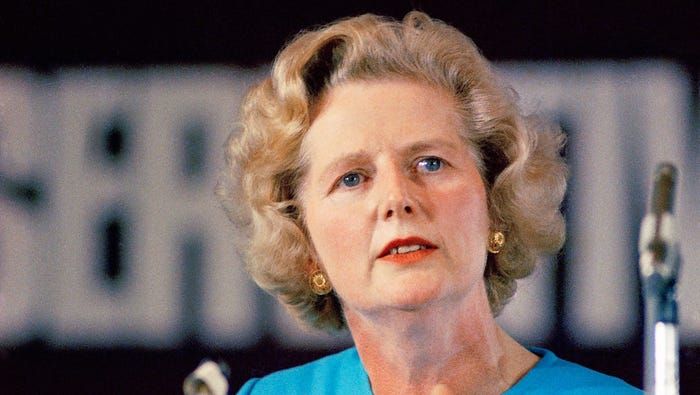
After graduating, Roberts worked as a research chemist and later trained as a barrister, specializing in taxation. But politics remained her obsession. In 1950, at just 24 years old, she became the youngest woman ever to stand as a Conservative parliamentary candidate, running in the safe Labour seat of Dartford. She knew she wouldn't win—Dartford was solidly working-class territory—but that wasn't the point. She was making herself known.
She ran again in 1951, losing again but significantly reducing the Labour majority. More importantly, she had caught the attention of Denis Thatcher, a wealthy businessman who had heard her speak at a political function. They married in 1951, and Margaret Roberts became Margaret Thatcher.
Denis Thatcher's financial support gave Margaret the freedom to pursue her political ambitions while raising their twins, Carol and Mark, born in 1953. In 1959, she finally won a seat in Parliament, representing the safe Conservative constituency of Finchley in North London—a seat she would hold for the next 33 years.
The Climb to Number 10
Thatcher's rise through Conservative ranks was steady but not meteoric. In 1970, she was appointed Secretary of State for Education under Prime Minister Edward Heath. It was in this role that she earned her first controversial nickname: "Margaret Thatcher, Milk Snatcher," after she ended free school milk for children aged seven to eleven. The policy was actually a continuation of a Labour initiative, but Thatcher became the face of it—and the target of public anger.
When Heath lost two elections in 1974, Thatcher sensed opportunity. In February 1975, she challenged him for the party leadership—something no one expected her to win. The Conservative establishment underestimated her. She won on the second ballot, becoming the first woman to lead a major British political party. Four years later, amid economic chaos, strikes, and the "Winter of Discontent," she led the Conservatives to victory in the general election.
Eleven Years at Number 10
Margaret Thatcher served as Prime Minister from 1979 to 1990—the longest continuous tenure in that office since the early nineteenth century, and the longest of any British Prime Minister in the twentieth century. In that time, she fundamentally reshaped British society, economy, and politics. The question of whether that reshaping was beneficial or destructive depends entirely on whom you ask.
Her economic policies—later dubbed "Thatcherism"—centered on free markets, deregulation, privatization of state-owned industries, and reducing the power of trade unions. She sold off nationalized companies like British Telecom, British Gas, British Airways, and British Steel. She introduced "right to buy" legislation, allowing council house tenants to purchase their homes, creating millions of new homeowners. She cut top tax rates and reduced government spending.
Supporters credit her with reviving a stagnant British economy, ending the chaos of constant strikes, and restoring Britain's standing in the world. Critics blame her for devastating manufacturing communities, widening inequality, creating mass unemployment, and destroying the social fabric of working-class Britain. Both perspectives contain truth.
The Falklands and the Iron Lady
In April 1982, Argentina invaded the Falkland Islands, a British territory in the South Atlantic. Thatcher's response was swift and decisive: she assembled a naval task force and sent it 8,000 miles to reclaim the islands. The war lasted 74 days and cost 255 British lives (and over 600 Argentine), but Britain emerged victorious.
The Falklands victory cemented Thatcher's reputation for resolve and transformed her political fortunes. She had been deeply unpopular before the war, with unemployment soaring above three million. After it, she won the 1983 election in a landslide. To her supporters, the Falklands demonstrated strength and principle. To her critics, it demonstrated a dangerous willingness to use military force and the cost of lives for political gain.
It was a Soviet journalist who gave her the nickname "Iron Lady" in 1976, meant as an insult. Thatcher embraced it. "I stand before you tonight in my Red Star chiffon evening gown," she joked at a Conservative dinner, "my face softly made up, and my fair hair gently waved—the Iron Lady of the Western world."
The Controversies That Defined Her
Thatcher's relationship with trade unions was confrontational from the start, but it reached its peak during the miners' strike of 1984-85. When the National Coal Board announced pit closures, the National Union of Mineworkers, led by Arthur Scargill, called a strike. For a full year, mining communities across Britain held out—and Thatcher refused to back down.
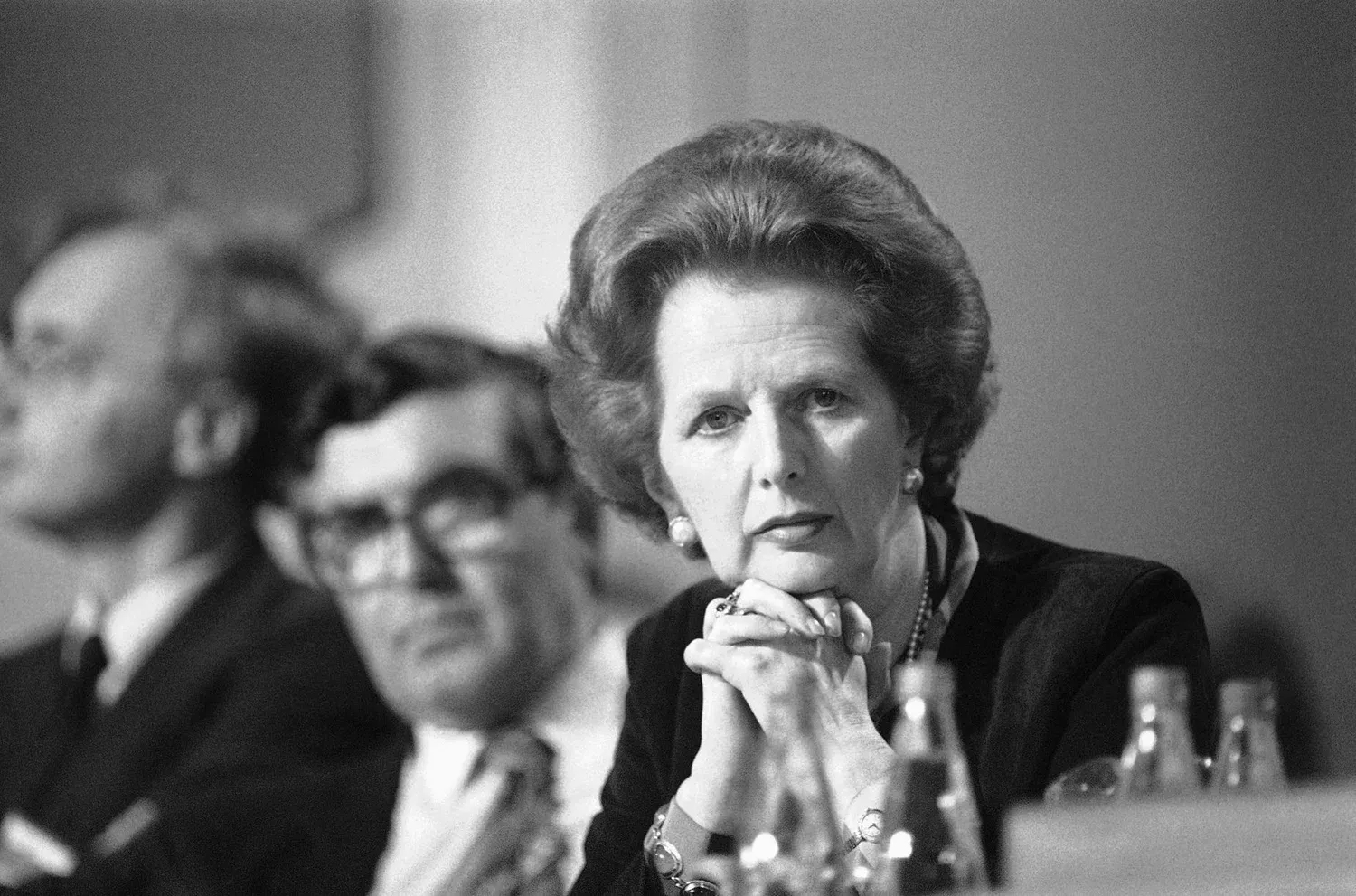
The strike ended in defeat for the miners. Pits closed across the country, destroying communities that had depended on coal mining for generations. For Thatcher supporters, this was a necessary economic correction and a victory over union militancy. For her opponents, it was deliberate destruction of working-class communities and a vindictive campaign against organized labor. Decades later, the wounds have not fully healed.
Her final controversy proved her undoing. The Community Charge—universally known as the "poll tax"—replaced local property taxes with a flat per-person charge. The policy was widely seen as unfair, taxing a duke the same amount as his gardener. Riots erupted in London in March 1990. Within months, her own party had turned against her, and in November 1990, Margaret Thatcher was forced to resign.
The Woman Behind the Image
Thatcher was not known for warmth. She famously survived on four hours of sleep a night and expected the same dedication from everyone around her. She had little patience for weakness, indecision, or what she saw as sentimentality. "If you want something said, ask a man," she once remarked. "If you want something done, ask a woman."
Her marriage to Denis appears to have been a genuine partnership. He supported her ambitions without competing with them, provided stability and financial security, and stayed largely out of the spotlight while she dominated it. When asked about their relationship, Denis famously replied, "I don't pretend to run the country. She doesn't pretend to run me."
After leaving office, Thatcher remained active in public life for years, though dementia gradually diminished her capacities. Denis Thatcher died in 2003. Margaret Thatcher died on April 8, 2013, at the age of 87. Her funeral at St Paul's Cathedral was attended by over 2,000 guests, including Queen Elizabeth II—a rare honor. Outside, some mourners wept while others celebrated. In death as in life, she divided opinion.
A Legacy That Still Divides
Margaret Thatcher was, undeniably, a woman who shattered glass ceilings. She became Prime Minister at a time when few women held positions of political power anywhere in the world. She proved that gender was no barrier to the highest office—and that women could be just as tough, just as decisive, and just as controversial as any man.
But she was not a feminist icon in any conventional sense. She appointed only one woman to her cabinet in eleven years. She expressed little interest in advancing women's causes and once said she owed "nothing to women's lib." Her success, she believed, was entirely her own—and if other women wanted success, they could earn it the same way.
Whether you see her as a necessary modernizer who saved Britain from economic decline or a destructive ideologue who tore communities apart depends largely on your politics—and, often, on where you grew up. In the former mining towns of northern England, Wales, and Scotland, her name is still spoken with bitterness. In the boardrooms of the City of London, she remains a hero.
What no one disputes is her significance. She changed the terms of British political debate so thoroughly that even the Labour Party eventually accepted much of her economic legacy. She formed one of the defining political partnerships of the Cold War era with Ronald Reagan. She proved that conviction politics—the refusal to compromise, to seek consensus, to moderate—could win.
Seeing Her Story: The Iron Lady (2011)
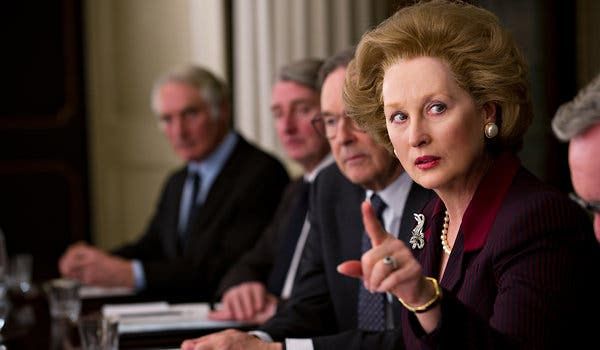
If you want to understand Margaret Thatcher beyond the political talking points, there's no better place to start than "The Iron Lady," the 2011 biographical film directed by Phyllida Lloyd. Meryl Streep's portrayal of Thatcher won her a third Academy Award for Best Actress—and it's easy to see why.
The film takes an unconventional approach, framing Thatcher's life through the lens of her declining years as she struggles with dementia and reflects on her past. Through flashbacks, we see her journey from grocer's daughter to Oxford student to young politician to Prime Minister. Streep doesn't just impersonate Thatcher—she inhabits her, capturing the voice, the mannerisms, the steely determination, and, eventually, the vulnerability of a woman whose mind is betraying her.
Jim Broadbent plays Denis Thatcher with warmth and humor, showing the supportive partnership behind the public image. The film doesn't shy away from Thatcher's controversial decisions—the Falklands, the miners' strike, the poll tax—but it also humanizes her in ways that pure political analysis cannot.
"The Iron Lady" isn't a political endorsement or condemnation. It's a portrait of a woman who achieved extraordinary things, paid extraordinary costs, and lived long enough to watch her own story become history. Whether you agree with her politics or not, the film offers a compelling, deeply human look at one of the twentieth century's most formidable leaders.
What Her Story Teaches Us
Margaret Thatcher was not a role model in the traditional sense. She was not nurturing or warm. She did not lift other women up behind her or champion causes beyond her own convictions. She could be brutal, dismissive, and uncompromising to the point of self-destruction.
But there are lessons in her story nonetheless. She proved that background does not determine destiny—that a grocer's daughter from a provincial town could reach the highest office through preparation, persistence, and absolute refusal to be underestimated. She demonstrated that conviction, however unpopular, has its own kind of power. And she showed that women could occupy spaces that had always been reserved for men—not by asking permission, but by taking them.
You don't have to agree with Margaret Thatcher to learn from her. You don't have to like her to acknowledge what she achieved. And in a world where women are still underrepresented in positions of political power, her story—complicated, controversial, and impossible to ignore—remains relevant.
In Her Own Words
"Disciplining yourself to do what you know is right and important, although difficult, is the highroad to pride, self-esteem, and personal satisfaction."
"If you set out to be liked, you would be prepared to compromise on anything at any time, and you would achieve nothing."
"I've got a woman's ability to stick to a job and get on with it when everyone else walks off and leaves it."
"Any leader has to have a certain amount of steel in them, so I am not that put out being called the Iron Lady."
"To wear your heart on your sleeve isn't an excellent plan; you should wear it inside, where it functions best."
Related Reading
Explore more stories of remarkable women and leadership:
Inspirational Women: Ada Lovelace, The First Computer Programmer
Lessons from Oprah: How She Built an Empire by Staying True to Herself
Emmeline Pankhurst: A Champion of Women's Suffrage
Sources & Further Reading
Margaret Thatcher Biography - Biography.com