

A couple of days ago, I was minding my own business, watching another predictable summer movie at home while quietly reminding myself that I need to pay a little more attention to my personal finances this month and stay home more. As the credits rolled on yet another sparkling, pastel-hued romance where all life’s complex structural problems are neatly solved by a dramatic airport chase, I came to a very clear conclusion: we are deep enough into the season that the relentless parade of sanitized, hyper-optimistic love stories has officially started to rot our brains. The cultural expectation that our summer movie July watchlists must consist of intellectually passive, easy-to-digest happy endings is a quiet insult to our intelligence.
The real problem is one we already recognize but rarely have the space to voice: the media we consume during our hard-earned downtime constantly attempts to resolve complex life decisions with simple romantic compromises, leaving us without a realistic framework for when our professional ambition and our partnerships actually collide. Classic romantic comedies sell a neat, packaged version of human relationships that feels entirely divorced from the strategic compromises of our actual lives. Instead of escaping into comfortable lies, I believe independent minds need narratives that treat emotional friction, career realities, and personal sovereignty with the gravity they deserve.
We do not live in a montage. Real life requires difficult decisions, daily trade-offs, and a healthy dose of realism. When we spend our days managing teams, negotiating contracts, or building a business, coming home to a movie that suggests "all you need is love" feels less like an escape and more like gaslighting. I want cinema that reflects the complexity of our actual lives, that is movies that are sharp, slightly cynical, and deeply honest about what happens when two independent people try to build a life together without losing themselves in the process.
Blue Valentine Proves to Us That Raw Chemistry Cannot Survive Mismatched Ambition

Photo Believing that compatibility is a static trait, rather than a fragile, daily alignment of timing and shared priorities, is the fastest way to invite eventual resentment.
When I watch Blue Valentine, I am always struck by how ruthlessly director Derek Cianfrance dismantles the myth of the happily-ever-after. Unlike 500 Days of Summer, which focuses on the painful realization of unrequited projection, Blue Valentine shows us what happens when we actually get the partner we wanted, only to realize we possess entirely different definitions of personal growth. The characters, Dean and Cindy, do not experience a single, dramatic betrayal; instead, we watch them slowly erode under the weight of mismatched ambition, daily friction, and the quiet tragedy of one partner outgrowing the other.
Cindy is ambitious, striving to build a career in medicine, while Dean is entirely content to float through life, prioritizing comfortable mediocrity. Their chemistry is undeniable in the nostalgic, sun-drenched flashbacks of their youth, but the film’s present-day timeline shows us how chemistry becomes a prison when there is no shared intellectual or professional trajectory. It is a devastatingly honest portrayal of how love, on its own, is entirely insufficient to sustain a life.
For me, this film serves as a masterclass in separating nostalgic fantasy from functional partnership. When a relationship fails, it is rarely due to a lack of effort, but rather because the structural realities of our individual trajectories no longer align. It reminds us that choosing a partner is not just about finding someone who makes us laugh; it is about finding someone whose life direction, work ethic, and ambition are compatible with our own.
La La Land Exposes the Transactional Reality of Peak Professional Success
The modern expectation that we can scale career heights or build our businesses without sacrificing part of our relational footprint is an absolute fantasy.
La La Land is frequently miscategorized as a whimsical, nostalgic musical, yet I find it to be a deeply realistic look at the transactional nature of ambition. The protagonists, Mia and Sebastian, do not separate because of a lack of affection; they separate because their career milestones require geographic and mental isolation. The film argues that peak performance in highly competitive fields is often incompatible with the soft compromises required to sustain a long-term partnership. It is a cinematic realization that some dreams require our undivided attention.
What makes this film so brilliantly cynical to me is its ending. There is no last-minute surrender, no sudden decision to abandon their respective dreams for a life of shared domestic compromise. Instead, they both achieve exactly what they set out to do—she becomes a successful actress, he opens his jazz club—and the cost of that success is their relationship. The final, heartbreaking "what if" sequence is not a tragedy; it is a mature, sober acknowledgment of the road not taken.
I use this film to validate my own strategic trade-offs. Choosing our careers over a partner who demands our shrinkage is not a moral failing but a rational allocation of our limited energy. It is an essential watch for anyone who has ever felt a quiet wave of guilt about putting our professional legacy ahead of a domestic ideal.
Past Lives Demonstrates That True Maturity Means Letting Go of Nostalgic "What Ifs"
Holding onto nostalgic "what ifs" is a massive cognitive drain, especially when we are actively trying to build a stable, reality-based life in the present.
Celine Song’s Past Lives examines the quiet, devastating maturity of accepting closure. The film entirely rejects the standard romantic-comedy climax in which the protagonist abandons her stable life for an idealized childhood sweetheart. Instead of a grand romantic gesture, we get the painful, beautiful reality of two adults acknowledging that they belong to different versions of the past. Nora, a playwright living in New York, is happily married to Arthur, a fellow writer. When her childhood sweetheart, Hae Sung, visits her from Korea, the stage is set for a classic romantic dilemma.
Yet, the film refuses to indulge in melodrama. Nora’s husband is not an obstacle to be overcome; he is a real, supportive partner who exists in her actual present. Hae Sung is not a savior; he is a ghost from a life she left behind. The movie shows us that maturity is not about ignoring the paths we didn't take, but about having the strength to stand firmly in the reality we have chosen.
When we find ourselves romanticizing an ex or a path not taken, we need to watch this film. It is a visual reminder that we cannot build a future while constantly looking over our shoulder.
The Worst Person in the World Highlights the Discomfort of Outgrowing a Perfectly Good Partner
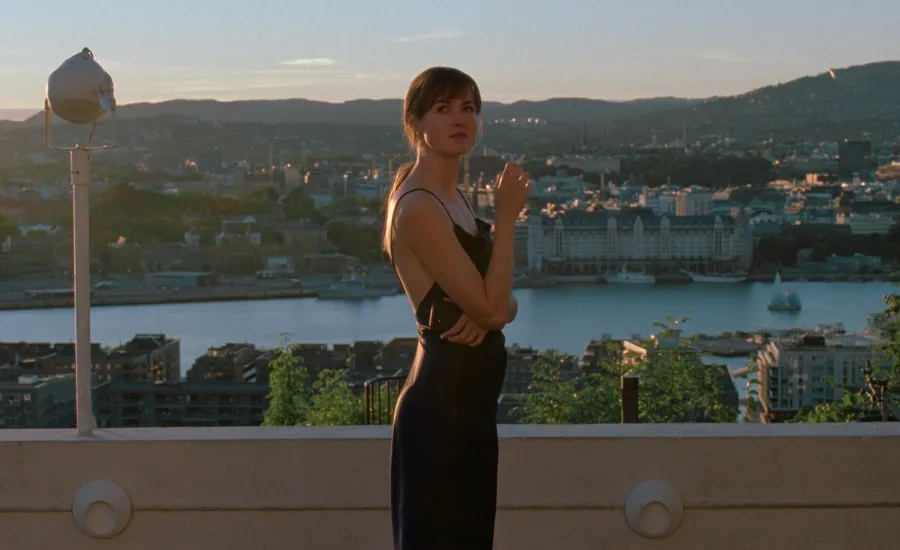
The discomfort of realizing that a perfectly pleasant partner can still be the wrong fit for our intellectual development is a necessary, albeit painful, part of our growth.
In Joachim Trier’s The Worst Person in the World, the protagonist, Julie, struggles to define herself within the boundaries of comfortable, established partnerships. She eventually chooses the messy anxiety of self-discovery over the safety of a domestic compromise. The movie follows Julie through her late twenties and early thirties as she changes careers, boyfriends, and identities, refusing to settle for a life that is merely "fine" when her entire sense of self is still evolving.
Her older boyfriend, Aksel, is a successful comic book artist who wants to settle down and have children. He is not a bad guy; in fact, he is incredibly supportive and intelligent. But his timeline and certainty stifle Julie’s need to explore her own potential. The film’s brilliance lies in its refusal to make Aksel the villain. The conflict is entirely internal—the terrifying realization that a relationship can be good, stable, and loving, and still be completely wrong for our personal development.
If we are currently feeling guilty about wanting more from a situation that is technically "perfect on paper," let this movie be the validation we need. Some partnerships are seasonal, and outgrowing them is a sign of progress, not a personal failure.
The Romantic Reality Check Framework Helps Us Identify Projection Before It Derails Our Lives
The easiest way to waste years on the wrong partnership is to fall in love with a person's potential rather than their present utility. To ensure we are not acting as the director of a movie that our partner never auditioned for, we must run an objective, three-step evaluation of our relationship trajectory.
First, we must run The Utility Test. This requires us to list the three most significant professional or financial decisions we made over the last twelve months. From there, we evaluate whether our partner acted as an operational asset who supported those moves, remained an indifferent bystander, or actively functioned as a resource and energy drain. The objective here is simple: we must determine if our partnership actively supports our output or quietly sabotages our focus.
Second, we commit to The Narrative Cleanse. We must write down our partner's qualities using only concrete, observable actions and behaviors from the past 90 days. We completely omit their "potential," their future plans, or any abstract promises they have made. This strips away the comforting stories we tell ourselves about who they might become, forcing us to confront their actual, current behavioral reality.
Third, we look at The Timeline Match. We must assess whether our five-year professional trajectory—including potential relocations, high-intensity career commitments, and financial risks—directly conflicts with their current lifestyle habits and goals. This helps us identify structural misalignments before they force us into a corner where we have to choose between our personal ambition and our relationship.
Applying this three-step audit quarterly helps maintain complete intellectual sovereignty over our personal lives. It forces us to look at our relationships with the same clarity and analytical rigor we bring to our professional projects.
Eternal Sunshine of the Spotless Mind Reminds Us That Emotional Pain is the Price of Experience
Attempting to sanitize our past or erase the emotional costs of failed relationships is a cognitive error that stunts our maturity.
Eternal Sunshine of the Spotless Mind argues that the pain of a dissolved relationship is the exact price of admission for genuine human connection. The story follows Joel and Clementine, a couple who undergo a medical procedure to erase each other from their memories after a painful breakup. As the memories are systematically deleted from Joel's brain, he realizes that even the worst parts of their relationship were essential to who he is.
The desire to erase painful memories of an ex is a form of cognitive cowardice that ultimately strips us of our history and our lessons. The narrative proves that even when we know the painful end of a story, the experience itself holds necessary data for our personal development. The heartbreak, the mistakes, and the awkward moments are not errors to be corrected; they are the literal foundation of our emotional intelligence.
We must stop viewing past relational failures as wasted time. The friction, the mismatched expectations, and even the eventual breakups are the raw data points we need to refine our boundaries and protect our peace of mind.
Her Warns Us Against the Dangerous Comfort of Frictionless, Imagined Connection
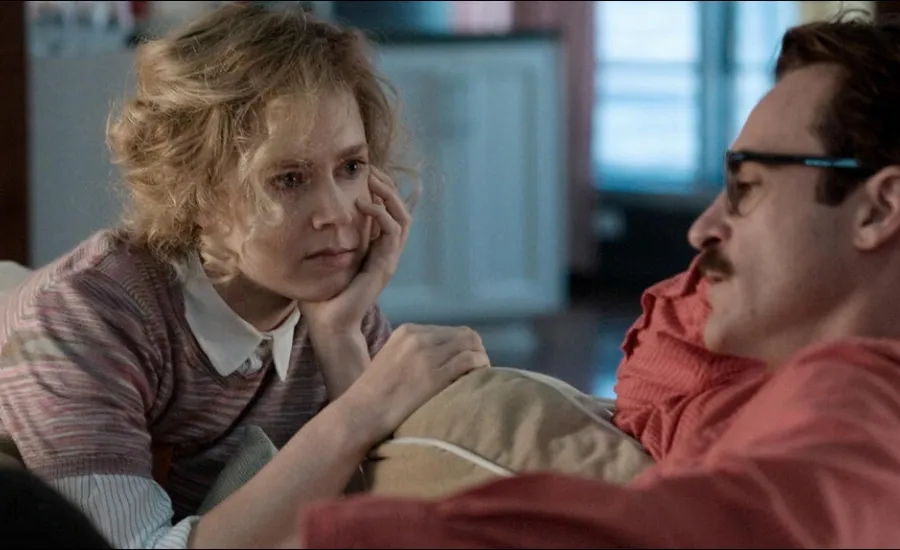
We often prefer the safety of projection over the unpredictable, uncontrollable nature of real human beings.
In Her, the protagonist’s relationship with an operating system serves as a bleak commentary on our desire for frictionless, fully customized connection. Theodore is a lonely man going through a painful divorce who falls in love with Samantha, an artificially intelligent operating system. Samantha is brilliant, funny, and entirely tailored to Theodore's emotional needs. She does not take up physical space, she has no competing physical demands, and she exists entirely to understand him.
But the tragedy of the film lies in this exact setup: his need to construct a flawless, non-physical entity to feel understood showcases the failure of artificial intimacy. Samantha eventually outgrows him, leaving Theodore to face the reality that real intimacy requires the risk of dealing with another messy, unpredictable human being who cannot be programmed.
It is a warning for our current era: when we seek out relationships that require zero compromise and zero friction, we aren't connecting—we are just talking to an echo chamber. Real partnership is inconvenient, unpredictable, and occasionally difficult. But it is also the only type of connection that is actually real.
Sifting through the cinematic landscape for substance during the summer months requires rejecting the predictable, comforting narratives designed to keep us emotionally passive. Real growth occurs when we match our entertainment choices to the complexity of our actual lives, choosing films that challenge our projections rather than coddle our expectations. The choice to seek out intellectually rigorous art is ours to make.