In Brief
A creative professional logged more than nine hours of daily screen time while telling herself it was research for work. The pull came from three forces working together: a recommendation algorithm, negativity bias, and FOMO. She moved her phone to a drawer in another room and ran her entire workday from her laptop instead. Within one week, her focus sharpened and she started finishing work earlier in the day. Within three months, she set clearer boundaries with clients, read more, and felt her creative instincts come back online.
A few weeks ago, a reader sent me an email that made me pause for a long time. It was one of those raw, honest confessions that start as a personal story but end up perfectly mirroring the reality so many ambitious, modern women live every single day. It is the quiet struggle of trying to balance a demanding career, creative edge, and sanity.
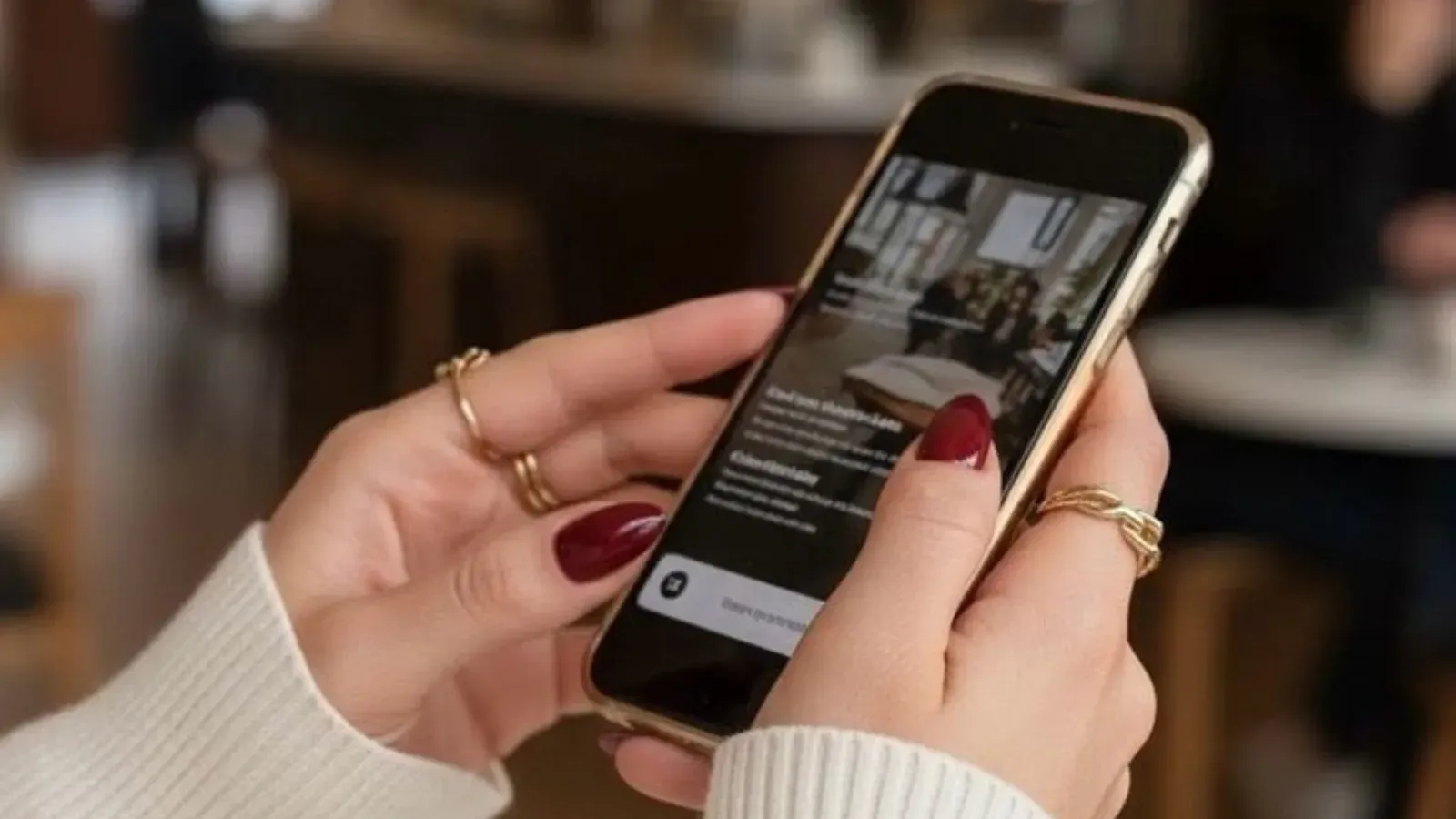
This woman works in a highly creative industry. It is the kind of professional space where the pressure to be constantly relevant, to know the latest visual trend, and to track every major global campaign is an unwritten rule. For a long time, she rationalized this constant pressure with a very convenient word: research. So, she treated her phone as a research tool. Open Instagram, open TikTok, open three industry newsletters, repeat. Her screen time routinely climbed past nine hours a day, and she justified every minute of it as professional development. She convinced herself that she was looking for inspiration, staying prepared, and ensuring she never missed a beat.
In reality, though, her routine had become a gilded cage. Her phone was the first thing her hand reached for in the morning, long before her eyes were fully open, and it was the very last thing she stared at before hitting the pillow. Even during dinners with friends, the device remained face-up on the table, flashing every few minutes, successfully stealing her attention from the people right in front of her. Her inner circle noticed the shift, and they told her directly that she was choosing the screen over the moment. She always brushed it off with the same shield: she was busy, she had deadlines, she was managing critical accounts.
The truth was far less glamorous, though, and she found it the night she sat down to watch a show and noticed her thumb was already moving across her phone screen before the opening credits finished. She was watching two things and absorbing neither. She would feel a small lift each time a new post loaded, a comment came in, a number changed, and then the lift would fade fast, faster than it used to, and her thumb would go looking for the next one.
The cost showed up in the one place she could not talk her way around: her actual output. Deadlines that used to feel comfortable started feeling tight. Ideas that used to arrive while she was in the shower or on a walk stopped arriving at all. She would sit down to create something and find herself reaching for her phone first, telling herself she needed one more reference, one more scroll through what other people were making, and an hour would disappear before she had written or designed a single original thing. She was busy every day and producing less every week, and the gap between those two facts kept growing.
The turning point came on an ordinary Tuesday. She sat with her coffee and ran an honest inventory: no new ideas in weeks, every reference point borrowed from somewhere else, a heaviness sitting on her chest that had nothing to do with her actual circumstances, because by every external measure her business was going well. Clients were paying, revenue was steady, yet she felt completely depleted.

She put her phone in a drawer in her bedroom that same morning and left it there. Not as a one-week experiment with a finish line attached. There were no grand announcements or trial periods. That was a new baseline.
What helped her was that her setup made this easier than it might sound. Her laptop carried every tool and message thread she needed for work, so nothing operational depended on her phone. Mornings became coffee, a window, and her own thoughts, no scrolling. To stay informed without getting sucked in, she signed up for exactly two to three high-quality industry newsletters and designated a strict fifteen-minute window at lunch to read them in bullet points, and then she closed the tab.
During the first few days, the old muscle memory resisted. Her hand kept reaching for a phone that was not there, the way a habit keeps running its old script even after you have changed the environment around it. What she noticed, though, was that the friction worked in her favor: getting up, walking to another room, and opening a drawer took just enough effort that the urge usually passed before she acted on it. The habit had nowhere convenient to land, so it started to lose its grip.
By the end of the first week, she felt something lift that she had stopped noticing was even sitting on her. Her attention held longer on single tasks. She finished her workday earlier because she was no longer losing an hour here and an hour there to a phone she had told herself she needed nearby.
Three months later, the results have compounded beautifully. She replaced mindless scrolling with rich reading, devouring books that provided actual creative substance. She established rock-solid boundaries with clients and colleagues regarding her availability, earning their respect in the process. Most importantly, her authentic creative voice returned. She is back to producing original, high-tier work that carries her distinct signature, completely independent of whatever happens to be trending on an algorithm that week.
The Anatomy of the Digital Loop
This reader’s experience is far from an isolated, extreme case, and that is precisely why we need to talk about it. Nothing about this story involves a clinical diagnosis, and that is the point worth sitting with. This is the exact blueprint of a modern challenge facing high-performing professional women. Digital addiction in professional life rarely targets the idle. It systematically targets ambitious, capable women who genuinely love their work and their lives, making the trap even harder to spot. To understand why the drawer method works so flawlessly, we have to look at the psychological mechanics operating in the background. This is not a personal failure of willpower. It is a predictable response to how human beings are biologically wired.
The first is the recommendation algorithm itself, which is built for one job: keep your attention on the platform for as long as possible. It learns what slows your scroll and feeds you more of it, second by second, which means the platform gets sharper at holding you the longer you use it. This is the system working exactly as designed, and it is worth naming plainly so it stops feeling like a personal failing.
The second mechanism is negativity bias, a well-documented feature of human cognition that predates smartphones by a long way. Our brains give threatening, alarming, or negative information more weight than neutral or positive information, because for most of human history, noticing the threat fast was the difference between staying alive and not. A feed full of urgent updates, conflict, and bad news activates that same old wiring, and the algorithm has learned to serve exactly that kind of content because it holds attention more reliably than a calm, neutral post does.

The third mechanism is FOMO, the fear of missing out, which gets sharper in fields where staying current is part of the job. For a creative professional, missing a trend can feel like missing a competitive edge, so checking becomes a proxy for professional diligence even when the actual return on that checking is close to zero. This is exactly why ambitious, capable, successful people fall into the same pattern as anyone else. Loving your work does not make you immune to a feed engineered to be more interesting than the present moment. If anything, caring about your field gives the FOMO a more convincing story to tell you.
Put those three forces together, and you get a loop that feels like diligence on the surface and runs like a dopamine search underneath it. The lift from a new notification fades fast, the search for the next one starts immediately, and a person can stay technically busy for nine hours a day while her actual creative output goes quiet.
The Algorithm Versus the Habit
Here is the part of this story I want you to keep. The algorithm is genuinely well built. It is also no match for a mind that has decided on a different default.
What changed her trajectory was not willpower in the dramatic, white-knuckle sense people usually picture. It was a structural decision, made once, that removed the easiest path back into the loop. The phone went into a drawer in another room. The work moved entirely onto a device built for work. The news got compressed into a fifteen-minute window instead of an all-day drip. None of these moves required her to fight a craving in real time over and over again. They simply made the old habit slightly less convenient than the new one, which is most of what building a habit actually requires.
Three months later, the proof was not in how she felt about screen time. It was what she made. More ideas, more reading, clearer boundaries, and work that felt like hers again. That is the actual measure of whether a habit shift worked, and it is the one I would ask you to track if you decide to run your own version of this.
If you are currently feeling that invisible mental weight of being constantly available, the answer is unlikely to be found in another screen-time management app. It is likely waiting for you inside a closed drawer in the other room. You do not need a finish line or a thirty-day challenge to start. You need one structural change (and a drawer) that makes the habit you want easier to keep than the habit you have, and a baseline you intend to hold rather than revisit.
What You're Actually Asking
Is high screen time a sign of clinical digital addiction?
No clinical diagnosis applies to this scenario. This behavioral pattern is a predictable result of algorithm engineering, negativity bias, and professional FOMO, affecting high performers across every modern industry.
Why is moving a phone to another room more effective than silencing notifications?
Physical distance introduces necessary friction. A few extra steps provide the exact window of time needed for an impulsive urge to pass before it translates into action, a result that is incredibly difficult to replicate when the device remains within arm's reach.
Does a digital reset require leaving social media permanently?
A successful reset focuses on intentionality rather than total isolation. The strategy involves replacing the infinite scroll with streamlined, time-blocked updates, keeping you fully informed without keeping the device in constant rotation.
How quickly can you expect to see changes in creative focus?
Initial improvements in daily focus and time management often appear within the first seven days. The deeper benefits, including clearer professional boundaries and a surge in original ideas, compound over a few months of maintaining the new baseline.
What is the primary takeaway from the drawer method?
Attention naturally follows convenience. Altering the physical availability of a device redirects your focus automatically, eliminating the need for constant willpower.