
In Brief
77% of American adults take supplements, and women use them more than men. Usage peaks between 35 and 54.
Most multi-item routines are built from social feeds rather than documented deficiency.
The wellness industry now designs for the shelf, not the bloodstream. Pastel packaging is a marketing decision.
There is a point where monitoring your own nutrition becomes its own source of anxiety. That point has a clinical name.
Four questions will tell you which bottles earn their place.
The Working Gal Salary & Sanity Survey 2026
Anonymous, 3 minutes, for an upcoming Working Gal report on women's work and money.
Take Survey (opens in a new tab)Somewhere between the third jar and the eleventh, a morning routine stops being a health decision and becomes a filing system for anxiety. Seventy-seven percent of American adults now take dietary supplements according to the Council for Responsible Nutrition's twentieth annual consumer survey, with women at 79% and the heaviest usage in the 35 to 54 bracket. Those numbers are neutral on their own. The question worth asking before you add jar number twelve is simpler and almost nobody asks it: how many supplements is too many, and what exactly is the eleventh one correcting?
The Shelf Is Doing Something. It Just Isn't Nutritional.
The impulse behind a fifteen-item routine is usually managerial. Aging, energy, focus, and productivity are largely outside your daily control, and a row of jars converts that uncertainty into a task you can complete before 8 a.m. Completing the task feels like progress and that feeling is the actual product.
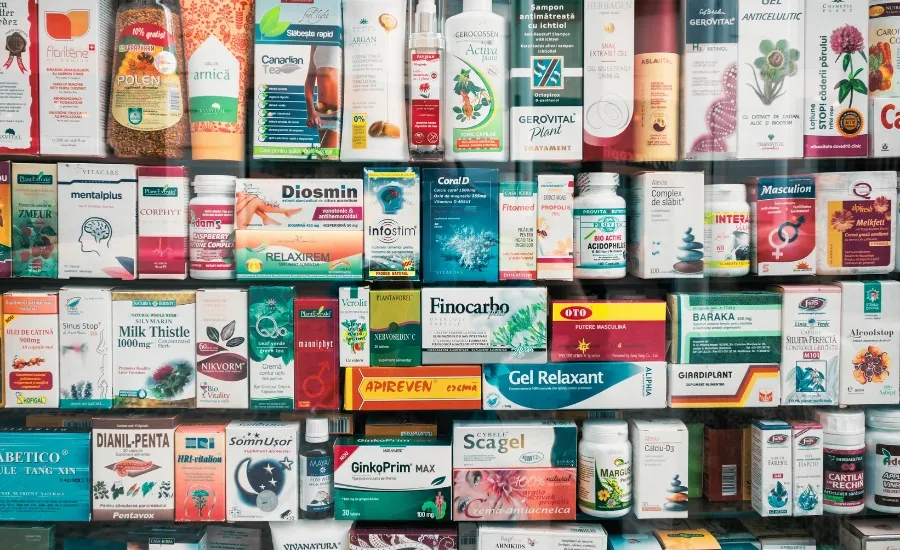
Where the routine came from matters more than its length. Spate's 2026 supplement report describes the shift plainly: routines that once came from a doctor now come from a feed. A recommendation from a nutritionist responds to your bloodwork, your medications, and your life stage. A recommendation from an algorithm responds to what performed well last quarter.
Here is the diagnostic that costs nothing. Walk to the shelf and pick up any bottle at random. If you cannot say what gap it is filling and how that gap was established, the bottle is not treating a deficiency but your discomfort with not knowing.
Wellness Learned to Look Expensive Before It Learned to Work
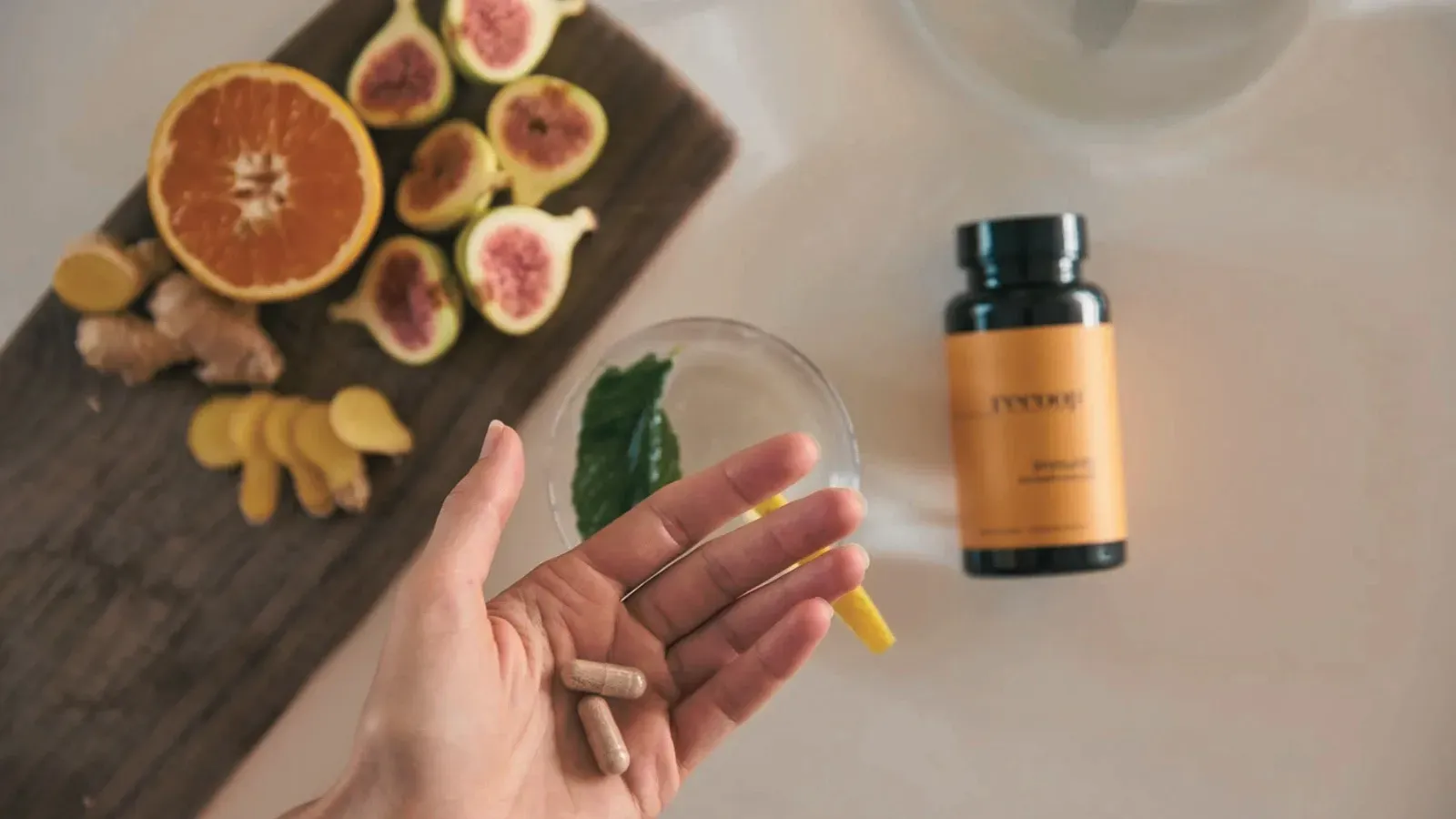
The packaging is now a meaningful part of what you are buying, and the industry says so out loud. Clarkston Consulting's 2026 category analysis notes that brands are deliberately moving away from clinical design choices toward lifestyle positioning, with wellness functioning as self-expression and as a gifting category rather than a basic necessity. Meanwhile, the ingredients themselves have migrated out of the supplement aisle entirely, into iced tea, coffee, and hot chocolate.
None of that makes the ingredients worthless. It does mean the aesthetic is engineered upstream of the formulation. A jar designed to look good on an open kitchen shelf has been optimized for a photograph. Whether it was also optimized for absorption is a separate question with a separate answer, and the label is where you find it.
Practical version: if you would be embarrassed to keep a product in a plain white pharmacy bottle, part of what you purchased was the display.
There Is a Point Where Managing Your Health Becomes a Second Job
The version of this that concerns me clinically has nothing to do with money. It is the belief that food alone is never sufficient, never clean enough, never complete. That belief tends to expand rather than resolve, because there is always one more nutrient you have not accounted for.
The term for the obsessive version of this is orthorexia, coined by physician Steven Bratman in 1997 to describe a fixation on food purity and perceived health impact. It is not a formal diagnosis in the DSM, though the anxiety, nutritional consequences and social withdrawal are documented and real. What makes it genuinely difficult to spot is that the behaviors get socially rewarded. Dietary discipline reads as self-mastery, and the people most affected often appear entirely functional and well.
I am not going to give you a checklist here, because a checklist invites you to score yourself and either dismiss the concern or spiral. This is clinical territory, and it belongs with a clinician. If your routine has started dictating whether you can eat at a restaurant, travel without preparation, or sit through a dinner someone else cooked, that is the signal to talk to a doctor or a registered dietitian who treats disordered eating. It is a conversation, not a verdict.
Four Questions That Decide Whether a Bottle Stays
Take the shelf apart once. For each product, answer these in order.
1. What is this correcting, and how do I know? Legitimate answers include documented bloodwork, a clinician's recommendation, pregnancy or preconception, a medically restricted diet, a diagnosed condition, or a specific life stage. "I read it was good for hormones" is not an answer. It is a headline.
2. Where did the recommendation originate? A provider who has seen your labs, or a video. Both can be right. Only one of them accounts for what else you are taking.
3. Have I added up the label totals? Vitamins A, D, E, and K are fat-soluble and accumulate in the body rather than flushing out, which is where stacking multiple products quietly becomes a problem. The National Institutes of Health Office of Dietary Supplements publishes tolerable upper limits for individual nutrients, and manufacturers are not required to keep a product beneath them. While you are reading labels, check for third-party verification from USP, NSF, or Informed Choice, because independent testing is the only assurance that what is printed on the bottle is what is inside it.
4. What happens if I stop this one for four weeks? Ask a clinician before pausing anything prescribed or anything addressing a diagnosed condition. For the discretionary half of the shelf, four weeks is enough to distinguish a supplement you need from a supplement you have simply gotten used to buying.
Whatever survives that process is your routine. The foundation underneath it stays the same regardless: meals with actual food in them, sleep you protect, movement you tolerate, and a stress load that is not permanently at maximum. Supplements fill gaps in that structure. They do not substitute for it, and no formulation currently on the market compensates for four hours of sleep.
Take one bottle off the shelf this week, specifically, the one you could not explain. Then bring the full list, including doses, to your next physical, because your doctor cannot flag an interaction with something you never mentioned.
This article is general information and does not constitute medical advice. Talk to your physician or a registered dietitian before starting, stopping, or combining supplements, particularly if you take prescription medication.
What You’re Actually Asking
How many supplements is too many?
There is no universal number. The threshold is functional rather than numerical: too many is the point where you cannot explain what each product is doing, where label totals push individual nutrients toward their upper limits, or where the routine is generating anxiety instead of reducing it.
Do I need a multivitamin?
For adults eating a reasonably varied diet, the evidence for broad multivitamin benefit is mixed, though people with restrictive diets, specific conditions or particular life stages may benefit. It is worth raising at your next appointment rather than deciding from a search result.
Can taking too many supplements be harmful?
Yes. Fat-soluble vitamins accumulate rather than being excreted, and some products contain many multiples of the daily value. Certain supplements also interact with prescription medications, which is why your pharmacist should have your full list.
Is it worth paying more for a supplement?
Price signals packaging as often as it signals quality. What is worth paying for is third-party verification from USP, NSF, or Informed Choice.