
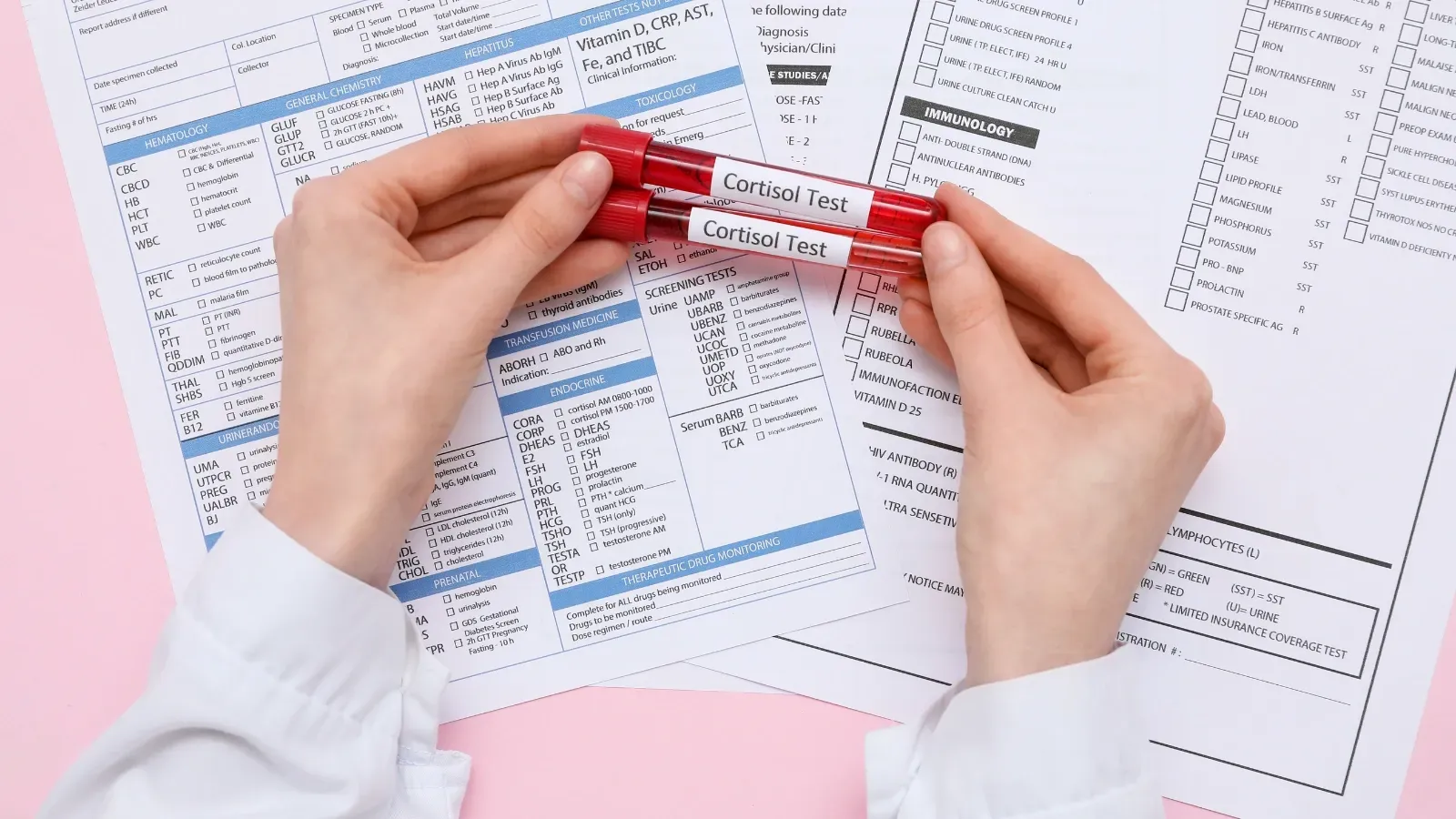
Chronic stress and hormones are directly linked: cortisol dysregulation elevates at night and blunts in the morning, disrupting sleep and driving visceral fat storage High cortisol suppresses progesterone, creating estrogen dominance symptoms including irregular cycles, worsened PMS, and pre-period anxiety Cortisol impairs T4-to-T3 conversion, producing hypothyroid symptoms in women even when TSH reads normal Repeated cortisol-driven blood sugar spikes contribute to insulin resistance and stress, showing up as afternoon energy crashes and unexplained weight gain A standard blood panel does not catch stress hormone imbalance in women — ask for four-point salivary cortisol, full thyroid panel with free T3 and reverse T3, and fasted insulin
If you've had the bloodwork done and everything came back normal, and you are still exhausted before your alarm goes off, your cycle has been unpredictable for months, and your body feels like it is going through something your labs cannot find, your doctor probably mentioned stress. Maybe suggested you sleep more. And that was the end of it.
What nobody explained is that chronic stress is not just a mood state. It is a hormonal event that leaves a specific fingerprint on your physiology that a standard panel is not designed to detect.
And the problem is not that your doctor is wrong, exactly. It is that the word stress has become so culturally overloaded that most people, including many clinicians, have stopped taking it seriously as a physiological event. Chronic stress does not just make you feel tired or anxious. It rewires your endocrine system in ways that are specific, measurable, and often entirely overlooked in a standard wellness visit.
Here is what is actually happening.
The Working Gal Salary & Sanity Survey 2026
Anonymous, 3 minutes, for an upcoming Working Gal report on women's work and money.
Take Survey (opens in a new tab)Cortisol Is Not the Enemy. Dysregulated Cortisol Is.
Cortisol is your primary stress hormone, and it exists for a reason. In the short term, it sharpens focus, mobilizes energy, and keeps inflammation in check. Your body needs it. The problem starts when the stressor never actually goes away.
In a healthy cortisol cycle, levels peak in the morning, drop steadily through the day, and hit their lowest point at night so your body can repair and sleep. Chronic psychological stress, the kind that comes from sustained high-stakes work, financial pressure, caregiving load, and the general state of managing too many competing responsibilities, disrupts this rhythm. What many working women experience is a flattened cortisol curve: elevated at night when it should be low, blunted in the morning when it should be high, or both.
The downstream effects are not subtle. Elevated nighttime cortisol suppresses melatonin production, which explains why you can be physically exhausted and still unable to fall asleep. High cortisol also activates fat storage, particularly around the abdomen, through its interaction with insulin receptors. That unexplained weight gain is not a discipline issue. It is a cortisol issue.
A standard blood panel does not measure cortisol rhythm. It captures cortisol at one point in time. If you want to understand your actual curve, a four-point salivary cortisol test, taken at waking, midday, late afternoon, and bedtime, gives you the full picture. It is worth asking for.
What Chronic Stress Does to Estrogen and Progesterone

The relationship between cortisol and your sex hormones runs through a pathway most women have never heard of: the HPA axis, which stands for hypothalamic-pituitary-adrenal. When this system is running on overdrive, it competes directly with the HPG axis, the one that regulates your reproductive hormones.
One of the most well-documented effects is a phenomenon sometimes called pregnenolone steal, though the clinical literature increasingly refers to it as cortisol-mediated progesterone suppression. Pregnenolone is a precursor hormone that the body uses to make both cortisol and progesterone. Under sustained stress, the body prioritizes cortisol production. Progesterone levels take the hit.
Low progesterone relative to estrogen creates a state of estrogen dominance, not because estrogen is necessarily elevated, but because the ratio is off. The symptoms are recognizable to a lot of working women: irregular cycles, worsened PMS, heavier or more painful periods, increased anxiety in the week before menstruation, sleep disruption that tracks with cycle phase. None of these is normal. They are signals.
Estrogen itself is also affected by stress through a secondary route: the liver. The liver processes and clears excess estrogen, but when the body is under chronic stress, liver detoxification pathways become less efficient. This means estrogen that should be cleared continues to circulate. Compound this with poor sleep and a diet low in cruciferous vegetables and fiber, both of which support estrogen clearance, and you have a hormonal environment that is genuinely dysregulated, not just vaguely "off."
The Thyroid Connection Nobody Talks About
Thyroid dysfunction is underdiagnosed in women of reproductive age, and chronic stress is one of the reasons why. The connection is not a direct one, which is partly why it gets missed.
Cortisol suppresses the conversion of T4, the inactive form of thyroid hormone, into T3, the active form your cells actually use. Your thyroid might be producing sufficient T4. Your TSH, the standard thyroid marker on most panels, might look perfectly normal. But if T4 is not converting efficiently into T3 at the cellular level, you will have hypothyroid symptoms without a hypothyroid diagnosis. That list includes fatigue, hair thinning, cold intolerance, slow digestion, low mood, and brain fog.
This is why a TSH test alone is an incomplete picture for women under chronic stress. A full thyroid panel, including free T3, free T4, and reverse T3, gives you something useful to work with. Reverse T3 in particular can be elevated in high-stress states because the body converts T4 to reverse T3 instead of active T3 as a kind of metabolic braking mechanism. It is the body's way of slowing down when it perceives a sustained threat.
If you have been told your thyroid is fine, but you recognize those symptoms, it is worth requesting the expanded panel. You are entitled to a complete picture of your own physiology.
Insulin, Blood Sugar, and the Chronic Stress Loop
Cortisol raises blood sugar. This is by design. In an acute stress response, your body needs fast-available glucose to deal with the threat. The problem is that under chronic stress, your blood sugar is being repeatedly elevated by cortisol even when you are sitting at a desk, not running from anything.

Repeated blood sugar spikes require repeated insulin responses. Over time, this can contribute to insulin resistance, a state in which your cells become less responsive to insulin's signal to take up glucose. Insulin resistance is not a diabetes diagnosis. It is a spectrum. And for many working women in their late twenties and thirties, it shows up as energy crashes after meals, intense sugar cravings in the afternoon, difficulty losing weight despite a reasonable diet, and feeling hungry shortly after eating.
From a nutritional standpoint, the most direct lever here is meal composition. Eating protein and fat before carbohydrates at meals slows glucose absorption and blunts the post-meal insulin spike. This is not a low-carb prescription. It is a sequencing strategy. Getting 25 to 30 grams of protein at breakfast in particular, before blood sugar has been stressed by cortisol peaking in the morning, creates a more stable hormonal environment for the rest of the day.
What You Can Actually Do About This
The physiological changes described here are real, but they are also largely reversible. The body is not fragile. It responds to consistent input.
The most evidence-backed interventions are not complicated, but they require committing to them before you feel their effect, which is the hard part when you are already running on depleted reserves.
Sleep architecture matters more than sleep duration.
Seven hours of fragmented sleep does significantly less restorative work than six and a half hours of consolidated sleep. Reducing blue light exposure after 9 PM, keeping your room cold, and eating your last meal at least two to three hours before bed all support deeper sleep stages where cortisol is regulated and growth hormone is released.
Magnesium glycinate is one of the few supplements with solid evidence behind it in this context.
Chronic stress depletes magnesium, and magnesium is required for both sleep quality and HPA axis regulation. 300 to 400 mg taken in the evening is a reasonable starting dose for most adults. It is not a cure, but it is a genuine support.
Prioritize cruciferous vegetables for estrogen clearance.
Broccoli, cauliflower, Brussels sprouts, and kale contain compounds called indole-3-carbinol and DIM that support phase II liver detoxification of estrogen. Aim for at least one serving daily. This is a consistent dietary approach to improving estrogen metabolism, and it works.
Resistance training, not chronic cardio.
Long cardio sessions at high intensity are an additional cortisol stressor on a body that is already cortisol-loaded. Two to three sessions of resistance training per week improve insulin sensitivity, supports bone density, and regulate cortisol more effectively than steady-state cardio for women dealing with chronic stress. This is not a preference statement. The research is consistent.
Finally, get the labs. Not the standard panel that tells you everything is fine. The four-point salivary cortisol, the full thyroid panel, and a fasted insulin level alongside your glucose, not just your glucose. These give you data to make decisions from, rather than a vague instruction to stress less.
Frequently Asked Questions About Chronic Stress and Hormones
Can chronic stress actually change your hormones?
Yes. Sustained psychological stress activates the HPA axis and drives cortisol production, which directly suppresses progesterone, impairs thyroid hormone conversion, and disrupts insulin sensitivity. These are measurable physiological changes, not subjective symptoms.
Why does my doctor say my labs are normal if I feel this bad?
Standard panels test TSH, not the full thyroid cascade. They capture cortisol at a single point in time, not across the day. They do not test fasted insulin or progesterone-to-estrogen ratio. Normal labs and real hormonal disruption are not mutually exclusive.
What is the fastest way to lower cortisol naturally?
Consolidating sleep is the highest-leverage intervention. Resistance training two to three times per week, magnesium glycinate at night, and eating protein before carbohydrates at breakfast all have consistent evidence behind them. Chronic cardio at high intensity adds cortisol load and is generally counterproductive in this context.
Can stress cause weight gain even with a good diet?
Yes. Elevated cortisol raises blood sugar, triggers insulin response, and promotes visceral fat storage, independent of caloric intake. This is why the weight gain associated with high-stress periods often does not respond to typical dietary changes.
What labs should I ask for if I suspect stress is affecting my hormones?
Four-point salivary cortisol, free T3, free T4, reverse T3, fasted insulin alongside fasted glucose, and if relevant, progesterone tested on day 21 of your cycle.