
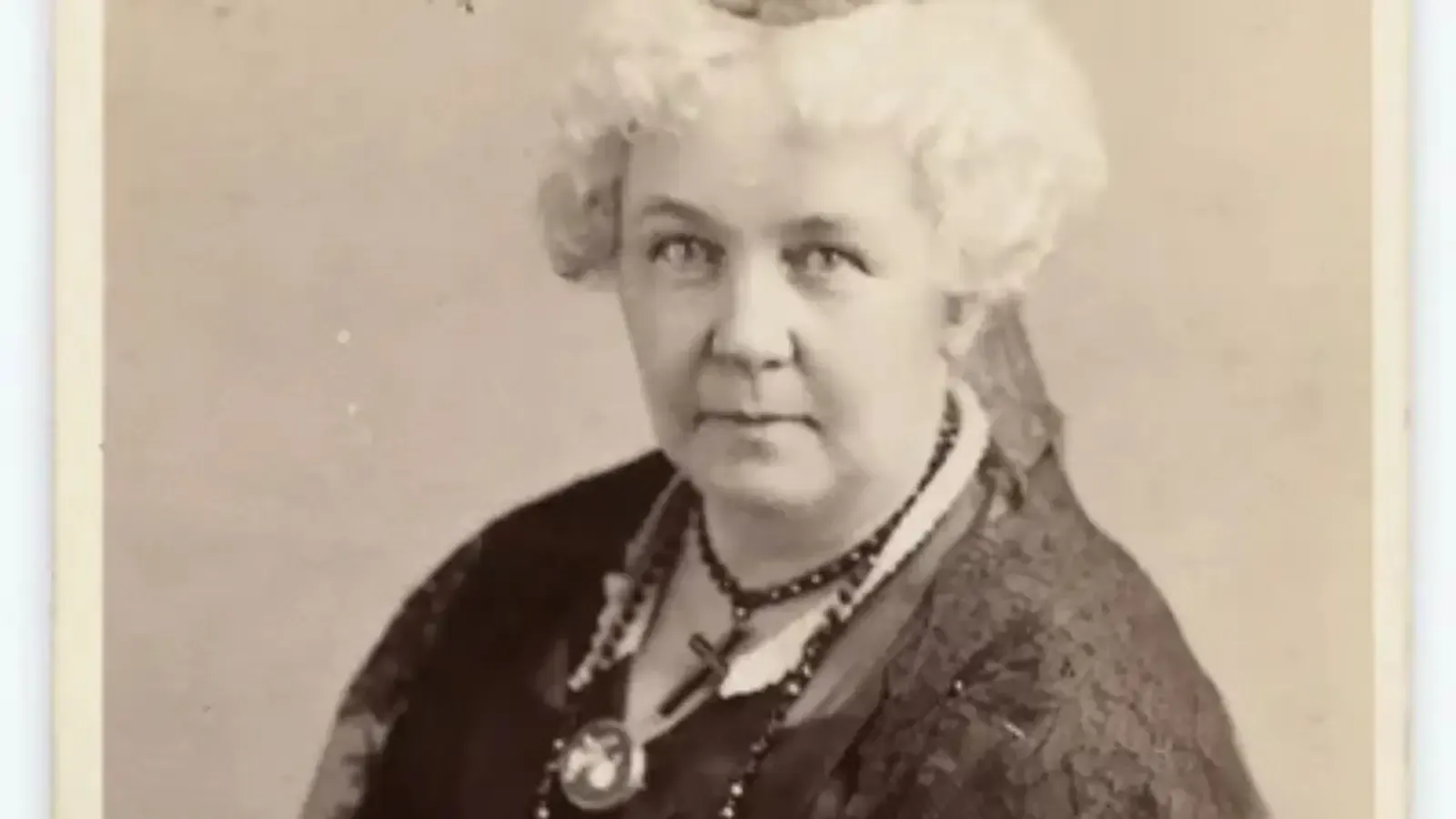
July 13, 1848. A sweltering summer day in upstate New York. Five women sit around a mahogany tea table in Seneca Falls, their conversation growing more animated by the minute. What started as a polite afternoon tea between neighbors is about to transform into something that will forever reshape American society.
By the end of that afternoon, one of those women would volunteer to draft a document that many historians consider the most important letter in the history of women's rights. Within days, her words would spark the first women's rights convention in American history. Within decades, those same words would fuel a movement that would fundamentally change what it means to be a woman in America.
The woman was Elizabeth Cady Stanton. The document was the Declaration of Sentiments. And the revolution it started is still transforming lives today.
The Working Gal Salary & Sanity Survey 2026
Anonymous, 3 minutes, for an upcoming Working Gal report on women's work and money.
Take Survey (opens in a new tab)The Tea Party That Launched a Thousand Dreams
The story begins with what seems like an ordinary social gathering. Lucretia Mott, a prominent Quaker minister and abolitionist from Philadelphia, had traveled to upstate New York to visit her pregnant sister Martha Coffin Wright. While in the area, their friend Jane Hunt decided to host a tea party at her home in Waterloo, New York.
The guest list was small but formidable: Mott, Wright, Hunt, her neighbor Mary Ann M'Clintock, and Elizabeth Cady Stanton from nearby Seneca Falls. All five women were connected through their involvement in the abolitionist movement, but they shared another common experience-the frustration of being relegated to secondary roles even within reform movements that claimed to champion equality.
"When the course of their conversation turned to the situation of women, Stanton poured out her discontent with the limitations placed on her own situation under America's new democracy," historians note. The 32-year-old mother of three had been feeling increasingly isolated and intellectually stifled in her domestic role, despite her privileged background and education.
But this wasn't just personal frustration talking. As the women shared their experiences around Hunt's table, they realized they were articulating something much larger-a systematic pattern of legal, social, and political oppression that affected every woman in America.
The Radical Decision
By the end of that July afternoon, the five women had made a decision that seemed almost impossible in its audacity: they would organize a public convention to discuss women's rights. In 1848, no such meeting had ever been held anywhere in the Western world.
"Within two days of their afternoon tea together, this small group had picked a date for their convention, found a suitable location, and placed a small announcement in the Seneca County Courier," records show. The notice was deceptively simple: "A convention to discuss the social, civil, and religious condition and rights of women."
The meeting was scheduled to take place at the Wesleyan Chapel in Seneca Falls on July 19 and 20, 1848. They had less than a week to prepare for what would become a historic gathering.
The Document That Changed Everything
Elizabeth Cady Stanton volunteered for what seemed like the most challenging task: drafting a declaration that would serve as the foundation for their unprecedented meeting. But rather than starting from scratch, Stanton made a brilliant strategic decision that would ensure her words would resonate with every American.
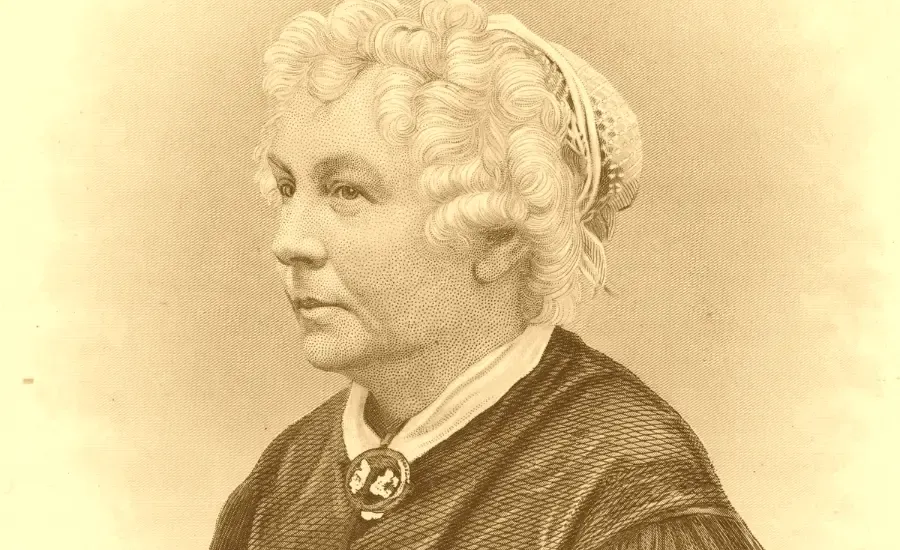
She would model her declaration directly on the Declaration of Independence.
"In what proved to be a brilliant move, Stanton connected the nascent campaign for women's rights directly to the founding principles of the American Republic," historians note. This wasn't coincidence-it was a calculated strategy from a woman who understood both law and politics.
Working at Mary Ann M'Clintock's mahogany tea table, Stanton crafted what she titled the "Declaration of Sentiments." The opening words deliberately echoed Thomas Jefferson while expanding his vision: "We hold these truths to be self-evident: that all men and women are created equal."
That single addition-"and women"-was revolutionary. With three simple words, Stanton had reframed the entire foundation of American democracy.
The Catalog of Injustices
But Stanton didn't stop with philosophical declarations. Following the structure of the Declaration of Independence exactly, she methodically listed eighteen specific grievances against the treatment of women-the same number of complaints the Founding Fathers had levied against King George III.
The parallels were deliberate and devastating:
Where the original Declaration condemned King George for imposing taxes without representation, Stanton wrote: "He has compelled her to submit to laws, in the formation of which she had no voice."
Where the Founders protested being deprived of trial by jury, Stanton declared: "He has made her, if married, in the eye of the law, civilly dead."
Where the original condemned the King for cutting off trade, Stanton noted: "He has monopolized nearly all the profitable employments, and from those she is permitted to follow, she receives but a scanty remuneration."
The document continued through a devastating catalog of legal and social injustices:
- Married women were legally non-existent, unable to own property or sign contracts
- Husbands had legal power to imprison or physically discipline their wives
- Divorce and child custody laws overwhelmingly favored men
- Women were barred from most professions and educational opportunities
- Women paid property taxes but had no voice in how those taxes were levied
- Most religious denominations denied women any authority or leadership roles
"The history of mankind is a history of repeated injuries and usurpations on the part of man toward woman, having in direct object the establishment of an absolute tyranny over her," Stanton declared, using language that immediately connected women's oppression to the tyranny that had sparked the American Revolution.
The Revolutionary Conclusion
The Declaration of Sentiments concluded with the most radical statement yet: "Now, in view of this entire disenfranchisement of one-half the people of this country, their social and religious degradation-in view of the unjust laws above mentioned, and because women do feel themselves aggrieved, oppressed, and fraudulently deprived of their most sacred rights, we insist that they have immediate admission to all the rights and privileges which belong to them as citizens of these United States."
This wasn't a polite request for gradual reform. This was a demand for immediate, complete equality-including, most controversially, the right to vote.
The Convention That Made History
When the Seneca Falls Convention opened on July 19, 1848, approximately 300 people attended-a remarkable turnout given that the event had been announced less than a week earlier. About 40 men were among the attendees, including the famous abolitionist Frederick Douglass.
Stanton read her Declaration of Sentiments aloud to the gathering, and the response was electric. "According to the North Star, published by Frederick Douglass, whose attendance at the convention and support of the Declaration helped pass the resolutions put forward, the document was the 'grand movement for attaining the civil, social, political, and religious rights of women.'"
The convention proceeded to debate and vote on each resolution in the Declaration. All passed unanimously-except one. The ninth resolution, which demanded voting rights for women, was considered so radical that even some supporters of women's rights opposed it.
Stanton and Frederick Douglass delivered passionate speeches in defense of women's suffrage. "Nature has given woman the same powers, and subjected her to the same earth, breathes the same air, subsists on the same food, physical, moral, mental, and spiritual. She has, therefore, an equal right with man, in all efforts to obtain and maintain a perfect existence," Douglass argued.
The resolution barely passed, but it did pass-and with it, the women's suffrage movement was born.
The Immediate Impact
By the convention's end, 68 women and 32 men had signed the Declaration of Sentiments-an act that required considerable courage, as the document immediately attracted fierce public criticism and ridicule.
"Its publication brought the convention attendees great public attention-much of it negative-and launched Stanton on her first public speaking tour as an apologist for what was about to become an organized woman's rights movement," historians note.
Newspapers across the country mocked the Declaration and its signers. Many supporters later withdrew their names when faced with social ostracism. But the damage to the status quo was already done-Stanton's words had articulated something that could never again be unspoken.
The Letter's Living Legacy
The impact of Stanton's Declaration extended far beyond that summer gathering in Seneca Falls. The document became the foundational text of the American women's rights movement, influencing generations of activists and reformers.
The suffrage movement drew directly from Stanton's arguments about representation and citizenship. When the 19th Amendment was finally ratified in 1920, it fulfilled the promise made in the Declaration of Sentiments 72 years earlier.
Legal reforms addressing married women's property rights, divorce laws, and employment discrimination all traced their intellectual roots back to the specific grievances Stanton cataloged in 1848.
Educational opportunities for women expanded as society began to grapple with Stanton's arguments about women's intellectual capabilities and right to knowledge.
Professional barriers began falling as women used the Declaration's language about economic rights to challenge employment discrimination.
The Modern Resonance
What makes Stanton's Declaration remarkable isn't just its historical impact-it's how relevant it remains today. Many of the issues she identified in 1848 continue to challenge working women in the 21st century:
Economic inequality: Women still earn less than men for comparable work, echoing Stanton's complaint about "scanty remuneration."
Leadership barriers: Women remain underrepresented in positions of power across business, politics, and religious institutions.
Work-life balance: The tension between professional ambitions and domestic responsibilities that Stanton felt so acutely continues to affect millions of women.
Legal protections: Issues around reproductive rights, workplace harassment, and gender-based violence connect directly to Stanton's arguments about women's fundamental rights to autonomy and safety.
The Strategic Genius
What made Stanton's letter so powerful wasn't just its content-it was her strategic brilliance in how she framed her arguments. By modeling the Declaration of Sentiments on the Declaration of Independence, she accomplished several crucial goals:
- Legitimized women's complaints by connecting them to America's founding principles rather than presenting them as new or radical ideas.
- Used familiar language that Americans already revered, making her arguments harder to dismiss as foreign or anti-American.
- Highlighted contradictions in American democracy that claimed to value equality while systematically excluding half the population.
- Created moral authority by positioning women's rights advocates as the true inheritors of Revolutionary ideals.
"Such a purposeful mimicking of language and form meant that Stanton tied together the complaints of women in America with the Declaration of Independence, in order to ensure that in the eyes of the American people, such requests were not seen as overly radical," scholars note.
The Personal Courage Behind the Public Document
Behind the Declaration's powerful rhetoric was a personal story of courage that makes Stanton's achievement even more remarkable. As a woman in 1848, she had no legal standing to speak publicly, no right to vote, and no protection if her husband disapproved of her activities. Yet she chose to put her name on a document that challenged the fundamental structure of American society.
Stanton was also navigating the demands of motherhood-she had three young children and would eventually have seven. The domestic responsibilities that she critiqued in the Declaration were ones she lived with daily. Her decision to speak out required not just intellectual courage but the willingness to challenge social expectations about women's proper roles.
The Collaborative Nature of Revolution
While Stanton is rightly celebrated as the primary author of the Declaration of Sentiments, the document emerged from collaborative effort that reflects how real change happens. The conversations around Jane Hunt's tea table, the input from Mary Ann M'Clintock as they drafted the document, the support from Lucretia Mott's established reputation as a reformer-all contributed to the Declaration's power and reach.
This collaborative model became characteristic of the women's rights movement Stanton helped launch. Rather than relying on a single charismatic leader, the movement succeeded by building networks of women who supported and amplified each other's voices.
The Long Arc of Change
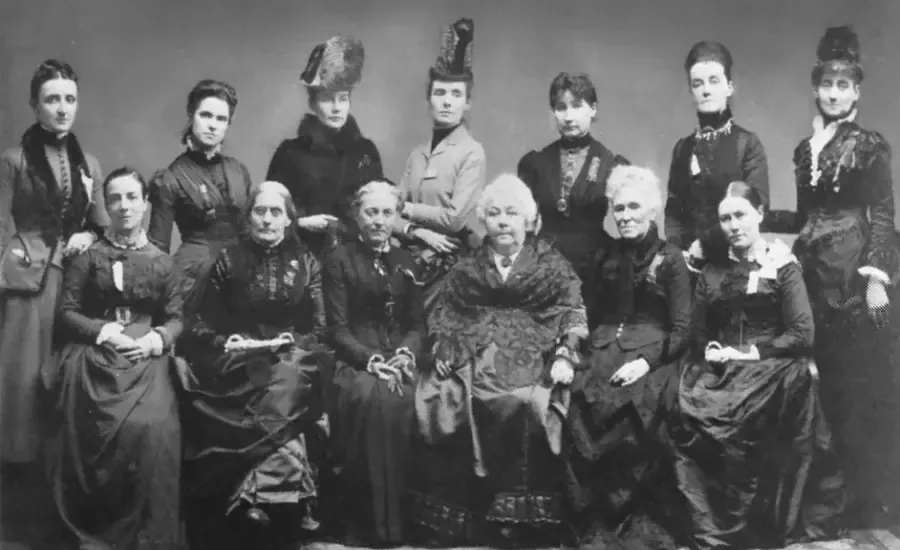
Perhaps most remarkably, Stanton understood that the changes she advocated would take generations to achieve. "Furthermore, whilst Stanton intended for changes to be made immediately after the Seneca Falls Convention, it was the ending of the American Civil War and the Reconstruction Period before women's rights movements became increasingly mainstream and actual change was effected."
She was writing not just for her contemporary audience but for future generations of women who would carry forward the work she began. The Declaration of Sentiments was both a document of its time and a letter to the future.
The Chain Reaction
The influence of Stanton's letter extended far beyond American borders. The language and logic of the Declaration of Sentiments influenced women's rights movements around the world, as reformers in other countries adapted her arguments to their own contexts.
The document also inspired other marginalized groups to use similar strategies, modeling their demands for equality on established constitutional principles rather than presenting themselves as seeking entirely new rights.
Why This Letter Still Matters
In an era when women have achieved formal legal equality in many areas, it might seem that Stanton's Declaration has served its purpose. But the document remains relevant because it addresses not just specific legal barriers but the underlying assumptions about women's capabilities and roles that continue to shape society.
For working women today, the Declaration of Sentiments offers both inspiration and strategic guidance. Stanton demonstrated how to frame arguments for equality in terms that existing power structures would find difficult to dismiss.
For advocates of any marginalized group, the Declaration provides a template for connecting specific grievances to broader principles of justice and equality.
For anyone seeking to understand American democracy, the Declaration reveals both the gaps in our founding principles and the power of those principles to inspire expanded inclusion.
The Letter's Lasting Questions
Stanton's Declaration of Sentiments posed questions that each generation must answer anew:
- What does true equality look like in practice?
- How do we balance individual rights with social responsibilities?
- What barriers to full participation remain invisible until someone has the courage to name them?
- How do we honor our stated principles while acknowledging where we've failed to live up to them?
The Revolutionary Power of Words
The Declaration of Sentiments proves that sometimes the most powerful revolution begins not with violence but with words-the right words, written by someone brave enough to speak truth to power, at the moment when society is ready to hear that truth.
Elizabeth Cady Stanton's letter didn't just describe women's inequality; it redefined inequality itself as fundamentally un-American. She didn't just demand women's rights; she argued that denying those rights betrayed the principles on which the nation was founded.
In doing so, she created a document that was both thoroughly of its time-addressing the specific legal and social barriers women faced in 1848-and timeless in its vision of human equality and dignity.
The Revolution Continues
More than 175 years after that summer afternoon in Seneca Falls, the revolution Stanton started with her letter continues. Every woman who runs for office, starts a business, challenges workplace discrimination, or simply assumes her right to equal treatment is building on the foundation she laid.
The Declaration of Sentiments reminds us that lasting change often begins with someone willing to sit down and write the truth-clearly, boldly, and without apology. Sometimes the most powerful thing you can do is pick up a pen and declare that the way things are is not the way they have to be.
Because sometimes, just sometimes, the right letter at the right moment really can change everything.
_Photos: Britannica, ThoughtCo, Britannica_