

I should clarify up front that I have not discovered the holy grail of productivity, even though I’ve been actively trying for years. My calendar still gets messy, my inbox occasionally gets out of hand, and my attention span gets tested just like everyone else’s. However, as a general baseline assumption about modern professional life, answering three routine emails and taking a three-minute phone call simply cannot be categorized as an extreme, unmanageable workload.
Yet a few days ago, I watched someone react to receiving a handful of standard work emails as if they had been drafted into grueling physical labor. Shortly after, a brief phone call to clarify a basic logistical detail was recounted with the dramatic flair of a major personal trial. And I’ve been watching that happening for quite some time now with different people, in different job positions. This reaction has quietly become the default setting for a massive portion of the modern workforce. I am convinced that we are living through a widespread collapse of micro-resilience, in which the smallest operational friction is treated as an insurmountable mountain. And if we want to be fair here, most of us are not actually working brutal, unprecedented hours. We are simply exhausted by our own complete inability to manage our attention, our time, and our mental space without throwing a performance about it.
The Working Gal Salary & Sanity Survey 2026
Anonymous, 3 minutes, for an upcoming Working Gal report on women's work and money.
Take Survey (opens in a new tab)Τhe Confusion Between Genuine Productivity and Emotional Turbulence
From a sociological perspective, much of what gets labeled as professional burnout is actually the physical toll of constant, self-inflicted mental distraction. Real clinical burnout is a serious condition caused by prolonged, unmanageable institutional stress and structural exploitation. What we are witnessing on a daily basis, however, is a completely different mechanism masquerading as exhaustion.
The data on modern workplace distraction paints a noteworthy picture of why people feel perpetually drained. Research from the University of California, Irvine reveals that it takes an average of 23 minutes and 15 seconds to return to an original task after a single interruption. When focus is fractured into micro-seconds by endless notifications, open browser tabs, and quick dopamine checks, the brain remains in a perpetual state of low-grade panic.
In that hyper-fragmented state, every incoming request functions as a direct threat to an already depleted ego. A quick response to a message or a straightforward scheduling confirmation requires an enormous amount of emotional energy simply because the habit of sustained concentration has vanished. We have built a workplace culture where people routinely mistake emotional turbulence for high output. They log off at five o'clock feeling utterly depleted, not because they executed complex, high-value strategy, but because their nervous system spent eight hours reacting to routine micro-stimuli as if they were genuine operational threats.
The narrative that adulthood and modern work are inherently brutal serves as a wonderfully convenient social shield for terrible cognitive hygiene. It is infinitely easier to declare that an entire industry is toxic or that a workday is unmanageable than it is to admit that taking five minutes to formulate a clear, written answer feels agonizing because your brain has been fried by endless scrolling.
The Cognitive Cost of Frictionless Everything
To understand why a three-minute phone call induces sheer panic, we must look at modern infrastructure and the broader shift in how media is consumed. We live in an era engineered for absolute convenience and micro-content. Food arrives at the doorstep with three taps, movies stream instantly without commercial breaks, and algorithms anticipate our desires before we even articulate them. This environment of total frictionlessness has unintentionally severely damaged our mental stamina.
This cognitive decline is measurable across modern media consumption. According to a landmark study on human attention span by Microsoft, the average human attention span dropped from 12 seconds in the year 2000 to just 8 seconds—a figure lower than that of a goldfish. Furthermore, research published in Nature Communications on the acceleration of collective attention spans demonstrates that public interest in individual topics exhausts itself significantly faster today than a decade ago due to the overwhelming volume of information competing for our focus.
When daily life eliminates every minor inconvenience, the brain begins to register the remaining friction as an intolerable anomaly. A phone call requires real-time social negotiation, active listening, and immediate cognitive processing without an undo button. For an individual accustomed to asynchronous, filtered communication, an incoming call feels like an invasive disruption of their personal space. The brain, lacking the daily exercise of managing minor delays or discomforts, misinterprets standard operational demands as aggressive intrusions.
This dynamic creates a profound mismatch between reality and perception. The work itself has not become more difficult, but our capacity to tolerate the mundane mechanics of executing that work has shrunk significantly. We are attempting to run professional operations using a mental apparatus that has been conditioned to expect instantaneous results with zero resistance.
The Cultural Normalization of Performative Exhaustion
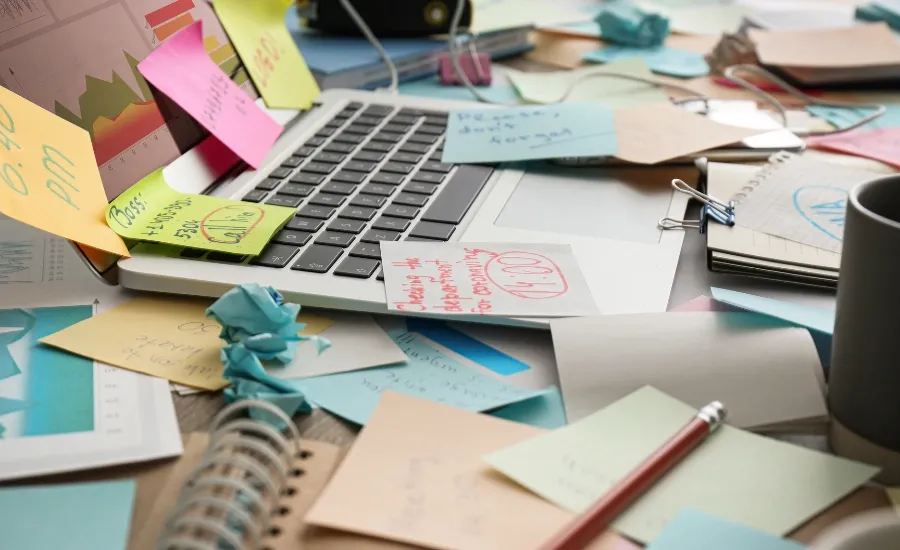
Society has quietly romanticized this total lack of tolerance for basic friction. We have constructed a dramatic vocabulary that elevates mild inconvenience into psychological distress, turning everyday administrative tasks into heroic survival stories. Expressing overwhelming exhaustion has become a strange form of social currency, serving as proof of one's importance, dedication, or systemic oppression.
The scale of context-switching in the modern office actively fuels this performative paralysis. A comprehensive Harvard Business Review report on the cost of context switching found that the average worker toggles between applications and websites nearly 1,200 times per day. This constant jumping back and forth creates a phenomenon known as "toggle tax," where workers waste roughly four hours a week simply re-orienting themselves after switching apps.
A minor change in a project deadline is framed as a fundamental violation of personal boundaries. A simple request for an update is interpreted as micromanagement. A brief conversation that could resolve an issue in sixty seconds is avoided for three days because sending a passive-aggressive email feels safer, even if it quadruples the time required to solve the problem. This dynamic creates a hilarious, self-fulfilling prophecy. Avoiding tiny, mildly uncomfortable tasks builds a massive mountain of minor administrative debt. As that debt accumulates, the ambient stress rises, making the next three-minute phone call feel even more catastrophic.
By treating every minor obligation as a battle, we construct a protective wall around our own inefficiency. If everyone agrees that answering emails is inherently traumatic, then failing to execute basic responsibilities ceases to be a personal shortcoming and becomes an understandable reaction to an unlivable world.
Building Focus Requires Managing Energy Over Excuses
Reclaiming control over your work and your sanity requires a somewhat sarcastic, highly realistic assessment of where your energy actually goes. Often, the simple act of closing thirty irrelevant browser tabs, turning off push notifications, and ruthlessly ordering your top three daily priorities proves that you were never actually suffering from burnout in the first place. You were simply suffocating under self-induced operational noise and fractured attention.
Real productivity remains remarkably quiet, calm, and deeply unimpressed with itself. It looks like taking fifteen minutes to clear a queue of minor tasks without demanding a medal for the effort, answering a call directly to eliminate ten back-and-forth messages, and closing the apps that harvest your focus for cheap engagement. It involves recognizing that the discomfort of focusing on a single task for forty-five minutes is infinitely preferable to the chronic anxiety of juggling ten distractions simultaneously.
Human beings are fully capable of handling three emails and a short phone call without entering a state of emotional collapse. The fatigue we feel at the end of the day rarely stems from the sheer volume of work completed. It stems from the immense energy wasted resisting the work, complaining about the friction, and fighting a constant internal battle against our own distracted minds.
Treating basic execution as a monumental sacrifice keeps us trapped in a cycle of artificial burnout. The moment we stop treating routine tasks as personal attacks and start treating our focus as something to be actively managed, the workday shrinks back down to its actual size, leaving our energy intact for things that are actually worth our time.