
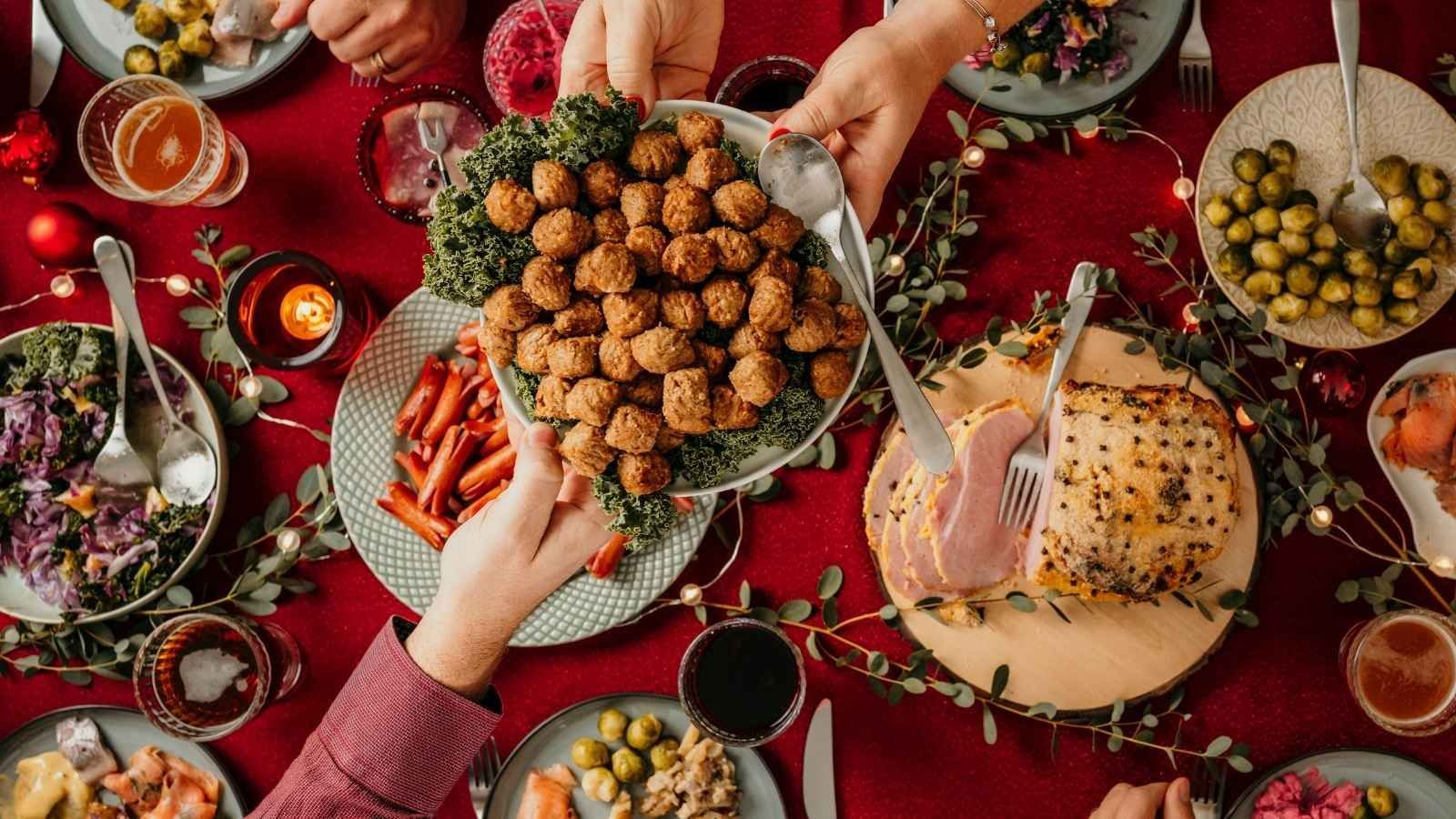
Every December, the conversation around food stops being about nourishment and turns into an emotional endurance test.
Between family dinners, office parties, and seasonal catch-ups, you are surrounded by dishes that appear only once a year. That alone would be easy enough to navigate. The friction starts when everyone around the table appoints themselves as the manager of your appetite.
A relative insists on loading a second portion onto your plate because they spent four hours making it. A colleague rolls their eyes when you pass on a tray of frosted cookies, telling you to live a little because it is Christmas.
Suddenly, deciding what to eat feels less like a personal choice and more like a social negotiation. You end up caught between eating past the point of physical comfort just to keep the peace, or defending your plate like a witness on the stand.
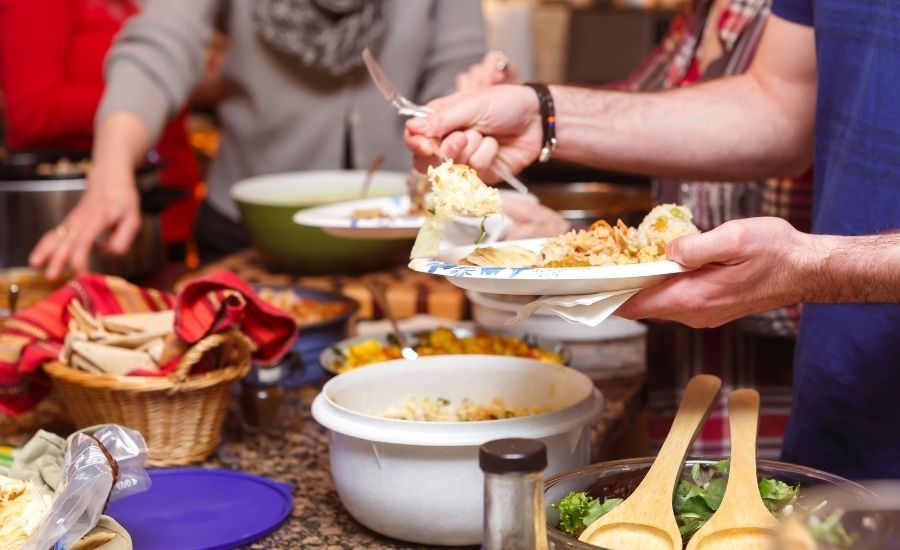
Navigating the holidays without wrecking your digestion or your sanity does not require showing up with your own pre-measured food containers. It simply requires understanding the emotional mechanics of holiday tables and setting calm, frictionless boundaries.
Why Holiday Food Pushers Are Never Really About the Food
When someone tries to force food onto your plate, their urgency almost never comes from a place of malice.
The Working Gal Salary & Sanity Survey 2026
Anonymous, 3 minutes, for an upcoming Working Gal report on women's work and money.
Take Survey (opens in a new tab)In most families, cooking is the primary love language people know how to speak. Handing you a rich dessert or serving an extra ladle of gravy is how a host looks for validation and connection. When you say no, an insecure host does not hear that your stomach is pleasantly full; they hear that you are rejecting their hospitality or critiquing their effort.
Other times, food pushing is driven by pure social discomfort.
When people around a table are overindulging, someone eating with intention acts as an unintentional mirror. It stirs up their own quiet guilt about what they are consuming. Urging you to join them in a food coma is simply an attempt to make everyone equally complicit so nobody has to feel self-conscious.
Recognizing that this pressure is about their emotional comfort, not your caloric needs, completely changes how you respond. You stop taking the comments personally, which makes it much easier to decline without sounding defensive.
The Art of the Non-Negotiable Deflection
The biggest mistake people make when turning down unwanted food is offering an elaborate explanation.
The moment you say you are watching your sugar, trying to stay healthy, or working on your fitness goals, you open the floor for debate. A persistent host will immediately counter by telling you that one night will not kill you, or that the recipe is made with natural ingredients.
To shut down pressure without causing an offense, give a short, warm compliment that addresses their ego, followed by a flat physical reality:
"That looks absolutely incredible, but I am completely full right now. I would love to wrap up a small slice to enjoy with my coffee tomorrow."
This approach gives the host the exact validation they were fishing for: you acknowledged that their food is delicious and valuable. By taking a small portion for later, you accept the gift without having to force it down an already overloaded digestive tract.

If someone continues to push after that, do not scramble for new excuses. A simple, cheerful repetition of the same sentence with a smile does the job. You are an adult, and you do not need a medical waiver to decide when your stomach has had enough.
Simple Ground Rules for Holiday Tables
Enjoying seasonal eating without feeling sluggish for three weeks comes down to a few basic physiological habits that keep your appetite steady.
First, never arrive at an evening gathering starving.
The old habit of skipping breakfast and lunch to save room for an elaborate dinner backfires every time. By the time you sit down at eight in the evening, your blood sugar is on the floor, your hunger hormone ghrelin is through the roof, and your brain is screaming for quick energy. You end up inhaling whatever appetizers sit within arm's reach before the real meal even begins.
Eat your normal protein-rich meals earlier in the day. Going into a party feeling physically stable allows you to choose what you genuinely want to taste rather than eating out of frantic hunger.
Second, survey the entire spread before putting anything on your plate.
Scan the table and pick the two or three seasonal dishes that you truly love and cannot get any other time of year. If your aunt makes an exceptional traditional pie, put that on your plate and savor every bite. Skip the generic dinner rolls, packaged chips, and grocery store chocolates that you can find on any given Tuesday.
Finally, give your nervous system time to register satiety.
Eat with your fork resting on the table between bites, join the conversation, and enjoy the room. Your gut takes roughly twenty minutes to send chemical signals to your brain that you are satisfied. When you finish your first plate, wait half an hour before deciding on dessert or seconds. More often than not, the urge to keep grazing fades completely once you step away from the table.
Moving Past the Feast Mentality
The holidays are a season, not a single twenty-four-hour binge that determines your health for the year.
If you have an evening where the wine flows freely, the dessert was too good to pass up, and you wake up the next morning feeling heavy and bloated, resist the urge to punish yourself. Do not sign up for an aggressive juice cleanse, do not skip breakfast out of guilt, and do not spend two hours doing frantic cardio to compensate.
Punishing yourself only reinforces an unhealthy cycle of restriction and overeating.
The morning after a heavy dinner, drink a large glass of water, eat a simple savory breakfast with eggs or Greek yogurt, and go for a brisk thirty-minute walk outside. Your body is remarkably resilient and knows exactly how to handle occasional abundance.
Step back into your normal routine without drama, guilt, or fanfare. The true joy of the holiday season is spending unhurried time with the people you care about, and that connection should never come at the expense of how you feel in your own body.