
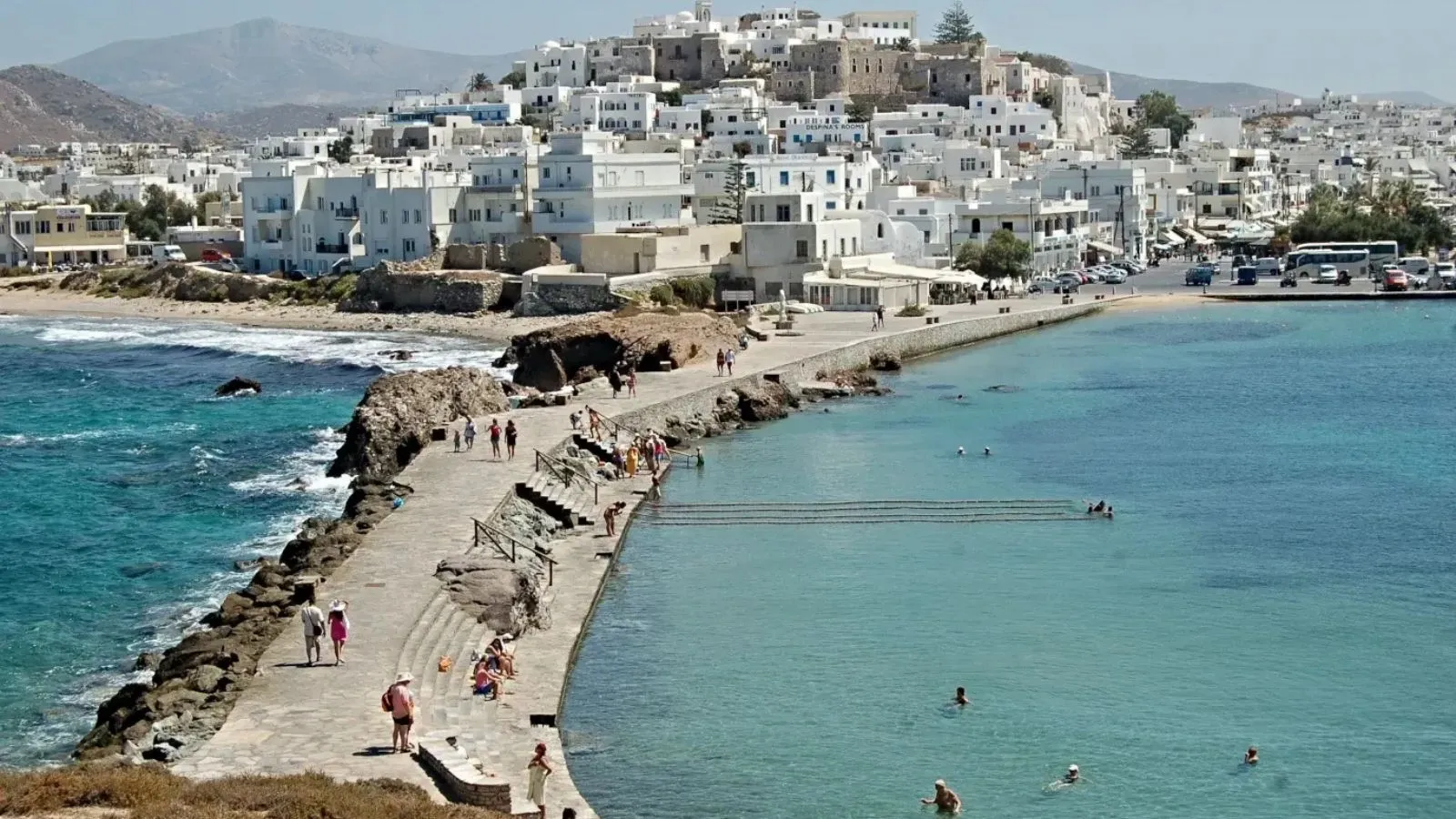
Beyond the polished, whitewashed minimalism of Mykonos and the volcanic theatrics of Santorini lies Naxos, the largest and geographically most imposing island of the Cyclades. Where neighboring destinations surrendered entirely to seasonal hospitality and imported luxuries, Naxos remained self-sufficient, sustained by its fertile valleys, ancient marble quarries, and a culinary culture anchored in working agricultural villages. The island rejects easy categorizations. To understand Naxos is to move between its fortified medieval port, its windswept western dunes, and the cool, stone-built mountain hamlets tucked high into the foothills of Mount Zas.
Chora and the Venetian Citadel
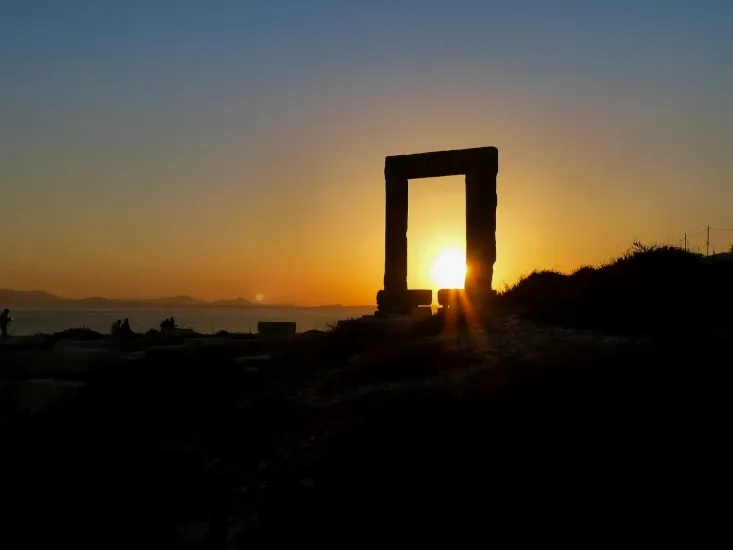
Arriving by sea immediately reveals the island’s layered history. The port is anchored to the north by the islet of Palatia, where the massive marble lintel of the unfinished sixth-century Temple of Apollo—the Portara—stands exposed to the open Aegean. Standing beneath the ancient frame at sunset offers a stark contrast between ancient monumentality and the movement of ferries cutting across the channel toward Paros.
Ascending into Chora reveals the Kastro, a thirteenth-century fortified citadel established by the Venetian Duke Marco Sanudo. Unlike the open layout of other Aegean capitals, the upper town is an enclosed, defensive labyrinth of stone arches, low passages, and private crests carved into the walls of noble Venetian residences. Within the citadel, quiet courtyards shield visitors from the afternoon winds, and the sound of footfalls echoes against centuries-old stone flags. Down along the harbor front, life transitions to family-run counters where you can taste pork rosto braised slowly in wine and garlic, alongside aged graviera, arseniko, and slightly sharp xynomyzithra cheeses produced exclusively on the island.
The Long Sands of the Western Coast
The western shoreline of Naxos represents one of the longest continuous stretches of sand in the Mediterranean. Rather than dramatic cliffs dropping directly into deep water, the coastline unfurls in expansive, pale dunes framed by low cedar trees.
Agios Prokopios sits closest to the capital, offering deep, protected turquoise water that stays calm even when northern summer winds pick up. Continuing south, the landscape broadens into Plaka, where miles of open sand provide ample space away from commercial beach clubs. For complete isolation, the dirt road continues past cedar reserves toward Hawaii Beach, a secluded cove bordered by ochre rock formations where the water shifts to deep emerald and the atmosphere remains raw and unserviced.
The Mountain Interior: Marble and Autonomy
The true character of Naxos resides far from the shoreline, deep in the mountainous interior. As the road climbs inland past ancient olive groves, the Aegean heat gives way to cool mountain air and stone architecture.
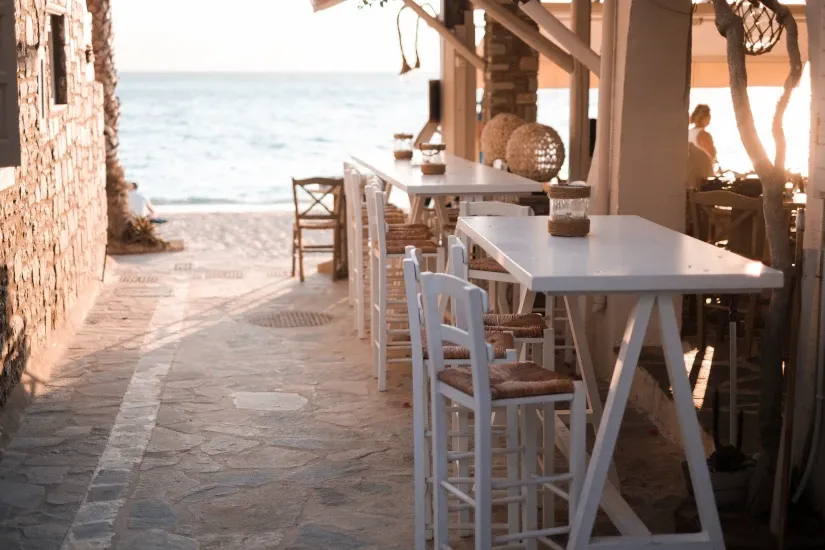
Apeiranthos, perched on the slopes of Mount Fanari, is built almost entirely of native marble. Its narrow streets, defensive towers, and public squares are paved in polished stone, reflecting a fiercely independent community that maintains its own distinct linguistic dialect and weaving traditions. Nearby Filoti, the island's largest mountain settlement, wraps around a central square shaded by a massive century-old plane tree. Here, daily rhythm revolves around traditional kafenios, small glasses of local citron liqueur, and dishes of slow-cooked goat and wild greens harvested from the surrounding valleys.
Naxos rewards travelers who seek substance over spectacle. It does not exist merely for the camera lens; it is a living, complex island that balances Aegean light with historical weight and remarkable self-possession.