
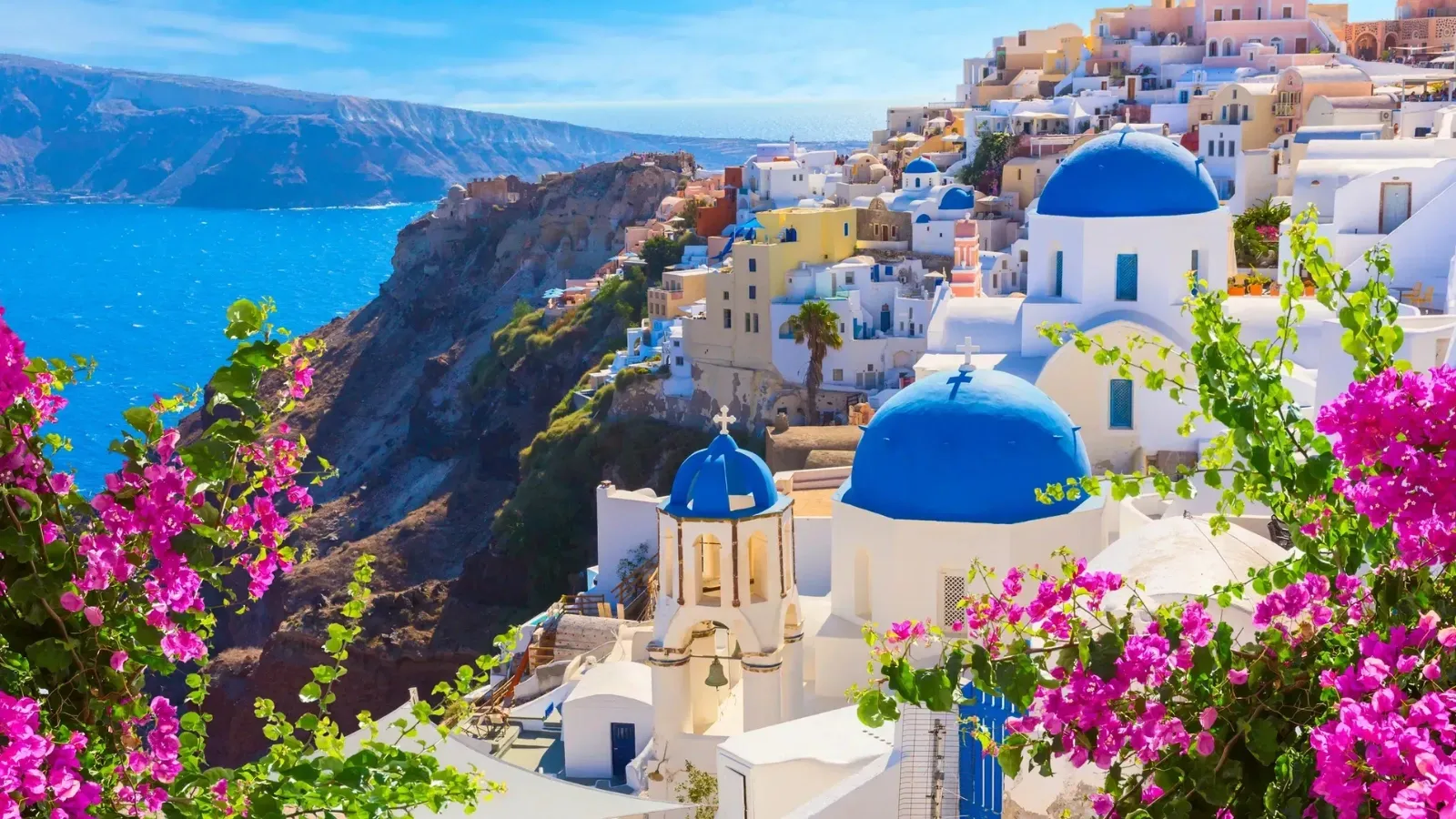
Look, Santorini is beautiful. I've been there multiple times and enjoy it every single time. But since you're reading this, you probably already know the Instagram reality: you'll spend half your time navigating crowds, the other half wondering if your vacation budget just evaporated, and you'll barely scratch the surface of what makes Greece special.
As someone who grew up in Greece, I'm letting you in on what locals already know: the best Greek island experiences are happening where Instagram hasn't completely taken over yet. Places where you can actually find a spot on the beach, where restaurant owners remember your name by day three, and where your dollars (euros, to be specific) stretch further without sacrificing the magic.
So, I put up this guide to help you navigate Greek island planning, from someone who actually understands how ferries work and knows which tavernas to skip, whether you're planning a solo adventure, a romantic escape, or a friend group trip.
Why You Should Look Beyond Santorini
Santorini deserves its reputation—the sunsets really are spectacular, the caldera views are stunning, and yes, those cave hotels are as dreamy as they look online. But unless you're visiting in January, you're sharing that experience with thousands of other people who had the same Instagram inspiration.
The cost comparison alone is eye-opening. A decent hotel in Santorini runs from €200-400 per night in peak season. That same budget gets you a boutique stay with a pool in Paros or Naxos, sometimes with breakfast included. Dinner for two at a cliffside restaurant in Oia? Easily €100-150. In Milos or Folegandros, you're looking at €50-70 for an equally romantic meal with comparable views.
And the crowds—during summer, expect to wait in line for everything from restaurant reservations to the perfect photo spot. The narrow streets of Oia become traffic jams of tourists all heading to the same sunset viewpoint. It's beautiful, but it's not exactly the peaceful Greek island escape most people are imagining.
You can absolutely still visit Santorini if it's on your list. Just don't make it your entire trip. Two nights is plenty to get the experience, see the sights, and then escape to islands that feel more like the Greece you're actually dreaming about.
Understanding Greek Island Geography: Cyclades vs. Ionian
An important thing to understand is that the Greek islands aren't all the same. The two main groups you'll consider—Cyclades and Ionian—sit in different seas and offer completely different experiences.
The Cyclades (Aegean Sea)
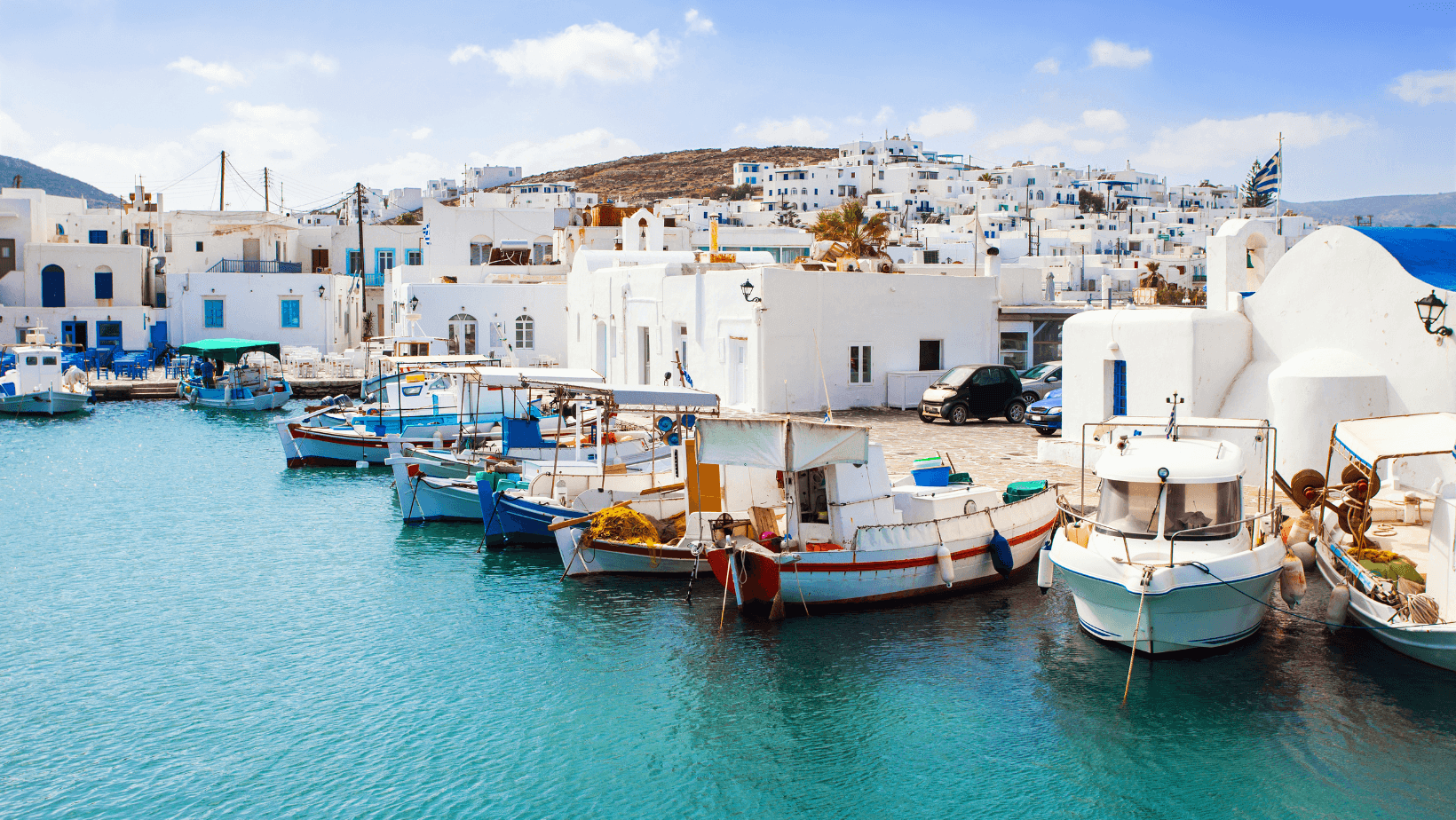
This is what you picture when you think "Greek islands"—whitewashed buildings with blue domes, arid landscapes dotted with windmills, and that iconic Aegean light that makes everything look filtered even when it's not.
The Cyclades include Santorini (yes, that one), Mykonos, Paros, Naxos, Milos, Folegandros, and dozens of smaller islands. They're connected by an extensive ferry network that runs from Athens' port at Piraeus. The landscape is dramatic and minimalist—think rocky terrain, sparse vegetation, and beaches that range from volcanic black sand to smooth white pebbles.
Best for: Classic Greek island vibes, island-hopping adventures, that quintessential Mediterranean aesthetic, beach lovers who don't mind wind (especially in August).
The Ionian Islands (Ionian Sea)
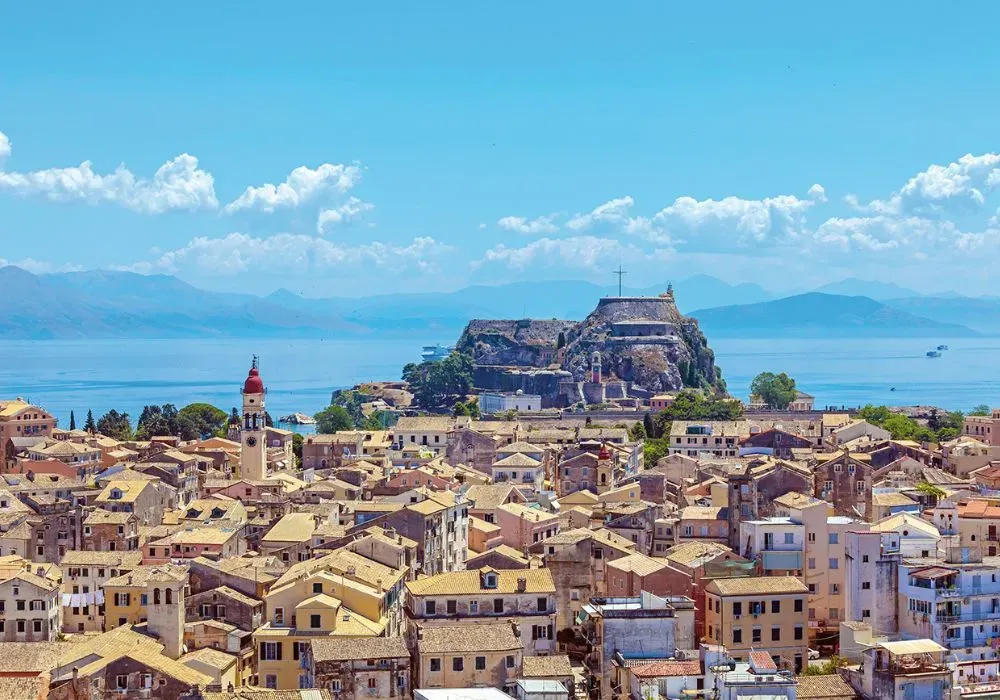
The Ionian islands feel like a different country entirely. Lush and green with Venetian-influenced architecture, these islands have a softer, more verdant beauty. The water here is an almost unreal turquoise, and the beaches tend to have calm, shallow waters perfect for swimming.
Corfu and Zakynthos are the stars here—Corfu with its elegant old town and cultural depth, Zakynthos with its famous Navagio Beach (Shipwreck Beach) and dramatic coastlines. These islands are easier to reach from Western Europe, and the driving infrastructure is better if you want to rent a car.
Best for: A different side of Greece, families with kids, cultural experiences beyond beaches, calmer waters, and travelers coming from Western Europe.
Choosing Your Greek Island(s): Match Your Travel Style
Not all Greek islands suit all travelers. Your perfect island depends on who you're traveling with and what kind of experience you want. Here's how to match your vibe with the right destination.
For Solo Female Travelers
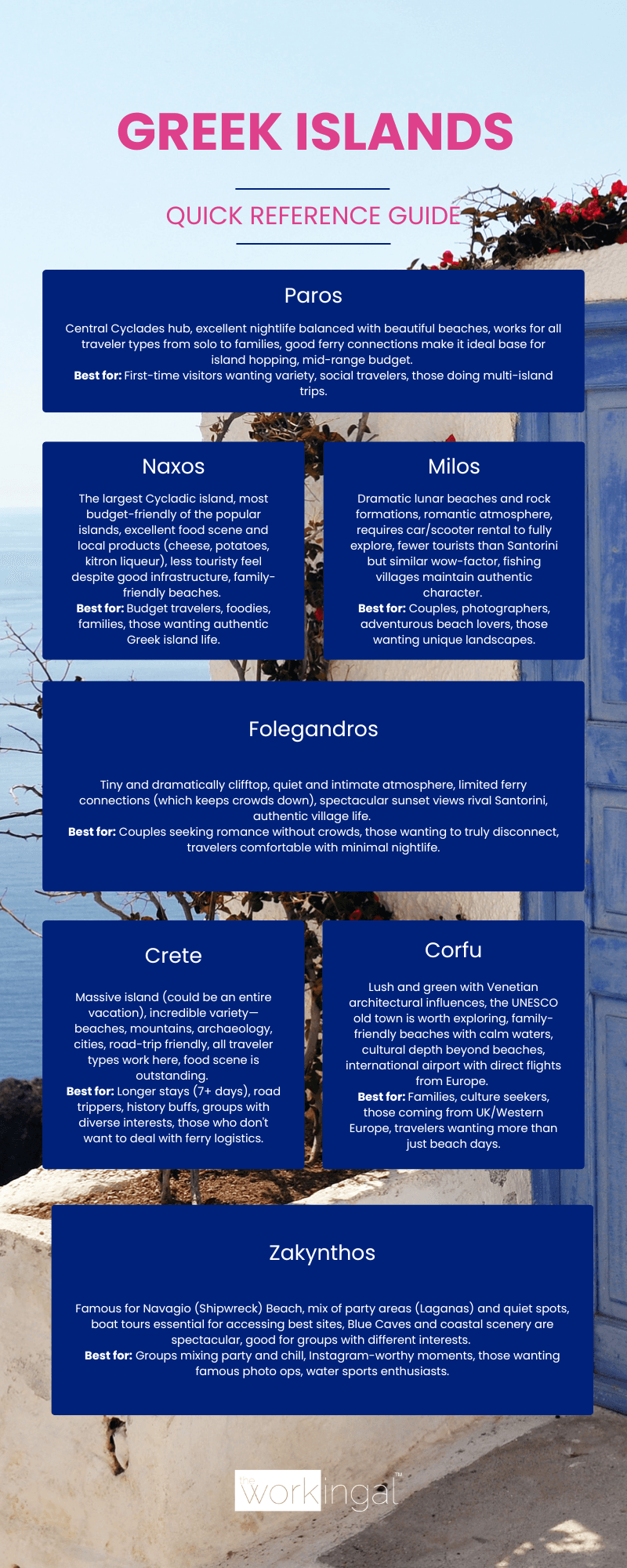
Paros (Cyclades):
This might be the most solo-traveler-friendly island in Greece. The main towns of Parikia and Naoussa are compact and walkable, with a vibrant social scene that makes it easy to meet other travelers. The dining scene is excellent for solo eaters—plenty of tavernas with communal tables and friendly owners who chat with everyone. Paros also serves as a central hub for ferry connections, so you can easily hop to neighboring islands if you want to explore.
Naxos (Cyclades):
The largest of the Cycladic islands, which means you never feel isolated, but you're not overwhelmed by tourism either. The island has excellent hiking trails, mountain villages to explore, and some of the best beaches in the Cyclades. Budget-friendly accommodations and restaurants make it perfect for solo travelers watching their spending. The laid-back vibe attracts a mix of ages, so you won't feel out of place whether you're 25 or 45.
Corfu (Ionian):
The old town is UNESCO-listed and genuinely walkable, with enough cultural activities (museums, concerts, historical sites) to fill days beyond just beach time. Good infrastructure means reliable transportation, and the presence of international tourism creates a comfortable environment for solo travelers. Plenty of cafes are perfect for settling in with a book and people-watching.
Why these work: Safety, walkability, social opportunities without feeling overwhelmed, good restaurant options for solo dining, and easy logistics so you're not stressed about getting around.
For Couples
Milos (Cyclades):
If Santorini and Mykonos had a cooler, less crowded cousin, it would be Milos. The island is famous for its otherworldly beaches—dramatic rock formations, hidden coves, and waters in every shade of blue imaginable. You'll need to rent a car or scooter to explore properly, but that's part of the adventure. The lunar landscape of Sarakiniko Beach looks like another planet, and the fishing village of Klima with its colorful boat houses is pure romance without the Santorini price tag.
Folegandros (Cyclades):
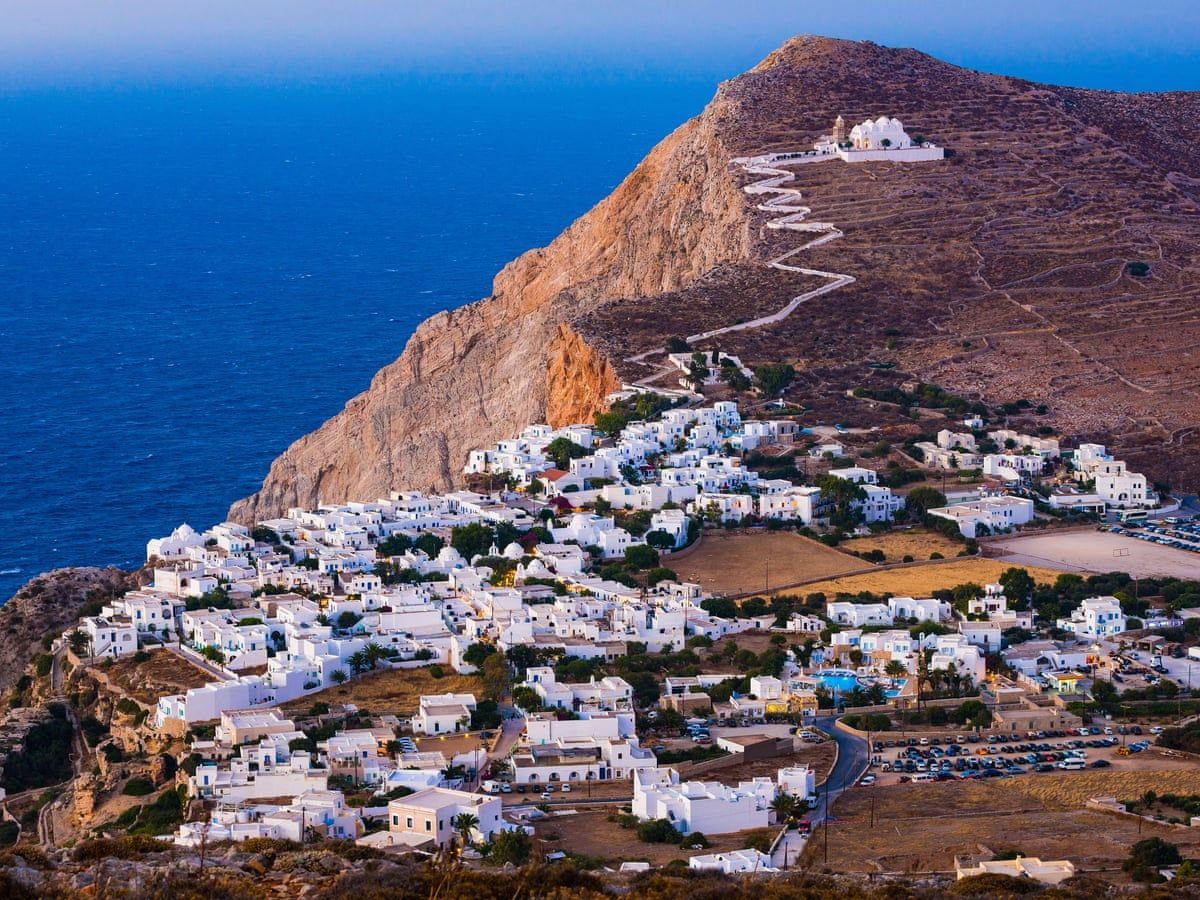
Tiny, dramatic, and intimate—this island feels like a secret even though it's been discovered. The main town of Chora clings to a clifftop with sunset views that rival Santorini's, but you might have the square to yourselves at twilight. Limited development means fewer tourists and a more authentic feel. Ferry connections are less frequent, which actually works in your favor—it keeps the crowds manageable and creates a genuine island-time atmosphere.
Zakynthos (Ionian):
Home to Navagio Beach—one of the most photographed beaches in Greece, with a shipwreck dramatically positioned on white sand against turquoise water. Beyond that iconic view, the island offers romantic sunset spots at Cape Skinari, sea caves you can explore by boat, and quieter beaches away from the party scene in Laganas. The mix of dramatic scenery and lush greenery creates a different kind of romantic backdrop than the Cyclades.
Why these work: Romantic atmosphere without the tourist circus, unique landscapes that create memorable experiences, opportunities for private moments, and restaurants and hotels that cater to couples without being too precious about it.
For Friend Groups
Paros (Cyclades):
Shows up again because it genuinely works for multiple travel styles. For friend groups, Paros offers the best of everything—beautiful beaches for day drinking, vibrant nightlife in Naoussa, a central location that makes day trips to other islands easy, and enough variety that friends with different interests won't get bored. The social scene is active but not overwhelming like Mykonos, and the infrastructure can handle groups without everything being booked solid.
Zakynthos (Ionian):
If your friend group includes party people and chill beach lovers, Zakynthos delivers both. Laganas has the club scene if that's your thing, while the northern and western parts of the island offer quiet beaches and scenic spots. Boat parties to the Blue Caves are a group-friendly activity, and adventure options like cliff jumping and snorkeling appeal to active travelers. The island is large enough that you can spread out and do different things without feeling disconnected.
Crete (Largest Greek Island):
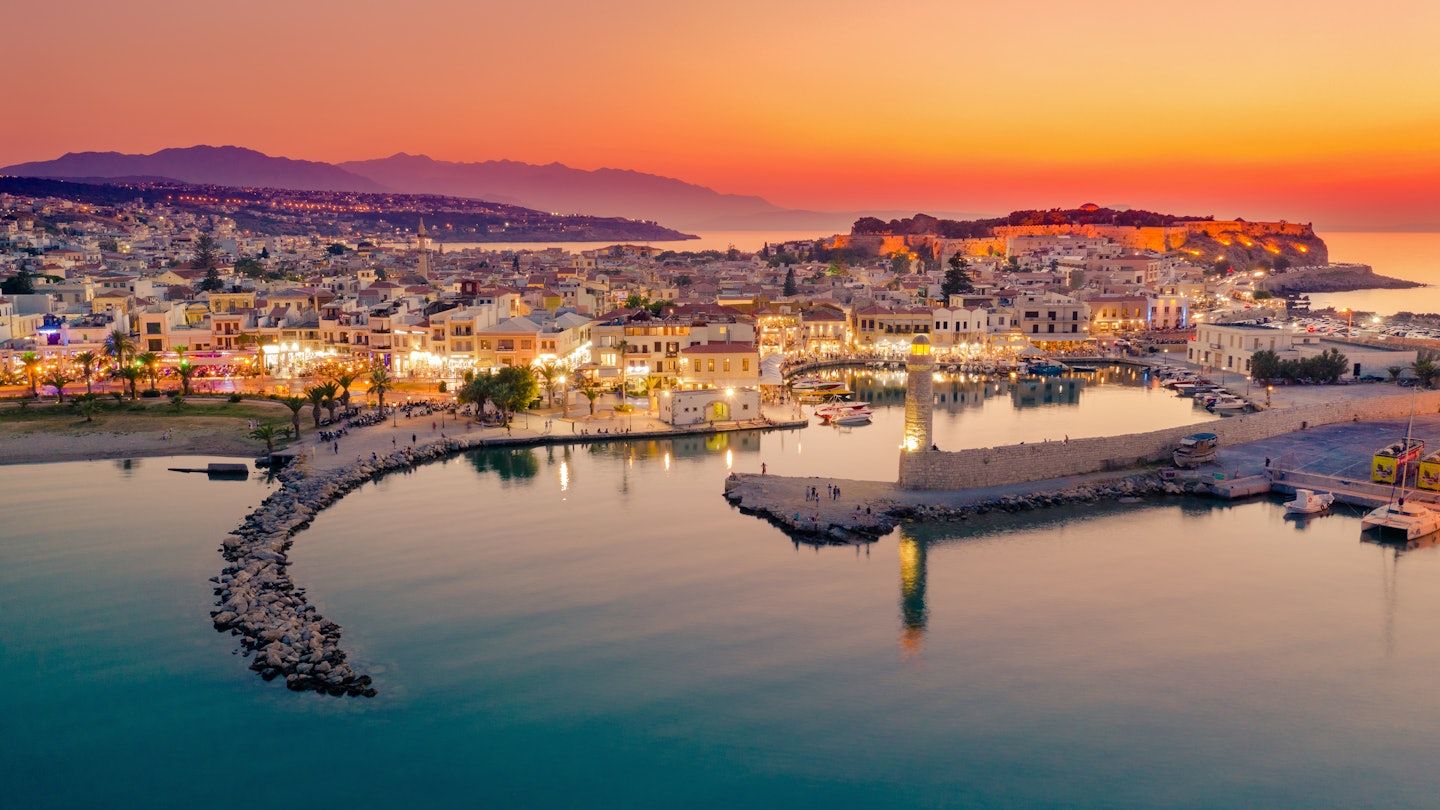
Technically big enough to be its own category, Crete works beautifully for friend groups because there's genuinely something for everyone. Want to hike Samaria Gorge? Done. Prefer beach clubs and water sports? Heading to the coast. Interested in Minoan history and archaeology? Multiple sites to explore. The island is car-friendly, so a group road trip works well here. You could easily spend your entire vacation on Crete and never feel limited.
Why these work: Variety of activities so different personalities stay happy, social scenes for meeting other travelers, enough space that groups don't feel cramped, and logistics that can handle larger parties without constant coordination stress.
For Families and Multi-Generational Travel
Corfu (Ionian):
The calm, shallow waters on many Corfu beaches are perfect for kids, and the lush landscape means there's actual shade—a big deal when you're managing small children in summer heat. Cultural sites like the Old Fortress and Achilleion Palace add educational value without being boring, and the island has excellent infrastructure, including reliable healthcare facilities. Day trips to mainland Greece or even Albania are possible if you want variety.
Naxos (Cyclades):
Family-friendly beaches with gentle waves, mountain villages that offer a break from beach days, and a food scene that includes plenty of options beyond typical tourist fare. The island isn't as party-focused as Mykonos or as dramatic as Santorini, which actually works better when you're traveling with multiple generations who have different energy levels and interests.
Why these work: Safe swimming conditions, diverse activities for different ages, good amenities and infrastructure, and a pace that allows for both adventure and relaxation without wearing everyone out.
The Practical Planning Guide: Geography, Ferries & Itineraries
Understanding the logistics is half the battle with Greek island planning. The geography determines your entire trip structure, so let's break down what you actually need to know.
When to Go
May, June, September, and early October are your sweet spot. The weather is beautiful—warm enough for swimming but not the oppressive heat of July-August. Ferry schedules are reliable, attractions are open, but the crowds are manageable. Restaurant reservations don't require booking weeks in advance, and accommodation prices drop significantly compared to peak summer.
Avoid August if possible. This is when Greeks take their summer holidays, which means domestic tourism peaks at the same time as international tourism. Ferries are packed, prices spike, and many small businesses close for their own vacations—particularly around August 15th (Dormition of Mary), when basically the entire country shuts down for a long weekend.
Shoulder season advantages are real: Better weather for walking and exploring (less intense heat), more authentic interactions with locals (they're less burned out from tourist season), lower prices across the board (sometimes 40-50% less than July-August), and actual space on beaches and at archaeological sites.
Choosing Your Base: Cyclades or Ionian?
You need to choose one region or the other—don't try to combine both in a single trip unless you have three weeks. They're in different seas, far apart, and switching between them wastes precious vacation days on travel.
Cyclades logistics:
Fly into Athens (ATH), then take a ferry from Piraeus port (about 30-45 minutes from the airport by taxi or metro). Alternatively, you can fly directly to Mykonos or Santorini from many European cities, though you'll pay a premium. The ferry network connecting Cycladic islands is extensive—you can island-hop relatively easily with advance planning.
Ionian logistics:
Corfu has its own international airport (CFU) with direct flights from many European cities, especially in summer. Zakynthos also has an airport (ZTH). You can also ferry from mainland Greece (Igoumenitsa port) or even from Italy if you're incorporating that into your trip. Car rentals make more sense in the Ionian islands compared to the Cyclades.
Choose based on: Available vacation time (Cyclades require more ferry planning), desired aesthetic (classic white-and-blue vs. lush-and-green), where you're flying from (direct flights to Corfu from UK/Europe), and what type of experience you want (traditional Greek island hopping vs. more car-based exploration).
How Many Islands?
One-week plan:
Two islands maximum, within the same region. Spend 3-4 nights on each island with a travel day in between. This gives you enough time to actually settle in, find your favorite beach, and feel like you've experienced each place.
Sample: Paros (4 nights) + Milos (3 nights), or Corfu (4 nights) + Zakynthos (3 nights).
Ten-day plan:
2-3 islands comfortably. Add Athens for 1-2 nights at the beginning or end.
Sample: Athens (1 night) → Naxos (3 nights) → Paros (3 nights) → Milos (3 nights) → Athens (fly home).
Two-week dream:
3-4 islands or explore one larger island deeply. You could do a proper Cycladic loop (Athens → Paros → Naxos → Milos → Santorini → Athens) or spend two weeks exploring Crete or Corfu thoroughly without the stress of constantly packing and ferrying.
Travel days count as lost beach days—factor that into your planning. Every ferry ride or flight is half a day minimum when you account for packing, transit, check-in, and getting settled.
Ferry and Flight Navigation
Cyclades ferry tips:
Book in advance, especially for summer travel. Use Ferryhopper or Direct Ferries apps—they're reliable and show real-time availability. Ferry companies include Blue Star Ferries and SeaJets (faster but more expensive). Morning ferries are generally more reliable than afternoon ones, and the Meltemi winds in July-August can cause cancellations or delays.
Ionian considerations:
More car-friendly than the Cyclades, so renting a car and taking it on ferries between islands is feasible. Domestic flights connect Athens to both Corfu and Zakynthos. The ferry from mainland Greece (Igoumenitsa to Corfu) runs frequently and is affordable, but it's a different system than the Cyclades ferry-hopping.
Athens as a hub:
If you're flying internationally, you'll likely route through Athens. Build in at least one night there, either at the start or end of your trip—jet lag recovery, potential ferry delays, and a chance to see the Acropolis and enjoy the Athenian lifestyle make it worthwhile.
Where to Splurge, Where to Save
Strategic spending makes a Greek island vacation accessible at almost any budget. Knowing where to invest and where to hold back means you get the experiences you want without the constant financial stress.
Worth Splurging On
One truly special dinner per island: Find that cliffside restaurant, the chef-owned taverna, or the seafood place right on the water. Budget €50-100 per person and make it an evening. These meals become the stories you tell later.
A nice hotel for part of your stay: Maybe not the entire trip, but 2-3 nights in a beautiful boutique hotel or one with an incredible view elevates the whole experience. Especially valuable for couples—that infinity pool or terrace with sunset views creates moments worth the investment.
Boat day trips: Whether it's a full-day catamaran tour, a fishing boat to remote beaches, or a sunset sailing trip, these experiences showcase the islands from a different perspective. Budget €50-100 per person. Worth it.
Quality sunscreen and after-sun products: Trust me on this. The Mediterranean sun is more intense than you think, and Greek pharmacies in the islands are excellent, but expensive. Bring good products from home or budget for quality brands there.
Smart Ways to Save
Accommodations mid-week: Many hotels offer 3-4-night minimum stays at better rates, especially outside peak season. Family-run pensions and studios often include kitchenettes, which brings us to...
Lunch strategy: Hit local bakeries for traditional spanakopita and tyropita (€2-3), gyro spots for quick lunch (€5-7), or buy picnic supplies from mini-markets (fresh bread, local cheese, tomatoes, olives) and eat on the beach. Save your dining budget for dinners when atmosphere matters more.
Ferry economy class: Unless you're highly prone to seasickness, economy ferry tickets are fine. The time difference between economy and first class isn't usually significant enough to justify the price jump.
Free entertainment: Beaches, hiking trails, sunset watching, wandering through villages—most of the best Greek island experiences don't cost anything. The sea is free, and it's usually the highlight anyway.
Budget Breakdown by Traveler Type
Budget traveler: €80-120 per day per person. Staying in hostels or budget studios, eating mainly at bakeries and local spots, taking economy ferries, limiting alcohol, and focusing on free activities. Totally doable and still enjoyable.
Mid-range: €150-200 per day per person. Nice but not luxurious accommodations, a mix of casual and sit-down restaurants, a few splurge activities, moderate drinking, and occasional taxis instead of always walking. This is the sweet spot for most travelers—comfortable without being extravagant.
Splurge: €250+ per day per person. Boutique hotels, fine dining, private boat trips, spa treatments, wine tasting, frequent taxis or car rentals. If this is your budget, lean into it—Greece does luxury well, especially in the Cyclades.
Insider Tips Only a Local Would Tell You
Growing up in Greece means knowing the unwritten rules that guidebooks miss. These are the things that will make your trip smoother and help you blend in rather than stand out as a tourist.
Universal Greek Island Wisdom
Afternoon rest is sacred: Shops close from approximately 2-5 PM, especially outside touristy areas. This isn't laziness—it's survival in the Mediterranean heat. Embrace the siesta. Use this time for your own beach or pool lounging, and save sightseeing for morning or late afternoon.
Basic Greek phrases earn genuine goodwill: "Kalimera" (good morning), "efharisto" (thank you), "parakalo" (please/you're welcome), "yamas" (cheers). You don't need to be fluent, but attempting a few words in Greek changes how people respond to you. The effort is appreciated far more than perfect pronunciation.
Don't book the first hotel from the port: When you arrive by ferry, walk past the first cluster of accommodations near the port. Ten minutes inland usually gets you better quality, lower prices, and quieter nights. The places right at the port rely on tired arrivals with no energy to explore options.
Ferry delays are part of the experience: Build buffer days into your itinerary, especially if you have a flight to catch. Wind and weather can delay or cancel ferries with little notice. Don't schedule a ferry arrival and an international flight departure on the same day unless you enjoy travel stress.
Dinner timing matters: Greeks eat late—9 PM or 10 PM is the usual dinner time, especially in summer. If you arrive at a nice restaurant at 7 PM, you'll often be the only diners (which can feel awkward). Make reservations for 8:30 PM or later to experience the actual atmosphere.
Tap water is safe but...: Drinking tap water is safe in Athens and most areas of the country, but in the islands, the locals drink bottled water because they prefer the taste (the water can be heavily chlorinated or brackish on some islands). Always bring bottled water for hiking or beach days—dehydration can set in fast in the Greek summer heat.
Cyclades-Specific Tips
Meltemi winds: July and August bring strong northern winds called Meltemi, which keep temperatures bearable but can make ferries uncomfortable or cancelled, beach days windier than expected, and outdoor dining tricky (bye-bye romance). Pack a light jacket even in summer—evenings can be surprisingly cool when the wind picks up.
Sun reflection is intense: Those white buildings aren't just aesthetic—they reflect heat. They also reflect brutal amounts of sunlight. Bring good sunglasses and don't underestimate the sun exposure, even when you're not directly on the beach.
Rocky beaches need preparation: Many Cycladic beaches are pebbles or rocky rather than sand. Water shoes make your life so much better. The snorkeling is often excellent precisely because of the rocky coastlines, so bring or rent snorkel gear.
Ionian-Specific Tips
Corfu town orientation: The old town is genuinely beautiful and worth exploring, but it's easy to get lost in the narrow streets. North Corfu tends to be more upscale and quieter, and the south is more touristy with package holiday resorts. The northeast coast (toward Kassiopi) offers the best balance.
Navagio Beach reality check: That iconic Zakynthos beach with the shipwreck is only accessible by boat, and you'll be sharing it with hundreds of other tourists. Book morning tours to beat the worst crowds. The view from the clifftop is actually more impressive than being on the beach itself.
Better shade situation: The Ionian islands have more trees and natural vegetation than the arid Cyclades, which means better natural shade. This makes mid-day heat more manageable, especially if you're traveling with kids or just don't want to spend the entire day baking.
Car rental advantage: Driving is easier and more practical in the Ionian islands compared to many Cycladic islands. Roads are better maintained, distances are manageable, and having a car opens up hidden beaches and mountain villages that tour buses don't reach. Also, keep in mind that 80%-90% of the cars in Greece are manual, so make sure you book an automatic car in advance.
Sample 7-Day Itinerary: First-Timer's Guide
Two options depending on which region calls to you. Both maximize experience while minimizing travel stress.
Option A: Cyclades Discovery
Day 1: Fly into Athens, evening ferry to Paros (about 4 hours), settle into accommodation, easy dinner in Parikia.
Days 2-3: Explore Paros. Day trips to nearby beaches (Kolymbithres, Santa Maria), evening in Naoussa for dinner and nightlife, full day on the beach, possible day trip to Antiparos by small ferry.
Day 4: Morning ferry to Milos (2-3 hours depending on route), rent car or scooter, explore Sarakiniko Beach and fishing villages, sunset dinner in Plaka.
Days 5-6: Full days exploring Milos beaches (Kleftiko boat tour, Tsigrado, Paleochori), discover Klima's boat houses, wine tasting, sunset at Plaka castle.
Day 7: Ferry back to Athens (or direct flight from Milos), evening in Athens for dinner and Acropolis views if time allows, fly home next day.
Option B: Ionian Escape
Day 1: Fly direct to Corfu, rent car, drive to accommodation in northeast coast, evening in Corfu Town for dinner and wandering.
Days 2-3: Beach days on Corfu's best coasts (Paleokastritsa, Glyfada), explore mountain villages (Pelekas, Old Perithia), sunset at Kaiser's Throne viewpoint, full day in Corfu Town for culture and shopping.
Day 4: Drive to port, ferry to mainland, drive/fly to Zakynthos, settle in northern part of island away from Laganas, sunset and dinner.
Days 5-6: Boat tour to Navagio Beach and Blue Caves, cliff-top views of Shipwreck Beach, explore western coast beaches (Porto Vromi, Limnionas), sunset at Cape Skinari.
Day 7: Fly from Zakynthos to Athens, evening flight home or night in Athens if you want to buffer for international departure.
Whether you choose the white-washed drama of the Cyclades or the lush romance of the Ionian islands, you're about to experience a side of Greece that most visitors miss. The islands beyond Santorini reward travelers who do a bit of planning—better value, more authentic experiences, and that feeling of discovering something special rather than following a preset Instagram itinerary.
Your Greek island trip doesn't need to look like everyone else's. In fact, it shouldn't. The beauty of Greece is that there's genuinely an island for every traveler—you just need to find yours.
Book those ferries, pack your sunscreen, and prepare for the kind of vacation that makes you want to quit your job and move to an island.
Fair warning: that feeling is completely normal and extremely common among first-time Greek island visitors.