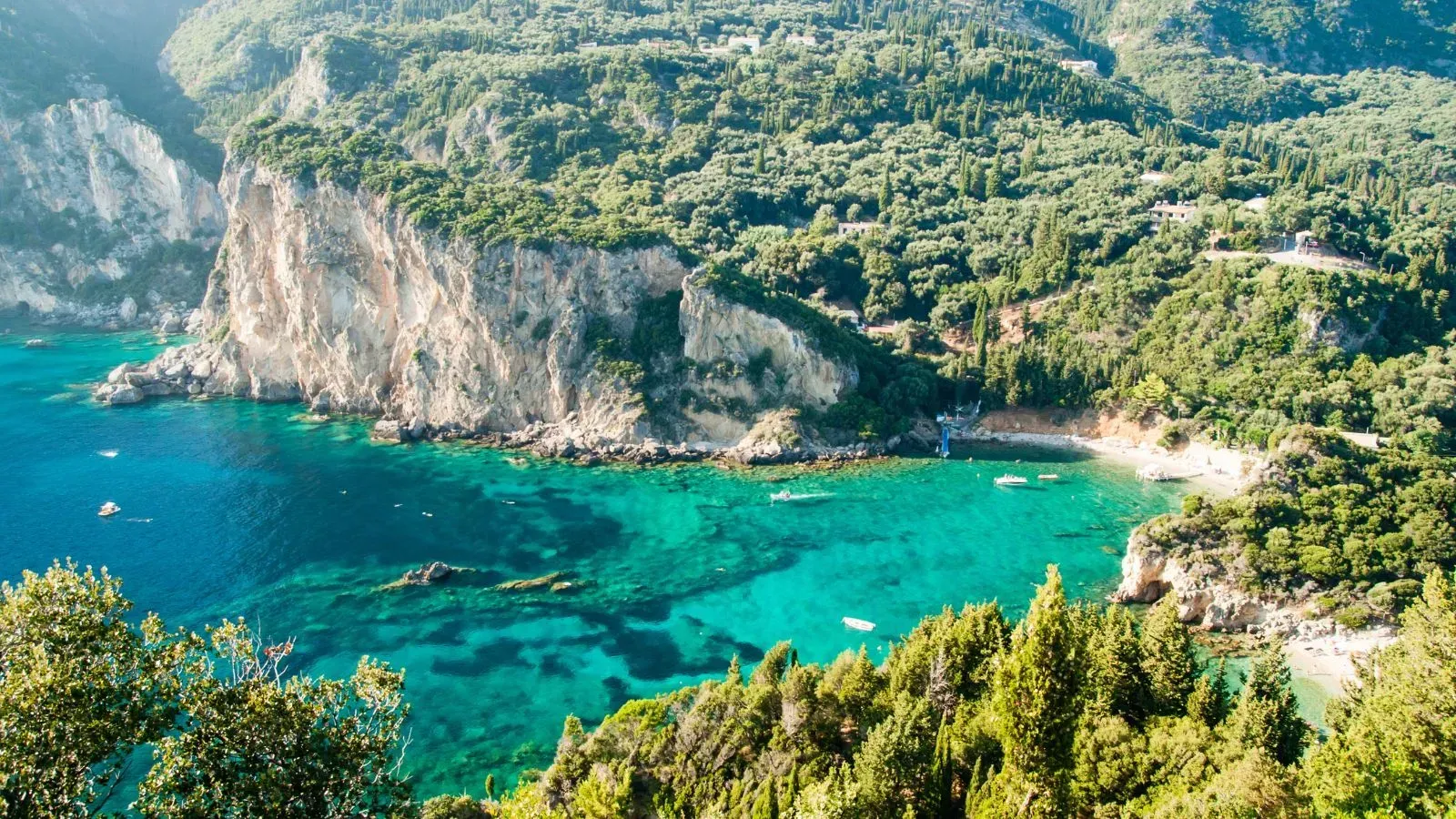
Corfu is entirely unlike the Cyclades.
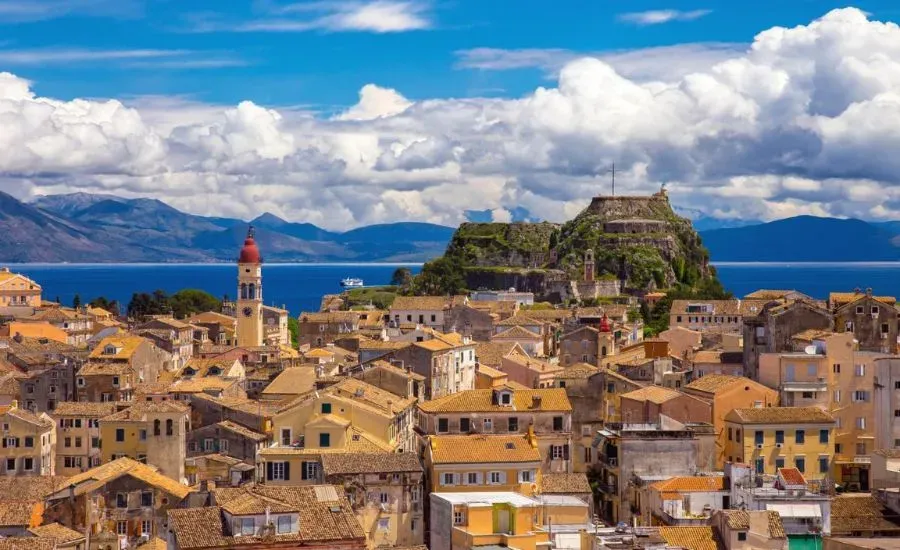
If your idea of a Greek island is whitewashed cubic houses and barren volcanic rock, arriving here can be a shock. Corfu is aristocratic, dense with millions of century-old olive trees, and heavily shaped by four centuries of Venetian rule. You feel it the moment you step into the Old Town: tall pastel shutters, laundry lines strung across narrow stone alleys called kantounia, and grand arcaded squares that look like they were lifted straight out of northern Italy.
Because Corfu is a large island with an international airport, it attracts all kinds of travelers, from budget package tourists to superyachts anchored off the northeast coast.
If you pick the wrong base, you can easily end up in a strip of neon pub signs and mediocre burger joints. If you navigate it with intention, it is one of the most civilized, beautiful summer destinations in the Mediterranean.
Here is how to experience the island properly.
The Venetian Rhythm of the Old Town
Corfu Town is the island's cultural anchor and deserves at least two evenings of unhurried walking.
Skip the midday heat and head in around six in the evening. Park outside the center and walk into Campiello, the oldest quarter of the Venetian settlement. It is an intricate maze of stone alleyways, small marble plazas, and crumbling ochre facades where locals still sit outside their doorways in the evening breeze.
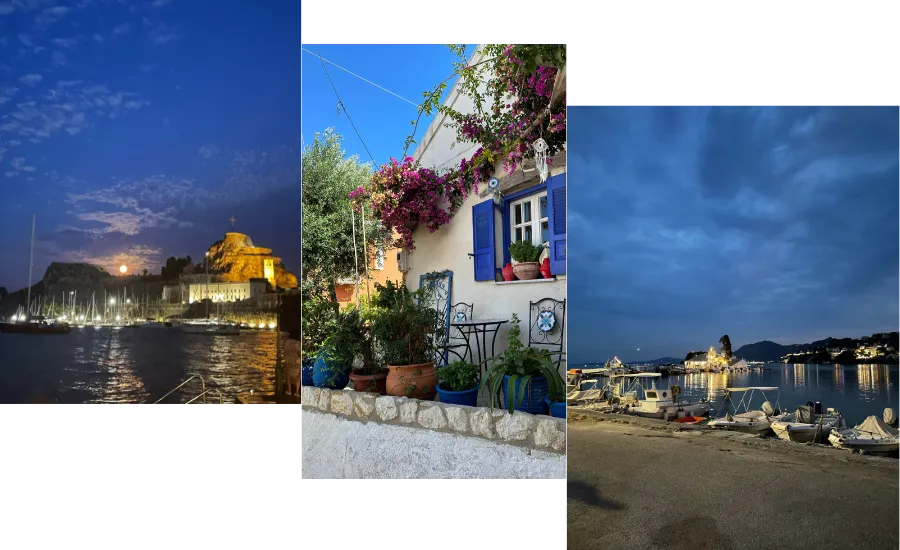
Eventually, the alleys open up to the Liston, the grand promenade built during the French administration of the island, modeled directly on Paris’s Rue de Rivoli.
The traditional routine here is effortless: take a small marble table under the arches for a cold espresso or an afternoon aperitivo, and watch the entire town stroll by. Just beyond the Liston lies the Spianada, the massive open green square framed by the Old Fortress rising out of the sea on one side and the Palace of St. Michael and St. George on the other.
When you get hungry, avoid the tourist-heavy menus directly facing the promenade and slip back into the side streets. Order authentic Corfiot staples: beef sofrito braised tender with garlic, vinegar, and flat-leaf parsley, or spicy fish bourdeto cooked down with sweet and hot paprika. Finish with fresh loukoumades drizzled with local thyme honey before heading back to your base.
The Northeast Coast and Quiet Coves
If you want calm, crystalline waters and exceptional seaside dining, the northeast coast between Barbati and Kassiopi is the place to be.
The shoreline here is pebbled, which keeps the water exceptionally clear and shades of electric turquoise. Renting a small motorboat for the day from one of the coastal villages is the single best decision you can make on the island. You do not need a maritime license to handle a small craft, and it gives you access to quiet limestone coves that cannot be reached by road.
Drop anchor in quiet bays like Kerasia or Agni, where family-run tavernas sit right at the water’s edge with wooden jetties. You can pull your boat up, walk onto the dock in your linen shirt and swimwear, and sit down to grilled sea bass, cold local wine, and plates of fresh fried calamari while the water laps against the stone pilings below your feet.
The Dramatic Cliffs of Paleokastritsa
On the western side of the island, the landscape shifts from gentle olive groves to dramatic limestone cliffs plunging directly into deep, icy water.
Paleokastritsa is famous for a reason, but the main village beach gets crowded early. The move here is to hire a small taxi boat or rent your own skiff to explore the dramatic western bays like Rovinia and Paradise Beach, where sheer white rock faces meet deep sapphire water. The sea on this side of the island is noticeably colder due to deep submarine currents, but on a hot July afternoon, the water feels incredible.
In the late afternoon, head to La Grotta, a bar carved straight into the rocky cliffside above a natural cove. You can step down the stone stairs, order a drink, and watch swimmers jump off the rocks into the deep water below while the sun dips down.
The Mountain Ghosts of Old Perithia
When you need a break from salt water and the heat of the coastline, drive up into the foothills of Mount Pantokrator to Old Perithia.
Tucked into a high mountain plateau, this stone village was originally built in the fourteenth century as a hideaway from pirate raids along the coast. It was largely abandoned in the mid-twentieth century as tourism drew families down to the beaches, leaving behind dozens of Venetian stone mansions, arched doorways, and historic chapels untouched by modern concrete.
Today, several stone buildings have been carefully restored, and a handful of traditional tavernas operate along the quiet dirt lanes.
It is noticeably cooler in the mountains, shaded by walnut trees and wild fig. Settle in for lunch and order rich, slow-simmered pastitsada, the island’s signature dish of tender beef or rooster braised in red wine, cinnamon, cloves, and allspice, served over thick hollow bucatini pasta. It is honest, rustic Corfiot cooking at its absolute best.
Practical Notes for Moving Around the Island
Corfu is too large to manage without a vehicle.
Public buses exist, but relying on them will confine you to main arterial roads and strip out all spontaneous detours. Rent a compact car instead of a large SUV. Island roads are winding, frequently narrow, and cut through villages where two wide cars can barely pass each other between stone walls.
Give yourself time when driving from coast to coast.
A distance that looks short on a map often takes forty-five minutes because you are winding through steep olive hills and mountain passes. Slow down, plan your days by quadrant rather than crisscrossing the entire island, and let the days unfold at their own pace.