Somewhere along the timeline, ordinary human existence was quietly classified as a defect requiring aggressive remediation.
Open your phone and you will soon realize that the prevailing standard of baseline decency looks unhinged: a two-hour sunrise protocol, red-light exposure before speech, twelve targeted supplements swallowed in calibrated sequence, journaling through your attachment style, and a haul of five new "essentials" acquired to correct problems you didn't know you had forty-eight hours ago.
Every mundane element of daily life has been dragged into a permanent performance review. You are no longer permitted to simply wake up, drink a cup of coffee, and go about your day. You must optimize your cortisol, biohack your hydration, and curate your morning into a seamless piece of behavioral hygiene. What was once living has been reduced to preventative maintenance.
The Working Gal Salary & Sanity Survey 2026
Anonymous, 3 minutes, for an upcoming Working Gal report on women's work and money.
Take Survey (opens in a new tab)The Industrialization of "Self-Care"
The wellness industry pulled off the ultimate commercial coup when it rebranded consumption as self-preservation. Care used to mean a long bath, eight hours of undisturbed sleep, and closing the door on the world. Today, it is an exhausting, multi-step chore with a four-hundred-dollar price tag. If your evening wind-down requires forty-five minutes, two serums, an acid, a lipid-barrier balm, a peptide glaze, and a sleep tracker monitoring your pulse, you aren't decompressing. You are working an unpaid second shift for cosmetic labs.
The fatigue is tangible. Women are perpetually exhausted not just by their actual workloads, but by the relentless administrative burden of keeping their hair, cuticles, skin barrier, and gut flora at showroom quality.
The messaging is insidiously calibrated: if you look tired, dry, or weathered, it is no longer an inevitable byproduct of working hard or living a full life—it is a personal moral failure of discipline. You simply didn't buy the right ceramic gua sha, didn't drink enough chlorophyll, and failed to optimize your sleep architecture.
Staged Intimacy and the Metric of Love
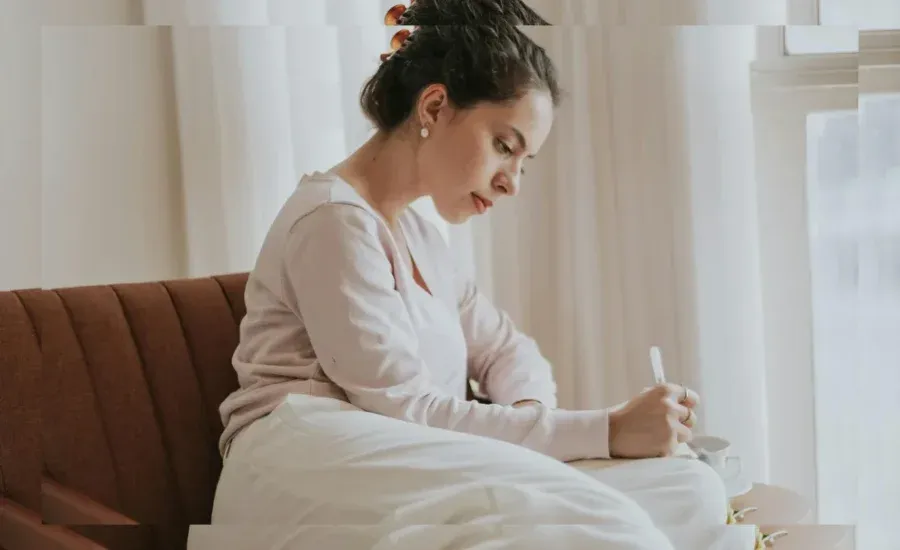
This compulsive optimization doesn't stop at the skin barrier; it infects how we conduct our private lives.
Romance has been colonized by the 9:16 vertical frame. A relationship is no longer allowed to just exist in the quiet, unglamorous reality between two adults. It has to be verified by the feed: curated anniversary reels set to acoustic covers, perfectly staged embraces against brutalist architecture, and captions dripping with clinical terminology about "safe spaces" and "conscious uncoupling."
When love becomes an aesthetic deliverable, genuine intimacy quietly rots.
Real companionship is profoundly unphotogenic. It is domestic quiet, mutual silence on the couch, petty arguments over parking, and the absence of an audience. Transforming your partnership into content doesn't prove its depth; it proves your desperation for public witness. If an argument only feels resolved once it is translated into an Instagram carousel about "learning to communicate through anxious-avoidant dynamics," you aren't in love with a person. You are in love with the optics of your own emotional maturity.
The Banality of the "Era"
The most pathetic consequence of this culture is that genuine rest has been stripped of its innocence.
You can no longer just read a novel on a rainy afternoon; you have to brand it your "slow living era." You can't just cook a bowl of pasta and eat it in silence; it must be framed as a "romanticizing my life reset." Even lethargy has to be repackaged with intentionality so that it feels productive, tasteful, and morally defensible.
We have pathologized the ordinary. To sit on a sofa doing absolutely nothing useful without labeling it a "nervous system reset" induces panic. We need a conceptual excuse for existing without producing, consuming, or improving. Every appetite must be audited, every lazy Sunday justified through the lens of recovery, and every hobby assessed for its cognitive benefits.
It is a bleak, exhausting way to inhabit a human body.
The Unmonetized Life
The exit from this algorithmic rat race requires no new purchases, no journaling templates, and no detox protocols. It requires the quiet refusal to perform. The most radical, high-status move available to a modern woman is unmediated privacy.
Eat the meal without photographing the plate. Read the book without logging it onto a virtual shelf. Love your partner without offering your domestic life up for public inspection. Let your face exist without treating every fine line as an emergency to be corrected by a thirty-step routine.
The ability to live exceptionally well without asking a server in California to validate your existence is the only luxury that actually matters. Step away from the optimization wheel. Your life is not a startup, and you do not owe the internet an audit of your days.