

Few concepts have been as thoroughly commodified over the past decade as the simple act of taking notice. Gratitude, once considered an unglamorous moral virtue practiced in private contemplation, has been repackaged as an aspirational consumer routine. It is sold through expensive journals, morning checklists, and serene digital vignettes that suggest a few minutes of forced appreciation before breakfast will insulate anyone from the friction of daily life.
In this contemporary framing, gratitude is treated as an emotional cosmetic. It functions like an ambient filter placed over reality, promising that if you catalog enough small joys—a warm beverage, sunlight through a window, a fragrant candle—the structural weight of adult responsibilities will magically dissolve. When life inevitably presents serious setbacks, this performative optimism curdles into frustration. People begin to wonder why their curated lists fail to prevent anxiety, or worse, they treat their own normal dissatisfaction as a personal spiritual failure.
Treating gratitude as a mood booster misunderstands its historical and psychological purpose. Gratitude is not an emotional high, nor is it a technique for manufacturing unearned cheerfulness. It is a rigorous mental discipline designed specifically for difficult conditions.
The Illusion of Spontaneous Appreciation

The temptation is to treat appreciation as an effortless byproduct of good fortune. When circumstances align—when revenue is up, relationships are peaceful, and health is intact—feeling fortunate requires no conscious effort. It is passive, reactive, and completely dependent on external stability.
Relying on external conditions to dictate your internal posture is a precarious way to operate. Life is defined by constant volatility: deadlines slip, contracts fall through, physical fatigue accumulates, and personal demands collide. If gratitude exists only as a sunny reaction to favorable winds, it vanishes the moment circumstances sour.
True gratitude functions in the exact opposite direction. It is an intentional cognitive anchor deployed precisely when circumstances are disappointing, chaotic, or dull. It does not wait for a spontaneous wave of inspiration to strike; it is an active decision to separate baseline reality from temporary emotional turbulence. Practicing it requires looking past immediate irritations to recognize what remains durable, functional, and sound.
Separation from the Drama of the Day
When a high-stakes project stalls or an ordinary day descends into logistical confusion, human attention naturally contracts. The brain possesses an ancient, well-documented negativity bias: it zeroes in on the single unresolved problem in a room, ignoring ninety-nine other components operating with quiet mechanical perfection.
A disciplined practice of gratitude disrupts that tunnel vision. It is not an exercise in denial; it does not require pretending a problem does not exist or suppressing legitimate anger. Instead, it introduces proportion.
Acknowledging what is currently working—the stability of an asset, the reliability of a colleague, the simple physical stamina to sit at a desk and solve a puzzle—prevents an isolated crisis from becoming an existential catastrophe. It establishes an emotional perimeter around the problem, ensuring that a professional setback remains an operational issue to be solved rather than a total indictment of your life.
This distinction changes the entire tenor of decision-making. Operating from a state of constant grievance or perceived scarcity produces frantic, reactive choices. Operating from grounded reality—recognizing the leverage and stability already in your corner—produces calm, strategic authority.
The Mechanics of a Working Discipline
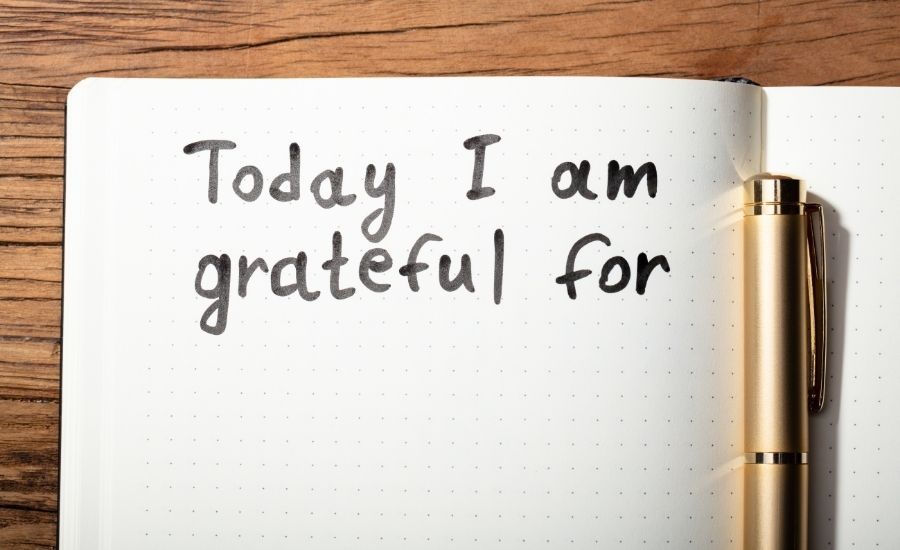
Moving gratitude away from aesthetic lifestyle tropes requires treating it like an operational habit rather than a creative writing exercise. It requires neither decorative stationery nor an audience.
First, strip away the sentimentality. Gratitude is most effective when it is specific and objective. Rather than listing sweeping, abstract concepts like "family" or "peace," anchor attention to concrete facts: a contract that paid on time, a physical body that recovered from fatigue, a clean workspace, or the uninterrupted hour you carved out to think. Precision prevents the practice from sliding into hollow routine.
Second, decouple the habit from your emotional state. Discipline, by definition, exists independently of how you feel on any given morning. You do not skip auditing your books simply because the numbers are stressful, and you do not abandon standards of execution because your mood is low. Similarly, acknowledging what is stable and functional is a duty you owe to your own sanity, especially when you least feel like doing it.
Finally, recognize that appreciation requires no external validation. The moment a private reflection is polished to be shared, discussed, or displayed, its utility shifts from internal grounding to social signaling. Real discipline is quiet, solitary, and entirely unconcerned with performance.
Perspective as the Ultimate Lever
The modern world runs on the manufactured desire for more: more visibility, higher numbers, faster timelines, and continuous external reassurance. While healthy ambition drives progress, an inability to register what has already been built creates a permanent state of psychological deficit.
Gratitude is the antidote to that quiet desperation. It is the steady, conscious recognition that whatever challenges are unfolding on the screen, your foundation remains intact. It demands neither apologies for ambition nor forced smiles in the face of hardship.
When approached as a daily mental standard, gratitude ceases to be an ephemeral trend and returns to what it was always meant to be: an unshakeable perspective that keeps your footing steady, regardless of the noise outside the door.