
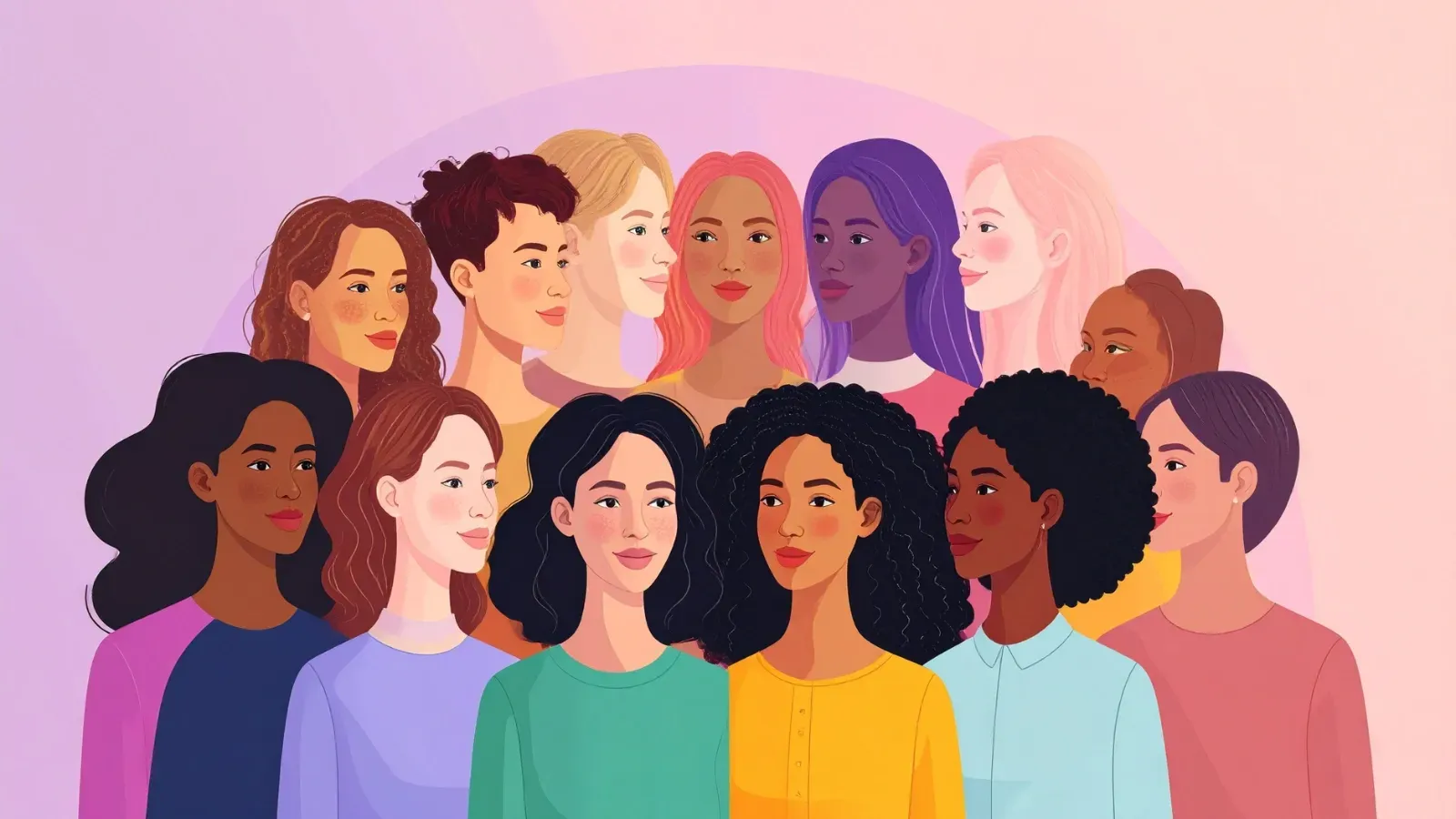
Women's Equality Day marks August 26, 1920, the date the Nineteenth Amendment was certified into law. It is a commemoration of a legal change, which is a useful thing to have and a limited one, because the amendment altered what women were permitted to do and had almost nothing to say about what they would actually be allowed to do.
The distance between those two things has been closed, where it has been closed at all, by individual women making tactical decisions in rooms where nobody had invited them. Four of them are worth looking at today, chosen because their methods were specific rather than inspiring, and because none of them waited to be handed anything.
Ruth Bader Ginsburg Argued for Men

By 1972 Ginsburg had a law degree from Columbia, a teaching position at Rutgers, and the accumulated experience of being told at Harvard Law that she was occupying a seat meant for a man. That year, she co-founded the Women's Rights Project at the American Civil Liberties Union with a strategy that struck many of her colleagues as backward.
So she went looking for male plaintiffs.
Charles Moritz was a never married man in Denver who had been denied a tax deduction for the cost of caring for his elderly mother, because the statute assumed caregivers were women. Stephen Wiesenfeld was a widower denied the survivor benefits a widow would have received automatically. Neither case looks like a landmark for women's rights, and that was precisely the design.
Ginsburg had concluded that an all-male Supreme Court would not recognize sex discrimination when the plaintiff was a woman, because the justices would see the outcome as natural. Show them a man harmed by the same assumption, and the machinery becomes visible. She argued six cases before the Court and won five, and she built the constitutional architecture for sex equality out of cases about men who wanted to look after their families.
There is a lesson in there about persuasion that has very little to do with being right and a great deal to do with understanding who is listening. Ginsburg spent a decade removing the bench's excuses one case at a time, which turned out to be more productive than appealing to its better instincts.
The Project Ran for Nine Years
What is easy to miss is how slow this was. The Women's Rights Project brought case after case through the seventies, each one narrow, each one establishing a small principle that the next case could stand on. Reed v. Reed in 1971 established that the Constitution's equal protection clause applied to sex at all, which sounds obvious now and was genuinely open before. Frontiero in 1973 went after military benefits. Wiesenfeld in 1975 went after Social Security.
None of these were the case. There was no case. There was instead a decade of incremental construction by a lawyer who had calculated that the Court would accept in ten steps what it would reject in one, and who was willing to spend most of her thirties and forties doing it.
Nora Ephron Was the Mail Girl
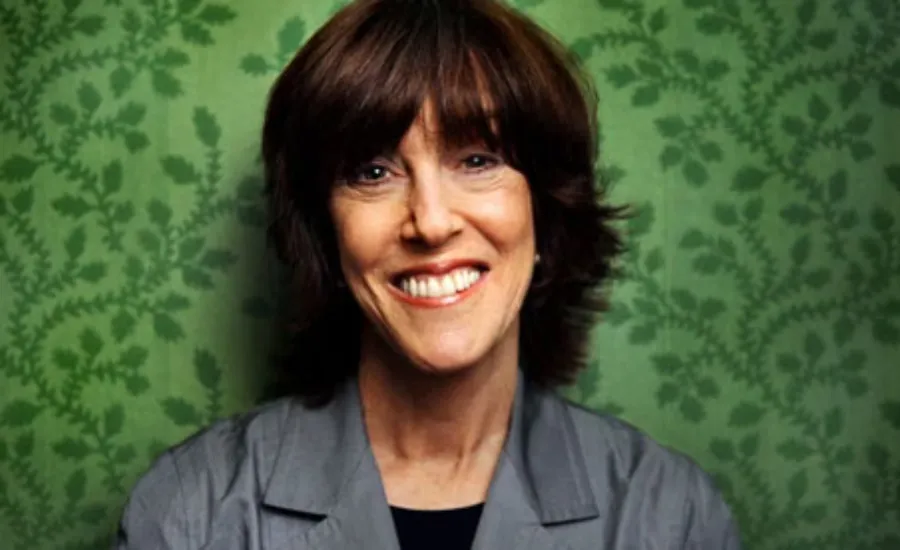
Ephron arrived at Newsweek in 1962 and was hired to sort mail because that was the job available to women with degrees who wanted to write. The magazine did not employ female writers. This was stated openly and treated as a fact about the world rather than a policy anyone had chosen.
She left. She wrote for the New York Post and then Esquire, developing an essay voice that was funny in a specific and slightly dangerous way, and by the late seventies, she had built a considerable reputation on personal journalism. Her mother's advice, that everything is copy, gave her permission to turn her own divorce into a novel and then a film, which is a considerable act of nerve and, quite deliberately, a business decision.
It is also worth noting what she was walking away from at Newsweek. The magazine was prestigious, the salary was real, and the sorting of mail came with proximity to people whose careers she wanted. A great many women stayed in exactly that position, reasonably, on the theory that proximity would eventually convert into opportunity. It did not convert for most of them, and in 1970, a group of women at the magazine sued it for discrimination, which is what it took.
Then she did the part that people forget. Ephron moved into screenwriting in her forties, wrote Silkwood and When Harry Met Sally, and directed her first feature at fifty-one. Not because a studio approached her with an offer. She had watched what directors did to her scripts and decided she would prefer to be the one making those choices.
Fifty-one is a number worth sitting with for a moment. She had a functioning career, a reputation, and a steady income, and she started over in an adjacent job that nobody had suggested she was qualified for.
Diane von Furstenberg Bought Herself Back

The wrap dress arrived in 1974 and did something unusual for a garment, which was to solve a logistical problem. It went on in a single motion, it fit a range of bodies without alteration, it did not wrinkle in a bag, and it was appropriate in an office at nine and at dinner afterward. Women bought it in quantities that put von Furstenberg on the cover of Newsweek by 1976, at twenty nine.
There is a version of this story told as a triumph of design, and the design was genuinely good. The more useful version is about distribution and nerve. Von Furstenberg was in her twenties, unknown, and she carried samples around New York herself, going into department stores without appointments and asking buyers to look. Nobody had put her on a schedule. She built one.
The interesting part of her career is the part that went wrong.
Through the 1980s, she licensed the name aggressively, which is what you do when a brand is hot and you want revenue without operations. The name ended up attached to a great deal of product she had not designed and would not have approved, and its value degraded the way licensed names generally do. By the early nineties, the label meant considerably less than it had.
So she bought it back. She reacquired the licenses, relaunched the wrap dress in 1997, and rebuilt the company under her own control, at fifty, with the additional inconvenience of having to convince an industry that she was not a seventies footnote.
Reclaiming something you gave away is harder than never giving it away, and substantially less glamorous. It also happens more often, which is why the second act is the useful one to study.
Katharine Graham Did Not Want the Job
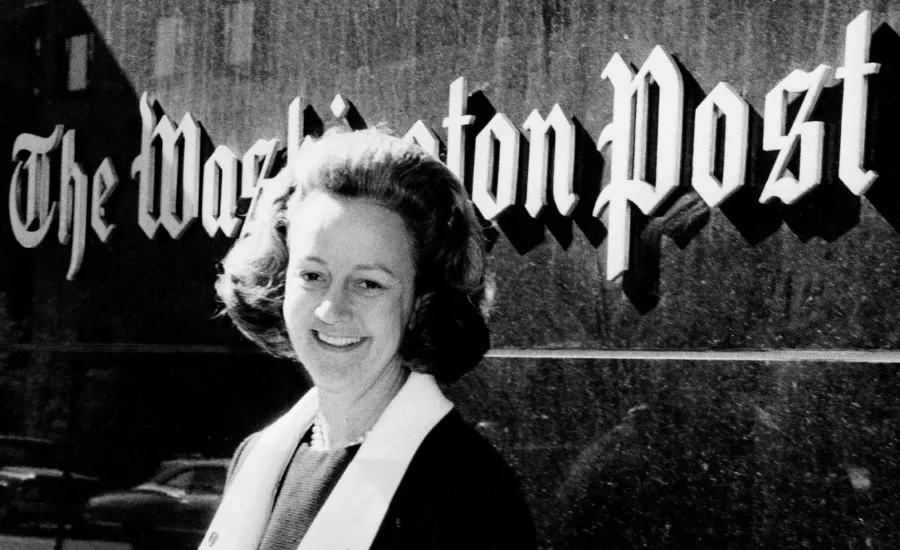
Graham became publisher of the Washington Post in 1963 because her husband died, and there was no one else. She had no executive experience. She had spent two decades as a wife and mother in a social world where women did not run companies, and she has written with unusual candor about how frightened she was, how she prepared obsessively for meetings, and how long it took before she stopped assuming the men in the room knew more than she did.
The detail worth borrowing is the preparation. Graham has described arriving at meetings having read everything twice, having written out what she intended to say, having anticipated the objections, because she assumed she would be caught out otherwise. Plenty of women recognize that pattern and read it as a symptom of not belonging. It is also, functionally, how you become the best-informed person in a room, and it is a large part of why the Post ended up being run competently by somebody with no training for it.
In 1971, the Post obtained the Pentagon Papers. The company had gone public days earlier, the New York Times had already been enjoined from publishing, and the Post's own lawyers advised against it. Publishing risked the newspaper's broadcast licenses, which were the profitable part of the business, and potentially the company itself.
She was asked for a decision over the telephone, in the middle of a dinner party, with almost no time to consider it. She said publish.
Then came Watergate, and two years of sustained pressure from an administration that made specific threats against her company, during which she backed two young reporters whose story could not be confirmed by anyone willing to be named.
Graham won a Pulitzer at eighty-one for a memoir in which she described herself as having been terrified through most of it. That combination, the fear and the decision arriving together, is a more accurate picture of how consequential things get done than any account in which the protagonist felt certain.
A Fifth Name
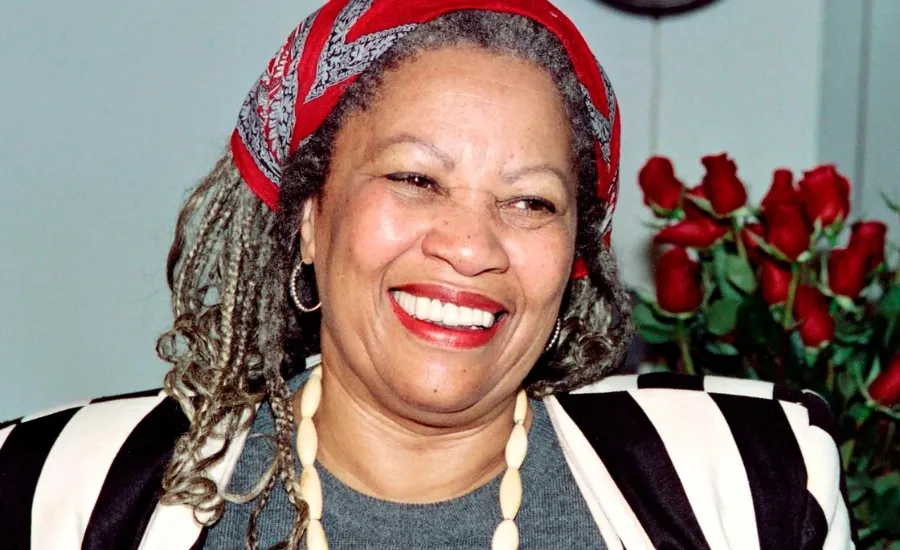
A fifth name belongs here, and there is not room for her, which is its own comment on the shape of these lists. Toni Morrison edited other writers at Random House during the day, raised two sons alone, and wrote her own novels in the hours around both, for years, before anyone thought of her primarily as a novelist. The arrangement was not sustainable, and she sustained it anyway, and the relevant point is that nobody offered her a fellowship or a year off to make it easier.
What They Have in Common
None of these four asked permission, and that phrase has been so thoroughly worn down by motivational usage that it is worth being concrete about what it actually meant in each case.
Ginsburg did not petition the Court to take women's rights seriously. She restructured the question until the Court had no way to avoid it.
Ephron did not wait for a studio to offer her a directing job, because studios were not offering directing jobs to women in their fifties in 1991. She wrote the material herself and made the job come with it.
Von Furstenberg did not wait for the industry to remember her. She bought the asset back and put it in front of people again.
Graham took the job long before she felt qualified for it, which was fortunate, because by her own account that feeling arrived roughly two decades late.
The Nineteenth Amendment gave American women a legal right in 1920, and no mechanism to enforce anything else. What arrived afterward came in pieces, unevenly, largely through women who decided that the absence of an invitation was not the same as a closed door.
That is a considerably less rousing thought than the ones usually offered, and it carries the advantage of being repeatable. Nobody here was extraordinary in a way that excludes you. They were tactical, they were frequently frightened, and they moved before anyone told them they could.