

Women's History Month has a content problem.
Every March, the same format appears: a list of inspiring women, a quote from each one, and a vague instruction to "be bold." By the end of the article, you feel momentarily motivated and structurally unchanged. That's not history, it's wallpaper.
The women we celebrate this month didn't succeed because they were inspirational. They succeeded because they made specific, often uncomfortable, strategic decisions at moments when the easier choice was available. Those decisions are documented, studied, and almost never mentioned in the inspiration posts.
This is the version that's actually useful.
1. Coco Chanel's Move: Create the market that doesn't exist yet instead of competing in the one that does
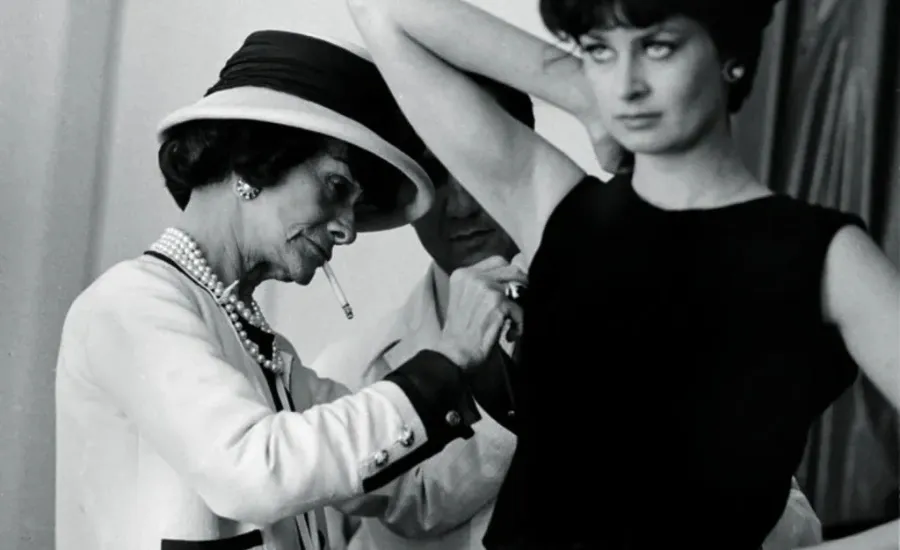
In the early 1900s, women's fashion was dominated by corsets, excess fabric, and the labour of dressing as a performance of status. Chanel didn't try to make better corsets. She looked at what women actually needed — freedom of movement, practicality, ease — and built an entirely new category around it. The little black dress, jersey fabric, costume jewellery worn unironically: each of these was a calculated act of market creation, not trend-following.
The career move: When you're struggling to compete in a crowded space, the question worth asking is whether you're trying to win the wrong game. Chanel didn't enter the market she inherited. She built one that didn't exist, which meant she had no direct competitors — only imitators who came later.
Where in your career are you trying to be the best version of something that already exists, when you could be the first version of something that doesn't?
2. Katharine Graham's Move: Lead through the thing you're afraid of, not around it
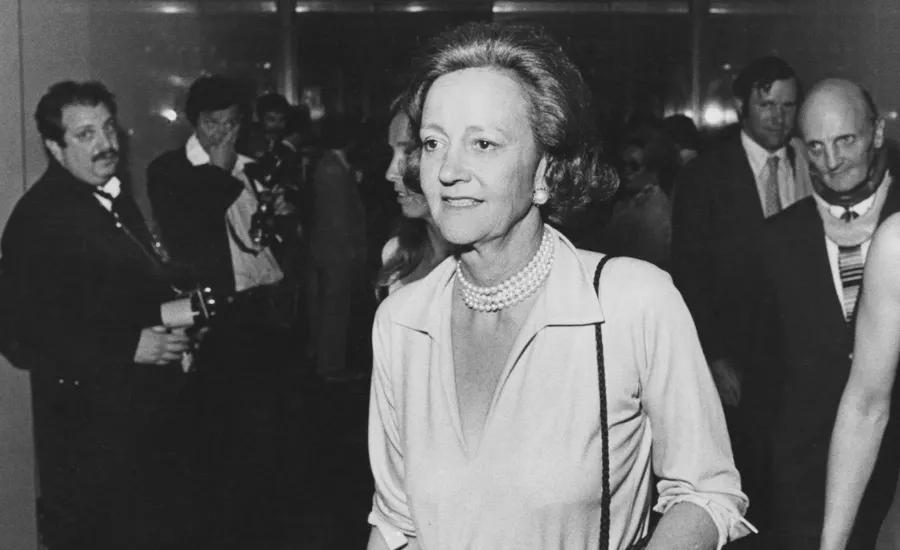
When Katharine Graham became publisher of The Washington Post in 1963 following her husband's death, she had been told her entire life, by her mother, by her husband, by the culture, that she wasn't capable of running anything. She believed it and, by her own account in her memoir, she took the job terrified.
What followed is documented: the Pentagon Papers, Watergate, decisions that put the paper — and her personally — in direct conflict with the Nixon administration at a moment when the legal and political consequences were genuinely unpredictable. She made every one of those calls.
The career move: Confidence didn't precede Graham's decisions. It was produced by them. The leadership model that says "build confidence first, then act" reverses the actual sequence. Graham's career is a case study in acting at the edge of your capability and letting the competence follow.
Most women wait until they feel ready. Graham is evidence that the feeling arrives after the decision, not before it.
3. Madam C.J. Walker's Move: Build the infrastructure when the infrastructure refuses to include you
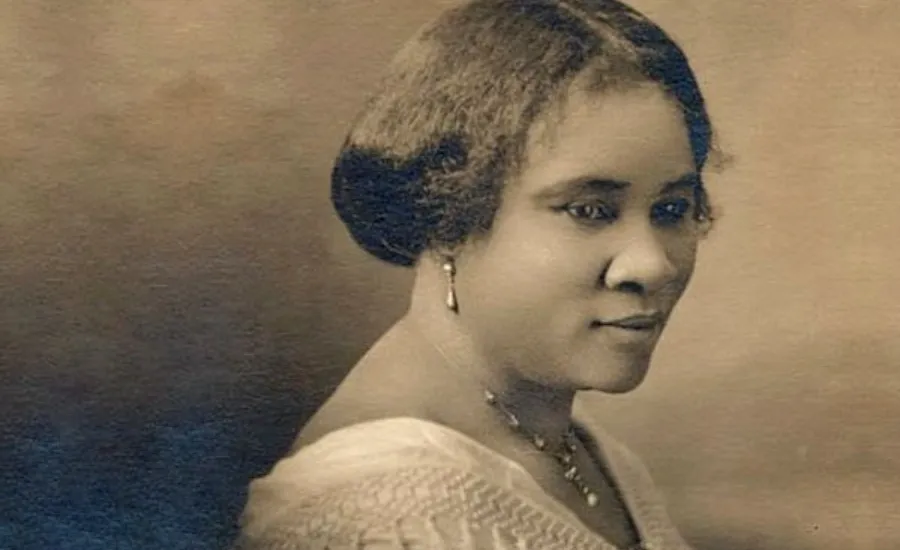
Madam C.J. Walker became America's first self-made female millionaire in an era when Black women were excluded from virtually every existing business system — banking, retail distribution, professional networks, and formal education. Her response was to build parallel infrastructure: her own manufacturing, her own sales force (the Walker Agents, trained women who became financially independent through her system), her own training schools, her own philanthropic network.
She didn't petition to be included in the systems that excluded her. She built systems that worked without them.
The career move: When the path doesn't exist, the question isn't how to find it — it's whether you're capable of building it. Walker's model is particularly relevant for women in industries or roles where the pipeline is structurally thin. The answer to a broken system is rarely to wait for someone to fix it.
What infrastructure are you waiting for permission to build?
4. Indra Nooyi's Move: Make the long-term case in an institution that rewards the short-term

When Indra Nooyi became CEO of PepsiCo in 2006, she inherited a company that was profitable by every conventional measure and heading, in her analysis, toward long-term structural decline. Her response — reorienting the company toward healthier products, environmental sustainability, and global markets before those were commercially obvious priorities — was met with resistance from shareholders who wanted quarterly returns, not a fifteen-year strategy.
She held the line for twelve years. The strategic pivot she initiated is now credited with positioning the company for the market realities that followed.
The career move: Nooyi's tenure is a study in making the case for decisions whose payoff isn't visible in the current reporting period. This is one of the hardest things to do inside a large organization, and one of the most valuable capabilities to develop. The women who advance furthest in corporate environments are rarely the ones who optimize for the next performance review. They're the ones who can articulate a five-year thesis and defend it when the quarterly numbers create pressure to abandon it.
What decision are you avoiding because its return is too far out to defend in the next meeting?
5. Toni Morrison's Move: Refuse to write for the audience that doesn't see you

Toni Morrison was asked repeatedly throughout her career — by editors, by critics, by the publishing industry — to write in ways that would make her work more accessible to white readers. She refused, consistently and without apology. Her position, stated plainly in multiple interviews, was that she was writing for Black readers and that the work derived its authority precisely from that specificity of address.
The result was a body of work that won the Nobel Prize in Literature and sold tens of millions of copies worldwide — including to the very audiences she declined to optimize for.
The career move: Morrison's strategy inverts the conventional advice to "broaden your appeal." She narrowed her audience deliberately, and the depth of resonance she achieved with that specific audience created the authority that attracted everyone else. Trying to appeal to everyone is a reliable way to be deeply meaningful to no one.
What are you diluting about your work, your voice, or your positioning in order to be acceptable to people who are not actually your audience?
6. Sheryl Sandberg's Move: Use data to make the case that feelings alone can't

Before Lean In, before the public platform, Sandberg spent years inside corporate environments making the internal case for gender equity using the language those environments actually respond to: business performance data, retention costs, productivity metrics, competitive analysis. She learned early that emotional arguments for inclusion, however valid, don't move organizations. Evidence-based arguments do.
The career move: The most effective advocates for change inside organizations are the ones who translate the moral case into the operational one. If you want your company to change something — a policy, a practice, a structural inequity — the argument that moves leadership is the one that connects the change to revenue, retention, or risk. This isn't cynical. It's effective.
What case are you making in the language you prefer when the decision-maker needs it in a different one?
7. Ruth Bader Ginsburg's Move: Strategic patience as a deliberate career tool, not a consolation prize

Before RBG was a cultural icon, she spent decades doing work that was largely invisible to the general public — carefully selecting cases, building precedent incrementally, losing strategic battles to win the longer legal war. Her approach to dismantling gender discrimination through the courts was explicitly methodical: she chose cases with male plaintiffs where possible to make the constitutional argument more legible to male judges, she sequenced arguments to build on each other, and she moved at the speed the system could absorb.
She was 60 years old when she was appointed to the Supreme Court.
The career move: Ginsburg's career is a corrective to the cultural narrative that equates speed with seriousness. The most durable professional legacies are almost always built slowly, sequentially, and with a longer timeline in mind than any single year's performance review captures. Strategic patience — knowing when to move and when to hold position — is a skill, not a personality trait. It can be developed.
What are you trying to force on a timeline that the situation doesn't support?
The Pattern Across All Seven
None of these women was waiting for conditions to improve before acting. None of them framed their constraints as the reason they couldn't move. Each of them identified the specific leverage point available to them — a gap in the market, a moment of institutional crisis, a body of evidence, a long legal strategy — and applied pressure there.
That's the career move. Not inspiration. Leverage.
Find yours.