
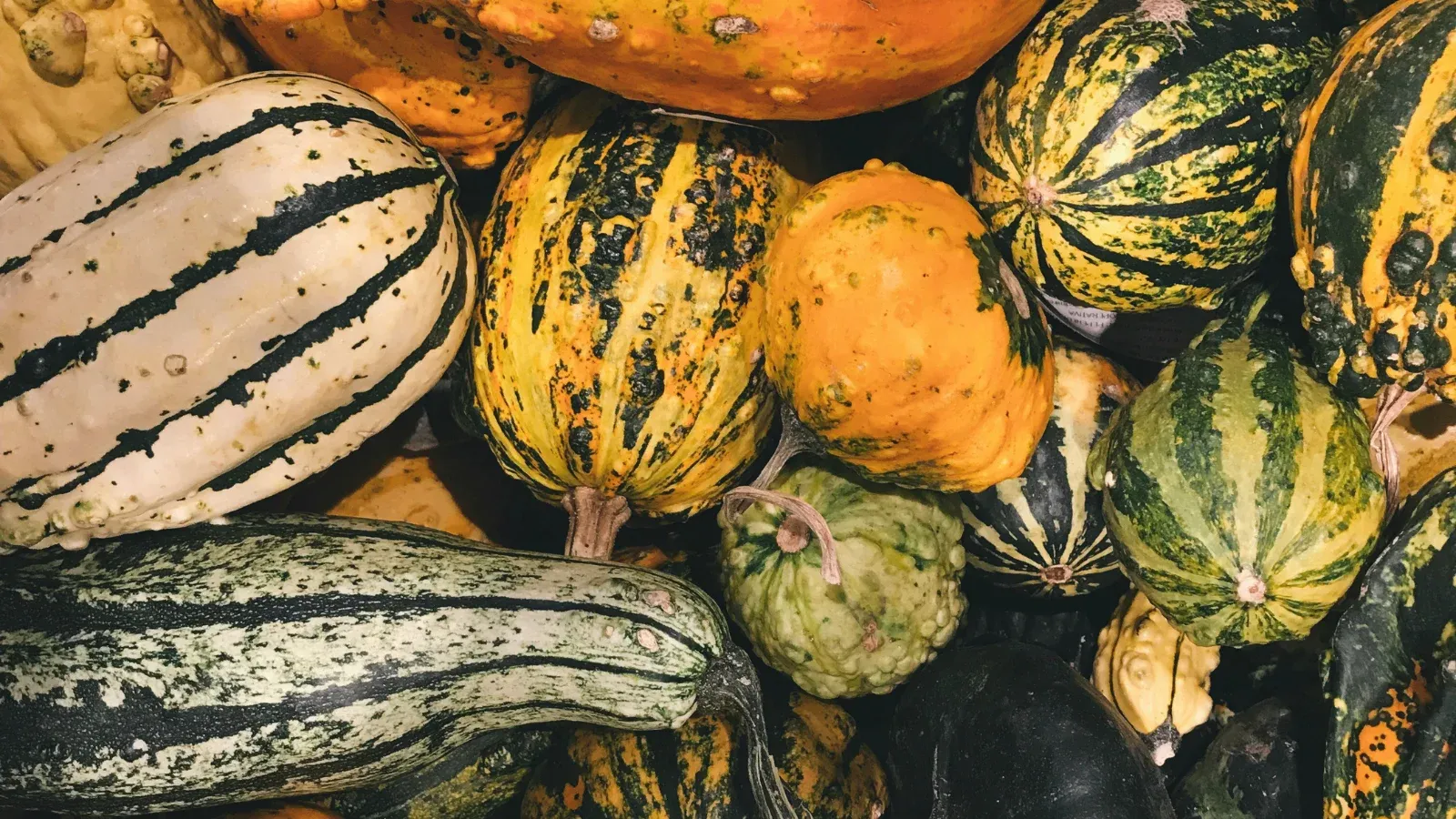
Winter squashes—specifically Delicata, Butternut, Acorn, and Kabocha—are kitchen workhorses because of their starch density. Unlike softer summer varieties, their cellular structure holds up against high heat, converting complex carbohydrates into caramelized sugars without collapsing into mush. They maintain crisp, defined edges on a roasting sheet, absorb animal fats, and provide an earthy foundation for fast weeknight dinners.
Getting the most out of them comes down to matching the specific squash variety to the right cooking method: high-heat blistered halves, starch-dense homemade gnocchi, or stuffed cavities that double as their own bowls.
These five savory recipes make proper use of winter squash varieties, pairing high-heat roasting with acid, salt, and crisp proteins to retire the sweet pumpkin cliché for good.
1. Roasted Delicata Squash Dinner with Spiced Lamb and Greek Yogurt
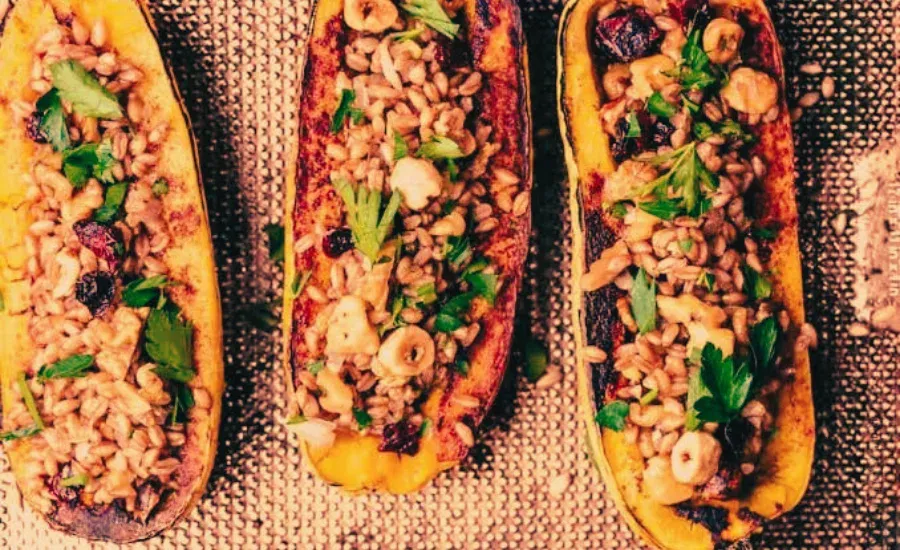
Delicata is the most efficient winter squash because its thin, tender skin requires zero peeling. It roasts into a crisp shell with a custard-like center in under twenty-five minutes.
The Squash Prep: Halve two Delicata squashes lengthwise, scrape out the seeds, and slice crosswise into half-inch half-moons. Toss directly on a baking sheet with extra virgin olive oil, sea salt, cracked black pepper, and ground coriander. Roast at 425°F (220°C) for twenty-two to twenty-five minutes, flipping once until both flat sides develop deep mahogany blistered spots.
The Savory Protein: Brown one pound of ground lamb in a hot cast-iron skillet, breaking it into small, crisp bits. Season with minced garlic, ground cumin, smoked paprika, and a pinch of cinnamon. Drain excess grease, preserving two tablespoons of rendered fat.
The Assembly: Spread a generous cup of cold, strained whole-milk Greek yogurt across a wide ceramic serving platter. Mound the hot roasted Delicata rings over the yogurt, spoon the crispy spiced lamb and reserved pan drippings across the center, and finish with toasted pine nuts, fresh torn mint, and a squeeze of fresh lemon juice.
2. Brown Butter & Crispy Sage Roasted Butternut Squash Gnocchi
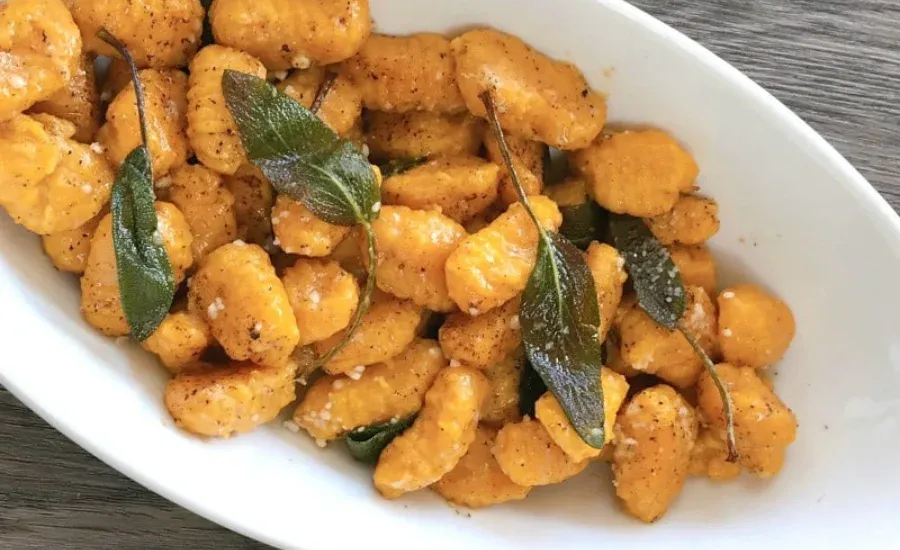
Watery purée destroys gnocchi dough. Roasting butternut squash cut-side down concentrates the natural starch, yielding light, pillowy pasta that holds its shape in sizzling brown butter.
The Squash Prep: Halve a large butternut squash, remove the seeds, prick the skin with a fork, and roast cut-side down at 400°F (200°C) until completely collapsed (roughly forty-five minutes). Scoop out the pulp while hot and run it through a potato ricer onto a clean kitchen towel. Let the steam evaporate fully to eliminate excess moisture.
The Pasta Dough: In a wide bowl, combine two cups of cooled squash purée with one egg yolk, a pinch of sea salt, freshly grated whole nutmeg, and one and a quarter cups of unbleached all-purpose flour. Work gently into a soft dough—do not over-knead. Roll into ropes, slice into one-inch pillows, and boil in salted water for ninety seconds until they float.
The Sauce: Render four ounces of diced pancetta in a wide stainless-steel pan until crispy. Remove the meat, add six tablespoons of unsalted butter, and swirl over medium heat until the milk solids turn nutty and hazelnut-brown. Drop in fresh whole sage leaves until fried and crisp. Drop the boiled gnocchi directly into the brown butter to sear the exterior for sixty seconds. Plate immediately with the crispy pancetta, flaky salt, and shaved Parmigiano-Reggiano.
3. Stuffed Acorn Squash Dinner with Sweet Italian Sausage and Wild Rice
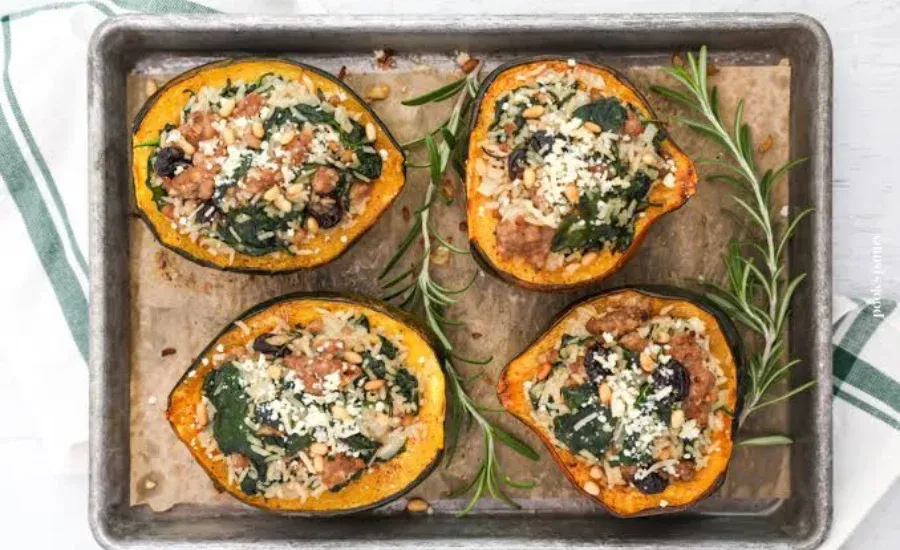
Acorn squash has a mild, peppery-sweet profile and a natural ribbed bowl structure that makes it ideal for savory stuffed dinners.
The Squash Prep: Slice a quarter-inch off the stem and base of two acorn squashes so they sit flat, then cut each squash in half horizontally. Scoop out the seeds and fibrous strands. Rub the interiors with olive oil, coarse salt, and cracked pepper. Place cavity-side down on a parchment-lined baking sheet and roast at 375°F (190°C) for thirty-five minutes until tender when pierced with a paring knife.
The Stuffing: Brown loose sweet Italian pork sausage in a skillet with diced shallots, finely chopped celery, and minced garlic. Stir in four cups of roughly chopped Tuscan lacinato kale until wilted. Fold in two cups of cooked wild rice, a half-cup of dried tart currants, and a half-cup of toasted chopped walnuts.
The Bake: Turn the roasted acorn squash halves cut-side up. Pack the warm sausage-and-rice filling into each cavity, mounding it high. Grate sharp Gruyère or aged white cheddar over each half and return to the oven at 400°F for ten minutes, broiling for the final two minutes until the cheese is bubbling and golden brown.
4. Sheet-Pan Roasted Kabocha Squash Dinner with Bone-In Chicken Thighs
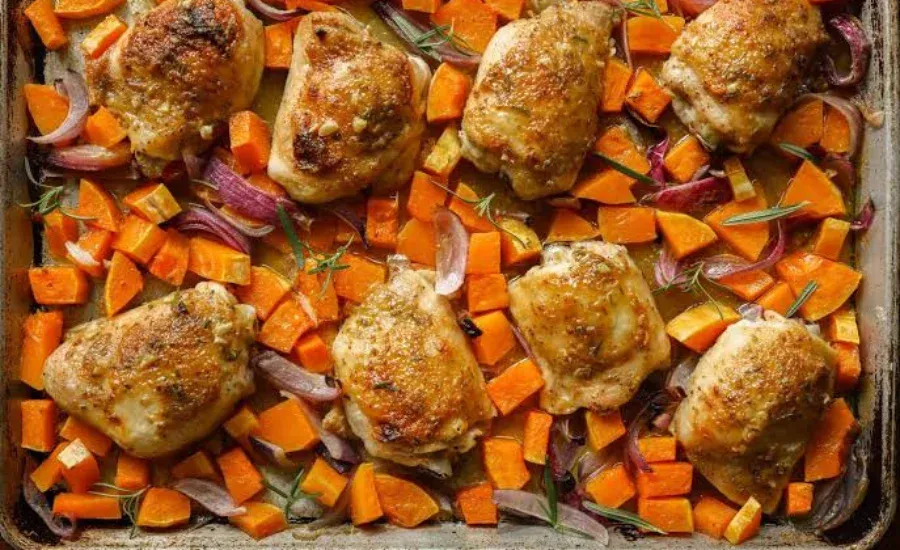
Kabocha (Japanese pumpkin) has the lowest moisture content of any edible winter squash, with a dense, chestnut-like texture that absorbs rendered poultry fat without turning soggy.
The Squash Prep: Cut a green Kabocha squash in half using a heavy chef’s knife. Scoop out the seeds and slice into three-quarter-inch wedges. Leave the dark green skin intact—it softens completely during roasting and adds an earthy, structural bite.
The Pan Assembly: Arrange four bone-in, skin-on chicken thighs on a heavy half-sheet pan. Scatter the Kabocha wedges and two thickly sliced red onions around the chicken. Toss the vegetables directly in olive oil, smoked paprika, coarse sea salt, and crushed garlic cloves. Season the chicken skins heavily with salt and ground sumac.
The Roast: Roast at 425°F (220°C) for forty minutes. As the chicken roasts, the rendered schmaltz coats the Kabocha wedges, frying their edges against the hot sheet pan. Finish with a splash of aged sherry vinegar across the pan and a handful of chopped flat-leaf parsley right out of the oven.
5. Roasted Butternut Squash & French Green Lentils with Pecorino
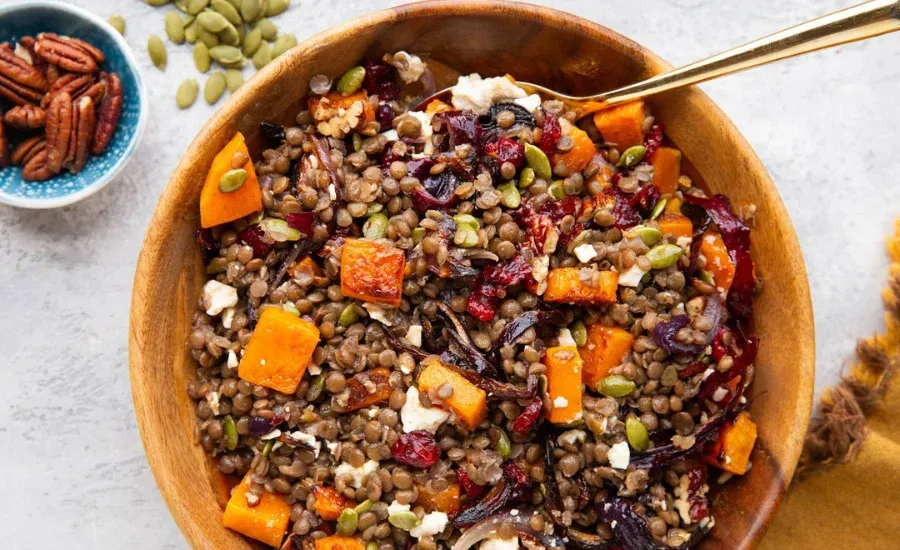
An earthy, bistro-style weeknight dinner that relies on the clean contrast between caramelized roasted squash cubes and peppery, firm-textured French Puy lentils.
The Squash Prep: Peel the neck of a large butternut squash, remove the seeds, and cut the flesh into uniform three-quarter-inch cubes. Toss with olive oil, fresh thyme leaves, salt, and a pinch of cayenne. Spread across a sheet pan in a single layer—spacing is critical so the cubes roast rather than steam. Bake at 425°F (220°C) for thirty minutes until blistered and browned.
The Lentils: Simmer one cup of French green lentils (Puy) in rich chicken or vegetable stock with a halved shallot, one bay leaf, and fresh thyme sprigs for twenty-two minutes until al dente. Drain thoroughly and discard the aromatics.
The Vinaigrette & Assembly: While the lentils are hot, whisk two tablespoons of extra virgin olive oil with one tablespoon of grainy Dijon mustard and one tablespoon of red wine vinegar. Fold the warm dressing directly into the lentils. Divide the lentils among shallow bowls, top with the hot roasted butternut cubes, and finish with a heavy shaving of salty Pecorino Romano and coarse black pepper.
How to Roast Winter Squash Without Turning It Soggy
If your roasted squash consistently turns into a wet mash, you are violating three basic kitchen physics rules:
Maintain High Surface Heat: Winter squashes need high roasting temperatures—between 400°F and 425°F (200°C–220°C). Anything lower will steam the squash in its own juices before the surface sugars have time to caramelize.
Never Crowd the Baking Sheet: When squash slices touch or overlap on a baking sheet, the moisture escaping from the cut flesh gets trapped, boiling the squash. Keep at least a half-inch of empty space between every slice or wedge.
Leave Edible Skins Intact: Peeling Delicata, Kabocha, and young Acorn squash is a waste of time. The skins soften into a tender exterior during high-heat roasting, preserving the physical shape of the wedge and providing valuable dietary fiber.