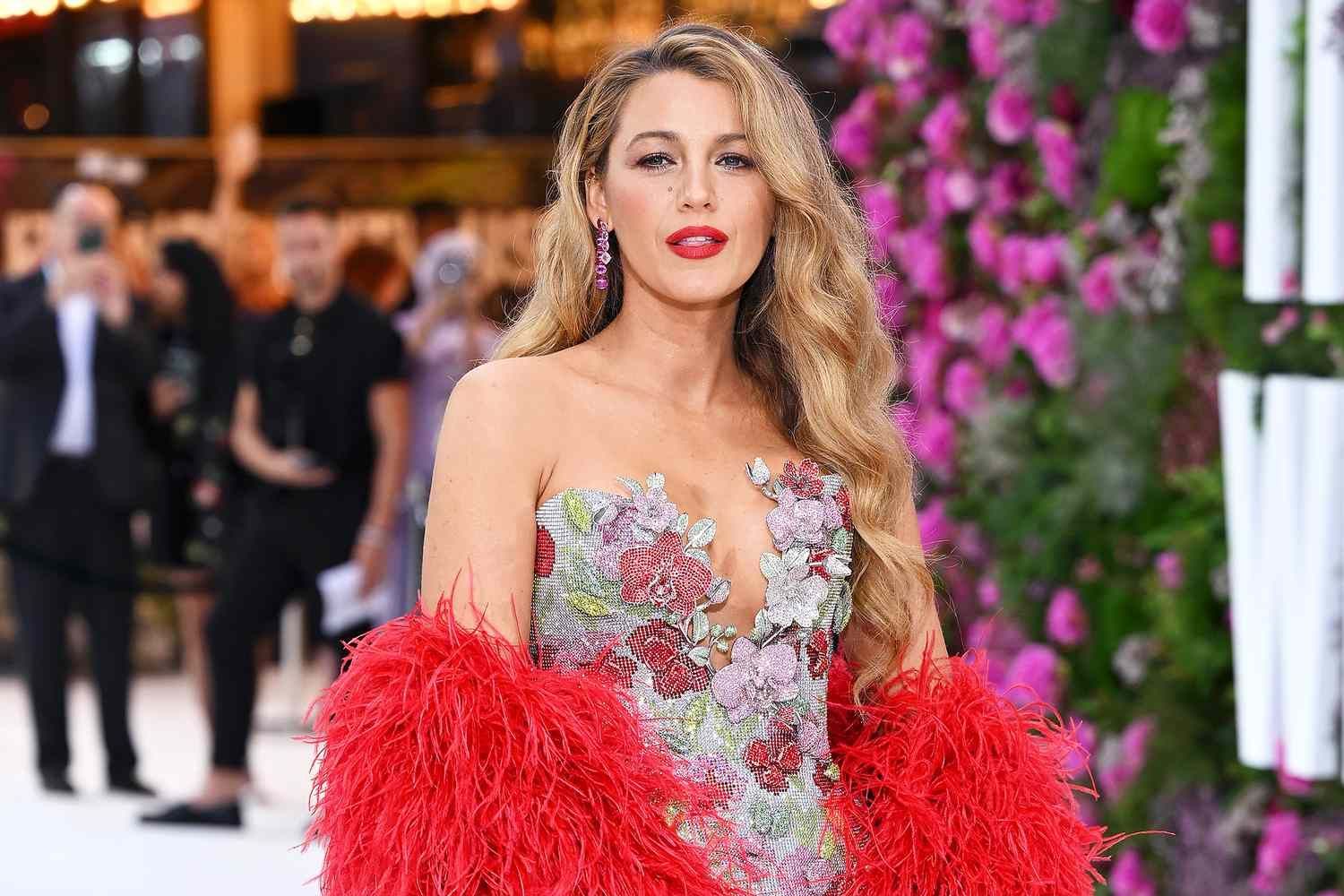
You knew her as Serena Van Der Woodsen, and for us millennials, she represented the girl who wore the best clothes, made chaos look chic, and somehow always landed on her feet. Then 2024 happened. And 2025. And now here we are in 2026, still talking about Blake Lively but not because of a comeback, but because the story refuses to close.
Blake Lively's reputation is one of the most documented image collapses in recent Hollywood history. What started as a promotional misstep for It Ends With Us became a legal battle, a PR war, and an extended public reckoning that resurfaced years of inconvenient choices. If you want to understand what actually happened, not the fan edits, not the PR spin, this is the breakdown.
She went from 'America's effortless sweetheart' to 'Hollywood's most contested figure' in under six months. Now, the question is no longer whether her image took a hit but whether the hit was earned.
Blake Lively's Public Image: Who She Was Before the Collapse
For almost two decades, Blake Lively held an unusual position in popular culture. She was famous enough to be a household name, aspirational enough to generate genuine admiration, and — crucially — uncontroversial enough that nobody looked too closely.
The Serena effect was real. Lively's portrayal of Serena Van Der Woodsen on Gossip Girl embedded her in the consciousness of an entire generation of women. The character was everything the show's audience was told to want: stylish, effortless, magnetic. Lively translated that into a real-life image with precision. Her relationship with Ryan Reynolds, their mutual public roasting, their carefully curated family content, it all added up to a brand that felt authentic because it never asked you to question it.
That is the foundation that cracked in 2024, not because Lively suddenly became a different person, but because the cracks had always been there, and the promotional cycle for It Ends With Us gave everyone a reason to look.
The It Ends With Us Promotional Disaster
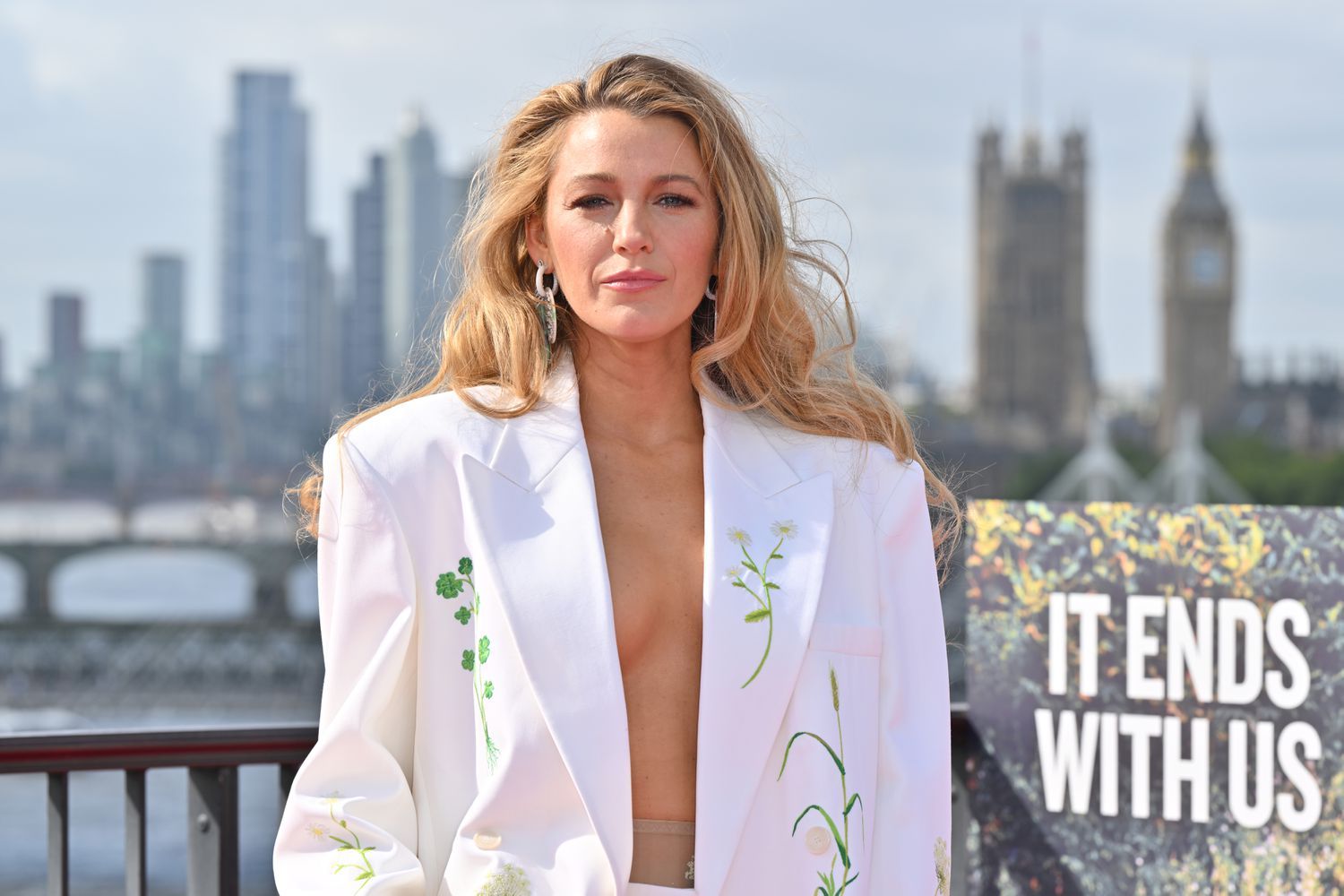
The It Ends With Us press tour is now a case study in what happens when a star's personal brand collides with the subject matter of her own film. Colleen Hoover's novel is a story about domestic violence, survival, and the complicated psychology of leaving. Lively promoted it with hair product launches, floral dress codes, and 'grab your florals & friends' energy.
The disconnect was immediate and it was loud. Online discussions flagged the tension between Lively and director Justin Baldoni early: cast members not following Baldoni on social media, separate promotional appearances, no collaborative presence. Audiences initially assumed that was a marketing tactic but it turned out to be something more substantive.
Baldoni doubled down on the film's weight while Lively pivoted to her business launches and he internet made its choice about which read it preferred.
THE VIRAL MOMENT The Kjersti Flaa interview — an older video in which journalist Kjersti Flaa stated she 'wanted to quit her job' after interviewing Lively — resurfaced at exactly the wrong (for Lively) time. It gave the 'mean girl' narrative a face and a timestamp.
The Legal Battle: What Blake Lively and Justin Baldoni Actually Filed
In late 2024, Lively filed a legal complaint against Baldoni alleging sexual harassment, a coordinated smear campaign, and a hostile work environment during filming. The complaint was filed with the court and simultaneously shared with The New York Times, which published a detailed account of Hollywood PR operations.
The strategy was clear: control the narrative before Baldoni could. It worked, briefly. Baldoni lost projects, lost representation, and faced significant public backlash.
Then Baldoni responded with a countersuit against Lively, Ryan Reynolds, Lively's publicist, and The New York Times, and he brought documentation. The receipts changed the public temperature and by mid-2025, the PR momentum had shifted. Lively's team's case appeared less airtight than the initial New York Times piece suggested.
Baldoni’s countersuit, filed in January 2025 and valued at $400 million, made specific and documented claims. His legal team alleged that Lively and Reynolds ran a coordinated campaign to wrest creative control of the film from Baldoni, then used the harassment complaint as a mechanism to sideline him professionally once he pushed back. The filing included text messages that, according to Baldoni’s attorneys, showed Lively’s team explicitly discussing how to shape media coverage and neutralize Baldoni in the press. Critically, it named Ryan Reynolds as an active participant,not a bystander husband, in the communications strategy. The New York Times countersuit, filed separately, alleged the paper published a one-sided account based on materials selectively provided by Lively’s publicist, without adequate verification of Baldoni’s perspective.
What this tells us about celebrity culture and how it operates is more instructive than the outcome of any individual lawsuit.
The Resurfaced Record: Past Controversies That Complicated the Narrative
When an ongoing controversy prompts people to look back, the results are rarely flattering. In Lively's case, the retrospective uncovered three specific incidents that complicated her carefully constructed 'progressive, unbothered' image:
The plantation wedding (2012)
Lively and Reynolds married at Boone Hall Plantation in South Carolina, a former slave plantation. The choice was not controversial at the time but it became retroactively significant as cultural awareness shifted. However, it remains a factual data point about the judgment calls she was making before the current scrutiny existed.
The Harvey Weinstein comments
Lively made public statements defending Harvey Weinstein that were resurfaced and widely shared in the context of her current lawsuit. The irony of someone alleging industry misconduct while having previously defended the industry's most prominent abuser was not lost on audiences.
The Woody Allen comment
Praising Allen as 'empowering to women' — post-allegations — is the kind of statement that ages poorly under any circumstances. In the middle of a harassment lawsuit, it ages significantly worse. None of these incidents are new. All of them matter more now than they did when they happened, which is precisely how reputation works.
A Marketer's Take: Where Blake's Team Failed
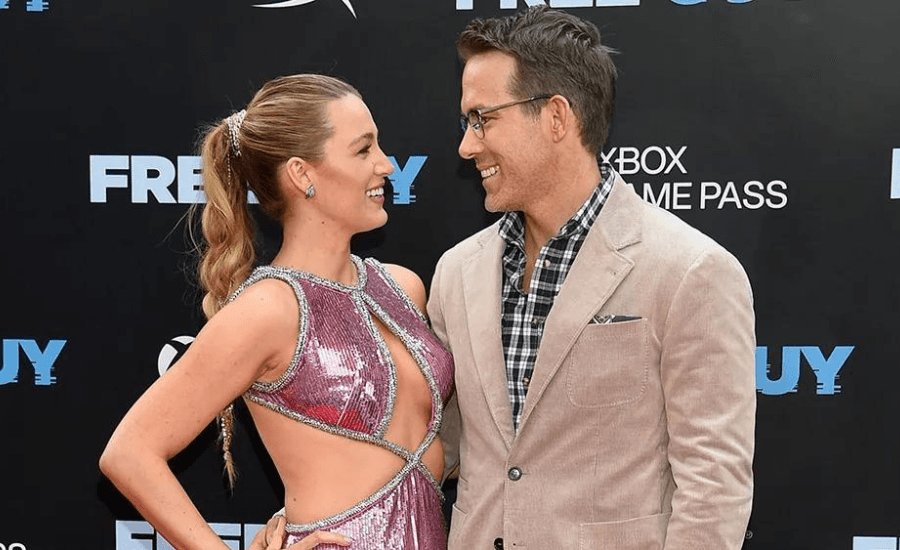
The Blake Lively PR situation is not a mystery. It is a textbook example of what happens when a communications team optimizes for brand extension when it should be doing crisis containment.
Here is the breakdown:
Mistake 1: They launched during the wrong news cycle.
Rolling out a hair product line during the promotional window of a domestic violence film is not a scheduling error — it is a priority signal. Audiences read it correctly. When your product launch and your film premiere compete for the same attention, you have told the audience which one matters more to you.
Mistake 2: They used legal action as a PR tool.
Filing a complaint and simultaneously handing it to The New York Times is not a legal strategy. It is a reputation play. The problem with reputation plays is that they require the opposing party to have nothing. However, Baldoni had something. And The New York Times is now in a countersuit. That outcome was foreseeable.
Mistake 3: They underestimated the internet's institutional memory.
The Kjersti Flaa interview had been sitting on YouTube for years. The Weinstein quotes were publicly indexed. The plantation wedding photos were in every gossip archive. The team appears to have calculated that none of this material would resurface at scale. In 2024, in a high-attention controversy, that calculation was wrong.
Mistake 4: They had no credible contrition arc.
Effective reputation repair requires a moment of visible accountability. Lively never provided one. She did not address the promotional disconnect directly, she did not address the resurfaced interviews, therefore the absence of that moment left audiences with no path back to sympathy.
Mistake 5: They chose silence over statement.
There is a version of the Blake Lively situation that could have been managed with a single, well-timed public statement; not an apology tour, not a press conference, but one direct acknowledgment that the promotional rollout missed the mark on tone. That statement never came. Instead, Lively’s team defaulted to legal action and media silence, which in the absence of any counter-narrative allowed Baldoni’s team to define the story. Silence is not neutral in a PR crisis. When one side is talking and the other is not, the side that is talking wins the public narrative, regardless of the legal facts.
THE TAKEAWAY FOR WORKING WOMEN Your personal brand is not just what you put out. It is the sum of every decision, statement, and choice that exists on the public record, including the ones you made before anyone was paying attention. Build accordingly.
Is Blake Lively the Ultimate Hollywood 'Yapper'?
There is a specific pattern in Lively's controversies that is worth naming: she talks. A lot. In interviews, in promotional appearances, in the Kjersti Flaa video, in the promotional press run. Hollywood has a long history of stars whose public relations problems were self-generated. Not by scandal, but by saying too much in the wrong room.
If the concept of a "Hollywood Yapper" resonates, read our breakdown on dating a yapper and modern conversational boundaries. Blake is not alone in this category, but she is currently the most visible example of how over-communicating plays out at scale.
Blake Lively's Reputation in 2026: Where Things Stand
The legal case is ongoing and recently the judge dismissed 10 of her 13 claims, including those of sexual harassment. However, neither side has achieved a definitive win in court or in public opinion. Baldoni has the more coherent narrative at the moment: the receipts strategy was effective. Lively's team appears to be in a holding pattern.
What has changed in 2026 is the audience's orientation toward the story. The initial shock of the revelation has settled into something more analytical. People are less interested in whether Blake Lively is a good or bad person and more interested in what the situation reveals about how Hollywood power actually operates.
That is a harder environment to navigate than a simple cancellation cycle because it does not have a resolution. It just continues.
Frequently Asked Questions: Blake Lively's Reputation & Personality
What is Blake Lively like in real life?
In real-life interactions, public accounts and industry reports paint a starkly polarized picture. Longtime collaborators and brand partners often describe her as charismatic, witty, and deeply involved in creative styling. Conversely, several entertainment journalists and industry insiders point to resurfaced interviews—most notably the 2016 sit-down with reporter Kjersti Flaa—highlighting moments of dismissiveness, passive-aggressive humor, and an insular dynamic that critics categorize as typical "mean girl" behavior under stress.
Is Blake Lively considered a nice person or is her reputation damaged?
While Lively maintained a reputation as an untouchable Hollywood sweetheart for over a decade, her public perception has fundamentally shifted following the It Ends With Us press cycle and ongoing legal disputes with Justin Baldoni. Public sentiment has moved from viewing her as effortlessly charming to scrutinizing her defensive PR strategies, past controversial statements, and perceived lack of genuine accountability.
What is Blake Lively's popularity and public standing right now in 2026?
Her popularity is at an all-time low compared to her peak Gossip Girl and red-carpet eras. While she retains a dedicated core fanbase and successful commercial ventures like Betty Buzz, mainstream public opinion remains skeptical. Her favorability ratings have dropped significantly due to prolonged legal battles, resurfaced archival footage, and the perception that corporate brand promotion took precedence over sensitive narrative themes.
What is Blake Lively's personality like in interviews?
Lively's interview persona relies heavily on fast-paced banter, sarcastic humor, and spontaneous storytelling. When an interviewer matches her rhythm, the dynamic appears engaging and effortless. However, when conversations venture into uncomfortable territory or when tone-matching fails, that same sarcastic banter can read as condescending, defensive, and dismissive of the interviewer's professional boundaries.
Will Blake Lively's career fully recover from the backlash?
Career rehabilitation in Hollywood is standard, but it requires a structured narrative pivot. Because her team opted for legal countersuits and extended public silence rather than a direct, humble acknowledgment of the promotional disconnect, the path to rebuilding mainstream goodwill will be gradual and dependent on future film choices and unscripted transparency.
What is Blake Lively’s net worth in 2026?
Blake Lively’s net worth is estimated at approximately $30 million as of 2026. This portfolio reflects her extensive film and television earnings, equity in the Betty Buzz beverage enterprise, and previous consumer ventures. While the PR crisis damaged brand endorsement potential in the near term, her underlying commercial holdings remain financially secure.