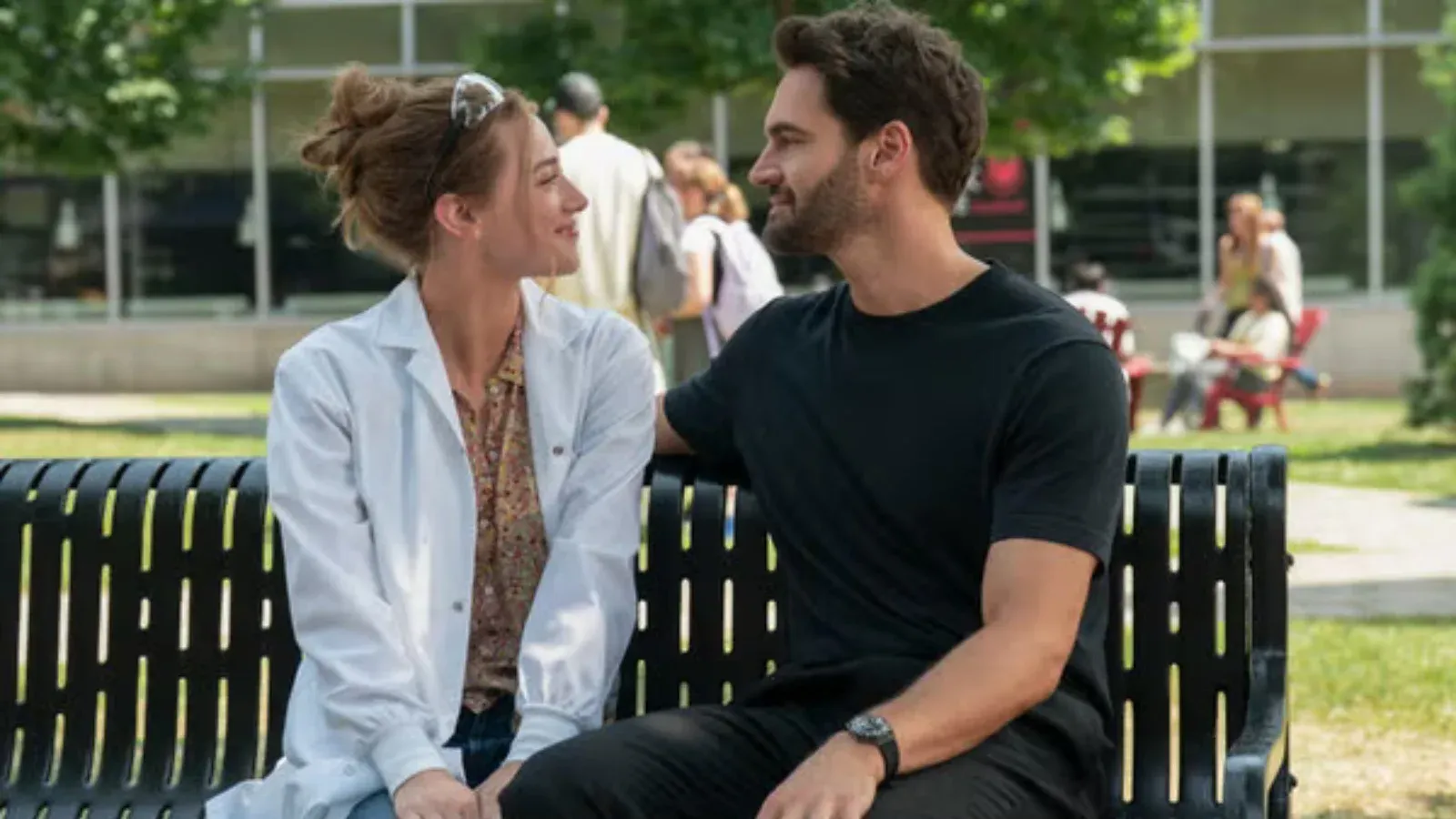
Hollywood adapted Ali Hazelwood's "The Love Hypothesis" this week, and there's already a detail bigger than the reviews. Tom Bateman, who plays love interest Adam Carlsen, is married to Daisy Ridley, whose "Star Wars" character indirectly inspired the Reylo fanfiction the whole book grew out of. He is playing a role his own wife's character helped create. That is the fun trivia everyone will forward this weekend. It is not the thing people are actually arguing about three days in.
The film landed on Prime Video with a strong critical score and real audience affection, most of it aimed at Lili Reinhart and Bateman together. Reinhart plays Olive with the right mix of competence and mess, the kind of PhD candidate who can defend a thesis and still panic-text her best friend before a fake date. Bateman brings enough restraint to Adam that the grump-to-softie arc reads on screen instead of feeling like a trope someone assigned him. The chemistry is real, which is the one thing a fake dating plot cannot survive without, and most reviewers agree it carries the film even where the script gets thin.
The Holden Cut: When Subplots Lose Their Pulse
Where the script gets thin is the first real complaint. The movie cut Holden Rodrigues completely, Adam's childhood best friend and the person who does the most to soften him on the page. In the book, Holden is not a side character killed for time. He dates Malcolm, which forces Malcolm and Adam into the same room and makes them deal with each other properly. Without him, the film loses an entire thread of how Adam becomes someone capable of loving Olive back in the first place. Readers are annoyed but philosophical about it. Subplots get trimmed in adaptations. That part tracks, even when it stings.
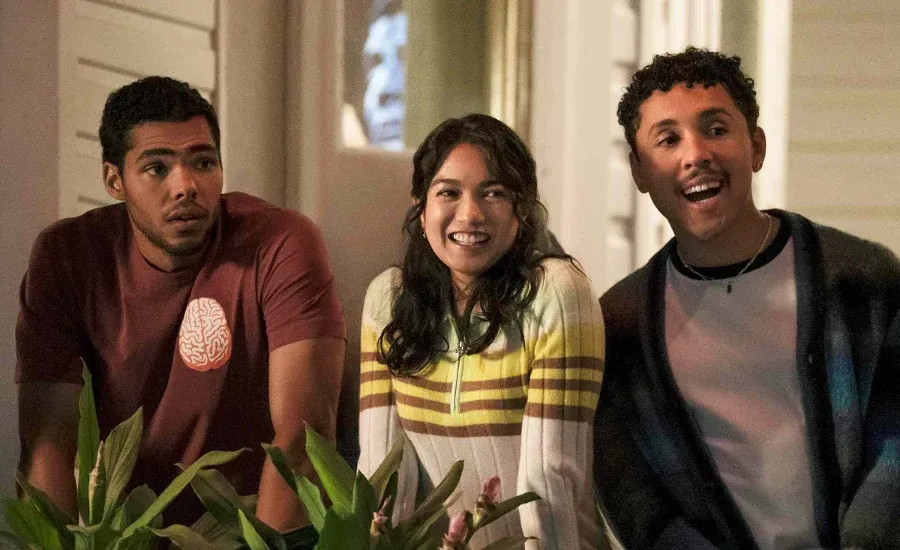
The choice that actually stings is smaller and stranger. In the novel, Olive's best friend Anh is Vietnamese. In the movie, she keeps the exact same name, unmistakably Vietnamese, and becomes Filipino instead, complete with a brand-new scene built around a Filipino family tradition, a floating lantern ritual clearly meant to signal cultural care. The specificity just belongs to a culture the character no longer has any real connection to.
Keeping the Name, Swapping the Heritage
One fan reaction already nailed it better than most film criticism manages: Anh is such a Vietnamese name, they made her Filipino. At least change the name.
That is the whole problem in one sentence. Nobody is asking Hollywood for less cultural specificity. The production clearly wanted it enough to write an entire new scene and shoot it beautifully. It just could not be bothered to match the name to the identity it assigned, which is the oldest habit in the book: treating Asian identity as an interchangeable variable rather than a fixed detail worth protecting. Swap the ethnicity, keep the name, add a lantern, call it representation. Nobody checked whether the label still matched what was inside it.
What makes this instance worth flagging is how avoidable it was. Nobody demanded that the studio add a culturally specific scene at all. They chose to, presumably, to prove the adaptation cared about more than the two leads kissing in a lab. Having made that choice, getting the one identifying detail wrong is not a rounding error. It is evidence of how little thought went into the part they were trying to get credit for.
## The Cost of Casual Representation
The lantern scene is genuinely lovely on screen. It is also proof that someone in that writers' room understood exactly how much a small cultural detail could add, and still reached for the wrong one. Reinhart and Bateman will get the headlines this week. The Anh detail is the one worth remembering by next week.