The Body on Netflix premiered this morning, November 11, 2026, and the costume department deserves the first round of credit. The eight-episode series is set in the fall of 2004, so the girls wear velour tracksuits, carry Balenciaga handbags, and text on Motorola flip phones that close with a satisfying snap. A woman who was sixteen that fall is 38 today, and every one of those objects was chosen with her in mind.
The Body Netflix Series: Plot and Cast
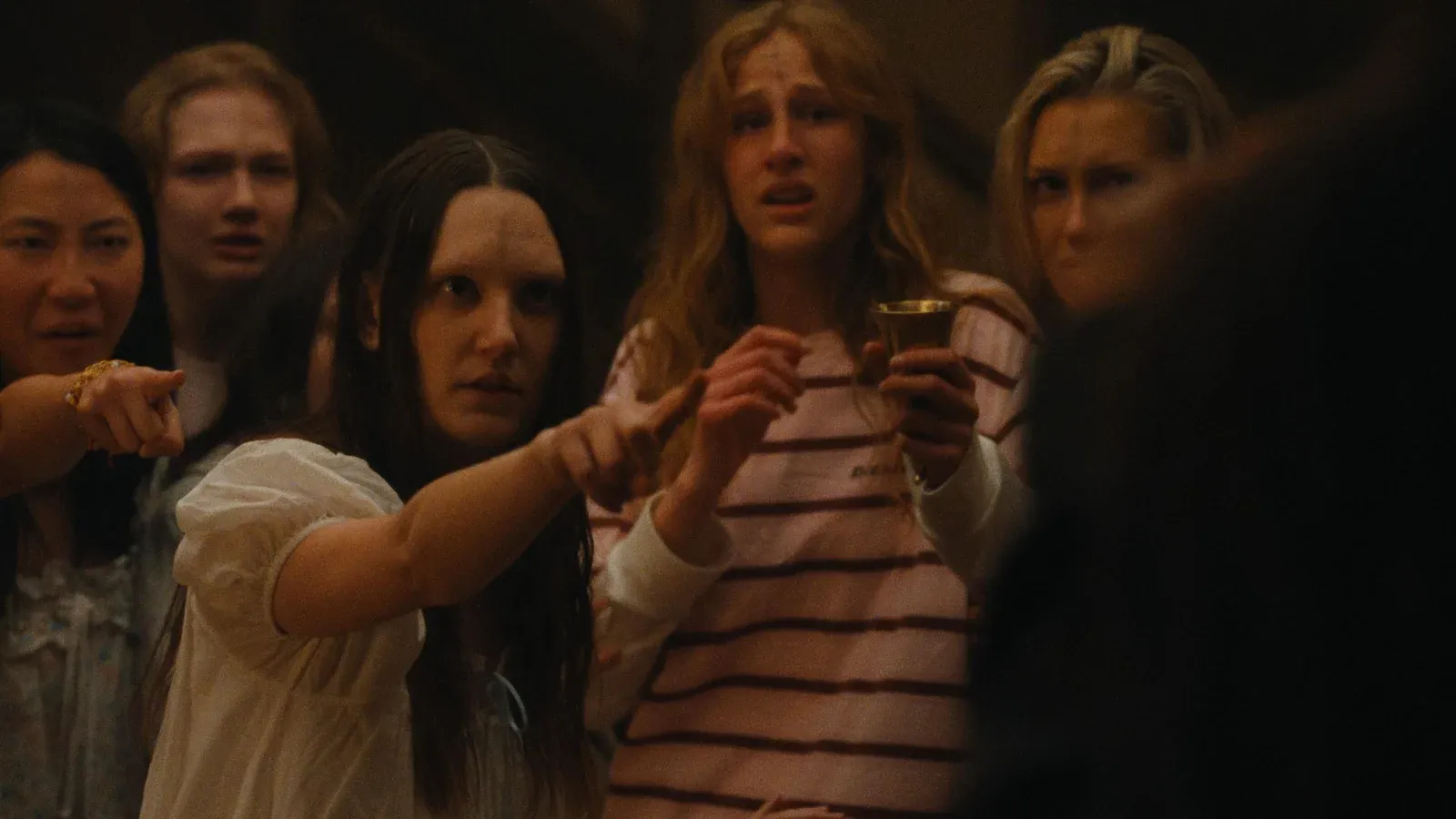
The Body Netflix series follows a Catholic school dance team, a Halloween hazing ritual that goes wrong, prophetic visions and a town sliding into mass hysteria, with Kristina Bogic, Sara Boustany, Sofia Wylie and Geena Meszaros in the central roles and Gabby Windey as coach. Salem tested that template in 1692, and the genre has always offered the same treat, which is that girls get to be frightening for once. Creator Quinn Shephard, with Riley Keough among the executive producers, calls it a love letter to the teen movies and erotic thrillers she grew up on, with Carrie, Jennifer’s Body and Mean Girls as the family tree. Mean Girls opened in April of 2004, so the show is set in the very year of one of its own ancestors, quoting the past from inside it.
Why The Body Sells 2004 Back to Women
The French sociologist Maurice Halbwachs argued in the 1920s that memory is a group project. A person recalls a childhood holiday the way the family has agreed to retell it, and a whole generation recalls a decade the same way, through a shared version that the group edits and each individual absorbs. A 38-year-old’s 2004 therefore belongs to her only in part. The rest consists of whatever the culture around her decided was worth keeping, which here means tracksuits, flip phones and handbags, and which quietly leaves out the bad skin and the long dull afternoons.
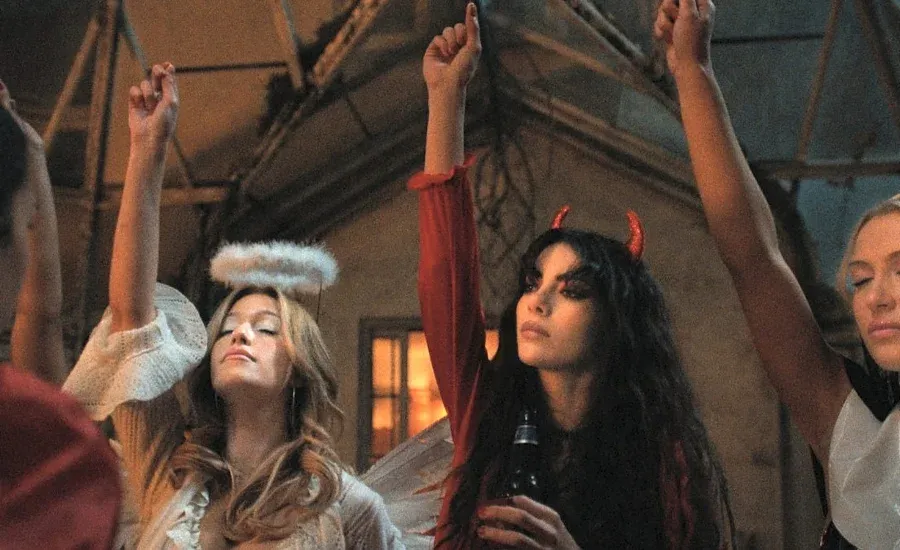
What has changed is the editor. That editing used to happen at kitchen tables, at school reunions, in the slow retelling among old friends. Now a streaming catalog does a large share of it, and a catalog needs a version of 2004 that is photogenic, consistent and easy to binge. Recognizing the Motorola, remembering the ringtone, knowing which bag Balenciaga was selling that year, all of that registers as proof of having been there, so the production design works as a handshake and the viewer returns it automatically.
The Body Characters and the Cost of Nostalgia
The characters of The Body live inside exactly this kind of group, the Lions, an all-female dance troupe where tryouts and induction rituals decide who belongs and what the team gets to remember about itself, and the plot starts the moment a ritual goes wrong. Viewers in their thirties have lived inside versions of that: the clique, the tryout, the invitation to the one good party, and recognizing it is part of what they came for.
And the audience has already paid once. Women who were teenagers in 2004 bought that period in full and in the original currency, with the curfews, the real humiliations, the real haircuts and the real boy who never called back. Streaming sells it back in a cleaned-up edition, where the haircuts are art directed, the cruelty has good lighting, and the discomfort has been removed while the logos stay. It is adolescence as a product, minus the adolescence.
2004 also happens to be a very convenient year to resell. Facebook had just opened to a handful of campuses, phone cameras produced photos the size of postage stamps, and a teenager’s worst weekend left no permanent record. That era survives almost entirely in memory, and memory edits generously. A past without receipts can be sold in whatever version the seller likes, because no one in the audience can pull up the original and compare it.
The buyers are exactly the group with the money and the motive. Women between 25 and 45 hold jobs, pay rent that has climbed faster than their salaries, and spend their evenings choosing which exhausting new thing to try next. A story whose ending is already known carries no emotional risk. Jennifer’s Body, dismissed when it opened in 2009, has since been promoted to cult classic by the same women who watched it fail, a clean demonstration of a group rewriting its own past the moment that past becomes useful.
The Body Parents Guide and Other Premiere-Day Searches
Premiere-day search data for The Body shows the arithmetic from two directions. Among the breakout queries are a parents' guide, typed by adults checking whether their own teenagers can watch this, and a search pairing an actress’s name with the word age, which is a precise way of measuring how far the sixteen-year-old on screen has drifted from the one on the couch.
Somewhere tonight a woman is pricing a used Motorola flip phone on eBay, and the market is delighted to help.