

Treating Mean Girls like a campy relic of 2004 teenage cruelty is a comfortable lie.
The film was never a disposable high school satire; it was an accurate ethnographic study. The joke turns sour the moment you look around your thirties and realize the exact same behavioral patterns are fully operational. The only difference is that pleated skirts and lockers have been swapped for tailored wool coats, private messaging threads, and closed dining room tables.
High school didn’t end. It just acquired an expense account, better lighting, and a veneer of adult manners.
The Polite Violence of the Closed Circle

Adults rarely have the brazen honesty to walk up to your face and announce that you can’t sit at their table. The mechanics of adult exclusion are understated, calculated, and designed with built-in plausible deniability.
The cafeteria table didn't vanish; it simply evolved into the private text thread, the locked WhatsApp group, and the curated drinks where three women mysteriously fail to mention the plan to a fourth. The weapon of choice is no longer open mockery. It is the tactical cold shoulder: the microsecond pause before someone answers your question, the shared glance across a marble table that excludes you without a sound, or the compliment delivered with just enough patronizing pity to leave a mark.
The modern Regina George didn’t self-destruct after graduation; she adapted. She wears neutral cashmere, drinks bone broth, and uses the language of therapy and boundaries to disguise territorial malice.
She doesn’t bully you directly. She hints that someone is "not in the right headspace," questions whether another woman "has the capacity" to be included, and manages group dynamics to ensure anyone who threatens her social capital is quietly edged to the perimeter. It is the same raw power grab, sanitized with modern conversational polish.
The Group Chat Burn Book
This tribalism thrives with disturbing ease inside adult social circles that pride themselves on being enlightened.
By your thirties, you would expect female friendships to be anchored in mutual security, shared taste, and emotional maturity. Yet astonishingly often, social circles fall right back into the ancient trap of manufactured scarcity. The invisible currency holding these groups together isn't genuine vulnerability—it is the unspoken requirement of a common target.
A dinner functions smoothly only when there is an absent third party to dissect over drinks. The conversation feasts on someone else's unraveling marriage, questionable financial moves, or parenting missteps.
The inevitable collateral damage of this dynamic is a quiet, ambient paranoia: If this is how effortlessly they dismantle her the moment she leaves the room, what happens when I step away from the table?
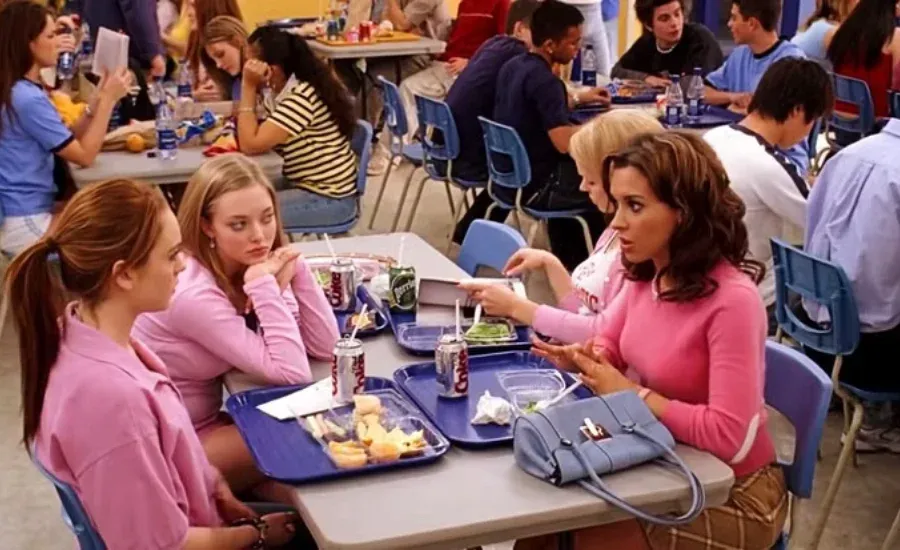
Intelligent, accomplished women find themselves biting their tongues, downplaying their wins, or nodding along to petty social policing simply to avoid becoming the next topic of conversation. You trade your autonomy for the cheap reassurance of being inside the fence, pretending not to notice that any circle built on mutual gossip will eventually turn its teeth on you.
The Scarcity Architecture
The endurance of female cliques isn't an accident of female nature; it is the conditioned reflex of an architecture built on scarcity.
Women have spent generations absorbing the implicit lesson that social status and influence are zero-sum games. When the prevailing myth insists there is only room for a select few at any given table, collaboration feels dangerous, and territorial anxiety sets in.
Cliques form as crude defensive pacts.
Aligning with the dominant personality provides an illusion of safety. Being part of the inner circle grants access to private information, protective cover, and social insulation. The cost, however, is exorbitant: you spend your energy maintaining micro-alliances, calculating social optics, and constantly monitoring the shifting moods of women who view proximity as leverage.
It is exhausting, undignified, and entirely self-inflicted.
The Illusion of the High Table
The ultimate tragedy of the adult clique is how hollow the prize actually is.
Women stay tethered to groups that demand conformity because the terror of exile feels worse than the humiliation of submission. We tolerate the quiet digs, the performative loyalties, and the emotional surveillance because we mistake being let into a clique for genuine belonging.
Belonging requires no audition. It never asks you to shrink your ambitions, perform manufactured misery, or participate in the quiet assassination of someone who isn't present to defend herself.
Real authority in your thirties is not measured by whether a self-appointed committee invites you to lunch. It is the cold, liberating realization that their table was never actually worth sitting at.
The moment you stop seeking entry into fragile, insecure circles, the entire hierarchy collapses. You don't need their permission, their validation, or their curated social safety. You simply walk past the cafeteria door, step outside into the crisp air, and realize you are entirely free.