
Everyone in Seattle is nice, and it took me about three years to work out that being nice and being kind are two different things, because in a city where the default setting is a warm smile, it's remarkably easy to mix them up. I came from Athens, where people are rude to your face and mean it, and it turns out I needed the contrast to see what was missing here.
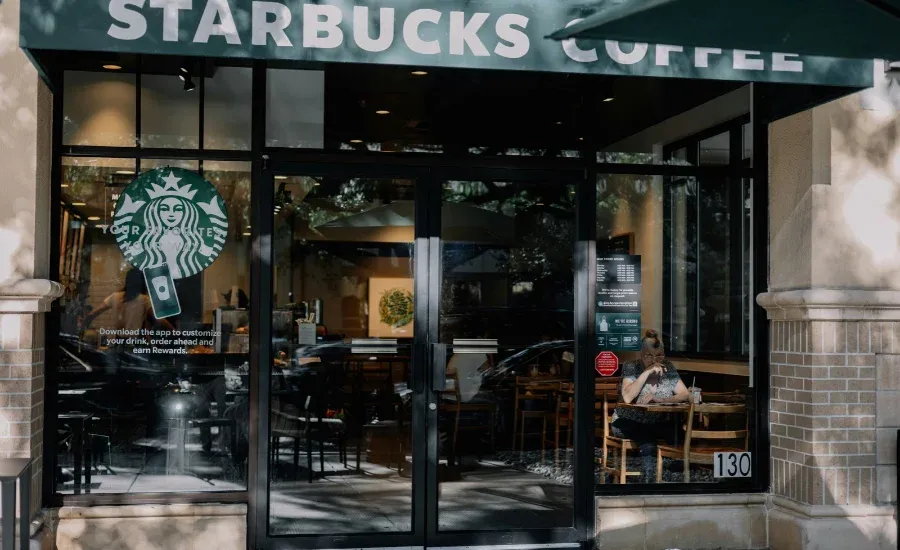
Last Tuesday I stood behind a woman at a downtown Starbucks for seven minutes while she cross-examined the barista about oat milk, seasonal syrups, and the roast profile of the regular drip, and by minute four I was eye-rolling at full power and turning around to share the pain with the people behind me. Nobody shared it. Nobody sighed or checked a watch, and the barista smiled and answered every question as if six people weren't waiting on a weekday morning before work.
In Athens, a takeaway coffee takes about eleven seconds. If you haven't decided by the time you reach the counter, the barista just stares at you until you do, and then you order, you pay, you take the cup that gets slid across the counter without a smile, and you leave. (Sit-down coffee is a different sport entirely. That one takes two hours and we're proud of it.) Nobody's feelings get hurt, because nobody thinks a coffee order is supposed to double as a bonding moment.
Transplants have been complaining about the Seattle Freeze for decades, so I'm not going to write that essay. People here aren't cold. If anything, they're warm and smiling and mostly somewhere else, and my theory is that West Coast politeness has very little to do with kindness and a lot to do with avoiding conflict. Nobody gets rushed or corrected or told no, and in exchange nobody tells you the truth either.
That trade looks harmless until you start pricing it. A no that never gets said doesn't disappear, it just turns into somebody else's time: the follow-ups, the revised proposal for a deal that was already dead, the renovation schedule that stays exactly where it was because telling you the truth would have felt rude. Politeness that leaves the other person to do the work isn't generosity, it just hands the bill to someone else, and the person who sends the "no worries!" is rarely the one who pays it.
Start with the driving. People do 23 in a 35 with both hands on the wheel and a line of cars behind them, and nobody honks. Someone parks their cart in the middle of the grocery aisle to read the back of a cereal box, and you don't say excuse me. You turn your cart around and come at the aisle from the other side so a stranger doesn't feel rushed. Lovely, really. It also means that at my normal speaking volume, people flinch.
A few months ago our general contractor missed a major deadline on the renovation, and it wasn't a small delay or the first one, so I called him and raised my voice. There was no screaming and no insults (my European pedigree wouldn't allow it), just a firm, loud, unmistakably annoyed tone, the way I'd talk to anyone in Greece who is wasting my time and my money. He went completely silent, and when we met at the house two days later, he stood three feet farther back than usual and looked visibly shaken, as if I'd threatened him.
Maybe he was just being careful because there's a contract involved, and maybe I was too loud, which I'm not proud of. But in Athens we'd have argued for five minutes, fixed the schedule, and had coffee the next morning, while here I got treated like I was losing my mind and the schedule didn't move.

So I started translating myself. Last week my interior designer sent over a presentation full of beige furniture that looked like a suburban dental clinic. My first draft said: "This isn't good, we aren't doing this. Please send me options like the ones I showed you." Instead, I asked an AI chatbot to rewrite it in West Coast corporate speak. Twenty minutes later, I sent a paragraph thanking her for her "thoughtful exploration of neutral tones" and asking if we could "pivot toward a stronger aesthetic direction." Three times the length for the same message. I hated myself a little.
The irony isn't lost on me, since translation is where I started professionally. I know how much gets lost between two languages, but I never expected to be translating from English into English, taking a sentence that says what I mean and padding it until it says what Seattle wants to hear.
Work is the same game with higher stakes. I spent a decade managing European corporate and legal projects, where a bad idea gets killed in the room with a flat "this doesn't work." With American clients and vendors, nobody says no. They thank me for my energy, love my perspective, and promise to circle back next quarter. It took me three weeks of follow-ups to realize a deal had been dead from day one and the other person just couldn't say it out loud.
Where I come from, a no is a favor. It gives you your afternoon back, it lets you move on to someone who actually wants to work with you, and it assumes you're an adult who can take it. Here, a no is treated like an injury, so it gets replaced with enthusiasm, and enthusiasm is the one thing I can't plan a quarter around.
Socially, same thing. "We should totally grab coffee!" from people who will never open a calendar. I've been running into the same faces at neighborhood events for two years, promising to catch up, and we have never once sat down.
The smaller version of this happens in text messages. Not long ago I wrote a long, warm birthday message, the kind that comes out of you in Greek without any effort, to a woman we see regularly through my husband's friendships, and she answered with a single dry thank you, the kind of reply you send to a LinkedIn contact who congratulated you on a work anniversary. In Athens, a message like that gets a phone call back, because warmth is an invitation and you're expected to take it. Here it gets processed.
And this is the part that actually gets me. At nearly every holiday party I've been to around Seattle, someone eventually corners me by the kitchen island and talks for thirty minutes about their company's stock, their equity refresh, and how their team is changing the world, smiling the entire time and never once raising their voice or asking where I'm from or what I do.
Even getting dressed to leave the house turns into a small standoff. In Athens, or in Paris for that matter, putting effort into how you look (a tailored coat, structured trousers, real shoes instead of trail runners) is just how you show up for dinner, but here a blazer at a casual gathering gets you the look people give someone who's trying too hard, or who missed the memo that everyone pretends not to care about money while quietly comparing stock portfolios in the background.
I don't miss Greek bureaucracy, and I definitely don't miss Athenian traffic, and Greeks have their own fake politeness too ("I'll call you tomorrow" is a lie in two languages). I'm not asking anyone to scream at a barista. What I want is much smaller than that: people who say what they mean, get annoyed when something goes wrong, and don't make me feel like a monster for wanting my coffee before noon. Mediterranean rudeness has one thing going for it, which is that it's paying attention.
An Athenian taxi driver yelling out his window because I'm taking too long with my suitcase is technically rude. A tech executive lecturing me about his RSUs for forty minutes, smiling the whole time, is considered good manners. Only one of them has actually looked at me.