The online case against suburbia is loud, confident, and made almost entirely by people who still fit inside six hundred square feet. What the migration actually looks like once you run the arithmetic on space, quiet, and adult friction.
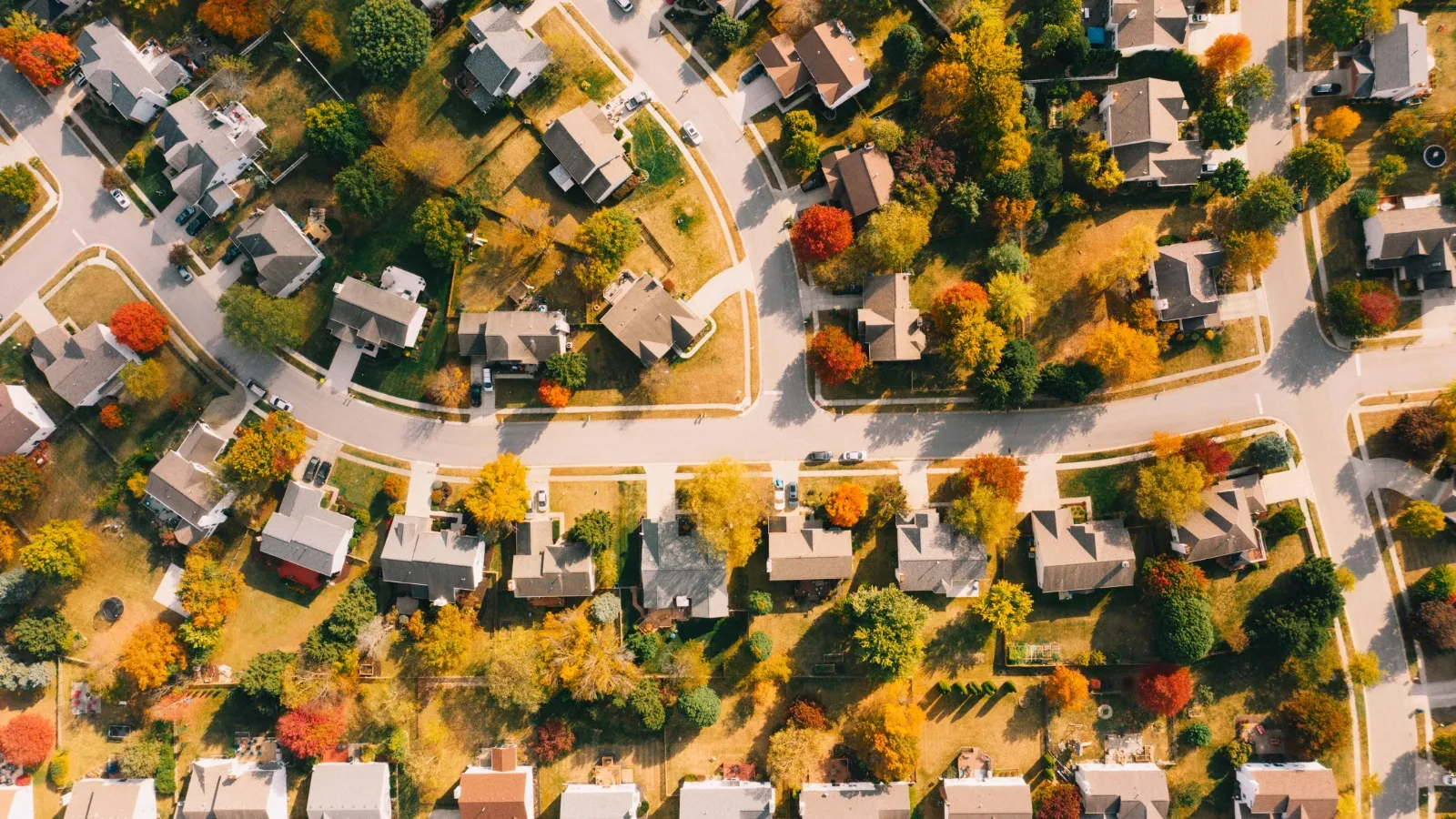
The suburbs discourse online runs on a loop and the loop has a shape. Somebody posts a photograph of a cul de sac in Ohio. Two hundred people arrive to explain that car dependency is killing the planet, that strip malls have destroyed the American commons, and that anybody choosing this life has surrendered something essential about themselves in exchange for a two car garage.
Then the identical accounts spend Sunday morning liking and bookmarking photographs of massive, sunlit kitchens with twenty-foot marble islands, walk-in pantries, and floor-to-ceiling glass looking out onto cedar trees. Nobody involved appears to find this cognitive dissonance strange.
It is easy to see why the urbanist argument sounds so virtuous on a screen. Walkability is appealing, density supports independent businesses, and the friction of the street can feel like culture when your life fits comfortably inside six hundred square feet. But that convenience is entirely conditional on having very little to manage. The online contempt for suburbia comes almost exclusively from people in their twenties, which is precisely the life stage where the city works without friction because your demands on physical space are practically zero. That is not moral superiority or enlightened civic planning; it is simply being twenty-six. And being twenty-six is a temporary stage of life, not an urban planning doctrine, no matter how articulately it is framed in a thread.
The Space Calculation That Ends the Debate
The conventional narrative insists that leaving the city is an ideological surrender. In reality, it is a pragmatic calculation about physical capacity, and reducing it strictly to baby gear misses half the picture.
People do not leave cities because they suddenly developed a deep affection for strip malls. They leave because a second room costs an extra fifteen hundred dollars a month, because parking has become a nightly forty-minute exercise in irritation, and because the romance of squeezing your entire life into nine hundred square feet curdles the moment you want a higher standard of living.
The assumption that the suburban migration is purely about stroller access and school lotteries is outdated. A significant, high-earning segment of this shift has no children at all. They are adults who simply ran out of patience for paying four thousand dollars a month to hear their neighbor’s blender through paper-thin drywall and store a vacuum cleaner behind their clothes rack. They want a dedicated workspace with an actual door, a kitchen where you can cook an elaborate dinner without setting groceries on the floor, room for an athletic reformer or a proper studio setup, and an acoustic perimeter where the evening does not belong to passing sirens.
At a certain point, the novelty of dense, collective living stops justifying the operational friction. The calculation stops resolving in the city’s favor not because people become boring, but because space, light, and architectural breathing room are legitimate baseline indicators of adult wellbeing.
The Working From Home Story Is Mostly Pragmatic
The popular version of the story holds that everyone decamped to the suburbs because remote work permanently dissolved the office. In reality, fully remote work remains a fraction of the market, and the sweeping predictions of a complete return to five-day office life proved equally false.
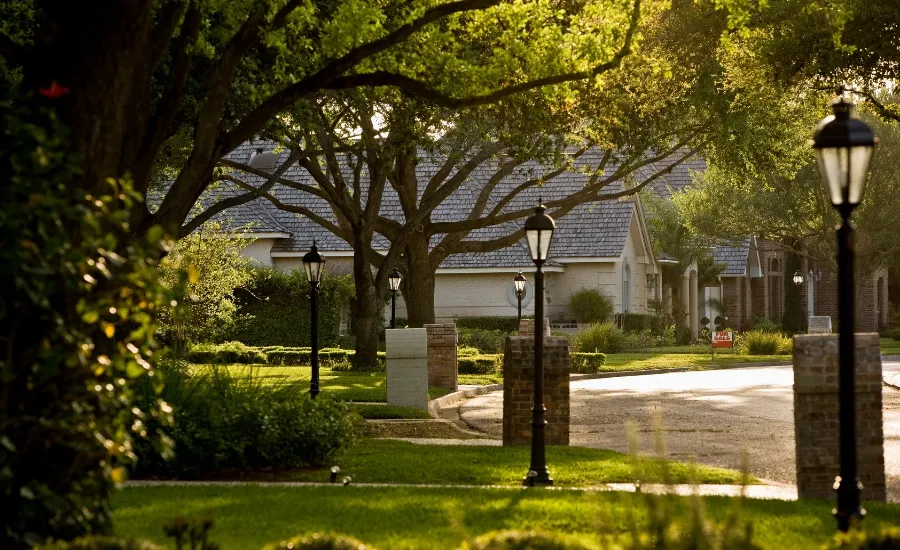
The woman who moved forty minutes outside the core is not sitting in a home office five days a week in pastoral serenity, completely severed from urban life. She is driving in on Tuesday, Wednesday, and Thursday, managing the commute, paying for parking, and maintaining her professional presence. She did not abandon the city; she simply renegotiated the terms of engagement.
She accepted a three-day commute in exchange for four thousand square feet, clean air, a private perimeter, and control over her daily environment. It is an intentional, practical compromise—far less tragic than the urbanists declare, and far less pure than the rural wellness influencers like to sell.
The Rebrand of Isolation as Wellness
What has genuinely shifted over the past decade is not the geography, but the vocabulary. The marketing around space has achieved something brilliant.
Living somewhere you cannot immediately walk to a crowded cocktail bar used to be diagnosed as social death—the bleak cinematic trope of female suburban stagnation right before a breakdown. Today, that exact geographic separation has been rebranded as nervous system regulation. Not having unpredictable, agitated strangers outside your front entryway is protecting your peace. A walk-in pantry that holds six months of provisions and an organized kitchen are the core infrastructure of slow living.
The daily reality is virtually identical to what cultural critics spent thirty years mocking. The only difference is the caption, and the caption changed because high-earning women decided to reclaim the aesthetic on their own terms.
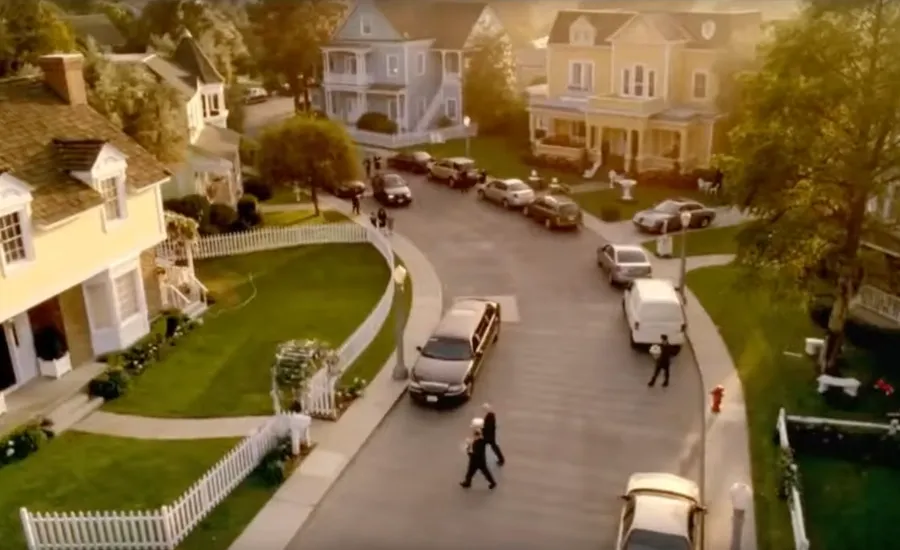
Desperate Housewives ran for eight seasons on the dramatic premise that the cul-de-sac was a sun-drenched psychological prison, and an entire generation was taught to read the setting as a warning against suburban surrender. What nobody acknowledges is that the entire show was staged across gorgeous, oversized homes with pristine architecture and impeccable kitchen finishes. A substantial portion of the audience spent eight years looking straight past the murder mystery to admire the cabinetry, the expansive layouts, and the light. The official moral of Wisteria Lane was supposed to be that domestic comfort hollows you out; what viewers actually retained was the indisputable luxury of the square footage.
The Third Places Trade-Off
One criticism from the urbanist camp deserves a direct answer: the argument that suburbs eliminate third places—those informal, accidental gathering spots between the office and the home.
The 1990s car-dependent sprawl was certainly guilty of this, but modern high-tier suburbs operate differently. They have specialty coffee shops where people spend hours working, boutique fitness studios where people see the same faces every morning, and local wine bars that function as tight social anchors. What they genuinely lack is the chaotic, unplanned collision—the accidental run-in on a subway platform or a street corner.
That absence is a real trade-off. In the suburbs, unplanned contact is replaced by scheduled, intentional socializing. You no longer absorb casual human energy through ambient proximity; you have to actively invite it into your calendar. For some, this structural boundary is a massive relief from chronic overstimulation. For others, particularly during the gray isolation of mid-February, the realization sets in that they were leaning on ambient street noise for social connection far more than they knew.
What Space Actually Signals Now
Here is the economic reality that makes people deeply uncomfortable: in a hyper-dense metropolitan economy, space is the final class divide.
Anyone with a line of credit can rent the visible symbols of city prestige. You can carry an expensive leather bag, book an eight-thirty table at a dimly lit restaurant that rushes your entrees to enforce a ninety-minute turn, or pay for a boutique gym membership in a converted warehouse. Those signifiers are accessible, crowded, and loud.
True silence, however, is not accessible. Trees that block the view to the adjacent property, an open two-car garage, a dedicated dressing room, and a master bathroom that feels like a private spa cannot be acquired on an entry-level salary or faked on an Instagram story. In an era where urban real estate has become genuinely absurd, spatial insulation has become the most honest indicator of financial capability. It is nearly impossible to counterfeit.
This is the hidden current driving the online vitriol. Nobody argues with this degree of venom about zoning laws or asphalt allocation. People argue with fury because the debate is about class and privilege, disguised as a high-minded debate about environmental ethics and community.
The Double Standard Aimed at Women
There is also a gendered dynamic at play that rarely gets dismantled.
When a man buys a large suburban property, society frames it as an obvious financial milestone—he acquired equity, built a portfolio, and secured an asset. When an ambitious woman makes the exact same purchase, the cultural commentary treats it like an intellectual concession. The assumption is that she has surrendered her edge, opted out of the arena, and resigned herself to domestic obscurity.
The media narrative continues to carry the residue of mid-century domestic dread, where moving beyond city limits meant a woman’s professional visibility was effectively terminated. Nobody ever demands that a man justify the morality of his driveway or explain why he wants a garage instead of a subway pass. Women, however, are subtly expected to perform ongoing urban suffering just to prove their relevance hasn't softened.
Choosing quiet, architectural order, and an environment you control is not a retreat from the world. It is the construction of a fortress.
The Reality of the Ledger
I am not going to pretend the move is free, because the people selling it as pure liberation are misleading you almost as badly as the people calling it a moral failure.
You will drive considerably more, and you will notice within a fortnight what that does to the shape of a day. Your social life will contract for about eighteen months while you work out who is worth the forty minute drive and who was actually just a proximity friendship. The maintenance is real and profoundly unglamorous, because a house has a roof and a boiler and a lawn, and every one of those will eventually want money from you at the least convenient moment available.
And the isolation is not entirely a rebrand. Some of it is the actual thing, and it lands hardest in the first winter, when it gets dark at five and there is genuinely nowhere to walk to.
What you get in exchange is space, quiet, control over your environment, and a materially different experience of raising children if you are raising any. Those are enormous goods and I would defend every one of them. They are also goods, purchased with money, rather than evidence of superior values.
The internet will continue running its cyclical argument because attacking cul-de-sacs costs nothing and passes the time. But the reality is far simpler: people grow up, their tolerance for friction drops, their capital increases, and they eventually choose the square footage.