Every few years, the fashion conversation about professional dressing resets, and we all pretend the previous version never happened.
The 1980s gave us padded shoulders and primary colours as the visual vocabulary of female authority. The 2010s overcorrected with quiet luxury, the uniform of intentional blandness, the camel coat, the white shirt, and the tote that cost as much as a month's rent, all communicating that you were too serious to care about fashion while caring enormously about fashion. Both were responses to the same underlying question: what does a woman wear when she needs to be taken seriously on her own terms?
That question is still relevant in 2026. The answer has changed considerably. And unlike its predecessors, the current version is actually practical.
The Working Gal Salary & Sanity Survey 2026
Anonymous, 3 minutes, for an upcoming Working Gal report on women's work and money.
Take Survey (opens in a new tab)1980s Power Dressing Fashion Essentials: The Original Blueprint vs. 2026 Tailoring
To understand where executive style sits today, you have to look at the foundations laid four decades ago. In the 1980s, power dressing emerged as a visual armor for women entering corporate boardrooms historically designed for men. The wardrobe relied on rigid tailoring and high-contrast styling engineered to project immediate, unmistakable authority.
The 5 Classic 1980s Power Dressing Essentials:
- The Strong-Shouldered Jacket: Pronounced, structured shoulder lines meant to project authority and posture across a conference table.
- The High-Rise Pleated Trouser: Deep front pleats and tapered ankles that anchored oversized upper tailoring.
- The Silk Pussy-Bow Blouse: A softer, feminine counterpoint layered under heavy wool lapels and sharp trenches.
- The Saturated Monochromatic Palette: Head-to-toe jewel tones, cobalt, or stark charcoal that eliminated visual clutter.
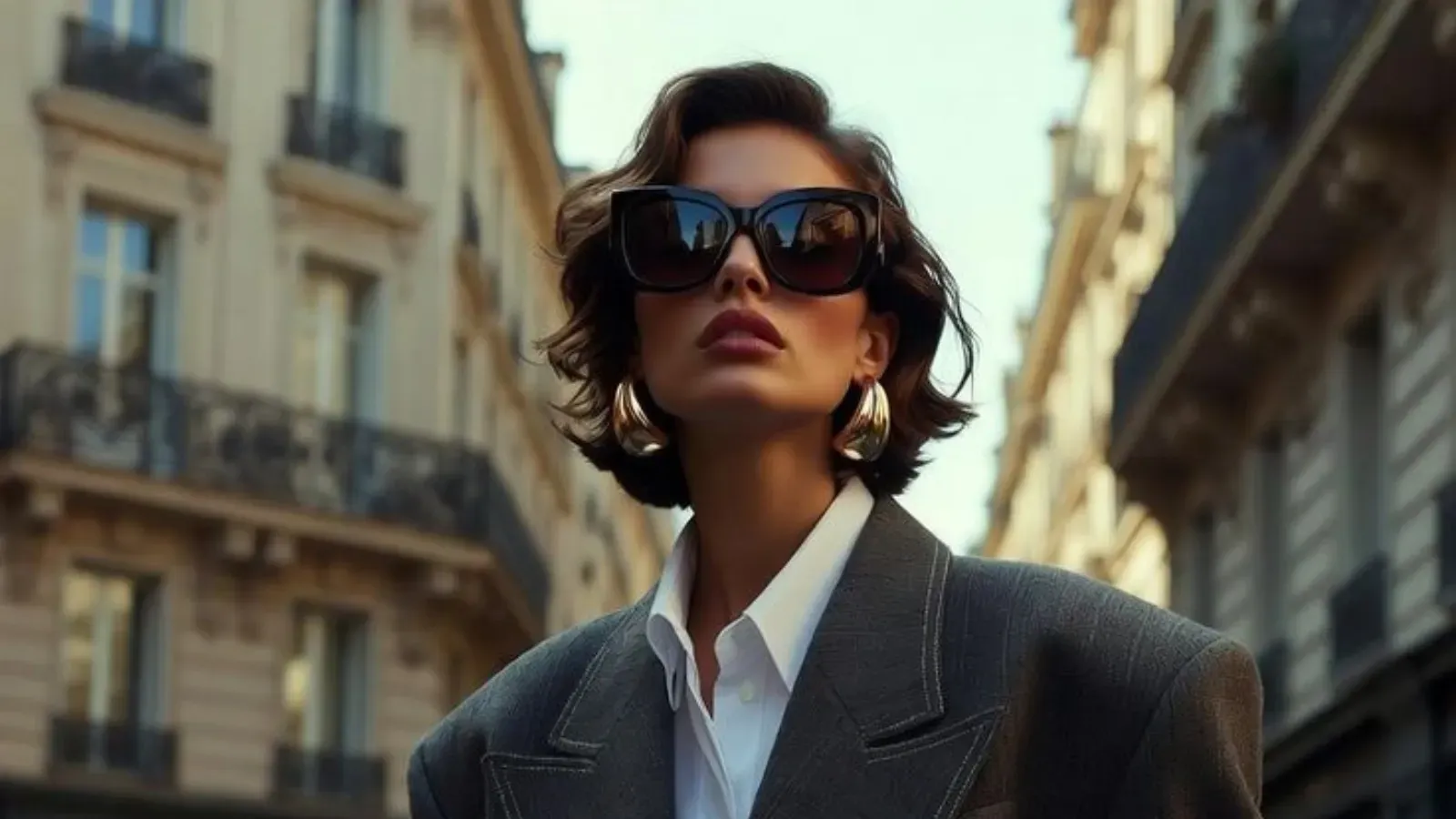
- Sculptural Gold Hardware: Bold, architectural earrings and cuffs designed to be noticed from across the room.
While the 1980s relied on stiffness and exaggerated volume to borrow traditional boardroom language, modern power dressing strips away the theatrical padding. Today's silhouette swaps rigidity for architectural drape, fluid tailoring, and intentional precision.
The Shift That Matters: From Uniform to Precision
The quiet luxury moment was a reaction, and like most reactions, it overcorrected. Stripping all personality from a professional wardrobe in order to appear above consideration reads differently in 2026 than it did in 2019. It can still work. It is no longer the only signal available, or even the strongest one.
What the women I pay attention to are doing now is something more specific: one deliberate choice per outfit that makes everything else look intentional. Not ten choices, nor a coordinated head-to-toe statement. One thing that communicates that you thought about it, and knew what you were doing when you did.
This matters because of how professional perception actually operates. People don't read an entire outfit the way a fashion editor does. They register the overall silhouette, and then they register one specific detail, and that detail does most of the authority work. A well-fitted blazer with nothing else precise reads as competent. The same blazer with one very specific choice — a scarf placed with intention, a shoe that creates a clean silhouette, a colour that was chosen rather than defaulted to— reads as authoritative. The difference is visible, and it doesn't require spending more money.
What Spring 2026 Is Actually Giving You to Work With
The runways are producing some genuinely wearable signals this season. I'll tell you the ones worth paying attention to and skip the ones that exist only to fill magazine pages.
Strong shoulders in an architectural rather than theatrical form.
The exaggerated shoulder of the 1980s was about borrowing masculine visual authority. What's coming through in spring 2026 is different — a defined shoulder line that creates a precise silhouette from across a room without reading as costume. This is geometry working in your favour. A strong shoulder line registers as deliberate before you've said anything, which is exactly what a well-considered professional outfit should do.
Color as a positioning choice rather than a personality expression.
The spring 2026 palette — dusty blue, confident red, warm camel, clean cobalt — is giving working women something the quiet luxury era actively avoided: permission to use colour strategically. Dusty blue in particular reads as both credible and approachable, which is the combination most women in senior roles spend years trying to achieve and then give up on because the fashion industry keeps suggesting they wear grey.
Tailoring with a discernible point of view.
The boxy, deliberately androgynous tailoring of the 2010s has evolved. The 2026 version is waisted, defined, with details that are quietly interesting rather than aggressively trendy. This is tailoring that communicates "I have an eye," which is a meaningfully different signal from "I am complying with a dress code."
The Specific Pieces That Are Working Right Now
A recalibrated blazer is doing more work this season than it has in years. The shift is in how it's worn: cropped with a high-waist trouser rather than hip-length over a straight leg, worn open over something simple rather than buttoned over a blouse. The blazer hasn't gone anywhere, but the silhouette has become more specific, which means it requires a clearer intention when you put one on. Wearing it as a default produces a different result than wearing it as a decision.
The midi skirt or A-line dress paired with something structured on top is outperforming the trouser suit as the strongest professional silhouette of the season, and it's practical in a way runway pieces rarely are: the pieces separate for other contexts, the proportion is genuinely flattering across body types, and it is visually distinct from what a man would wear to the same meeting. That distinctiveness, applied with confidence, reads as exactly that.
The silk scarf has crossed from French-girl accessory into functional professional tool, and the reason is purely visual. A scarf tied with intention — placed rather than thrown on — adds the single deliberate detail that elevates everything else around it. It doesn't need to be expensive. It needs to look chosen.
For footwear, the woven flat and kitten heel are the right call this season precisely because they're specific without demanding attention. A shoe that demands attention pulls the eye away from where it should be. A shoe that is precise but quiet keeps focus on you, which is the actual goal.
What Power Dressing Is Categorically Not in 2026
It is not performing to a standard set by and for a different context. The padded-shoulder suit of the 1980s made sense in that environment because women were working in organizations that had no visual language for female authority — so they borrowed one. That environment has changed enough that borrowing that particular language is no longer the most effective move available.
It is not minimalism as a personality substitute. The quieter end of the wardrobe can absolutely communicate power when it's chosen with precision. When it's chosen because you can't decide what you stand for visually, the person across from you usually picks that up.
It is not the same outfit in every situation. The single most sophisticated version of power dressing in 2026 is reading the room accurately enough to dress for the specific outcome you want in each context. A job interview, a salary negotiation, a creative pitch, and a client dinner are four different situations requiring four different signals. The woman who has thought this through is consistently more effective than the woman who defaulted to whatever felt safe.
Three Questions Before You Get Dressed
This is the framework I come back to consistently, and it takes under a minute once it's a habit.
First: What is the specific outcome I need from this situation? Not "seem professional" as a category. Something precise — to be the most credible person in the room, to be remembered after I leave, to not be underestimated before I speak. The outfit follows from the outcome, not the other way around.
Second: What does the person across from me respond to? A creative director and a CFO have different visual fluencies. Reading the environment accurately and dressing accordingly is strategic intelligence, not people-pleasing. Knowing the difference matters.
Third: What is the single deliberate detail in this outfit? One thing that makes everything else look intentional. Find it before you leave the house, and then stop there.
Power dressing in 2026 is not a uniform, a trend, or a set of prescribed rules. It's the practice of dressing with a specific outcome in mind, often enough that the thinking behind it becomes second nature. The women who do it well aren't necessarily spending more or working harder at it than anyone else. They're just clearer about what they want their presence to communicate before they walk into the room. That clarity is entirely learnable, and it's worth considerably more than any single piece in your wardrobe.
Questions You May Have
What were the key elements of 1980s power dressing?
The original 1980s power dressing uniform centered on wide, padded shoulders, structured double-breasted blazers, high-waisted pleated trousers, silk pussy-bow blouses, and statement gold jewelry. The silhouette aimed to establish parity and authority in corporate environments.
How does modern power dressing differ from the 1980s look?
Modern power dressing trades rigid shoulder pads and matching skirt suits for relaxed, architectural tailoring. Today's approach emphasizes fluid fabrics (wool, linen, silk), intentional color choices, and versatile separates that communicate personal authority without mimicking traditional menswear.
What are the core pieces needed for a modern professional wardrobe?
A focused contemporary workwear capsule requires:
- A tailored blazer with clean, architectural shoulders.
- High-rise wide-leg trousers with a fluid drape.
- Crisp cotton poplin button-downs and silk shirts.
- Minimalist leather footwear (pointed flats or sculptural kitten heels).
- A structured, unbranded leather tote with clean geometric lines.