
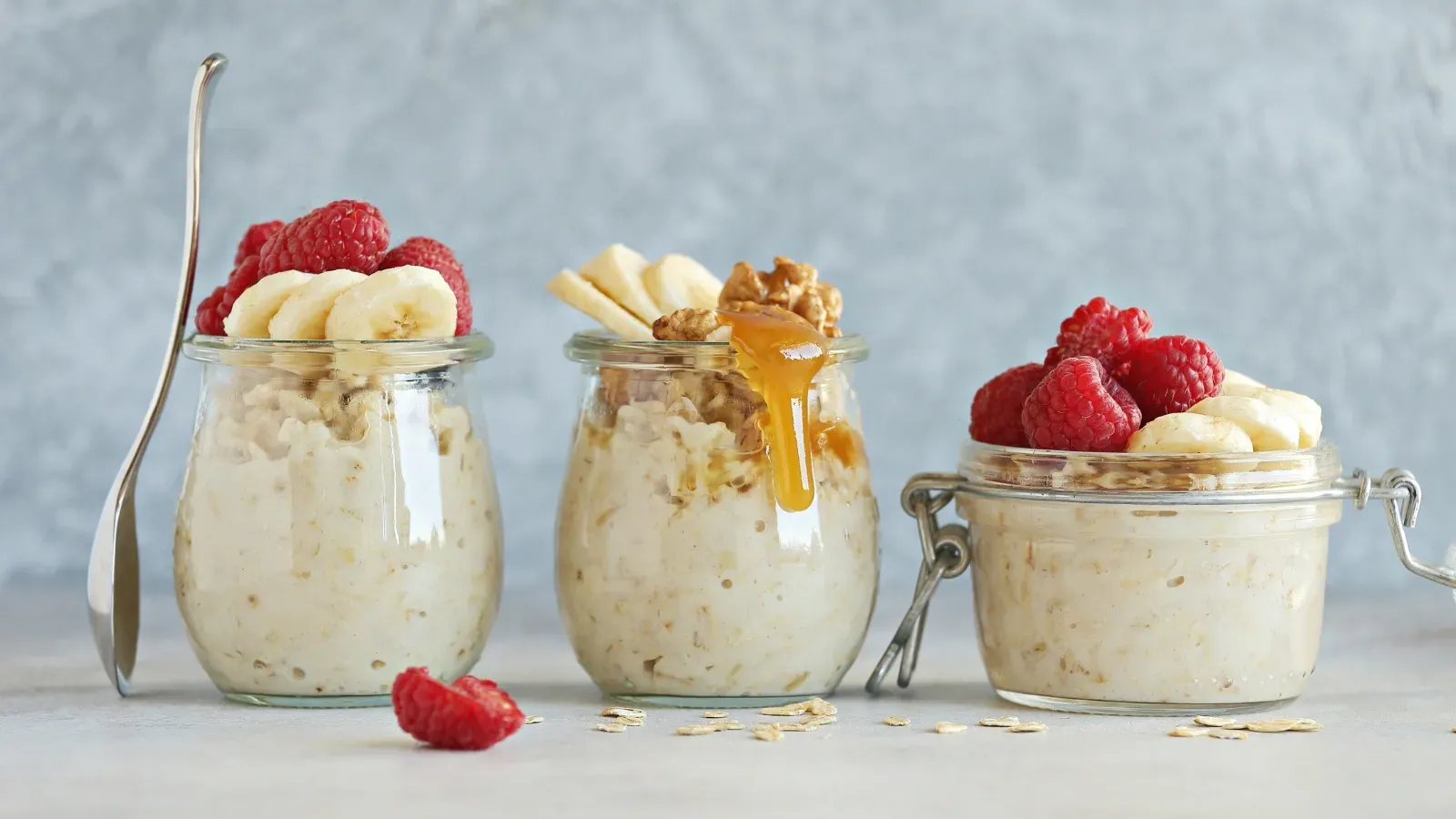
I have spent a fair portion of my career recommending oats to people and almost none of it eating overnight oats, because for about eight years I found them genuinely unpleasant. Cold, slightly gluey, sweet in a way that felt medicinal, and sitting in the fridge every morning looking like something a hospital would serve.
Then a colleague pointed out that I had been making them wrong in four separate ways at once, which was mildly humiliating and entirely correct. I now eat them three or four mornings a week.
Here is what was actually going wrong, and the five versions that fixed it. And maybe they fix it for you.
The Four Problems
The ratio is the first one. Most recipes call for one part oats to two parts liquid, which produces… soup. One part oats to one part liquid, with a couple of spoonfuls of yogurt stirred through, gives you something with structure that holds a spoon upright.
The oats matter more than anyone admits. Rolled oats, sometimes labeled old fashioned, are the only correct choice. Instant oats disintegrate into paste by morning and steel cut never soften properly unless you leave them two full days, at which point you have committed to a project rather than a breakfast.
Then there is salt, and this is the single change that does the most work. A generous pinch, stirred in the night before, takes the whole thing from bland to actually seasoned. Almost nobody puts salt in overnight oats and almost everybody should, including the recipe writers who have been leaving it out for a decade.
The last problem is texture, and the fix is to keep something crunchy out of the jar until the morning. Toasted nuts or seeds stirred overnight go soft and disappointing. Added on top at seven fifteen, they give you the contrast that makes the soft part enjoyable rather than relentless.
Peach and Toasted Almond
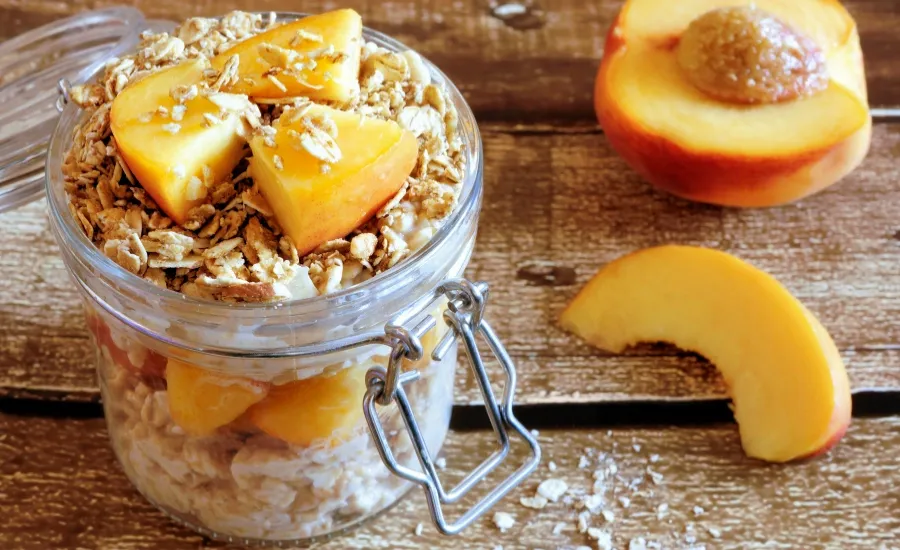
The August one, and the reason to bother with any of this right now while stone fruit is worth eating.
A half cup of rolled oats, a half cup of milk, two spoons of Greek yogurt, a pinch of salt, and a chopped ripe peach stirred through the night before so the juice works its way into the oats. Toasted flaked almonds on top in the morning, plus a little honey if the peach was not quite there.
Miso, Scallion, and a Soft Egg
This is the version that changed my mind, and I understand it sounds alarming.
Oats and water in the usual ratio, with a teaspoon of white miso whisked in and a pinch of salt. In the morning, warm it for a minute, top with sliced scallion, a soft boiled egg, and a few drops of sesame oil. It tastes like congee, which is a dish half the world eats for breakfast without anybody finding it remotely strange.
Oats are a grain. We have collectively decided they belong in the dessert category and there is no particular reason for that beyond habit.
Lemon, Olive Oil, and Honey
Half oats, half milk, a heaped spoon of thick Greek yogurt, the zest of a whole lemon, and salt. In the morning, a real pour of good olive oil across the top and a little honey.
The acid from the zest cuts the heaviness completely and the olive oil does something to the texture that dairy fat cannot manage on its own. This is the one I make when I want breakfast to taste like it costs considerably more than ninety cents.
Coffee and Cardamom
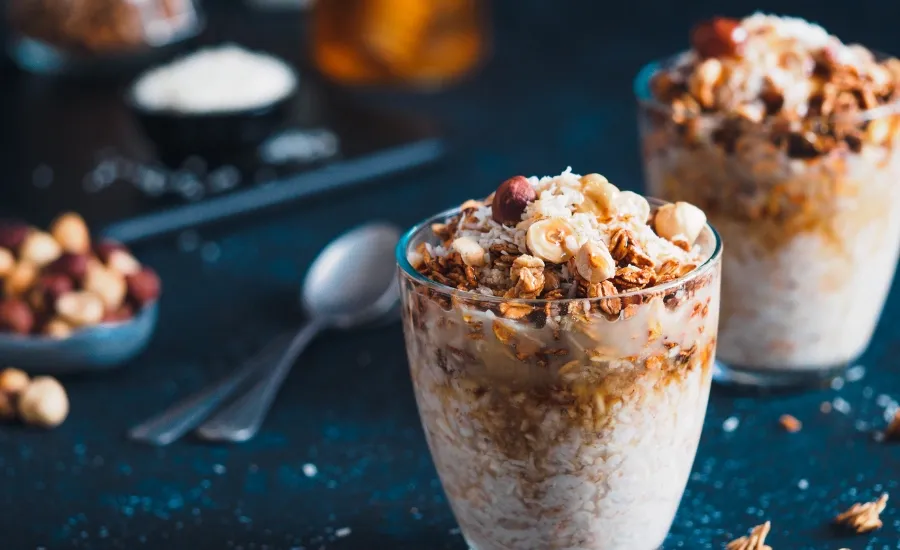
For anyone who is going to make coffee regardless.
Use cold brew or cooled leftover coffee as half the liquid, milk as the other half, with ground cardamom and salt. It is barely sweet and considerably more interesting than it has any right to be, and it means the caffeine arrives with fiber and protein rather than on its own at eight in the morning.
Tahini, Date, and Sesame
Two spoons of tahini stirred in the night before, one chopped date, salt, milk, and oats.
The tahini turns the whole thing rich and slightly savory, and the dates provide all the sweetness required. Toasted sesame seeds on top. This is comfortably the most filling of the five and the one I make on days when lunch is going to happen at three or possibly not at all.
Why Oats Deserve a Spot on your Meal Planning
Oats are worth the effort because of beta glucan, a soluble fiber with genuinely good evidence behind it for cholesterol, and because they are one of the few breakfasts that keeps people full past eleven.
But oats alone give you roughly six grams of protein and a fairly steep blood sugar curve, which is why the yogurt, egg, or tahini in each of these is doing structural work rather than decorating. Pair the carbohydrate with protein and fat and you flatten the curve, extend the fullness, and avoid the eleven o'clock hunt for something in the office kitchen.
So aim for fifteen to twenty grams of protein in the jar. That is two heaped spoons of Greek yogurt, or an egg, or a serving of tahini, and it converts oats from a snack into an actual breakfast.
Make two jars for your meal prep on Sunday instead of seven. Seven is how this ends, every time, with four untouched jars going quietly grey on the middle shelf by Thursday afternoon.