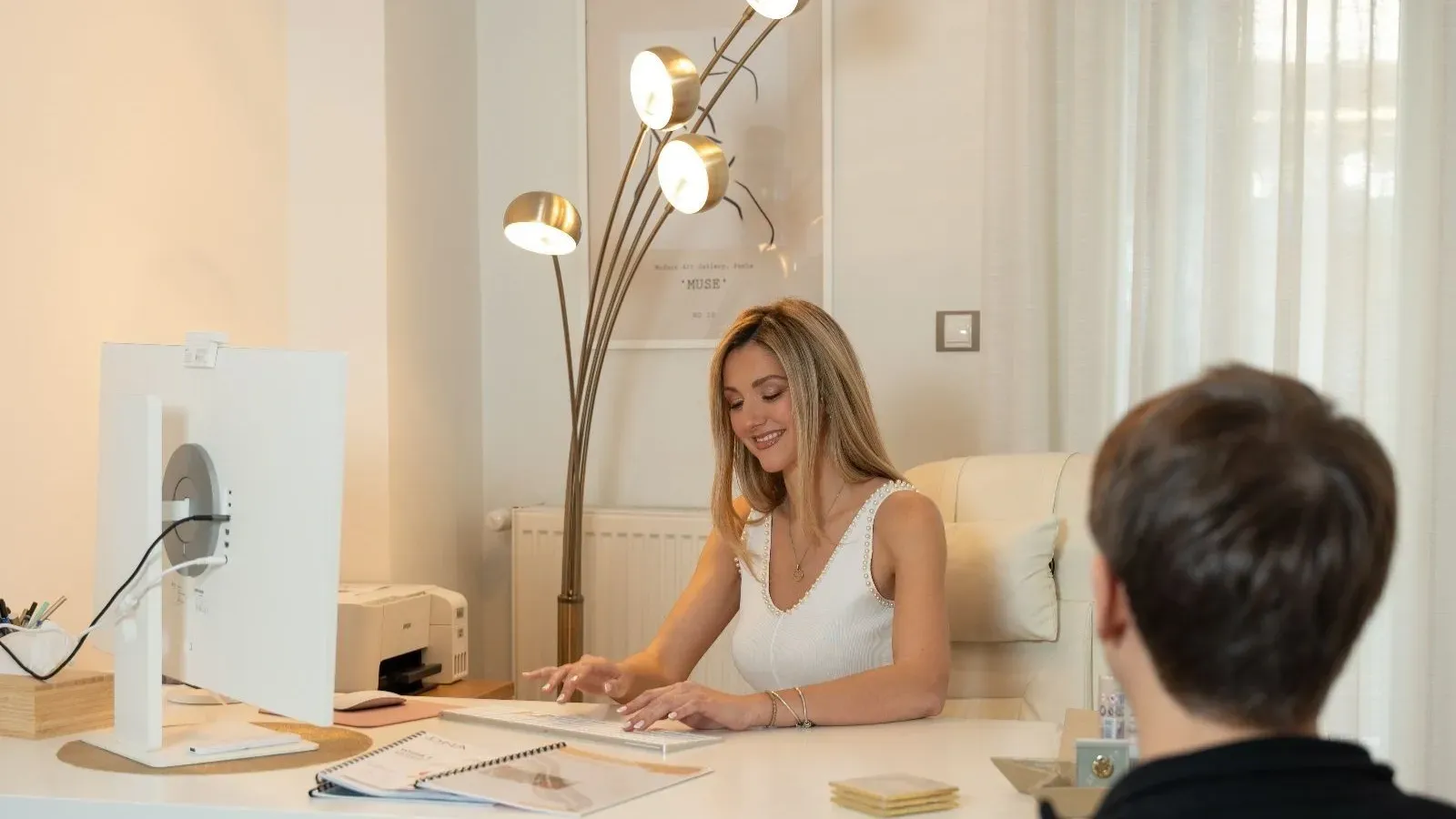
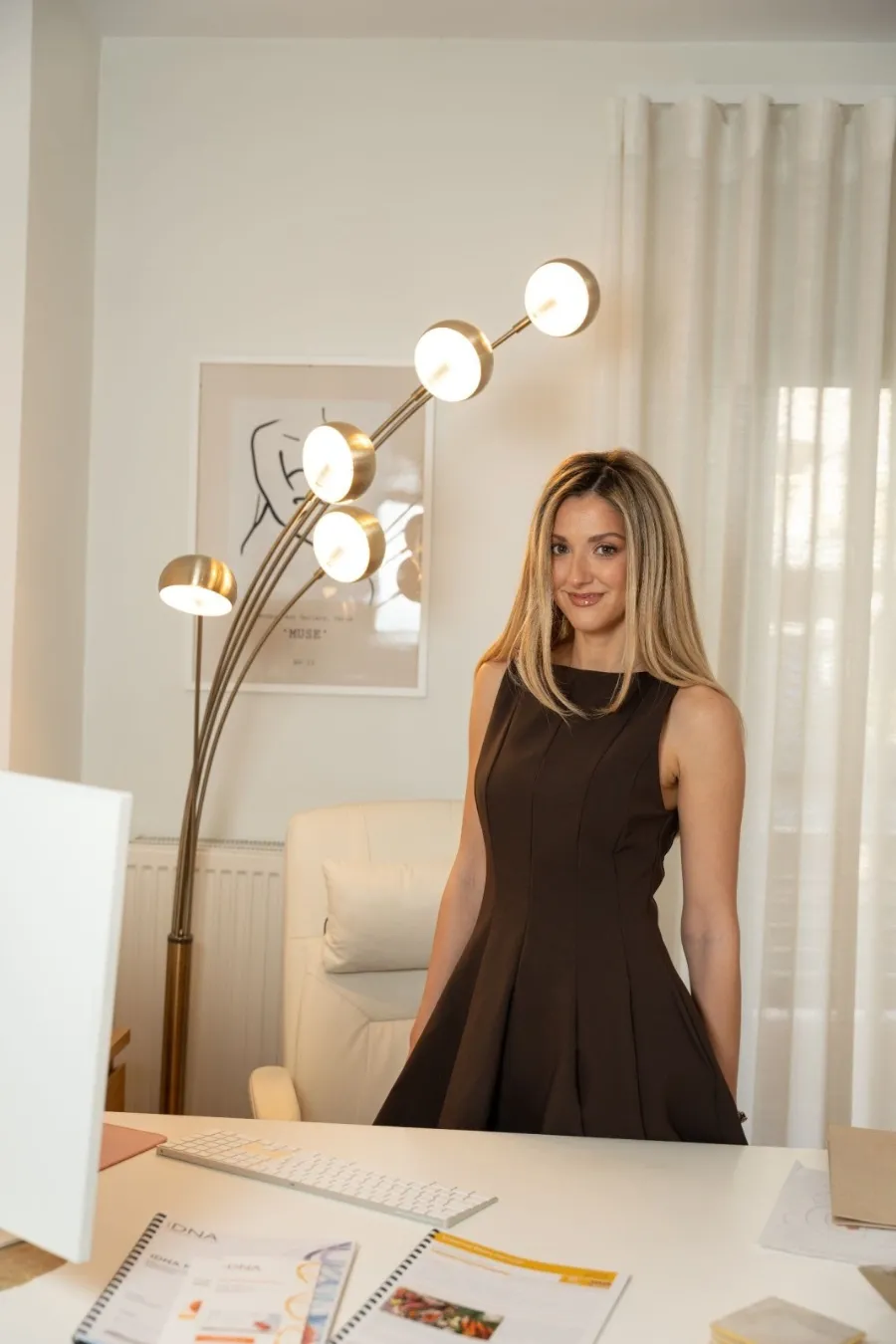
Flora Giatra is a registered nutritionist and dietitian based in Thessaloniki, Greece, and the moment you spend five minutes reading her work, you understand why her clients keep coming back.
Her background is not typical. She holds a degree in Biochemistry, a second degree in Nutrition and Dietetics, a certification in Eating Disorders from the British National Centre for Eating Disorders, and a specialization in pediatric nutrition.
She sees clients in person and online, and she has built a practice that goes well beyond meal plans because she genuinely believes that what you eat and how you feel about yourself are the same conversation.
She has strong opinions about the state of her industry, a very specific breakfast order, and a motto she can deliver in one sentence (or three!). We loved every word of this conversation, and we think you will too.
Office Hours is a new series by The Working Gal featuring women across industries talking honestly about what their work actually looks like. Flora is our first guest, and she set the bar high. You can find her at styleeatup.gr.
This interview has been lightly edited and condensed for clarity and length.
You have a degree in biochemistry, a degree in nutrition, a certification in eating disorders, and a specialization in pediatric nutrition. What were you actually looking for each time you went back to study?
Every time I went back to study, it was because I stumbled upon an answer that ended up creating three more questions. I’ve always been deeply passionate about well-being, but we live in an era obsessed with body-shrinking and toxic beauty standards. My main goal is to prove that a healthy lifestyle can include food we genuinely love and fun activities we enjoy, without the constant stress over appearance.
That is the main reason I wanted to combine the science of biochemistry and our understanding of hormones with nutrition and show how we can practically achieve both health and happiness.
Biochemistry showed me exactly how the body operates at a cellular and hormonal level, while nutrition taught me what to do with that knowledge. The eating disorders certification came later, simply from working with clients and realizing that food education alone isn't enough—people's relationship with food is deeply psychological. Finally, I couldn't ignore the pediatric side; Greece has one of the highest childhood obesity rates in Europe. If I could help shift that narrative even slightly, every extra year of studying was entirely worth it.
Walk us through yesterday. Not the highlight version, the actual one.
Yesterday was beautifully chaotic with a packed schedule of clinical cases. I started the morning with Pilates and my daily walk, followed by my absolute favorite breakfast: protein pancakes with hazelnut butter and fresh strawberries (it genuinely tastes like dessert).
After getting ready, I headed straight to the clinic, spent the day seeing clients back-to-back, took a quick lunch break, and wrapped up by the late afternoon. Dinner was a quick egg burrito with avocado and fresh veggies, which is my go-to for something filling. I ended the night winding down with my favorite TV show before falling asleep.
And yes, I did not read a book, but I am trying to be honest here.
Clients often get defensive about their eating habits before you've even said anything. How do you handle that resistance professionally?
It happens constantly. Clients often walk through my door having read a random theory online, completely convinced it’s an absolute truth, without any further research. I have accepted just part of the job nowadays, given the information overload, but my approach is always to explain the actual science behind the myth without ever making them feel judged.
When defenses go up, I gently remind them that we are a team—I am not sitting on the opposite side of the desk. Even if they haven't reached their specific goals yet, there is always a path forward. Our slip-ups are actually data; they help us make better choices next time, whether that means mastering portion control or simply allowing ourselves to enjoy a slice of cake without a side of guilt.
Running a practice means you're also running a business. Which one do you find more challenging?
Both pull me in entirely different directions, and each is challenging in a different way. On the practitioner side, the challenge is staying up to date, creating fresh content, and hosting events to connect with our community.
The business side requires a completely different kind of discipline. As a young professional, my biggest hurdle has been learning not to do a hundred things at once. The risk of burnout is incredibly real, and I’ve had to become highly intentional about time management.
What's the hardest call you've had to make at work, and would you make it again?
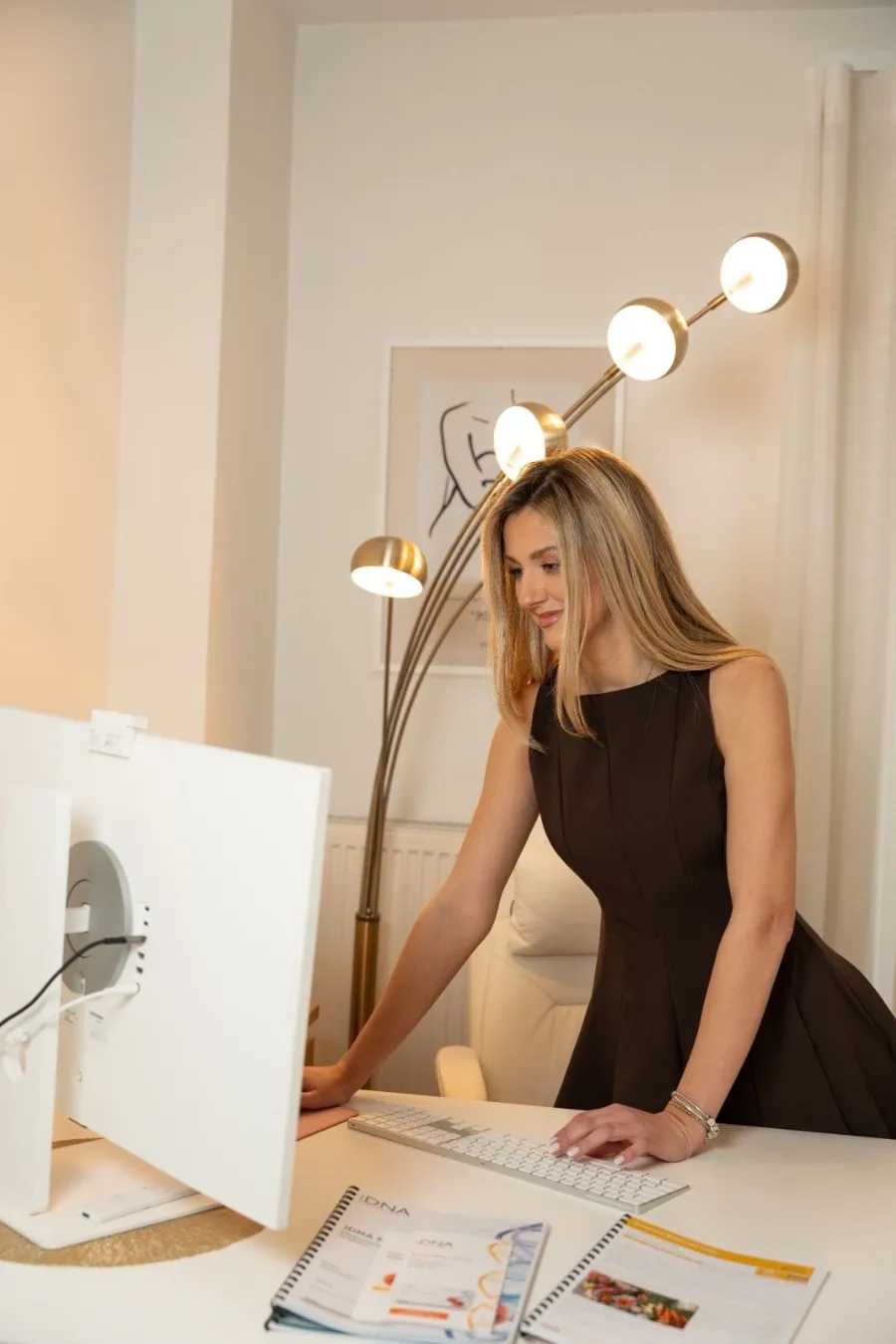
Probably my first eBook. We poured an immense amount of energy into it because I refused to put out just another generic guide. There were moments I questioned if it was worth the toll, but seeing the impact it had on our clients proved it was. And I would do it again without hesitation.
What does your industry get completely wrong about the people it's supposed to help?
I hate to admit it, but clients come into my office in tears far more often than you’d think. They’ve often been put on archaic, 1,000-calorie starvation diets by medical professionals—yes, even grown men—cutting out carbohydrates and entire groups of nutrient-rich foods. I’ve even seen cases of healthy women with perfectly normal BMIs being prescribed Ozempic off-label. It’s deeply alarming.
I have immense respect for the medical community, but every professional needs to operate within their specific field of expertise. No one knows everything, and acknowledging that is where real patient care begins.
AI can now generate meal plans, calorie counts, and nutrition advice in seconds. Does this affect the way you approach your clients or your business?
AI is a reality, and I’m certainly not anti-technology. However, we have to admit that it does not know everything. However, we have to look at the data: we regularly audit AI-generated nutrition protocols in our office, and the error margin is massive. It’s not just bad calorie counting; it blunders clinical nutrition advice, which can be genuinely dangerous for someone's health.
There is also something that is quite concerning, and we do not talk about it enough: AI can be highly triggering for individuals battling eating disorders.
And beyond all of that, I do not think people usually struggle from a lack of raw data or knowledge about what's healthy. The real human challenge is translating that knowledge into a sustainable, real-world lifestyle. No algorithm can hold your hand through that process.
What's the thing you had to learn that nobody put in a curriculum?
Compassion. So many clients walk in carrying heavy emotional weight—body dysmorphia, severe personal stress, or clinical depression. Science is fundamental, but it fails if it stands alone. A good healthcare professional is someone who actually listens and understands what the person in front of them is going through.
Ensuring my clients leave the office with a genuine smile is just as critical to me as their nutrition plan.
What does a bad professional day actually look like for you, and what do you do with it?
Honestly, a bad day usually starts with bad weather—it impacts my mood more than I care to admit!
Professionally, the toughest days are the ones when I encounter deep resistance to change, or when a client struggles to trust the process and let me do my job. I never take it personally, but it’s energetically draining. On those days, I lean heavily into clinical data while dialing up my listening skills. Sometimes that's enough to turn things around; sometimes it just takes time.
What's the question clients never ask you but probably should?
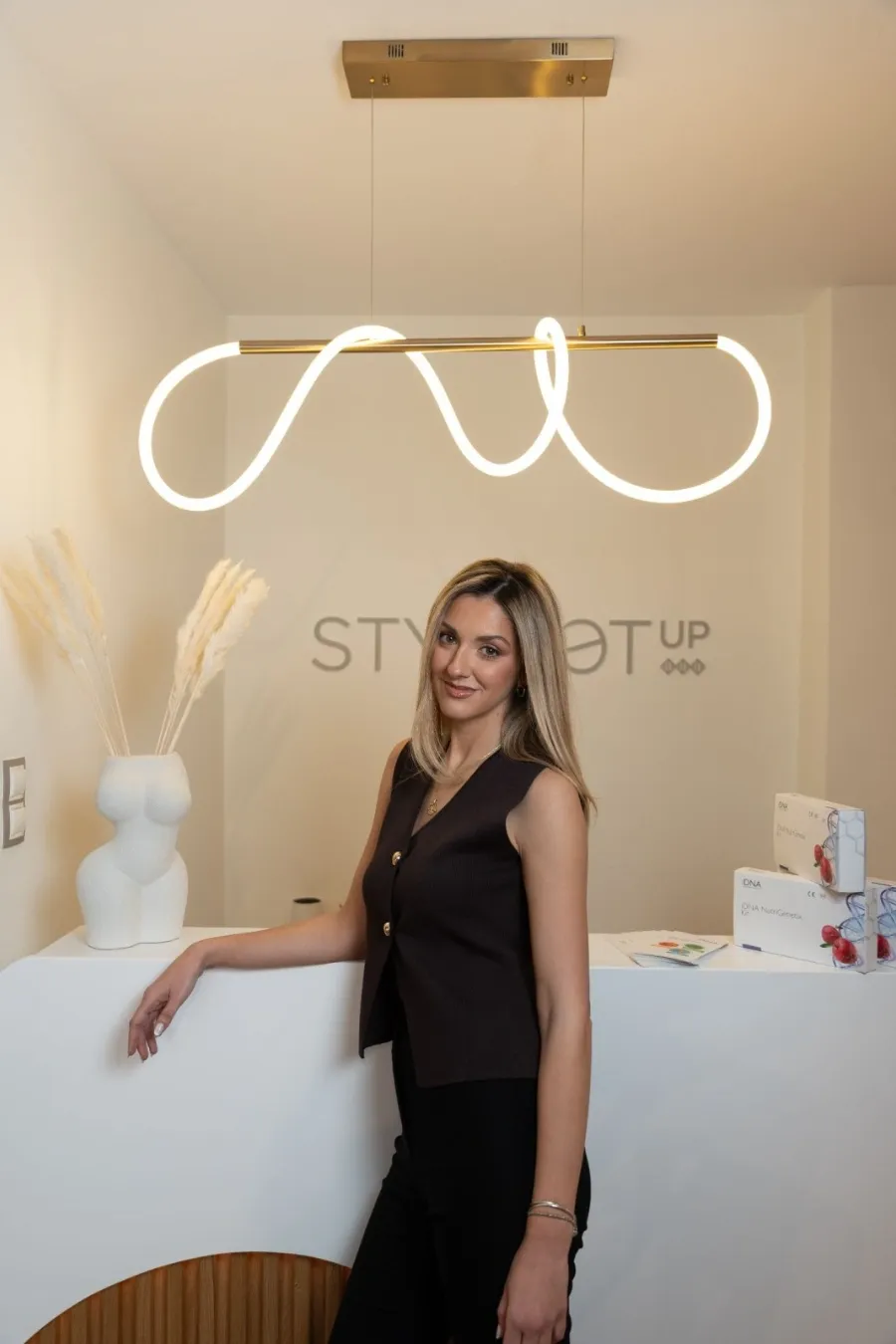
"What is the core reason I quit every single time I don't see immediate results?" And right behind that: "Why do I constantly default to an all-or-nothing mindset instead of simply showing up for myself daily?"
I know that’s technically two questions, but they are the most pivotal ones to solve.
You're talking to a woman who wants to do exactly what you do. What do you tell her that isn't on your website?
I would tell her that it took me years of trial and error to stand where I am today. Back when I was transitioning from Biochemistry and knew very little about actual lifestyle nutrition, I made plenty of mistakes myself. I genuinely believed that the lowest-calorie option was always the best one, even if it was highly processed and doing real damage to my gut health. I genuinely used to believe that the lowest-calorie option was always superior, even if it was highly processed and actively destroying my gut health. I also thought I needed endless hours of grueling cardio to see shifts. I didn't.
Today, my routine is built on sustainable nourishment, creating delicious, nutrient-dense recipes, and focusing almost entirely on weight training and Pilates. It requires patience and consistency. That part isn't glamorous, but it’s the absolute truth.
What are you reading, watching, or thinking about that has nothing to do with nutrition?
I love a great, high-stakes action movie or series—anything with a gripping plot that completely absorbs my attention and lets my brain switch off entirely. Aside from that, I am utterly obsessed with interior design. I’m a massive fan of modern minimalism, and I’m constantly flipping through editorials looking for inspiration for my home and clinic space. It turns out I have incredibly strong opinions about furniture!
If you had to sum up your approach to work and life in one sentence, what would it be?
If you put effort and know your worth, everything will follow. If you take care of yourself and make good choices, you see positive results. Eating well supports a healthy body, kindness helps you build relationships, and professionalism leads to success at work.
I know that’s a few sentences, but life is far too multi-faceted for just one!
Connect & Share
Connect with Flora on Instagram at @styleeatup or visit her website at styleeatup.gr to learn more about her practice.
Let’s keep the conversation going: Head over to our Instagram @the_working_gal and let us know your thoughts on this interview. Are you currently battling that "all-or-nothing" mindset with your routine? We’re talking about it in our latest post!
Office Hours is a series curated by The Working Gal. Stay tuned for our next interview with another incredible woman professional shaping her industry.