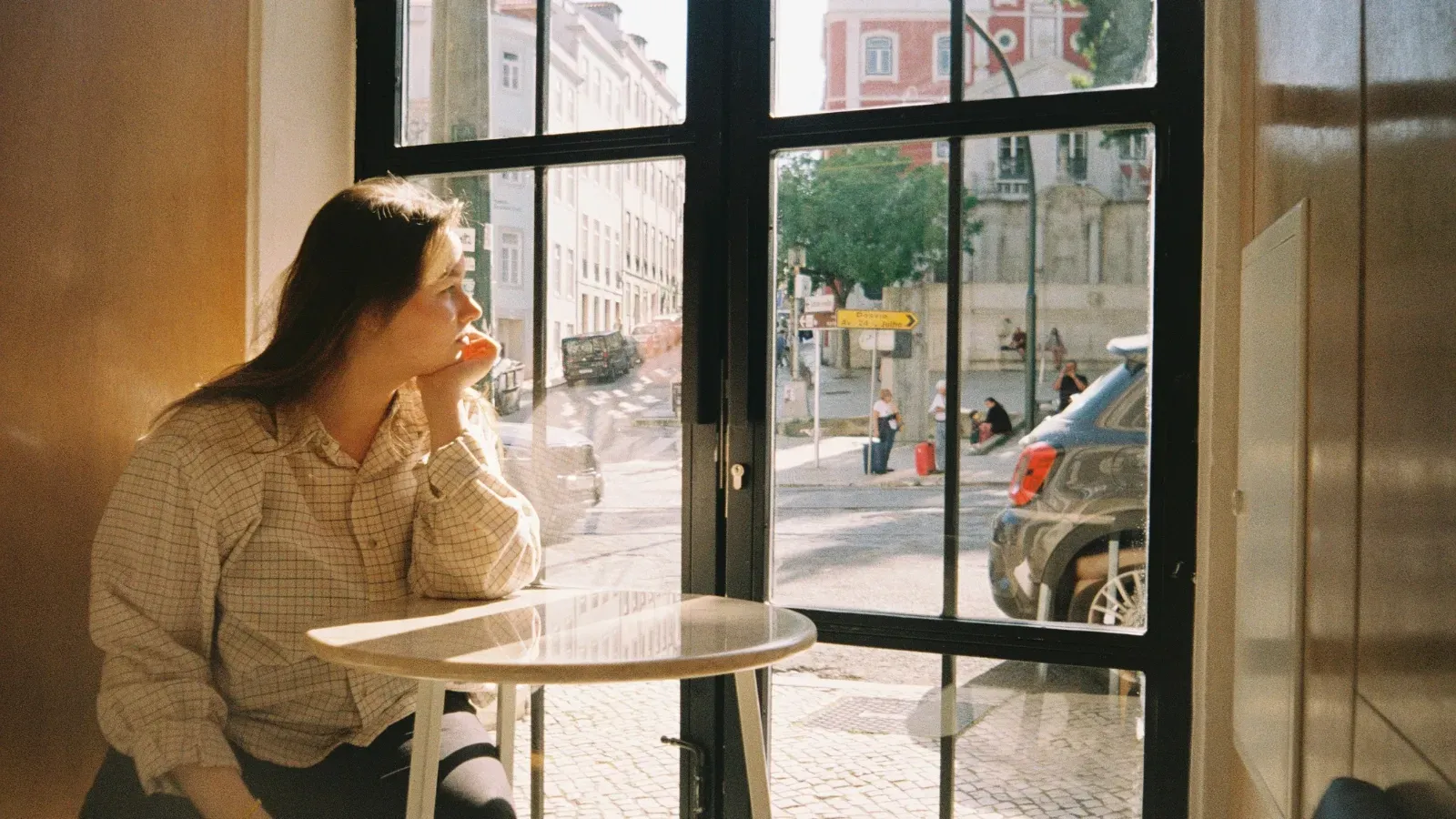
The video opens on a kitchen at dusk, one burner lit, a record turning somewhere off frame. A woman in her early thirties makes dinner for herself and tells the camera how hard it has become to make friends since she moved cities for work. She chops an onion with the unhurried competence of someone who has done this alone many times. Four minutes, two million views, a comment section forty thousand deep.
The genre has conventions by now, as legible as those of any cooking show. The light stays low and slightly warm. The focus falls off behind her shoulder. The voiceover was recorded separately, later, in a quieter room. The confession lands around the ninety-second mark, once the viewer has settled in and before the algorithm decides whether to keep serving the clip. Creators working in this register describe the project as normalizing the loneliness epidemic. Their audiences describe it as the only thing online that still feels true. Both claims survive mild scrutiny, and both leave out the part where a genre this legible is also a product.
The Comfort of the Parasocial Mirror
Sociologists named this arrangement in 1956, back when the medium was television, and the performer was a variety host addressing the camera as though it belonged to a neighbor. Parasocial interaction is a relationship that carries all the grammar of friendship, with only one participant present. The host knew his viewers as a demographic while several million viewers knew him by his first name and worried about his divorce.
The apparatus has improved since. A host reached you weekly from a studio built to resemble a living room. A creator reaches you at eleven at night from a room that is genuinely her own, in a format arriving on your phone whether or not you asked for it. The material has changed most of all. The hosts of the fifties performed competence and good cheer. This generation performs their absence, and performs it with real skill.
There is genuine relief in watching someone say the thing out loud. For women who have relocated twice for work, who bill long hours, who watched their social circle thin quietly somewhere around thirty-two, the acknowledgment lands. It confirms that a full calendar and a good title insulate nobody from the feeling, which is useful information delivered by an unlikely source.
When Vulnerability Becomes a Brand
Erving Goffman spent a career on the observation that social life runs like theater, with a front stage where behavior gets managed and a back stage where the managing stops. Waiters keep one set of manners for the dining room and a looser set for the kitchen, both of them learned.
Everything a camera sees is front stage. The achievement of the loneliness genre is to relocate that stage into a room dressed as the back one. The unmade bed is set decoration. The bare face is a costume choice. The long pause before the difficult sentence survived the edit because it tested well.
A creator can be lonely in fact and also aware that footage of her loneliness outperforms footage of her at brunch. Those two things sit together comfortably, which is precisely what makes the business hard to judge from outside.
Arlie Hochschild published a book in 1983 about flight attendants and bill collectors, workers paid to manufacture a specific emotional state and hold it steady for eight hours. She called the work "emotional labor," a phrase that has since been stretched to cover any tiring task. Her original question was sharper. She wanted to know what happens inside someone when feeling becomes a deliverable, and she found that the emotional system keeps poor records. Workers who spent years producing warmth on demand reported trouble locating their own.
The loneliness creator occupies a modified version of that chair. The flight attendant manufactured a feeling she lacked. The creator supplies one she has, on a publishing schedule, in a house style, at whatever frequency the platform rewards. Whether that counts as gentler work is an open question with an uncomfortable answer available.
The commercial logic is tidy enough to diagram. Disclosure builds trust. Trust assembles an audience defined by a shared emotional condition. An audience like that reads clearly to advertisers, since a woman who has identified herself as lonely has also identified a need. The sponsorships arrive accordingly: therapy platforms, meal kits portioned for one, supplements, dating apps. The condition that made the audience valuable gets sold back to it at retail.
What the Numbers Underneath Look Like
The condition being filmed is real, and it has been measured. The US Surgeon General issued an advisory on loneliness and social isolation in 2023, treating it as a matter of public health. Roughly a quarter of American households now contain a single person, a share that has been climbing steadily since the middle of the last century. Time use surveys show face-to-face socializing thinning across nearly every age bracket for two decades running.
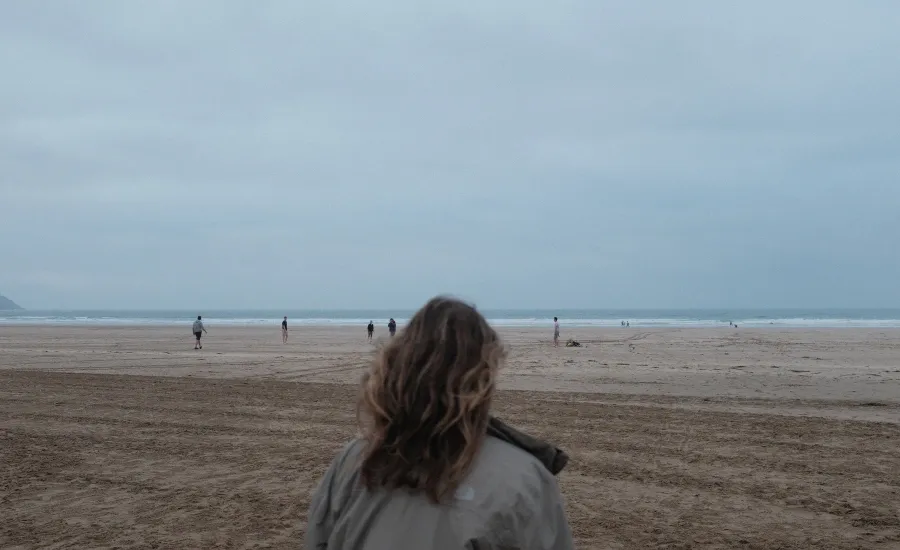
Professional women in their thirties sit where several of these lines cross. Moving for a job severs a local network in an afternoon. Long hours compress the loose, unstructured time when adult friendships are actually built. The institutions that once did this work quietly, the parish and the union hall and the bowling league Robert Putnam wrote about, thinned out over the same stretch of years.
The audience arrived well before the genre did. What the genre supplied was a visual language and a publishing schedule.
The Comment Section Is Part of the Product
Scroll below one of these videos, and the comments have a grammar of their own. People file their circumstances in compressed form. Twenty-nine, two relocations, nobody to call on a Sunday. The replies affirm and leave it there. Nobody proposes a running club.
This is the most interesting part of the arrangement and the easiest to miss, since it sits below the fold. Several hundred strangers perform a coordinated act of disclosure inside a space owned by a company that sells their attention. The traffic runs from each of them toward the creator, who functions as the hub, and almost never between them.
Durkheim would have recognized it. Collective ritual generating a powerful sense of belonging while producing no durable tie whatsoever. The warmth is real for the length of the thread. By morning nobody in it knows anybody else in it, and the engagement has been logged.
The Substitution Question
The standard objection to this influencer content holds that watching someone else be lonely relieves just enough pressure to keep you from addressing your own situation. Pseudo intimacy as a maintenance dose.
It is a plausible charge and a thinly evidenced one. The research on parasocial attachment splits. Some studies find it works as a supplement for people who already have a social life and as a replacement for people who lack one, which would make the effect a function of who is watching. Others report modest gains in reduced stigma and self-reported well-being.
One distinction gets lost in the format, and it matters. Solitude and loneliness describe different states, and the research has kept them separate for decades. Solitude is chosen and tends to restore people. Loneliness is the gap between the social life a person has and the one she wants, and it corrodes. The genre flattens both into the same warm, dim, four-minute package, which is commercially sensible and analytically useless. A woman genuinely enjoying her own company and a woman quietly struggling receive identical content, sponsored by identical advertisers.
The structural point is firmer. A platform has no stake in whether you eventually call someone. Its objective is watch time, and a viewer who resolves her loneliness stops watching loneliness content. The incentive runs steadily away from resolution.
The creators themselves are presumably sincere, most of them. The observation concerns the machinery around them, tuned to optimize something else entirely, which it manages without requiring bad faith from anyone.
Where This Ends Up
Genres of this kind follow a dependable arc. A form emerges from something real, attracts imitators, gets absorbed into the general vocabulary of content, and finishes as a set of visual references available to anyone selling anything at all. Dim light and a confessional register will end up as a look. Sad girl aesthetics made the same round trip in under four years.
The loneliness will still be there once the aesthetic moves on, since it preceded the aesthetic and has never been especially responsive to being filmed.
What the genre has produced, in the meantime, is an archive. Large, timestamped, visually consistent, documenting one condition among one demographic across one decade. Whoever studies this period later will be glad of it. Whether it did much for the women who made it, or for the women who watched it at eleven at night with the lights off, is a harder question, and unlikely to be settled by anyone currently earning from the answer.
Photos: Angelina Orlova | Summer Grove / Dupe