
The wellness industry wants you to spend money on ceremonial whisks to avoid admitting an uncomfortable truth.
The woman raving about her miraculous Tokyo glow didn't hack her metabolism with green tea and breathwork apps. She walked 10,000 steps a day and ate food free of industrial seed oils.
Every few months, a familiar narrative makes its predictable rounds across lifestyle media: an American traveler returns from Tokyo or Kyoto, breathless, announcing to their audience that their skin has miraculously cleared, their chronic bloating has vanished, and their central nervous system has finally settled.
Within forty-eight hours, the digital ecosystem produces an answer tailored specifically for modern consumerism. We are instructed to purchase authentic bamboo whisks, invest in imported ceremonial-grade powders, adopt a meticulous multi-step soaking ritual, and download apps designed to quantify our breathing. An entire society’s baseline state of existence is promptly hollowed out, packaged, and monetized into five actionable “habits” you can adopt from your living room.
It is a comforting fantasy, but from a sociological perspective, it is entirely bankrupt. What travelers experience when they step off a flight in Japan is not the magic of an esoteric self-care routine. They are experiencing the profound physiological relief of existing within a functioning built environment, an uncorrupted food ecosystem, and a coherent social fabric.
The Built Environment vs. The Compensatory Workout
Consider the physical space first. In North America, movement is predominantly treated as a compensatory chore. An isolated forty-five minutes on an incline treadmill or an expensive studio class booked through an app to counteract ten hours of forced immobility in a vehicle and an ergonomic desk chair. Movement must be scheduled, tracked, and purchased.
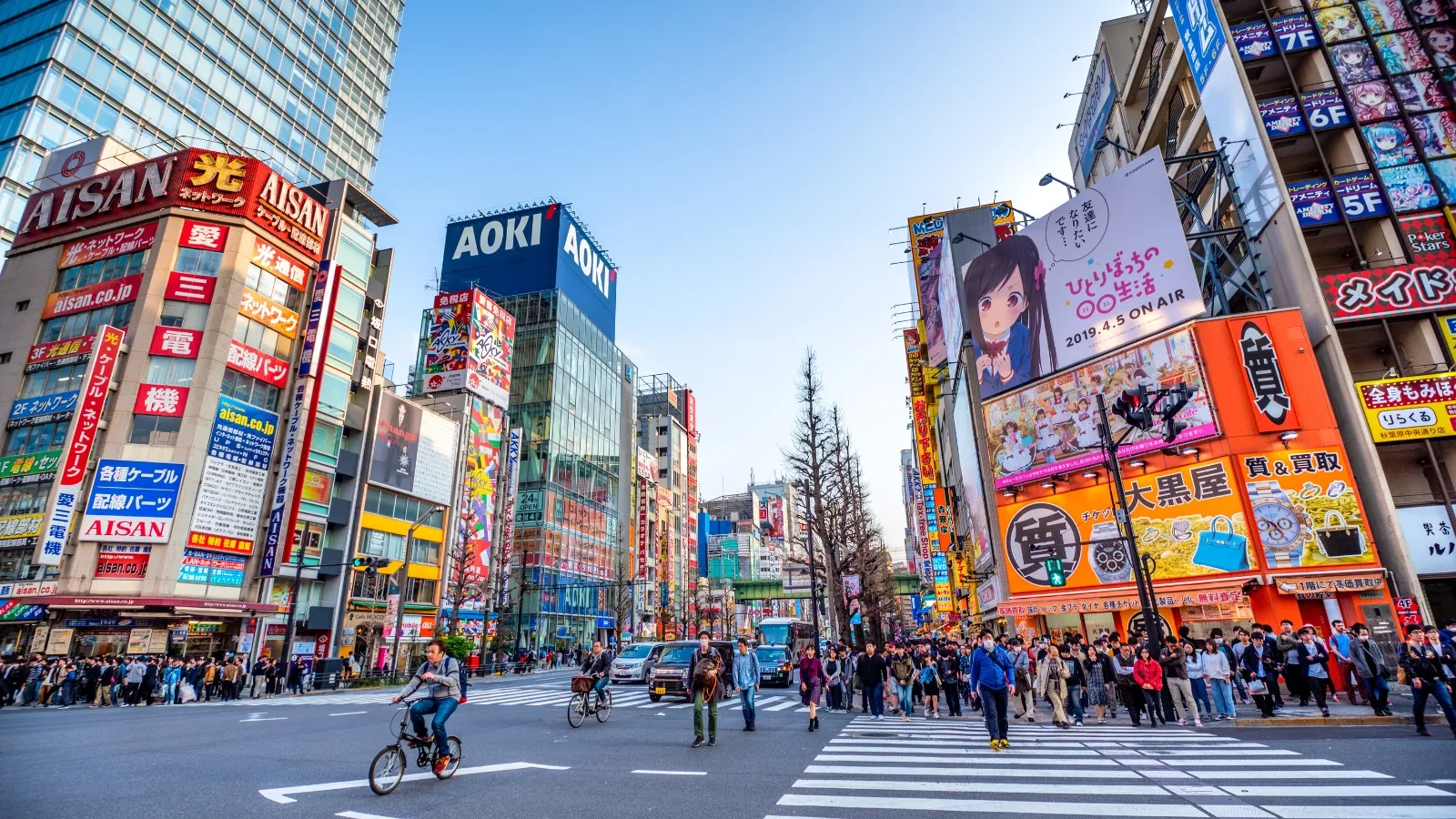
In contrast, Japanese urban centers are engineered around dense, multimodal public transit and radical pedestrian priority. The average Tokyo commuter walks between 8,000 and 10,000 steps a day simply executing life: walking to the station, transferring platforms, climbing stairs, and navigating pedestrian-only commercial alleys.
Movement is incidental, integrated, and non-performative. You do not need to gamify your step count when the civic infrastructure does not mandate a two-ton vehicle to purchase a bottle of soy sauce. The nervous system relaxes not because of an intentional breathwork exercise, but because navigating the physical world does not require negotiating high-speed traffic and highway gridlock twice a day.
The Institutional Integrity of the Plate
Then there is the food paradigm. When Western publications examine the Japanese diet, they inevitably reduce the phenomenon to a hyper-individualized list of isolated superfoods: fermented soy, clear broths, marine collagen, or high-grade polyphenols. This framing deliberately ignores the institutional and economic mechanics of how food is produced, distributed, and consumed.
Japan’s agricultural standards maintain rigorous boundaries against the hyper-processed shelf-stabilizers, artificial emulsifiers, and industrial seed oils that dominate Western grocery store aisles. A foundational cultural respect for seasonality (shun) dictates what appears on shelves and menus. Portion sizes are shaped by tradition and social convention rather than competitive commercial supersizing.
Crucially, the act of consumption is afforded structural boundaries. Eating while walking down the street, driving, or mindlessly typing an email through a forty-five-minute Zoom presentation is culturally discouraged. When meals consist of minimally altered ingredients eaten with intention and without chronic multitasking, the digestive system does not have to fight for resources against an active stress response. Calling this a "secret regimen" is an insult to public health policy; it is simply what happens when corporate food conglomerates are not permitted to optimize an entire population for metabolic addiction.
The Commodification of Cultural Context
The wellness industry cannot sell zoning reform, walkability, or agricultural policy. It can only sell inventory.
This is where the commodification of culture becomes absurd. Rather than confronting the systemic extraction that leaves workers chronically exhausted, sedentary, and nutritionally compromised, the market convinces the individual that burnout can be offset through aesthetic consumerism. We import the ceremonial artifacts—the ceramics, the teas, the bespoke serums—while maintaining the exact 60-hour desk marathons, car-dependent commutes, and ultra-processed diets that created the distress in the first place.
It is spiritual tourism: foreign cultural traditions are decoupled from their origins, sanitized of nuance, and reduced to a checkout cart total. We attempt to buy our way out of the symptoms of an extractive culture using the exact commercial mechanisms that exhaust us.
Worse still, this romantic gaze aggressively flattens the society it claims to admire. To hold up Japan as an effortless sanctuary of holistic living requires ignoring the country’s well-documented crisis of corporate exhaustion (karoshi), intense social conformity, and unforgiving expectations around professional devotion. Japanese society is not a serene retreat designed for foreign self-optimization; it is a high-pressure industrial economy navigating immense demographic and societal strain.
Stop Outsourcing Your Baseline
The quiet reality that glossy publications refuse to admit is simple: you cannot purchase systemic ease from an online boutique.
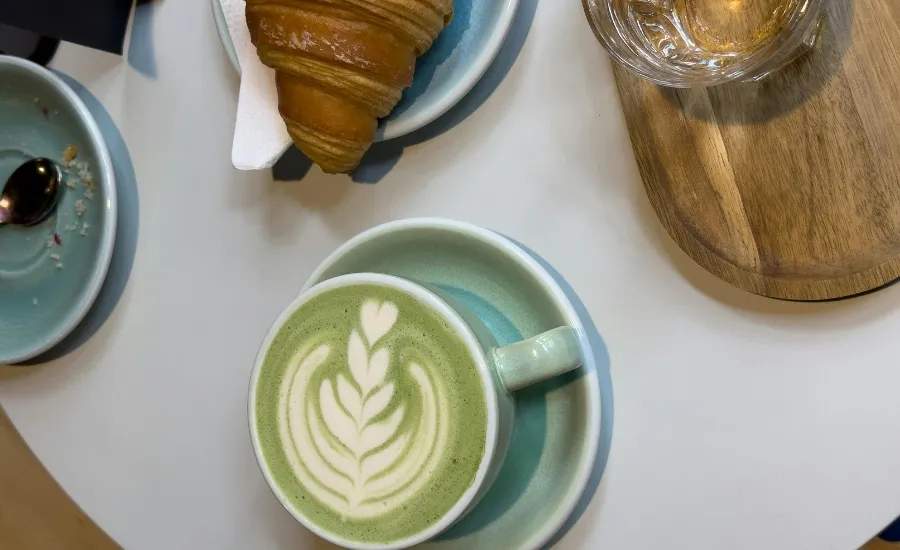
Drinking imported matcha out of an artisan bowl will not neutralize the cortisol spike of back-to-back calendar invites. An elaborate evening bath will not compensate for a day spent under fluorescent office lighting without fresh air or baseline physical movement.
If existing elsewhere feels noticeably more restorative, the explanation is rarely hidden in a foreign wellness trend. The difference is the world outside the front door—and no amount of curated shopping will ever replace a life built around human scale.