

At the end of The Devil Wears Prada, Andrea Sachs throws her ringing cell phone into a Parisian fountain, turns her back on the most powerful magazine editor in New York, and takes a junior reporting job at a scrappy downtown newspaper. At the end of Scandal, Olivia Pope hangs up her white trench coat and steps out of Washington's backrooms to enjoy a quiet, unbothered life. Even in The Bold Type, a show practically engineered as a love letter to ambition, Jane Sloan eventually steps down from her hard-won vertical editor role to wander off toward an undefined creative future.
Pop culture loves watching women chase power, right up until the moment they actually hold it.
For decades, working women in TV and film have followed a remarkably predictable narrative arc. We get six seasons of sharp tailoring, midnight crisis calls, ruthless boardroom negotiations, and the thrilling sight of a woman outmaneuvering everyone in the room. Then the final episode arrives, and the writers panic. Suddenly, the corner office becomes a gilded cage, the ambition gets reframed as a symptom of emotional emptiness, and the only acceptable happy ending is for her to walk out the door.
Hollywood knows how to write a woman's climb, yet it remains deeply uncomfortable letting her stay at the top.
Ambition as a Temporary Illness
When television depicts ambitious men, power is rarely treated as a moral defect that requires curing. Don Draper never renounces advertising to open a pottery studio. Logan Roy dies on a private jet still trying to close an acquisition. Even when male antiheroes lose everything, their drive is framed as an elemental, permanent force of nature.
Female ambition on screen gets handled like a fever that eventually has to break. In series after series, a woman's intense devotion to her career is written as a defensive armor she puts on because she has not yet healed her personal life. She works eighty hours a week because she is afraid of intimacy, estranged from her family, or trying to prove something to an indifferent father. Once she finally confronts her emotional blind spots—or meets a man who convinces her to slow down—the job loses its purpose.
Walking away from the desk becomes proof that she has matured because staying in the chair would imply she never learned the lesson.
The Lie of the Low-Stakes Pivot
Writers rarely force these characters into full domestic retirement; that would look too regressive for a modern audience. Instead, they rely on a softer escape hatch: the romanticized, low-stakes pivot.
The cutthroat litigator leaves her Manhattan firm to run a sleepy coastal legal clinic. The high-powered marketing executive trades global brand strategy for a small artisanal bakery in Vermont. The political operative abandons the White House to teach a seminar or write a memoir in a sunlit brownstone.
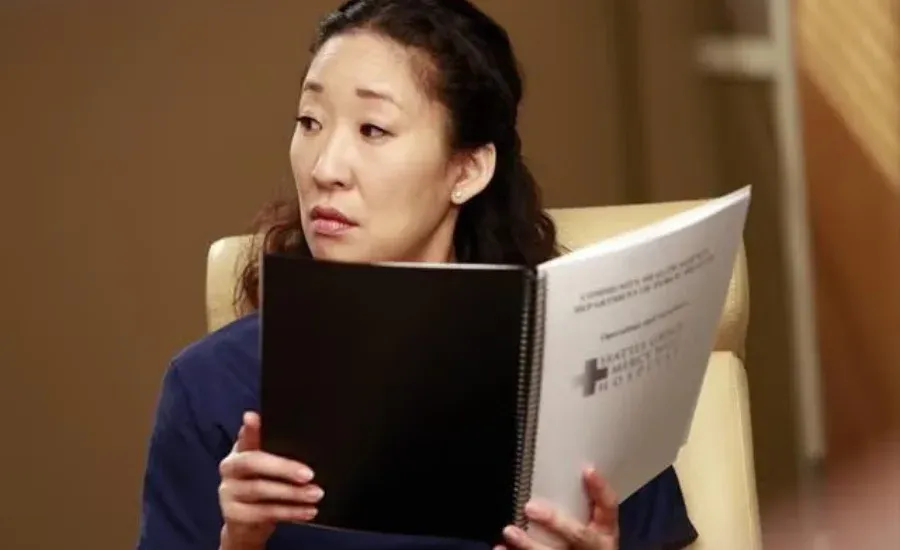
These endings pretend to honor a woman's intelligence while quietly stripping away her institutional reach. They reassure the viewer that she is still bright and capable, just no longer competing in rooms where real money, policy, or cultural influence changes hands. Ambition is sanitized into a hobby with a charming storefront.
What never appears on screen is the daily reality of a woman who hits forty-five, loves the scale of her work, enjoys her income, keeps her corner office, and feels zero urge to trade her equity for a slower pace.
Why Writers Struggle With Women Who Stay
Part of this narrative failure comes down to lazy dramatic structure. Conflict drives television, and once a character secures the promotion, wins the partnership, or builds the company, writers assume the story has run out of fuel.
Yet that excuse collapses the second you look at how prestige television handles male-dominated workplaces. Shows like Mad Men, Succession, or Billions derive endless tension from what happens after someone claims the throne—the paranoia of defending territory, the moral compromises required to keep a company solvent, and the sheer operational weight of leadership.
When the protagonist is a woman, however, cultural scripts still equate happiness with personal softness. A woman who remains fiercely committed to her career through the final credits risks reading to a mainstream audience as cold, lonely, or incomplete. To guarantee the audience leaves feeling warm, the script demands a sacrifice. She has to surrender the title to prove she still has a soul.
What Working Women Actually Want to Watch
Look closely at the moments audiences actually rewatch from TV shows about women at work. Nobody pulls up YouTube clips of Andrea Sachs walking down a New York sidewalk in a sensible sweater after she quits Runway. They rewatch Miranda Priestly dismantling an entire spring collection with a single purse of her lips. They rewatch Jessica Pearson holding together a Manhattan law firm in a custom-tailored dress while every man in the building panics. They rewatch Cristina Yang choosing a Swiss cardiothoracic research hospital over a wedding.
Those characters endure because they refuse to apologize for wanting the room, the authority, and the work itself. They treat their careers not as a phase to outgrow on the way to inner peace, but as the central organizing passion of their lives.
Real women do not spend fifteen years building expertise, surviving office politics, and earning leverage just to toss their phones into a fountain when the credits roll. Until film and television stop treating female power as a condition to recover from, our best stories about working women will keep ending right where the real work begins.