

In Brief
Creatine has been used by athletes for decades, but most of the research excluded women until recently. That gap is closing fast. Current evidence supports creatine for muscle retention, bone density, and exercise performance, with growing research on brain fatigue and mood. Perimenopause and menopause are where the data is strongest right now, since both stages come with natural declines in muscle and bone density. The effective dose sits at 3 to 5 grams per day, taken consistently, with or without exercise on a given day. Bloating, the most common complaint, is almost always a formulation issue and not a reason to avoid creatine altogether.
Quick Picks
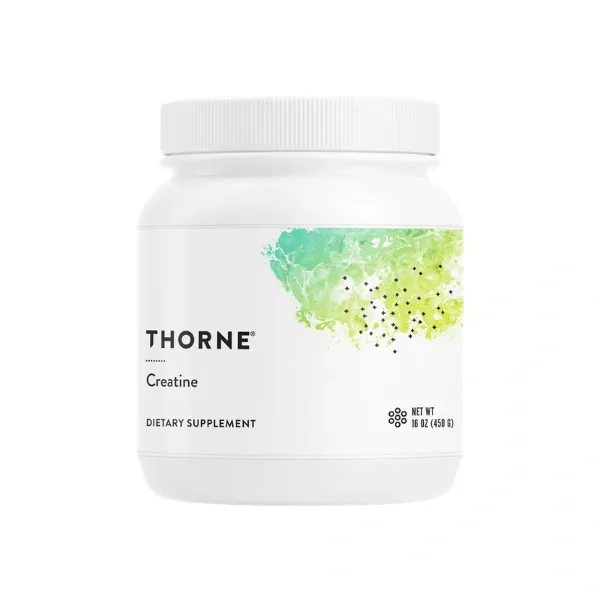
• Thorne Creatine. Pure micronized creatine monohydrate, third-party tested, no flavor or filler. Best for anyone who wants the simplest possible option.
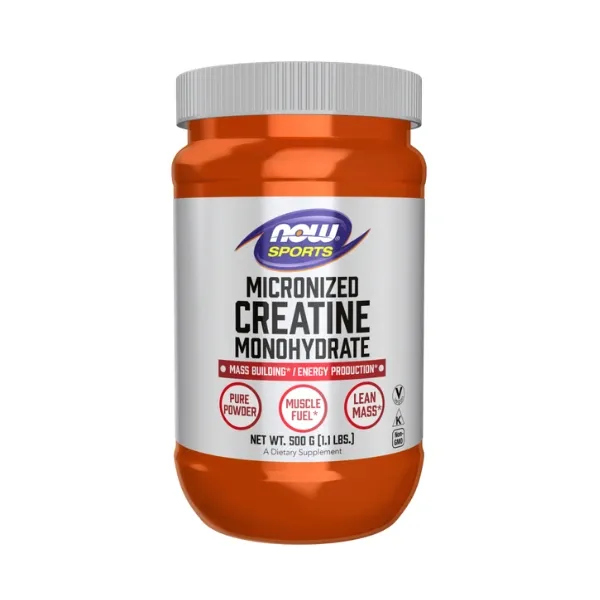
• NOW Sports Creatine Monohydrate. Budget-friendly powder with the same active ingredient as premium brands. Best for anyone testing the waters before committing to a routine.
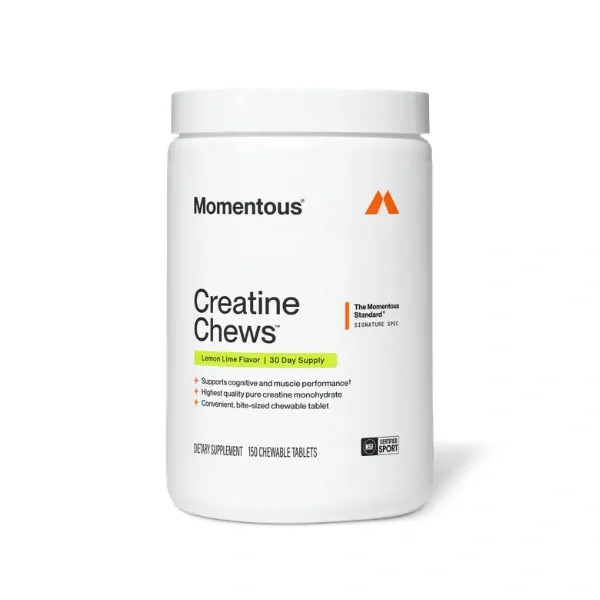
• Momentous Creatine Chews. Pre-dosed, portable, no mixing required. Best for travel or anyone who forgets to bring a shaker bottle.
For years, creatine for women was treated as an afterthought to a supplement built for men's gym routines. Most of the foundational research used young male athletes as subjects, which left an obvious gap: nobody had a clear answer for what creatine actually does in a female body. That gap has narrowed considerably over the past several years, and the answer turns out to matter for reasons that go well beyond the gym.
It also matters that the current wave of attention is not purely manufactured hype. Search interest in creatine for women has grown sharply over the past year, and a long list of wellness commentators, celebrities, and fitness professionals has weighed in publicly. That kind of attention usually produces two things at once: genuinely useful information reaching a wider audience, and a flood of marketing claims that outrun the actual research. Our goal here is to separate the two, using what the studies actually show rather than what a product label promises.
Why the Conversation Changed
Creatine works by supporting the regeneration of ATP, the molecule your muscles rely on for short bursts of intense effort. That much has been established in science for decades. What changed is the population being studied. Newer research has expanded the picture to include women across different life stages, and several findings stand out. Women naturally store less creatine in their muscles than men, which means supplementation may produce a proportionally larger effect. Research has also moved into areas unrelated to athletic performance, including bone density, cognitive function, and mood.
What’s important to note here is that the supplement did not change, but the research population did. A compound that has been studied for forty years suddenly looks more relevant to women's health once women are actually included in the studies.
For Anyone in a Demanding Job: Energy, Focus, and Recovery
Creatine plays a role in how your brain produces energy, and several recent studies have examined its effects on mental fatigue, particularly under sleep deprivation or sustained cognitive load. If your job runs on long hours, tight deadlines, and not nearly enough sleep, that is a relevant data point. Some research has also looked at creatine's relationship to mood, with early findings suggesting a supportive role alongside other interventions, though this is an active area of research rather than a settled conclusion.
On the physical side, creatine supports faster recovery between intense efforts, which matters whether your exercise is a strength-training session or a single high-intensity class squeezed into a lunch break. More reps, less soreness the next day, and a faster return to baseline are the practical, well-documented effects.
For Women in Perimenopause and Menopause: Muscle, Bone, and Brain
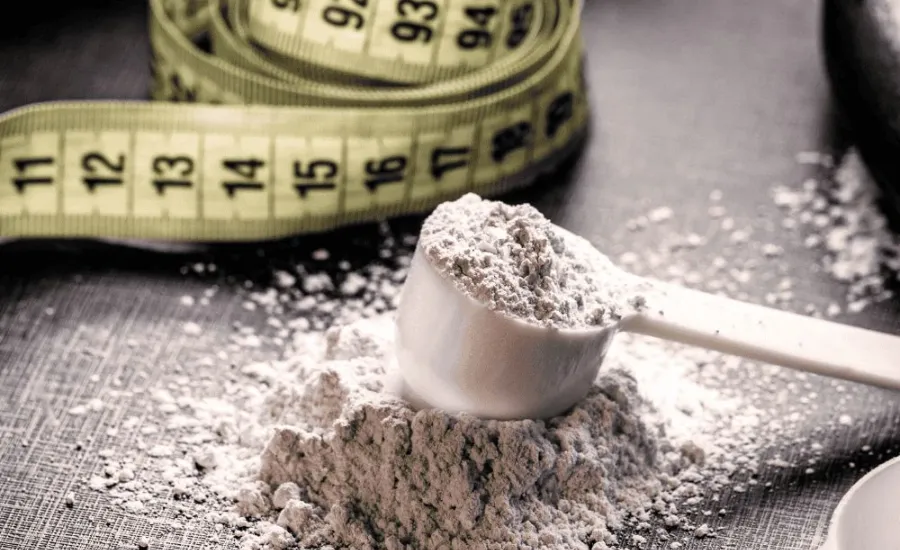
This is where the current evidence is strongest. Estrogen decline during perimenopause and menopause accelerates the loss of both muscle mass and bone density, and creatine supplementation combined with resistance training has shown meaningful benefit in counteracting both. Several studies specifically in postmenopausal women have found improvements in muscle strength and lean mass when creatine was paired with structured exercise, beyond what exercise alone produced.
The brain fog reported during perimenopause has also drawn research interest, with creatine's role in cellular energy production offering a plausible mechanism for some of the cognitive support women describe anecdotally. The research here is newer and smaller in scale than the muscle and bone data, so it is worth treating as a promising direction rather than a guaranteed outcome for every individual.
The Three Myths Worth Retiring
The first myth is that creatine is only for bodybuilders. The current research base spans casual exercisers, postmenopausal women, and even older adults working to preserve mobility, which makes “bodybuilder supplement” an outdated label.
The second myth is that creatine causes significant weight gain. Some initial water retention is common in the first one to two weeks, and it typically levels off. This is fluid inside the muscle cell, not fat gain, and it's often the most misunderstood part of starting creatine.
The third myth is that creatine is hard on the kidneys for healthy adults. The research on healthy individuals does not support this concern at standard doses. People with existing kidney disease are the clear exception and should consult a physician before adding any new supplement, and the safety profile during pregnancy has not been studied enough to make a confident recommendation either way.
How Much and What Format
The effective dose across most research is 3 to 5 grams of creatine monohydrate per day, taken consistently rather than only on workout days. Creatine builds up in your system over time, so daily use matters more than precise timing around exercise. Powder remains the most cost-effective format and mixes into virtually any drink without altering the taste. Gummies and pre-dosed chews trade some cost efficiency for convenience, which is a reasonable trade for anyone who knows they will not stick with a powder and shaker bottle.
Creatine monohydrate is the form with the largest body of supporting research. Other forms marketed as more “advanced” or “absorbable” exist on the market, but the evidence supporting any meaningful advantage over monohydrate is thin. Spending more for a different form rarely buys a better result.
A loading phase, where someone takes a higher dose for the first 5 to 7 days before settling into the standard 3 to 5 grams, can help saturate creatine stores faster. Skipping it simply means it takes a few weeks longer to reach the same saturation point, with no difference in the long-term outcome. Most people do fine starting straight at the standard daily dose and staying consistent with it.
A Note on What This Is and Is Not
This article is general nutritional guidance, not a medical recommendation tailored to your individual health profile. Creatine is among the most extensively studied supplements available, and the safety data for healthy adults is strong, but anyone with kidney disease, anyone who is pregnant or breastfeeding, or anyone managing a chronic condition should talk to a doctor before adding it to a routine.
What You’re Actually Asking
Does creatine make women bulky?
No. Creatine supports strength and lean muscle retention, not the kind of dramatic size increase associated with bulking. Any early weight change is water inside the muscle cell, and it stabilizes within a few weeks.
Is creatine safe to take every day, including rest days?
Yes. Creatine works by building up in your system over time, so daily use, including rest days, produces better results than only taking it around workouts.
What is the best time of day to take creatine?
Timing matters far less than consistency. Taking it with a meal can reduce the chance of mild stomach discomfort, but there is no research-backed “best” time of day.
Can creatine help with menopause symptoms?
Research supports creatine's role in preserving muscle and bone density during perimenopause and menopause, and early research points to a possible benefit for brain fog. It is not a treatment for menopause symptoms broadly, and it works best alongside resistance training.
Who should avoid creatine or check with a doctor first?
Anyone with existing kidney disease, anyone who is pregnant or breastfeeding, and anyone managing a chronic health condition should consult a physician before starting creatine.