Growing up Greek means growing up surrounded by food. Not just any food—the kind that involves yiayia (grandmother) hand-rolling dolmades while telling you exactly why your technique is wrong, the smell of lamb slow-roasting on Sunday afternoons, and enough olive oil to make any American cooking show host nervous.
I learned to cook Greek food the way most Greek kids do: by watching, helping, and eventually being trusted with the important jobs like flipping the spanakopita or testing if the avgolemono is thick enough. There were no written recipes—just yiayia's "a little of this" and "until it looks right" and the understanding that you'd figure it out through repetition.
Now that I'm living in the US, I've had to translate those unwritten family recipes into something measurable. These 20 dishes are the ones I make when I'm homesick, when I want to impress dinner guests, or when I just need the comfort of familiar flavors. Some are everyday staples, others are reserved for special occasions, but all of them carry a piece of home with them.
Mezze: The art of Greek appetizers
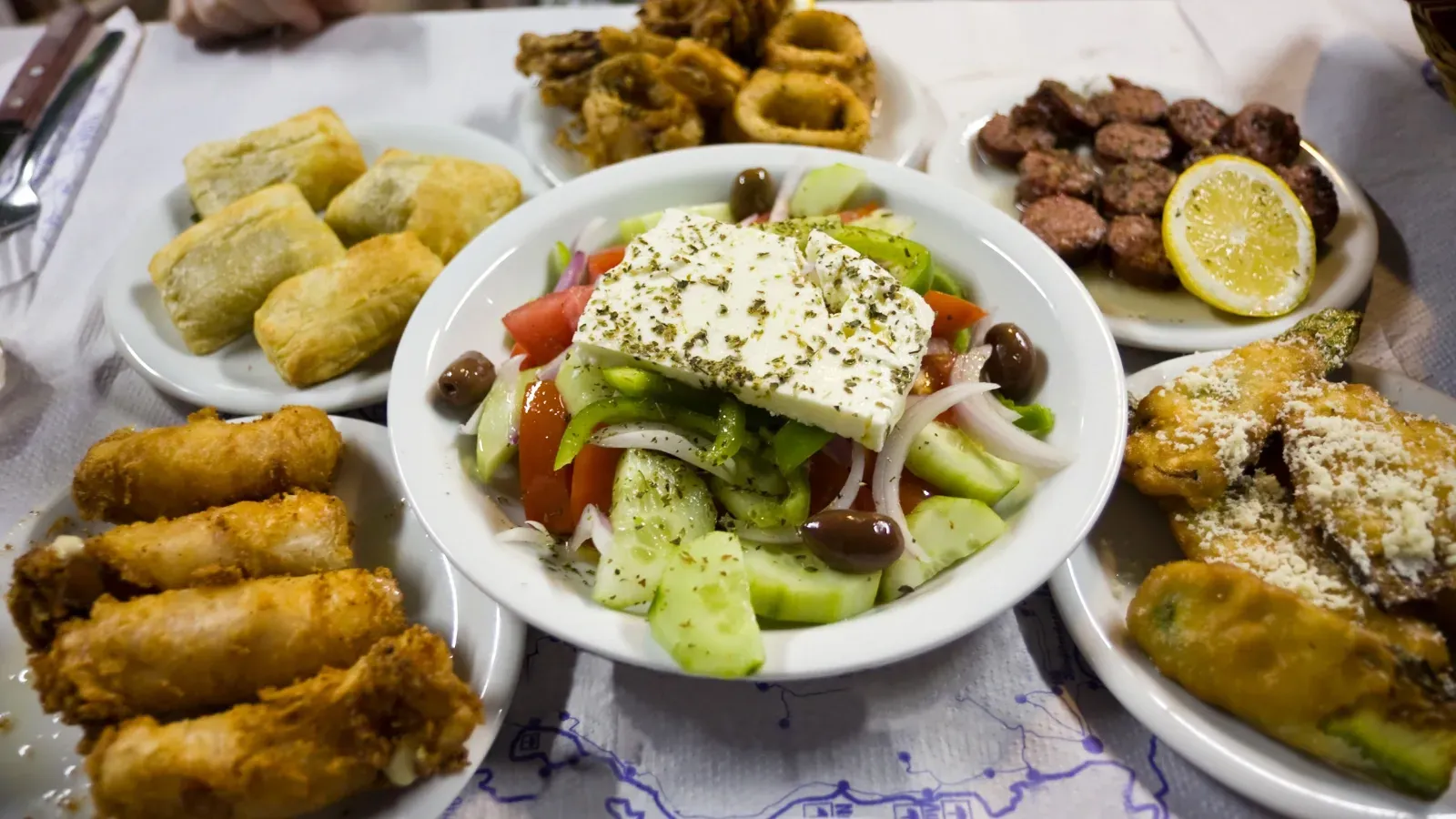
In Greece, we don't rush to the main course. Mezze—small plates meant for sharing—are how we start every meal, whether it's a casual weeknight dinner or a celebration. The table fills up slowly: a dish of olives here, some tzatziki there, maybe some fresh bread. It's about taking your time and actually enjoying the company.
1. Tzatziki—but make it right
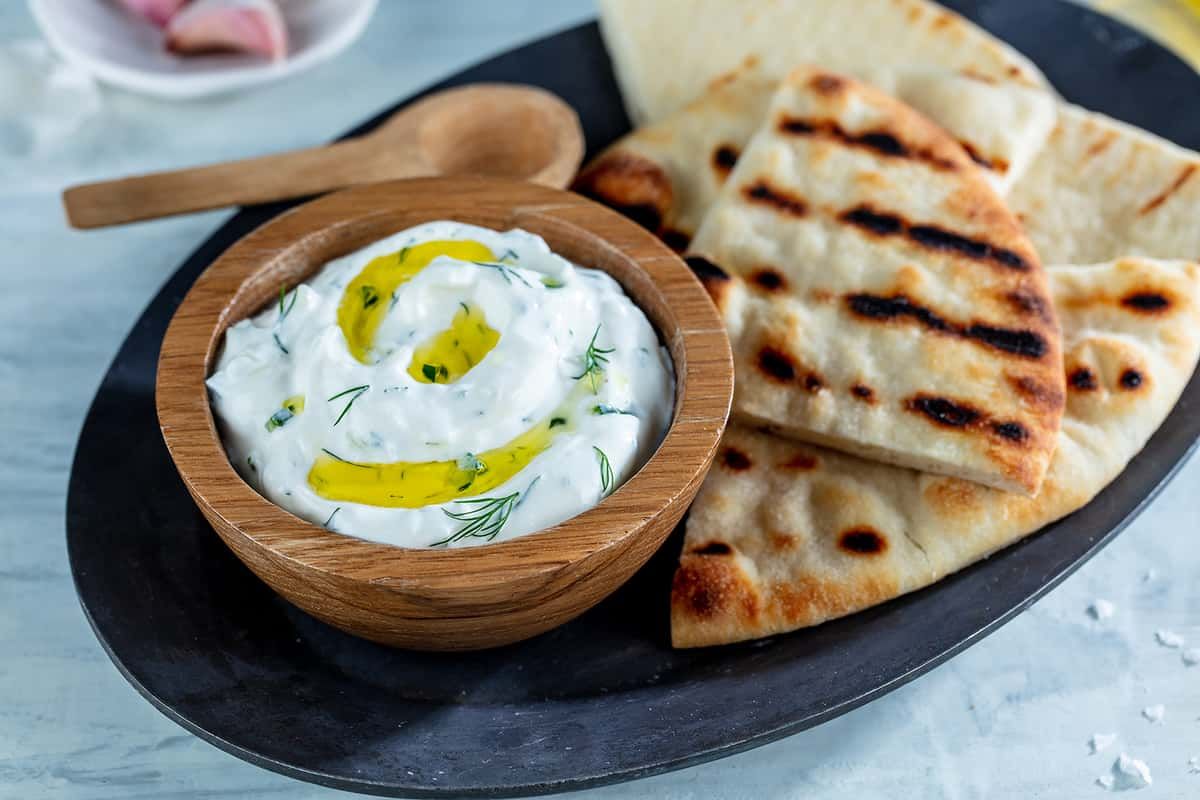
I've seen so many versions of tzatziki in the US, and honestly, most of them are too thin and under-garlicked (or, with added ketchup, which is a big no-no). Real tzatziki should be thick enough to stand a spoon in, and yes, it should have enough garlic to make you think twice about a first date.
Here's the key: use Greek yogurt (straggisto, the strained kind—our yogurt is much thicker than even American Greek yogurt), grate your cucumber and then squeeze out every last drop of water using a clean kitchen towel, and don't be shy with the garlic. I use one large clove per cup of yogurt, but my yiayia would use two.
Add fresh dill (never dried—this is one place where fresh matters), a good glug of olive oil, lemon juice, and salt. Mix it and let it sit in the fridge for at least an hour. The flavors need time to marry, as my mom would say. Serve it with everything: grilled meats, pita, vegetables, or, honestly, just a spoon.
Find the recipe here
2. Spanakopita the way yiayia makes it
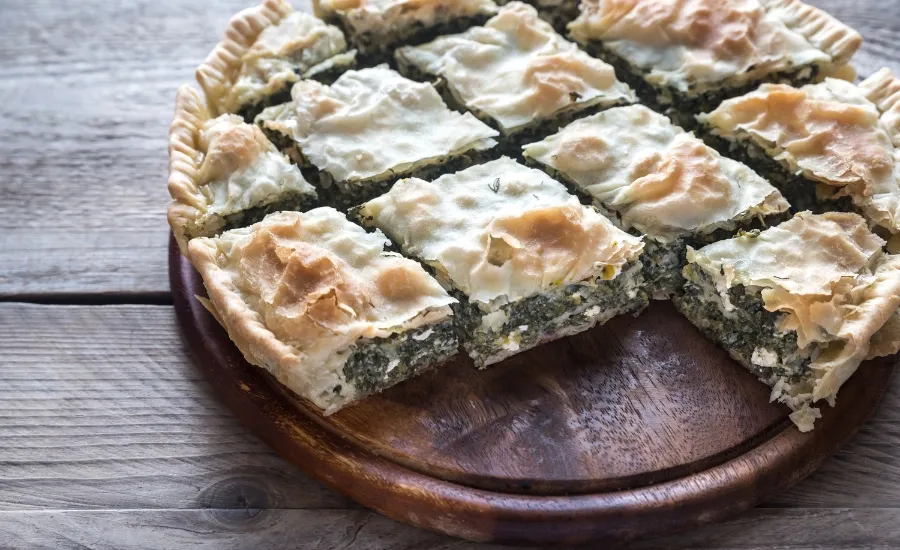
Every Greek family thinks their spanakopita is the best, and I'm not about to break tradition. My yiayia's version uses a mix of spinach and wild greens (horta) when they're in season, lots of fresh dill and green onions, and feta cheese that's been crumbled by hand, never pre-crumbled from a package.
The secret most people don't know: you need to squeeze the cooked greens within an inch of their life. If there's any moisture left, your phyllo will be soggy instead of crispy. Also, use egg for brushing the phyllo layers—olive oil works, but egg gives you that golden, flaky texture that makes spanakopita irresistible.
We usually make it in a large pan and cut it into squares, but for parties, the triangular individual pieces are more traditional. According to many, spanakopita is best served warm but not hot (give it about 15 minutes to set after baking), but I find it even tastier the next day, cold.
Find the recipe here
3. Melitzanosalata—smoky eggplant dip
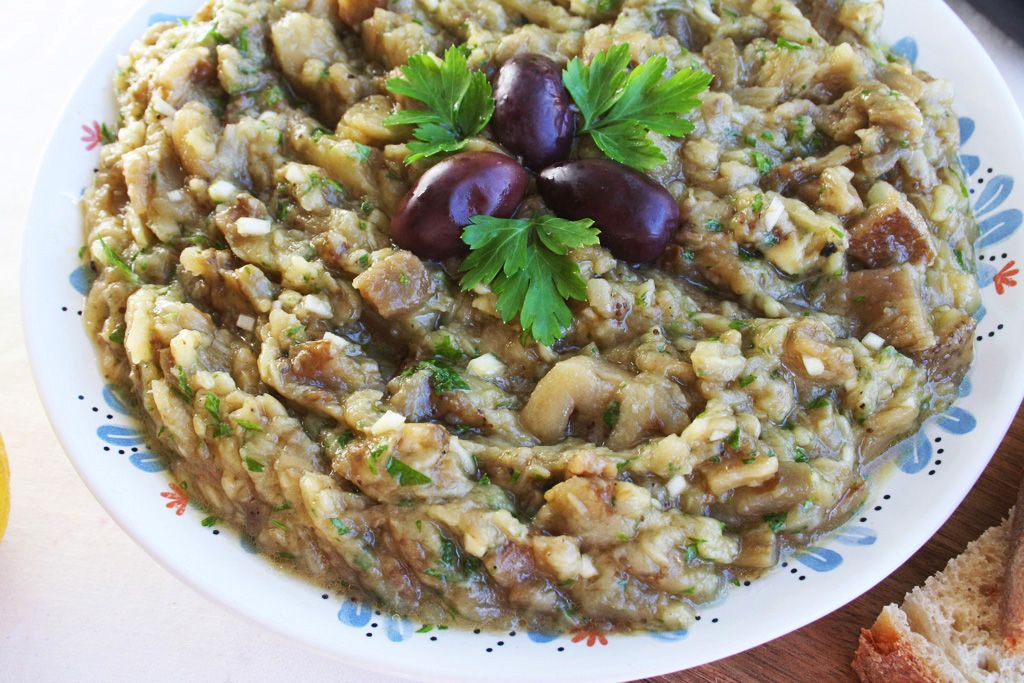
Melitzanosalata is one of those dishes where technique matters more than ingredients. You need to char the eggplant until the skin is completely black and the inside is soft and smoky. In Greece, we'd do this directly over a gas flame, turning it with tongs until it's evenly charred.
Let it cool, peel off the skin (it should come off easily), and scoop out the flesh. Some people blend it smooth; I prefer to mash it with a fork for a chunkier texture. Add crushed garlic, lemon juice, good olive oil, and a touch of red wine vinegar. Some versions include chopped tomatoes or parsley, but the classic is simple: just eggplant, garlic, lemon, and oil.
Serve it with warm pita or crusty bread, alongside tzatziki and taramosalata for a proper mezze spread.
Find the recipe here
4. Dolmades—patience required
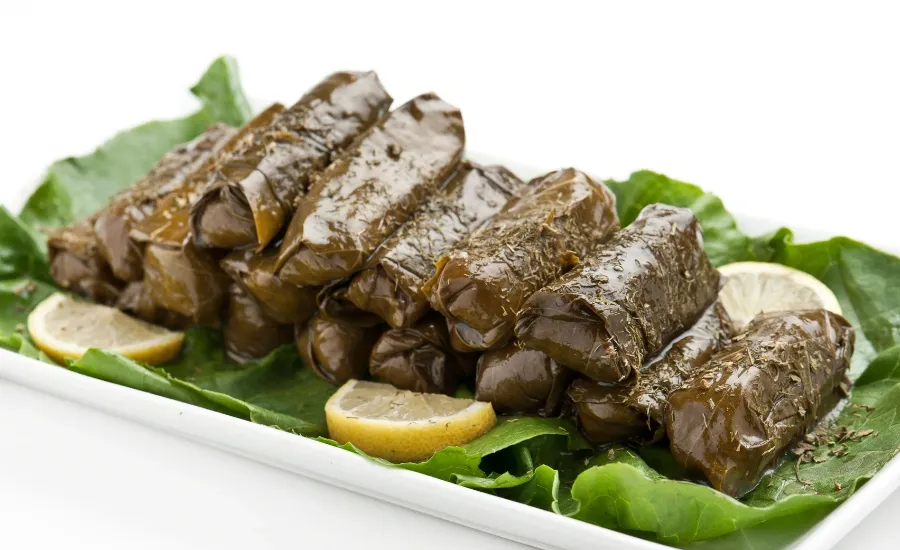
Making dolmades is a family affair. My mom and aunts would sit around the kitchen table rolling them while catching up on family gossip, and the pile would grow steadily over a couple of hours. It's not hard, just time-consuming—and honestly, kind of meditative once you get into the rhythm.
The filling is rice, fresh dill, mint, and green onions, with lemon juice and olive oil. Some families add ground meat, but the vegetarian version (yialantzi) is more traditional. You want the rice partially cooked before rolling because it will finish cooking in the pot.
Here's the trick: don't overfill them or roll them too tight—the rice needs room to expand. Place them seam-side down in a pot, tightly packed so they don't unravel, weight them down with a plate, and simmer them in lemony broth until the rice is tender. Serve them at room temperature with extra lemon wedges.
Find the recipe here
5. Taramosalata—an acquired taste worth acquiring
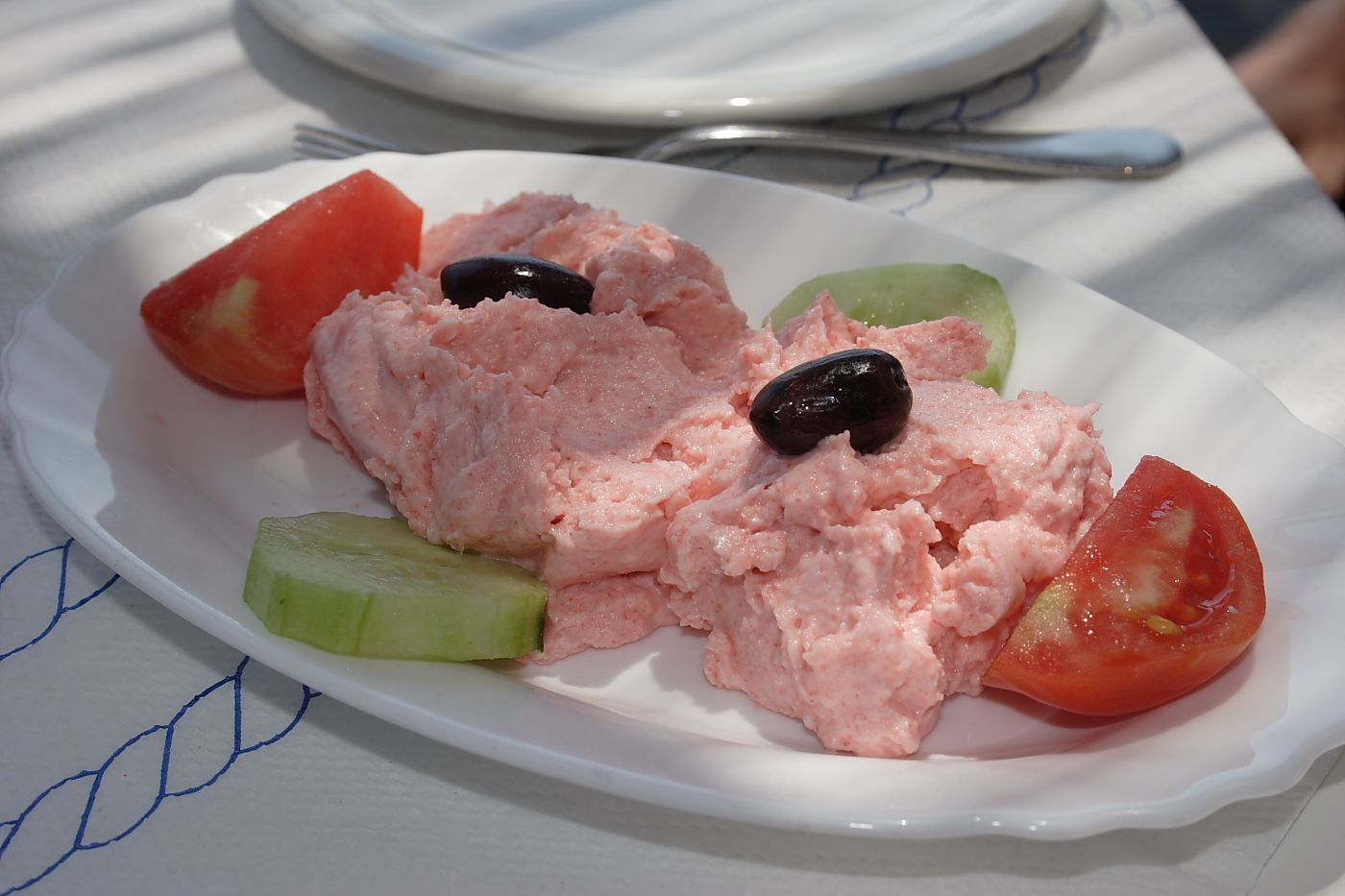
I'll be honest: taramosalata is polarizing. Some people love the briny, creamy fish roe dip, others can't get past the idea of it. But if you grew up eating it, it's pure comfort.
The traditional base is stale bread soaked in water (not milk), which gets blended with tarama (carp roe), lemon juice, and olive oil until it's smooth and pale pink. The texture should be like thick hummus, and the flavor should be pleasantly fishy without being overwhelming.
My mom's version uses a boiled potato instead of bread for a lighter, fluffier texture. Whichever way you make it, serve it cold with bread or raw vegetables. It's especially good with crisp radishes and cucumber slices.
Find the recipe here
Salads that are never boring
Greek salads aren't side dishes—they're central to the meal. We take them seriously, which means ripe tomatoes, good feta, and plenty of olive oil. Lettuce is optional (and usually absent).
6. Horiatiki—the real Greek salad
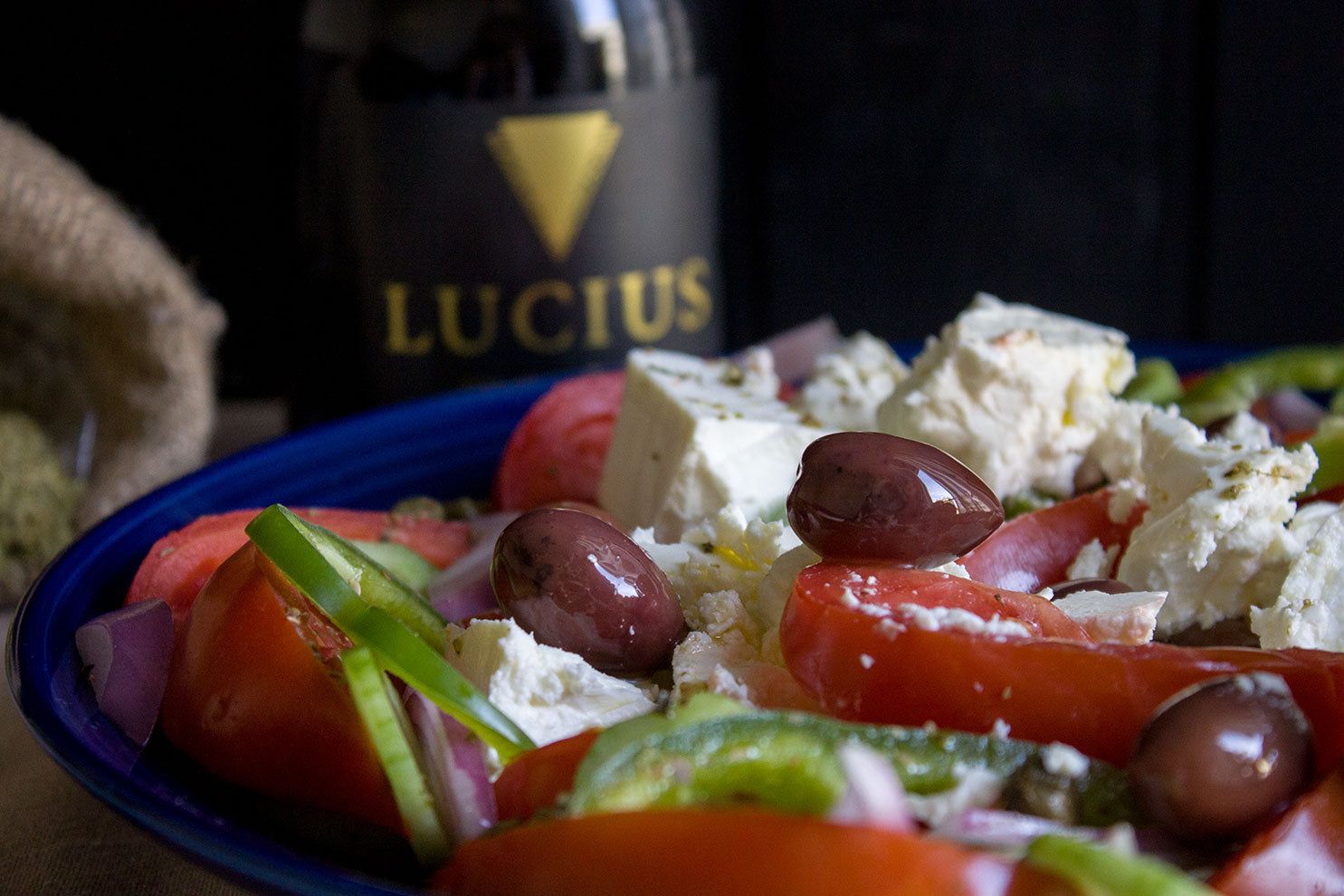
What Americans call "Greek salad" is not what we eat in Greece. Real horiatiki (village salad) has no lettuce, no potato salad on the side, and definitely no bottled dressing.
It's simple: ripe tomatoes cut into wedges, cucumber chunks, thick slices of green pepper, red onion (not too much—it can be overpowering), Kalamata olives, and a slab of feta cheese on top. The dressing is just good olive oil, a splash of red wine vinegar, dried oregano (crushed between your fingers), and salt.
The key is cutting everything into substantial pieces—this isn't a delicate salad. And the feta should be in one piece on top, not crumbled. Everyone breaks off what they want. We eat this almost daily in summer when tomatoes are at their peak.
Find the recipe here
7. Fasolakia ladera—green beans in tomato sauce
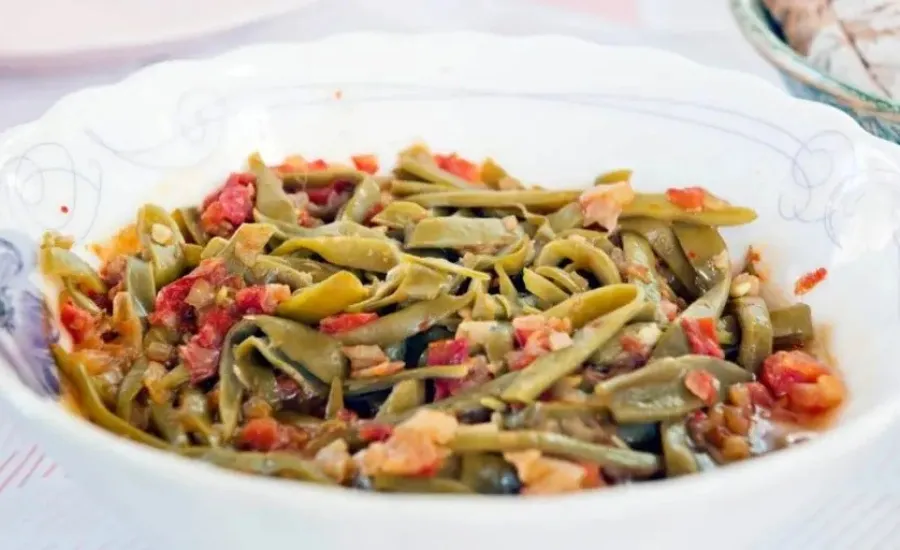
Ladera means "with oil," and it refers to a category of vegetables cooked slowly in tomato sauce and lots of olive oil. Fasolakia (green beans) is one of the most popular versions, and it's meant to be eaten at room temperature or even cold the next day.
The beans cook low and slow with tomatoes, onions, garlic, and olive oil until they're meltingly soft—nothing like the crisp-tender green beans you might be used to. My mom adds potatoes to make it more filling, and some families add a pinch of sugar to balance the tomato acidity.
Serve it with crusty bread and feta cheese, and prepare for it to taste even better tomorrow. Like most Greek dishes, fasolakia improves with time.
Find the recipe here
8. Patates lemonates—crispy lemon potatoes
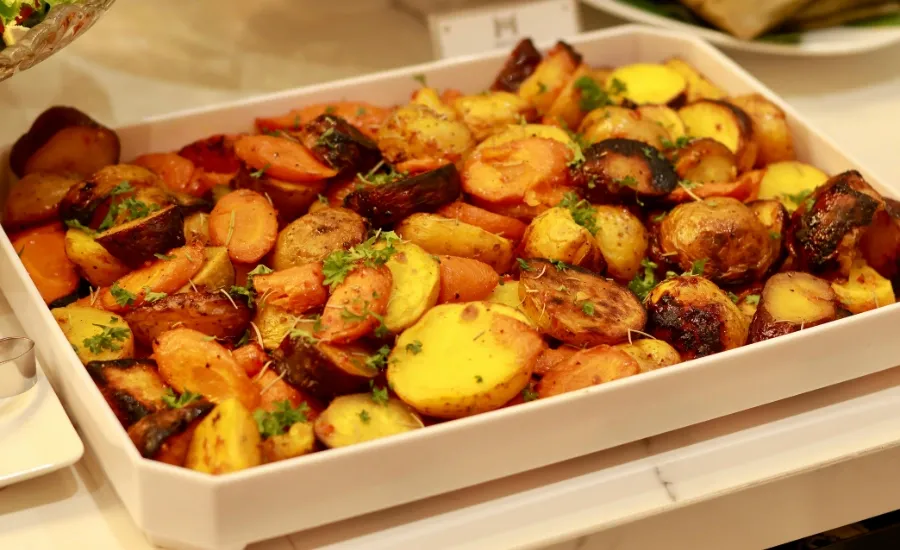
These potatoes are so good that they often disappear before the main course is served. They're roasted with olive oil, lemon juice, garlic, oregano, and chicken or vegetable broth, which creates steam that keeps them creamy inside while the edges get crispy and golden.
Cut the potatoes into thick wedges, toss them with the liquid, and roast at high heat, turning them occasionally. The liquid will reduce and caramelize, coating the potatoes in lemony goodness. My mom insists on adding extra lemon juice halfway through cooking, and honestly, she's right—more lemon is always better.
Find the recipe here
Main dishes worth the effort
Greek main dishes range from weeknight staples to labor-intensive Sunday meals. These are the ones I make when I want to feed people properly—the kind of food that makes everyone go quiet for the first few bites.
9. Moussaka—the Sunday meal
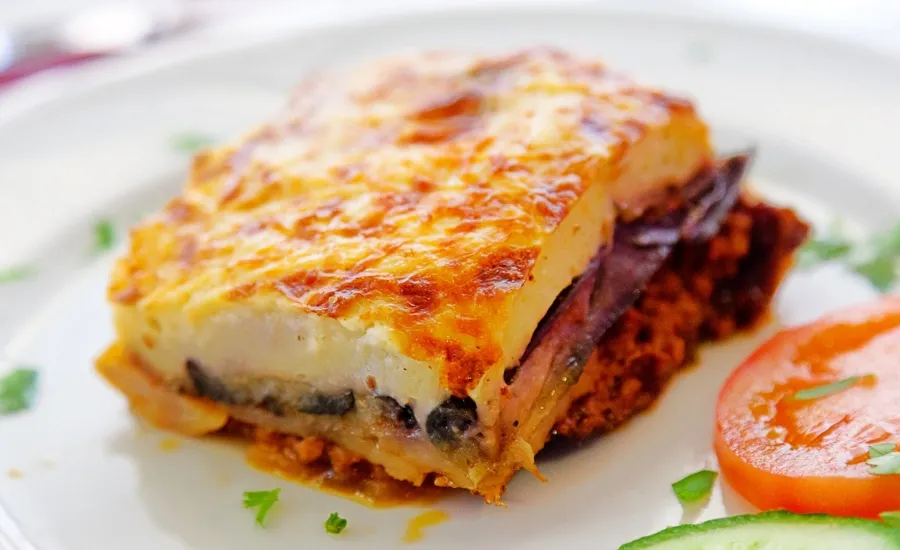
Moussaka is not a weeknight dish. It's what you make on Sunday when you have time, patience, and a reason to celebrate. My mom makes it for name days (Greek type of birthdays), Easter, and whenever family gathers all together.
The traditional method involves frying the eggplant slices, but you can brush them with olive oil and broil them if you want a lighter version. The meat sauce (we use a mix of beef and lamb) gets seasoned with cinnamon, nutmeg, and a touch of tomato paste. The cinnamon is essential—it's what makes it taste Greek instead of Italian.
The béchamel needs to be thick—thick enough to slice cleanly once the moussaka cools. My mom taught me to add a beaten egg to the béchamel for extra richness and to help it set properly. Let the finished moussaka rest for at least 30 minutes before cutting, or better yet, make it the day before. It's always better on day two.
Find the recipe here
10. Pastitsio—moussaka's easier cousin
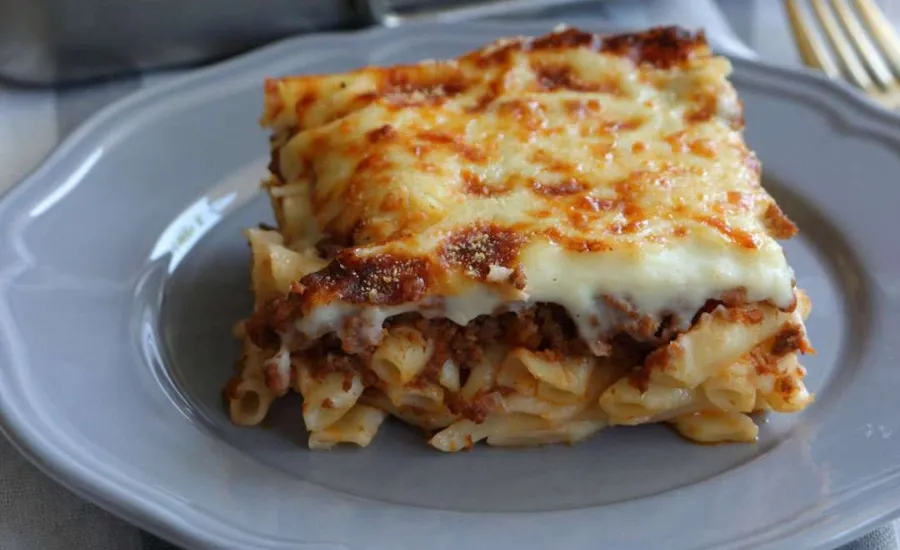
Pastitsio is what my mom makes when she wants moussaka flavors without the eggplant prep work. It layers tubular pasta (we use No. 2 macaroni, but rigatoni works just as well) with the same spiced meat sauce and a thick béchamel.
The pasta layer gets mixed with grated cheese before adding the meat sauce—this helps it hold together when you cut it. Top it with béchamel, sprinkle with more cheese, and bake until golden. It feeds a crowd, freezes beautifully, and tastes even better reheated.
Find the recipe here
11. Souvlaki—Greek street food perfection
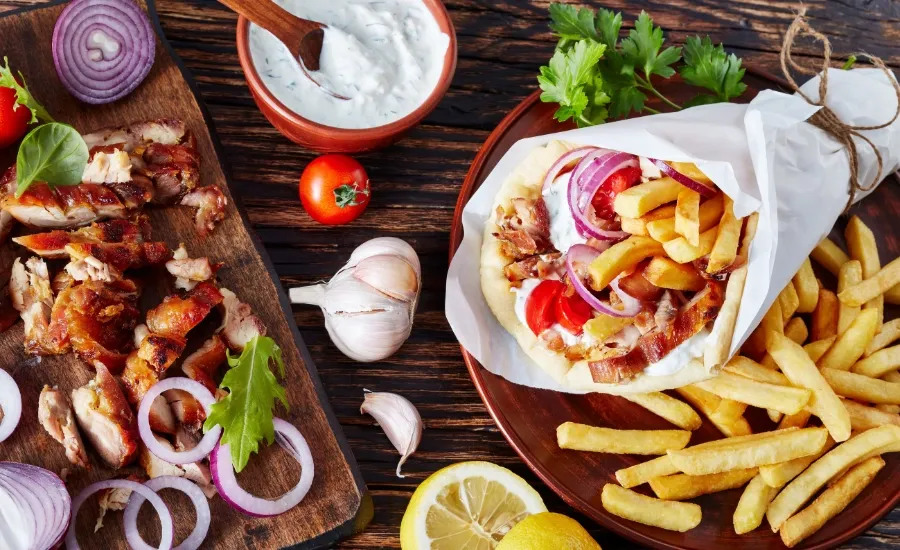
Real souvlaki is grilled pork (yes, pork, not chicken—that's different). The meat is cut into chunks, marinated in olive oil, lemon, oregano, and garlic, then threaded onto skewers and grilled over charcoal until slightly charred.
In Greece, we serve it wrapped in pita with tomatoes, onions, tzatziki, and fries—yes, fries go inside the wrap. It sounds weird if you've never tried it, but the combination of hot grilled meat, cool tzatziki, and crispy fries is magic.
Marinate the meat for at least 4 hours, preferably overnight. And if you can grill over charcoal instead of gas, do it—the smoky flavor makes all the difference.
Find the recipe here
12. Psari plaki—baked fish with tomatoes
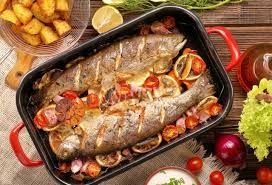
Growing up in Greece means you can access the sea within 20 minutes, so fish was on the table multiple times a week. Psari plaki is one of the simplest preparations: whole fish (or fillets) baked with tomatoes, onions, garlic, parsley, and lots of olive oil.
We use whatever white fish is freshest—sea bass, sea bream, or red snapper. Arrange sliced potatoes in the bottom of the pan, lay the fish on top, cover with tomatoes and onions, drizzle generously with olive oil, and bake until the fish flakes easily and the vegetables are tender.
The key is not overcooking the fish. It should be just cooked through, still moist and tender. Serve it with crusty bread to soak up the tomato-olive oil sauce.
Find the recipe here
13. Arni kleftiko—”stolen lamb”
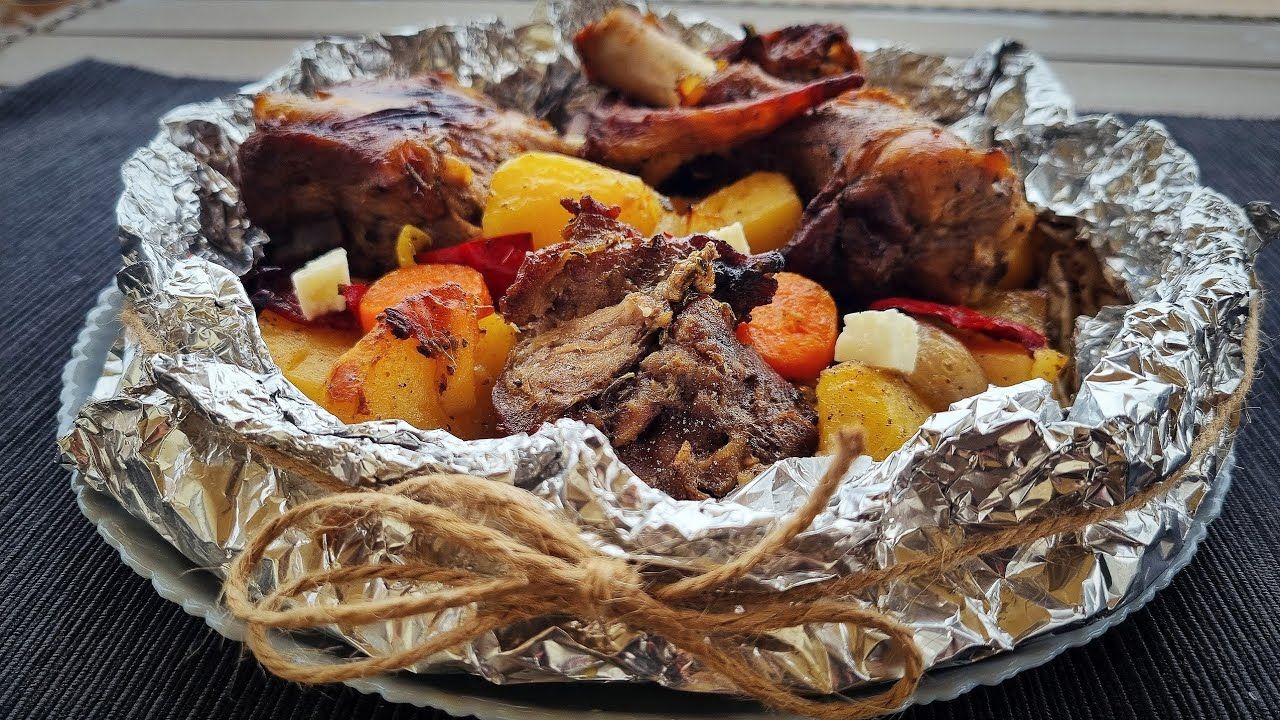
Kleftiko translates to "stolen," and the legend says this dish comes from Greek bandits who would seal stolen lamb in underground ovens to cook slowly without creating telltale smoke. Today's version is less dramatic but just as delicious.
Lamb shoulder is seasoned with garlic, lemon, oregano, and salt, then sealed in parchment paper with potatoes, tomatoes, and feta cheese. It slow-roasts for hours until the meat is fall-apart tender and the potatoes have absorbed all the flavors.
My dad makes this for Easter, and the house smells incredible all day. It's one of those dishes where the long, slow cooking does all the work—you just need patience and a good appetite.
Find the recipe here
14. Gigantes plaki—giant beans that aren't boring
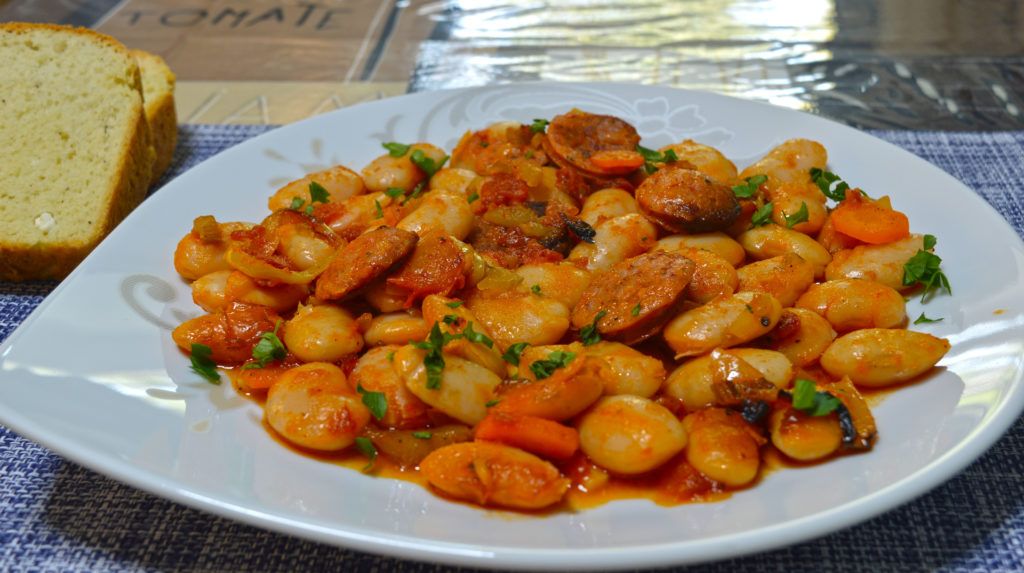
Gigantes (giant beans—usually butter beans or lima beans) slow-cooked in tomato sauce might sound boring, but this is one of those dishes that surprises people. The beans become incredibly creamy while absorbing all the flavors of the sauce.
Soak the beans overnight, simmer them until tender, then bake them with tomatoes, onions, garlic, parsley, and olive oil. The long baking time transforms them into something that's both hearty and comforting. We eat this as a main course during Lent (when we're avoiding meat) or as a mezze with bread and feta.
Find the recipe here
Greek comfort food for the soul
These are the dishes my mom makes when someone is sick, sad, or just needs feeding. They're simple, soothing, and taste like being taken care of.
15. Avgolemono soupa—Greek penicillin
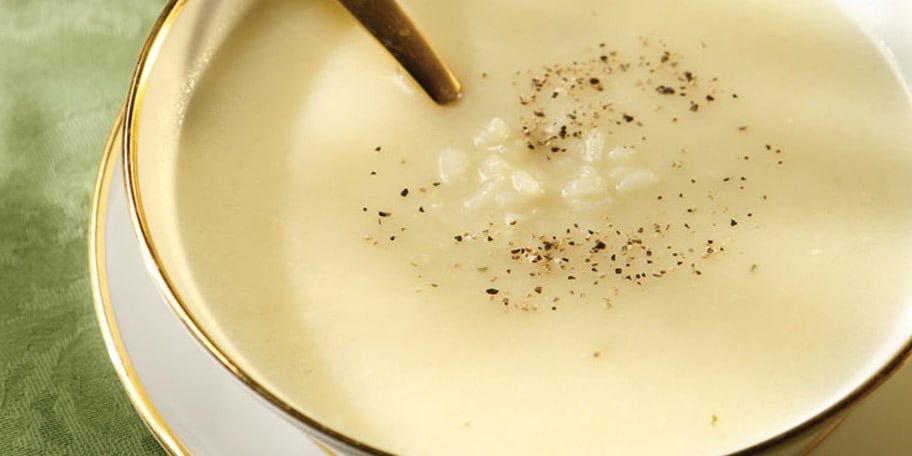
Every culture has a chicken soup that cures everything, and this is ours. Avgolemono (egg-lemon) soup is chicken broth with rice, thickened with a mixture of beaten eggs and lemon juice.
The trick is tempering the eggs properly—you need to add hot broth to the egg-lemon mixture slowly while whisking constantly, or you'll end up with scrambled eggs. Once it's properly tempered, pour it back into the soup and stir over low heat until it thickens slightly.
The result is creamy, tangy, and comforting without being heavy. My mom makes this whenever anyone in the family is under the weather, and honestly, it does make you feel better.
Find the recipe here
16. Gemista—stuffed vegetables that taste like summer
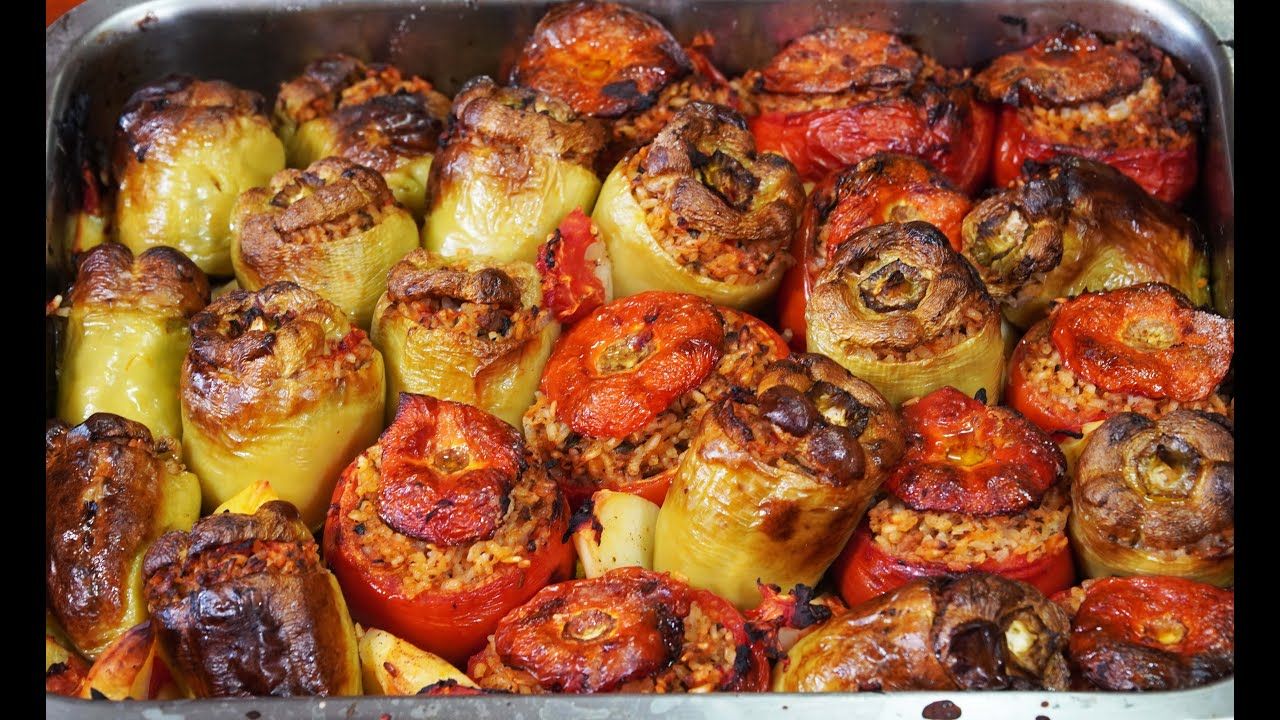
Gemista literally means "stuffed," and it's what we make in summer when tomatoes and peppers are everywhere. We hollow out the vegetables, stuff them with rice, herbs (lots of mint and parsley), and sometimes pine nuts and raisins, then bake them with potatoes.
The vegetarian version (without meat) is more traditional and, in my opinion, better—the rice absorbs all the vegetable juices as it cooks, making it incredibly flavorful. Some families add ground meat, but we never did. Serve them warm or at room temperature with feta and bread.
Find the recipe here
17. Keftedes—Greek meatballs with mint
Apart from the Greek patty burgers, which are one of the most popular meals in Greece, Greek meatballs are different from what you might be used to. We use fresh mint along with parsley, and sometimes we add grated onion and bread soaked in milk for moisture. The mint is what makes them distinctly Greek.
My yiayia's trick was to chill the mixture for at least an hour before shaping—it makes the meatballs easier to form and helps them hold together during cooking. We usually fry them for crispy exteriors, but you can bake them if you prefer. Serve with tzatziki, lemon wedges, and pita.
Find the recipe here
Sweets for special occasions
Greek desserts are unapologetically sweet—we don't do subtle when it comes to honey and sugar. These are treats for celebrations, name days, and whenever you want to make someone feel special.
18. Baklava—worth every minute
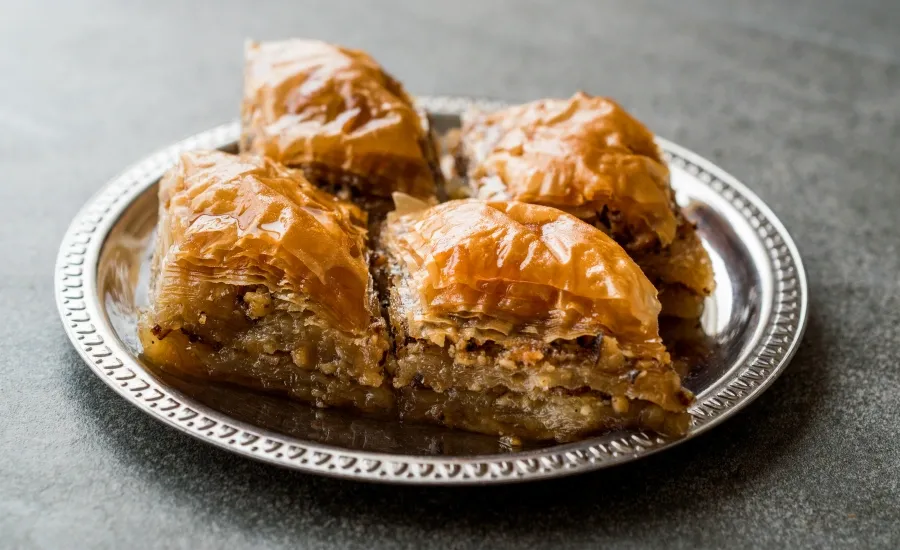
I'm not going to lie—baklava is time-consuming. But it's also one of those recipes where the effort pays off in a way that makes you understand why Greek families have been making it for centuries.
Layer buttered phyllo sheets with ground walnuts (or pistachios, or a mixture) mixed with cinnamon and sugar. My family uses a 2:1 ratio of phyllo to nuts, but some people prefer more nuts. Cut the baklava into diamonds before baking—this is crucial because you cannot cut it cleanly after.
Bake until golden and crispy, then immediately pour cold honey syrup over the hot baklava. The temperature shock helps the syrup absorb properly. Let it sit overnight—baklava is always better the next day once the flavors have melded and the phyllo has absorbed the syrup.
Find the recipe here
19. Galaktoboureko—custard pie dreams
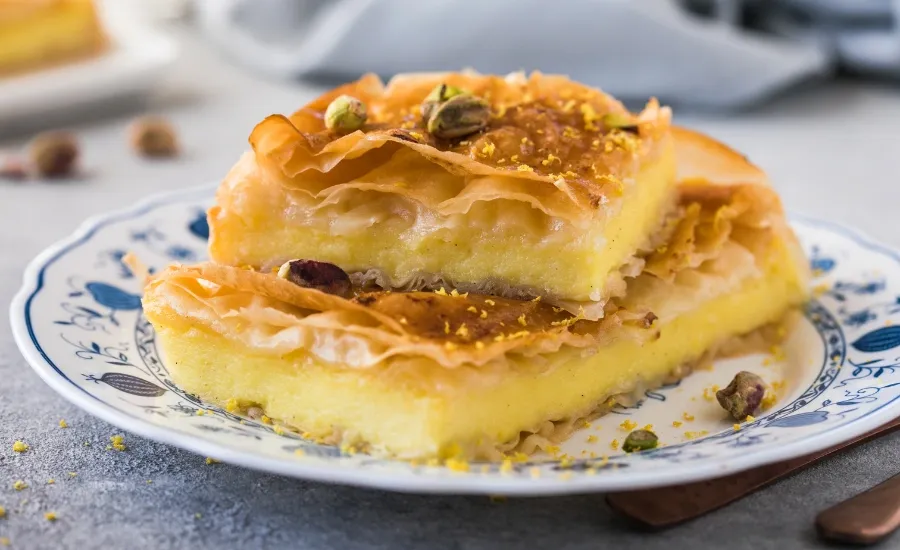
If baklava is the queen of Greek desserts, galaktoboureko is the princess. It's semolina custard wrapped in phyllo and soaked in honey syrup—think crème brûlée meets baklava.
The custard needs to be thick and set properly, which means cooking it slowly and stirring constantly until it's the consistency of thick pudding. Pour it between layers of buttered phyllo, bake until golden, and drench with cold syrup while it's still hot.
My aunt makes this for Easter, and it's always the first dessert to disappear. The contrast between crispy phyllo and silky custard is perfection.
Find the recipe here
20. Loukoumades—golden honey puffs
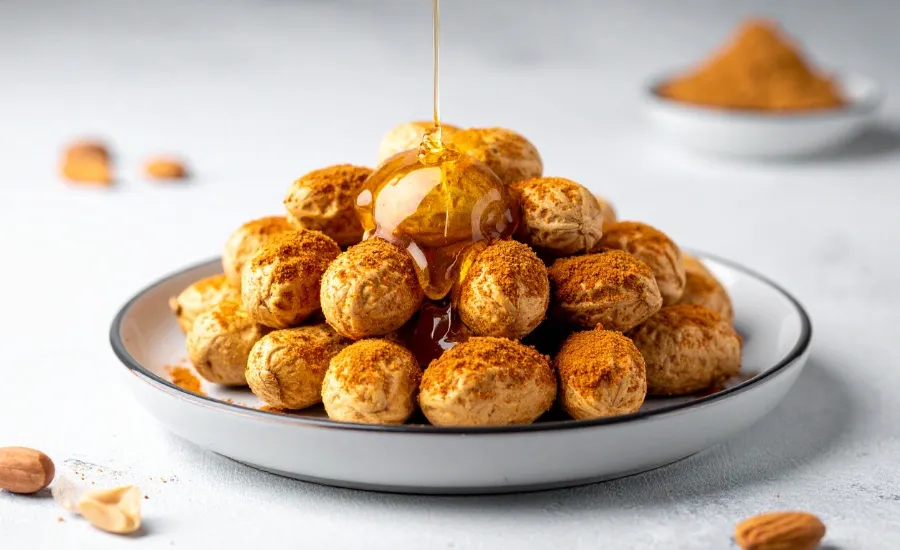
Loukoumades are Greek donuts—light, yeasted dough balls deep-fried until golden, then drizzled with honey and sprinkled with cinnamon and crushed walnuts. They're sold at street festivals and fairs, and the smell alone is enough to draw a crowd.
The dough needs time to rise until it's light and bubbly, then you drop spoonfuls into hot oil and watch them puff up like magic. They need to be eaten fresh and warm—loukoumades don't keep well, which is why we always make exactly as many as we plan to eat.
Find the recipe here
What I wish someone had told me about Greek cooking
After years of cooking both in Greece and in the US, here's what I've learned about making Greek food work no matter where you are.
Olive oil is not the place to cut corners. Greek cooking uses a lot of olive oil—it's not a garnish, it's a main ingredient. Get the best extra virgin olive oil you can afford. You don't need the most expensive bottle from a specialty store, but avoid the ultra-light refined stuff. Look for Greek or Italian extra virgin olive oil with a harvest date on the bottle.
Learn to love oregano (the right kind). Greek oregano (rigani) is different from the oregano in most American grocery stores. It's more pungent, more fragrant, and absolutely essential. You can find it at Greek or Mediterranean markets, or order it online. Always use dried oregano, never fresh—fresh oregano doesn't have the same concentrated flavor.
Real Greek feta is worth finding. Not all feta is created equal. Greek feta (look for PDO certification) is made from sheep's milk or a sheep-goat blend, and it's creamier, tangier, and less salty than most American versions. It comes in blocks packed in brine—drain it before using. For salads, use thick slabs; for cooking, crumble it by hand.
Fresh lemon juice always, no exceptions. Bottled lemon juice tastes nothing like fresh. Keep lemons on hand and squeeze them as you need them. The brightness of fresh lemon is what balances the richness of olive oil and makes Greek food taste the way it should.
Phyllo dough is temperamental but forgiving. Work quickly, keep unused sheets covered with a damp (not wet) towel, and don't stress about tears. You can patch phyllo together with butter, and once it's baked, no one will know. Frozen phyllo works perfectly—just thaw it in the fridge overnight, never at room temperature.
Most Greek dishes taste better the next day. This is not a flaw—it's a feature. Spanakopita, moussaka, pastitsio, fasolakia, gigantes, and most stews improve after sitting overnight as the flavors develop and meld. Plan ahead and make them the day before, when you can.
Making Greek cooking work in your American kitchen
The ingredients are easier to find than you think. Most grocery stores now carry Greek yogurt, feta, phyllo dough, and Kalamata olives. For harder-to-find items like Greek oregano, tarama, or grape leaves, try a Mediterranean or Middle Eastern market, or order online.
Build a basic Greek pantry: good olive oil, dried oregano, lemons, garlic, canned tomatoes, Greek yogurt, and feta. With these staples, you can make tzatziki, Greek salad, fasolakia, and dozens of other dishes without a special shopping trip.
Start with the simple stuff—tzatziki, Greek salad, lemon potatoes—and work your way up to moussaka and baklava. Greek cooking isn't complicated, but some dishes do require time and practice. Don't let perfectionism stop you from trying.
Bringing a piece of Greece into your kitchen
Greek cooking is about more than following exact recipes (I never do!). It's about generosity—the kind that shows up in generous pours of olive oil, large portions, and insisting guests take leftovers home. It's about taking your time, using your hands, and trusting your instincts.
You don't need to master all 20 recipes at once. Pick one that sounds good, gather your ingredients, and give yourself permission to learn as you go. If something doesn't turn out perfectly the first time, that's okay—even yiayias had to start somewhere.
These recipes are my way of staying connected to home, even when I'm thousands of miles away. I hope they bring you the same comfort, joy, and full table they've always brought me. Kali orexi—bon appétit!