The Trap of Taking Casual Politeness Literally
When a Thanksgiving host looks you in the eye and tells you to just bring yourself, taking that statement literally is a social failure. Unless you are attending dinner at an institutional banquet hall, hosting Thanksgiving is an expensive, physically grueling logistical sprint. Your host has spent three days brining poultry, ironing linen napkins, sourcing vintage glassware, and scrubbing baseboards. Showing up at their front door completely empty-handed because you took a polite colloquialism at face value marks you as socially tone-deaf.
At the same time, showing up with the wrong item is worse than showing up with nothing at all. Walking into a crowded entryway carrying a warm ceramic casserole dish that needs twenty minutes in the oven, or handing your host an unarranged bunch of grocery store flowers wrapped in wet brown paper, does not make you a generous guest. It forces an exhausted person to stop what they are doing, hunt down a cutting knife, trim stems, search high cabinets for a clean glass vase, or rearrange oven racks while gravy scorches on the stove.
The Rules of Guest Contributions
The assignment requires understanding hospitality etiquette. Bring something of exceptional quality that requires zero immediate effort, zero kitchen tools, and zero obligation to serve that evening.
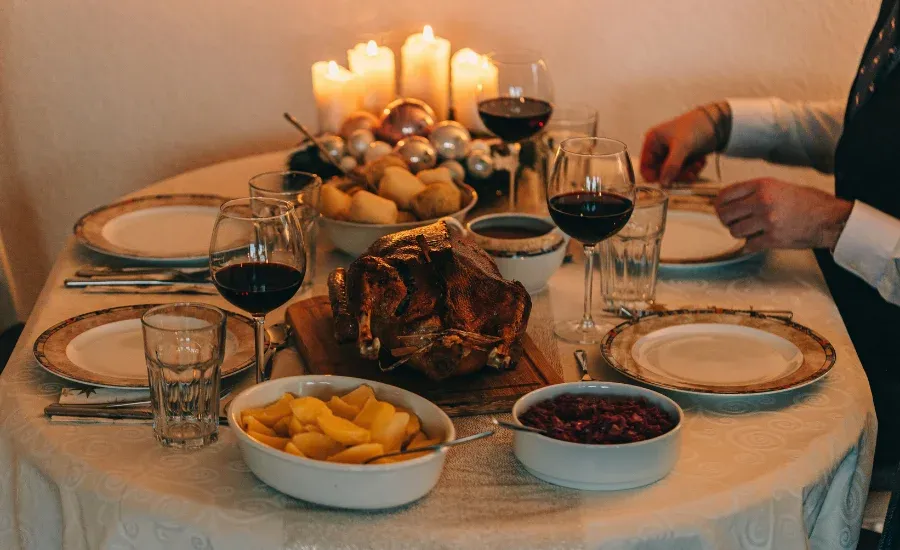
If an item needs a cutting board, a platter, chilling space in an already packed refrigerator, or an open burner on the range, leave it at home. Never bring a bottle of supermarket wine and expect the host to open it alongside their curated dinner pairings; a proper host gift is for the host to enjoy on Friday morning when the house is quiet, not for the communal table.
If you insist on bringing flowers, bring them already arranged in a weighted ceramic vessel that can be placed straight on a console table without assistance.
High-Utility Gifts with Understated Quality
A bottle of single-estate, early-harvest extra virgin olive oil from Tuscany, Greece, or California's Central Valley paired with a wooden tub of Maldon sea salt or French Fleur de Sel is the gold standard host gift. It is shelf-stable, universally appreciated, and does not interfere with the night's meal. Wrap the bottle in clean linen butcher paper tied with raw jute twine. Your host can drizzle it over leftover roast turkey, whisk it into vinaigrettes, or save it for simple weekend cooking throughout the winter months.
On the morning after Thanksgiving, the last thing an exhausted host wants to do is stand in a messy kitchen cooking breakfast for overnight family members. Solve that problem for them at the door. Bring a clean canvas market bag packed with a loaf of dense sourdough from a local artisanal bakery, a jar of bitter orange marmalade or cultured French sea salt butter, and a bag of freshly roasted, whole-bean single-origin espresso beans from an independent roaster. Hand the bag to the host at the door with a clear instruction that it is meant for tomorrow morning and should not be opened tonight. They will appreciate your foresight far more than another bottle of generic wine.
If you prefer bringing an edible pantry luxury, focus on shelf-stable items that feel like small indulgences. A heavy slab of wild honeycomb packed in a wooden box stores at room temperature and pairs with cheeses for weeks. A small, wax-sealed bottle of traditional Aceto Balsamico Tradizionale di Modena aged at least twelve years is something people rarely buy for themselves but treasure having on a pantry shelf. Alternatively, a pair of heavy, unbleached pure Belgian linen tea towels never goes out of style, absorbs moisture better than cotton, and quietly replaces the towels the host likely soiled while preparing dinner.
Handing Over the Gift Without Disruption
Etiquette is as much about delivery as selection. When the front door opens, step inside, greet your host warmly, and hand over your gift with a brief, quiet explanation. Never demand a public unboxing, and never ask them to pass it around the room.
If you brought a vintage dessert wine or a special digestive amaro, state clearly that it is for them to put away for later so they feel zero pressure to uncork it. Release them from the burden of host performance, hang up your coat, get yourself a glass of water without demanding service, and let your host run their kitchen with one less complication.