Every few seasons, luxury media experiences a collective panic about its relevance, and every few seasons, it reaches for the exact same remedy: corporate tech sponsorships wrapped in high-concept theatrical performance.
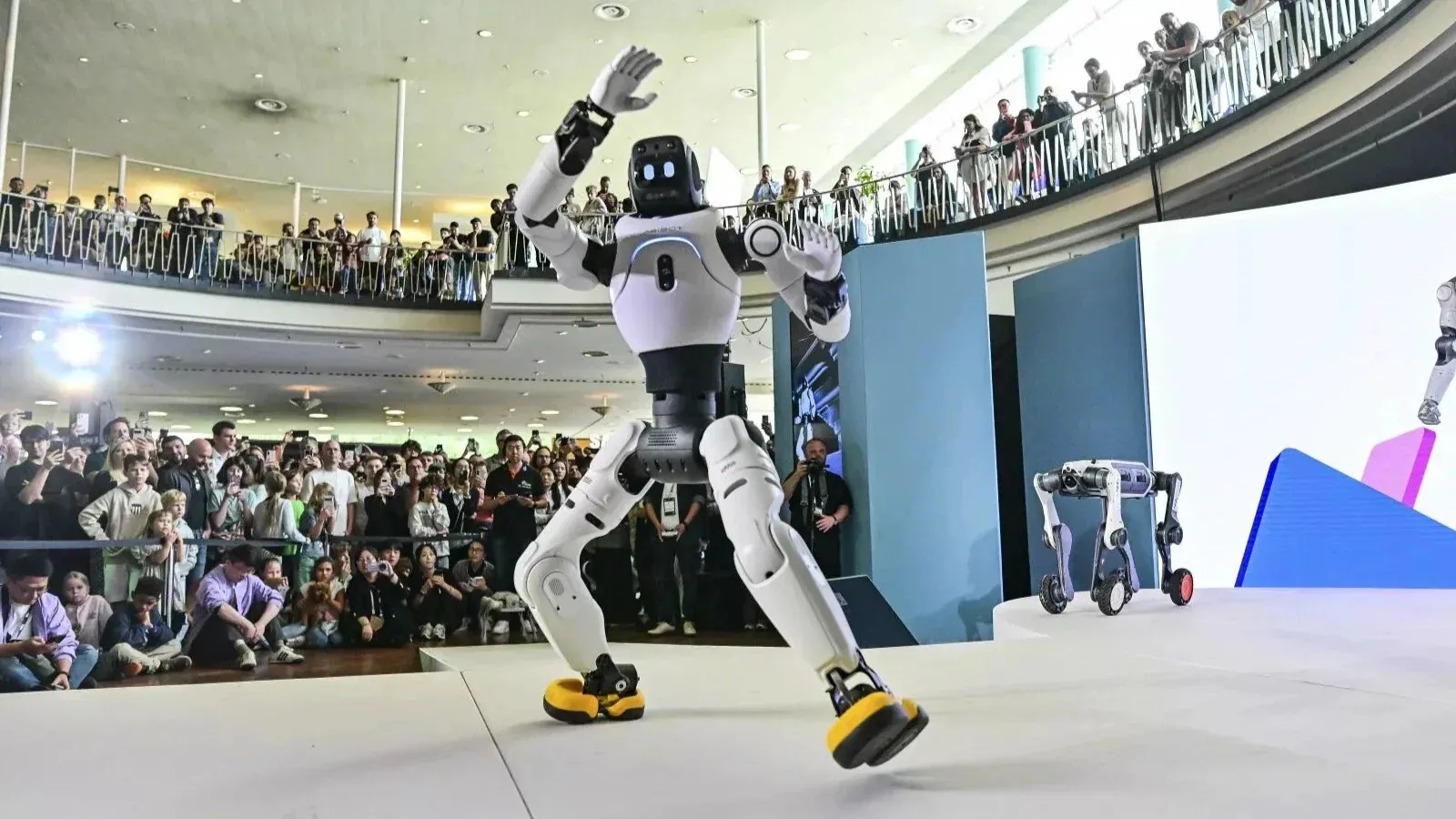
On Tuesday night, Vogue held its fifth annual Vogue World spectacle in Milan. During the fourth act, titled with complete self-seriousness as The Age of Intelligence, four humanoid robots from the Chinese company Unitree walked the historic floor of Galleria Vittorio Emanuele II. They wore no clothes. They walked toward the center of the stage, waved their articulated arms to perform the universal gesture for crowd noise, and prompted a front row of billionaire designers and pop stars to clap politely on cue.
The internet immediately performed its scheduled panic about mechanical dystopia and the death of human craft. The reality behind the runway was considerably less dramatic. It was simply media barter.
The entire production was sponsored by Meta Glasses, with OpenAI explicitly listed in the credits for additional support. The same Unitree machines strolling past Donatella Versace on Tuesday were simultaneously competing on the season finale of an American television talent show, performing choreographed group routines for home viewers.
This was not a glimpse into the creative future of dress. It was an expensive product placement deal between legacy print media needing Silicon Valley cash and technology conglomerates desperate for cultural cachet.
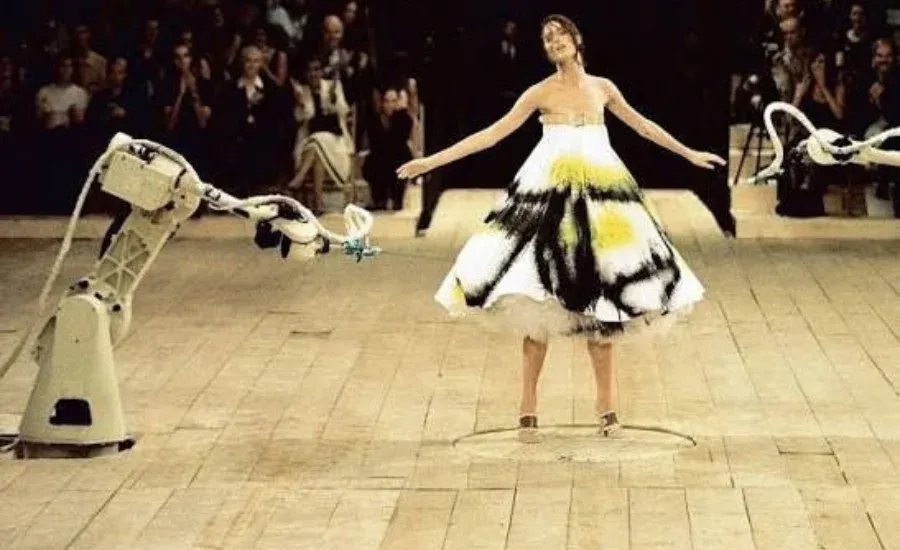
Luxury fashion has always attempted to flirt with technological disruption whenever retail figures stagnate. When Alexander McQueen directed robotic spray arms around Shalom Harlow in 1999, the moment became iconic because it carried genuine artistic tension. It placed human vulnerability directly against cold industrial automation.
What unfolded in Milan possessed none of that friction. It carried the exact energy of a corporate trade show demonstration shoehorned between couture gowns. If an organization cannot produce silhouettes that genuinely speak to the cultural exhaustion of our moment, booking third-party hardware to wave at front-row editors is an easy way to buy twenty-four hours of algorithmic attention.
The commercial irony is hard to miss. High fashion continues to push astronomical price increases on standard canvas totes and heritage leather, justifying those margins through the romance of specialized human atelier work. Yet when it wants to prove that it still commands global conversation, it sidelines the human body entirely and yields the floor to hardware manufacturers looking for mainstream consumer distribution.
Watching an industry rent its prestige to enterprise tech companies in exchange for social impressions is not avant-garde thinking. It is an admission that the current system is running low on ideas of its own.