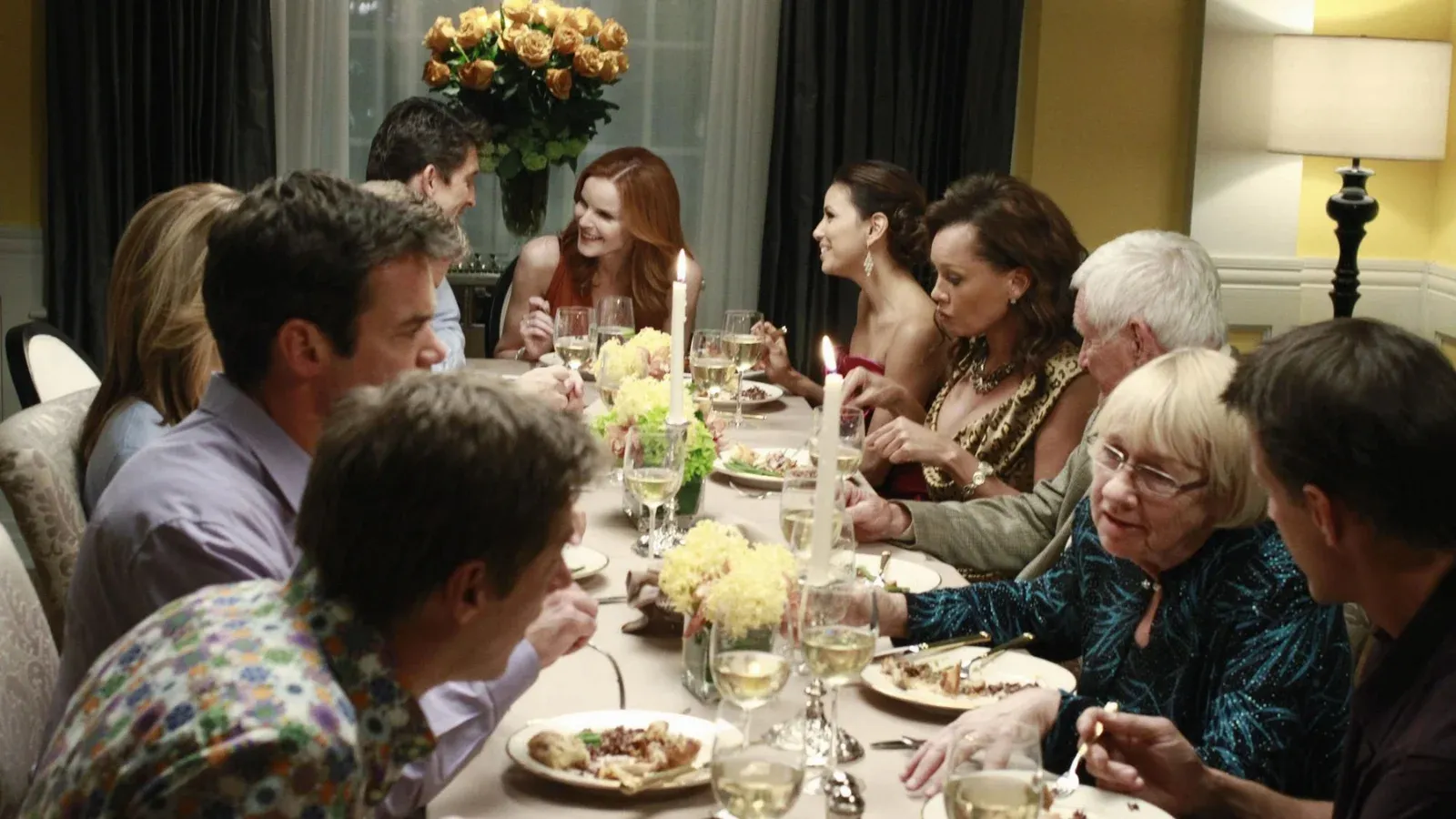
Last month, I walked into a friend's two-bedroom apartment for what she had pitched in a text message as a casual Sunday pasta night. By the time I hung up my coat, I realized I had stumbled onto an unpaid editorial shoot.
At every place setting sat a custom-letterpressed menu card printed on thick cotton stock, listing three courses and two natural wine pairings in a tiny italic serif. Unscented beeswax tapers burned in mismatched vintage silver holders, dangerously close to the sleeves of anyone reaching across the table for bread. Even the butter had been piped into miniature sculptural rosettes and dusted with flaky black sea salt, sitting on a ceramic dish too small to actually hold a butter knife without tipping over.
We spent the first forty minutes afraid to touch anything on the table because the host kept circling the perimeter with her phone, adjusting the overhead dimmer switch and asking everyone to hold off on pouring wine until she got the wide shot of the glassware.
Somewhere over the past few years, inviting friends over to eat stopped being an act of generosity and turned into high-anxiety set design. Under the pressure of digital aesthetics, the simple dinner party morphed into a tightly choreographed performance where the food comes second, the conversation stays stiff, and guests are reduced to background extras in someone else's brand exercise.
When Hospitality Becomes Narcissistic Control
Traditional hospitality operates on a simple premise: you open your door, feed people well, keep their glasses full, and make them feel comfortable enough to drop their shoulders. The host absorbs the logistical friction behind the scenes so the guests can relax.
The curated dinner party flips that dynamic completely. Instead of serving the room, the room serves the host's aesthetic ambition.
When every detail, from the linen napkin fold to the exact shade of the radishes, has been planned three weeks in advance on a mood board, spontaneity becomes an enemy. A guest who arrives ten minutes early ruins the final lighting check. Someone who asks for ice in their drink disrupts the visual symmetry of the stemware. A friend who accidentally spills red wine on the raw Belgian tablecloth triggers a silent crisis that freezes the entire table for twenty minutes.
You can feel the tension radiating off a host who has spent four hundred dollars on florals and specialty pantry items just to prove they possess good taste. Instead of sitting down, eating a warm meal, and laughing at a bad story, they hover near the kitchen doorway like a stressed stage manager watching actors miss their cues. Guests pick up on that anxiety immediately. They sit up straighter, chew carefully, compliment the olive oil bottle on cue, and leave at ten-thirty feeling like they just survived a client dinner rather than a night with friends.
The Pretentiousness of the Paper Menu
Nothing signals the death of casual entertaining faster than printing a formal menu for six people eating in your living room.
A printed menu belongs in a restaurant where diners are paying two hundred dollars a head and need to know what is in the sauce before ordering. In a private apartment, handing your closest friends a piece of cardstock that reads "Course II: Hand-Rolled Cavatelli, Braised Fennel, Pangrattato" is pure theater. Everyone at that table already smells the garlic from the kitchen. They do not need a brochure to eat spaghetti.
The same performative strain shows up in the wine selection. Instead of opening three reliable, crowd-pleasing bottles of Chianti or Sancerre that pair easily with food, the curated host insists on pouring hyper-obscure, cloudy orange wines with hand-drawn labels that taste faintly of cider vinegar and wet wool. Nobody actually enjoys drinking them, yet everyone nods thoughtfully and pretends to detect notes of bruised pear because admitting you just wanted a normal glass of Pinot Noir feels uncultured.
Why Scarcity Ruins the Appetite
Because curated hosting prioritizes visual composition over abundance, the portions almost always suffer.
A platter arranged for a camera needs negative space. It looks sleek and architectural when five slices of heirloom tomato sit artfully spaced across a handmade stoneware plate, drizzled with green oil and microgreens. It looks terrible when eight hungry adults sit down after a long workweek and realize there is roughly half a cherry tomato per person.
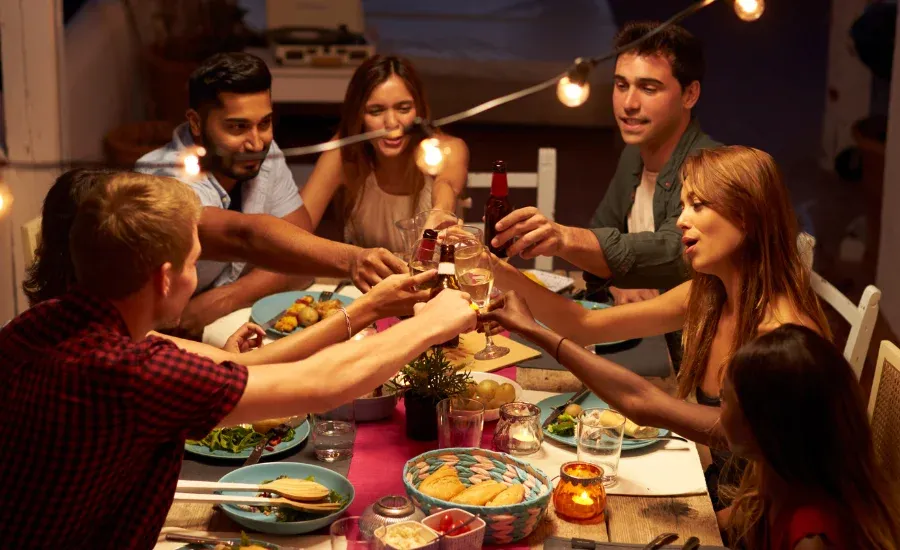
Real generosity is slightly messy. It looks like a heavy Dutch oven placed straight onto a wooden trivet in the center of the table, overflowing with braised short ribs or roast chicken, surrounded by a basket of warm crusty bread and a massive bowl of dressed greens that people can actually serve themselves without feeling like they are dismantling a museum exhibit.
When food is abundant and family-style, people lean in, pass bowls, reach across the table, and stop worrying about ruining the plating. The table gets loud, the candles drip wax onto the wood, and the evening actually starts.
Bringing Back the Unstaged Table
Throwing a genuinely memorable dinner party requires stripping away almost everything the internet tells you to buy for it. Skip the custom menus, leave the delicate taper candles in the drawer if they block eye contact across the table, and stop trying to turn a Tuesday night supper into a tribute to a Parisian bistro. Cook two dishes you have made twenty times before so you are not sweating over a complicated reduction while your guests sit alone in the living room.
Put out plenty of food, open good wine that does not require a lecture to appreciate, light a single low lamp, and sit down in your chair before the first course cools off. Your friends did not come over to admire your table styling. They came over to eat, drink, and spend three hours in a room where nobody is keeping score.