
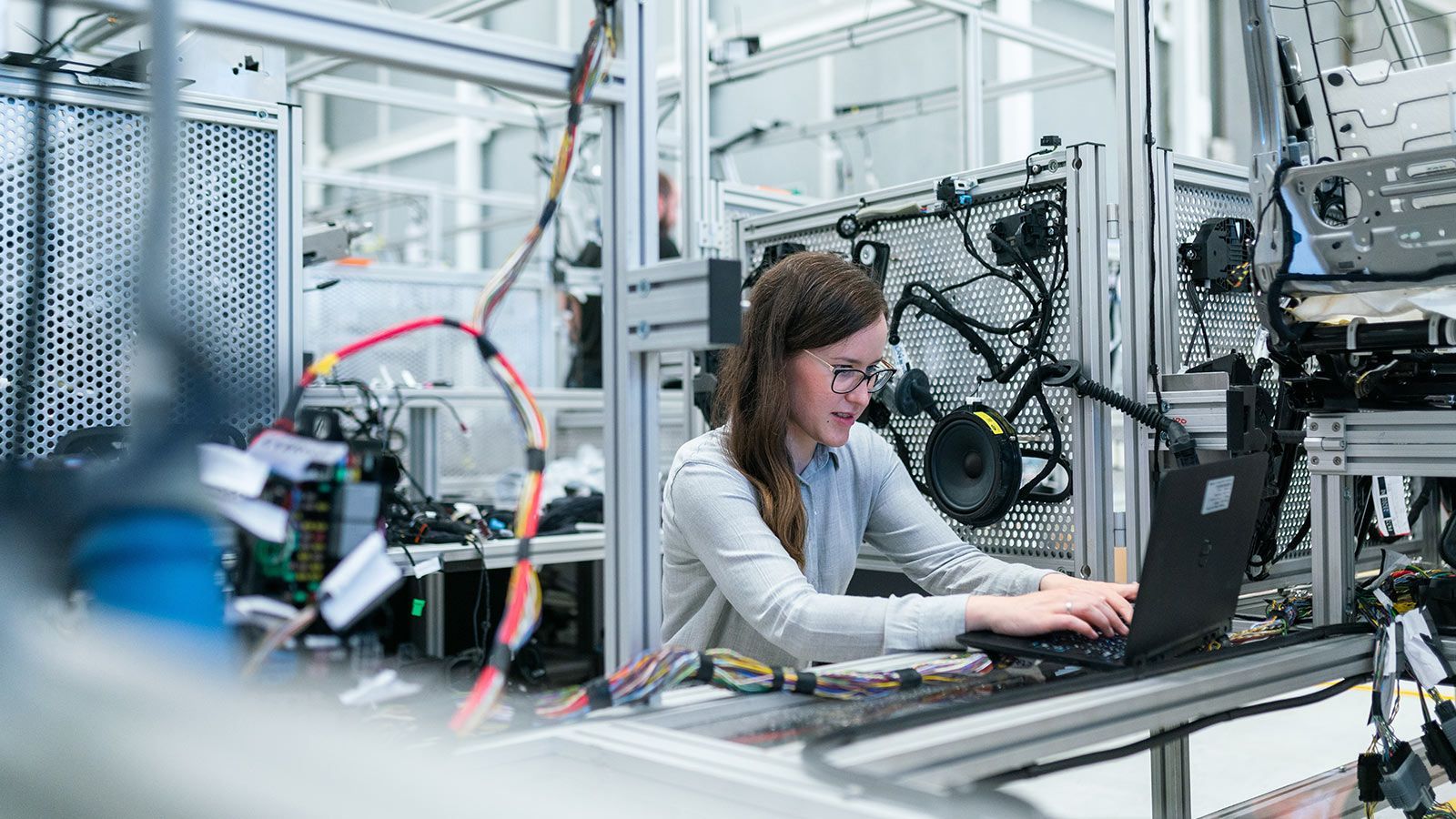
When we picture a scientist, an engineer, or a tech founder, who do we see? For most people—whether they admit it or not—the image that comes to mind is male. This isn't an accident. It's the result of decades of cultural conditioning, systemic barriers, and a self-reinforcing cycle that keeps women underrepresented in the fields that are shaping our future.
STEM—Science, Technology, Engineering, and Mathematics—encompasses the industries driving innovation, commanding high salaries, and solving the world's most pressing problems. Yet women remain dramatically underrepresented in these fields. They earn fewer degrees, hold fewer jobs, and leave the industry at higher rates than men.
Understanding why this gap exists—and what's being done to close it—matters not just for women seeking STEM careers, but for everyone who benefits from diverse perspectives in innovation.
The Numbers: Where Women Stand in STEM Today
The statistics paint a clear picture of imbalance. According to recent data from the U.S. Census Bureau and various international studies:
- Women make up approximately 28% of the STEM workforce globally, despite representing nearly half of the overall workforce
- In computing and mathematical occupations, women hold only about 26% of jobs
- In engineering, the number drops to around 16%
- Women earn only about 21% of engineering bachelor's degrees and 19% of computer science degrees
- The percentage of women in tech has actually declined from 35% in 1990 to around 26% today
- Women leave STEM careers at significantly higher rates than men—45% of women leave within the first decade compared to 17% of men
The picture isn't uniform across all STEM fields. Women have reached near parity in life sciences and are well-represented in healthcare-related sciences. But in computer science, engineering, and physics, the gender gap remains stubbornly wide—and in some cases, is actually getting worse.
Why the Gap Exists: It Starts Early
The underrepresentation of women in STEM isn't about ability. Girls perform as well as boys in math and science through primary school—and in many countries, outperform them. The gap emerges later, shaped by social forces that compound over time.
Stereotypes begin in childhood. From an early age, children absorb messages about what's "for boys" and what's "for girls." Construction sets and science kits get marketed to boys; dolls and craft supplies to girls. Studies show that by age six, girls are less likely than boys to believe members of their gender are "really, really smart"—and this belief gap correlates with reduced interest in activities described as being for smart people.
The confidence gap widens in adolescence. Even when girls perform equally well in math and science, they report lower confidence in their abilities than boys. This confidence gap affects course selection, with girls less likely to take advanced STEM classes even when qualified. Teachers, often unconsciously, may reinforce these patterns by calling on boys more frequently in science classes or expressing surprise when girls excel.
Lack of visible role models matters. It's hard to be what you can't see. When textbooks feature mostly male scientists, when tech companies are led by men, when the "genius" archetype in popular culture is almost always male, girls receive a constant message that STEM isn't for them. Research shows that exposure to female role models in STEM significantly increases girls' interest and confidence in these fields.
Barriers in the Workplace
Women who do enter STEM fields face a different set of challenges—ones that help explain why so many eventually leave.
The pay gap persists. Women in STEM earn approximately 80-85 cents for every dollar earned by men in comparable positions. While this is slightly better than the overall workforce gender pay gap, it's still significant—and it compounds over a career, affecting lifetime earnings, retirement savings, and financial security.

Workplace culture can be hostile. According to Pew Research Center, 50% of women in STEM jobs have experienced gender discrimination at work. This includes being treated as less competent, receiving less support from leadership, earning less than male counterparts, and being passed over for assignments. In male-dominated workplaces, women report higher rates of harassment, isolation, and having their contributions overlooked or attributed to male colleagues.
The "prove it again" phenomenon. Research shows that women in STEM must repeatedly prove their competence in ways that men don't. Their mistakes are remembered longer, their successes attributed to luck rather than skill, and their expertise questioned more frequently. This constant need to re-establish credibility is exhausting and contributes to burnout.
The motherhood penalty. Women with children face additional barriers. STEM careers often demand long hours and inflexible schedules that clash with caregiving responsibilities—responsibilities that still fall disproportionately on women. Mothers in STEM are more likely to reduce hours, step back from leadership tracks, or leave the field entirely. Meanwhile, fathers in STEM face no comparable penalty and may even benefit from a "fatherhood bonus" in how they're perceived.
The "leaky pipeline." The cumulative effect of these barriers is what researchers call the "leaky pipeline"—women drop out of STEM at every stage, from education to early career to senior leadership. Each leak reduces the pool of women available for the next level, resulting in the dramatic underrepresentation at the top: women hold only about 11% of executive positions in Silicon Valley companies.
Women Who Changed STEM History
Despite these barriers, women have made groundbreaking contributions to science and technology throughout history—often without receiving proper credit. Here are just a few:
Marie Curie (1867-1934) remains the only person to win Nobel Prizes in two different sciences—Physics and Chemistry. Her research on radioactivity laid the foundation for modern nuclear science and cancer treatment. She accomplished this while facing blatant sexism that nearly denied her the first Nobel Prize.
Katherine Johnson (1918-2020) was a NASA mathematician whose calculations were critical to the success of the first U.S. crewed spaceflights. As a Black woman working in the segregated South, she faced both racial and gender discrimination—yet her work was so trusted that John Glenn specifically requested she verify the computer's calculations before his orbital flight.
Ada Lovelace (1815-1852) is considered the world's first computer programmer. Working with Charles Babbage on his Analytical Engine, she wrote what is recognized as the first algorithm intended to be processed by a machine—a century before modern computers existed.
Rosalind Franklin (1920-1958) produced the X-ray images that were crucial to understanding the structure of DNA. Her work was used without proper acknowledgment by Watson and Crick, who won the Nobel Prize for the discovery. Franklin died before the prize was awarded and has only recently received proper recognition.
Grace Hopper (1906-1992) was a computer scientist and U.S. Navy rear admiral who developed the first compiler for a computer programming language. She popularized the term "debugging" and was instrumental in developing COBOL, one of the first high-level programming languages.
Hedy Lamarr (1914-2000), known primarily as a Hollywood actress, co-invented frequency-hopping spread spectrum technology during World War II. This invention became the foundation for modern WiFi, Bluetooth, and GPS technology.

Women Leading STEM Today
Contemporary women are continuing to break barriers and lead innovation:
Dr. Kizzmekia Corbett was the lead scientist on the team that developed the Moderna COVID-19 vaccine. Her work on coronavirus spike proteins was instrumental in the rapid vaccine development that has saved millions of lives.
Gwynne Shotwell serves as President and COO of SpaceX, overseeing the company's day-to-day operations and all customer and strategic relations. She's been instrumental in making SpaceX a leader in commercial space travel.
Dr. Fei-Fei Li is a computer science professor at Stanford and co-director of Stanford's Human-Centered AI Institute. Her work on ImageNet revolutionized computer vision and accelerated the deep learning revolution.
Whitney Wolfe Herd founded Bumble and became the youngest woman to take a company public in 2021. She transformed the dating app industry by giving women the power to make the first move.
What's Being Done to Close the Gap
Recognition of the problem has led to numerous initiatives aimed at increasing women's participation in STEM:
Educational programs like Girls Who Code, Black Girls CODE, and STEM Like a Girl aim to reach girls early, providing coding education, mentorship, and exposure to STEM careers. These programs have reached millions of girls and significantly increased their interest in technology careers.
Corporate initiatives at major tech companies include targeted recruitment, mentorship programs, employee resource groups for women, and efforts to address bias in hiring and promotion. Some companies publish diversity reports and set public targets for increasing female representation.
Policy changes, including paid parental leave, flexible work arrangements, and on-site childcare, help address the work-life balance challenges that disproportionately affect women. Some countries have implemented quotas for women on corporate boards and in leadership positions.
Networking and support organizations like Women in Technology International, Society of Women Engineers, Association for Women in Science, and Anita Borg Institute provide professional development, mentorship, and community for women at all career stages.
Advice for Women Entering or Advancing in STEM
If you're considering a STEM career or working to advance in one, here's practical advice from women who've navigated these fields:
Find your community. Connect with other women in your field through professional organizations, online communities, or informal networks. Having people who understand your experiences and can offer advice is invaluable. Mentors who've navigated similar challenges can help you avoid pitfalls and seize opportunities.
Document your achievements. Keep a record of your accomplishments, positive feedback, and contributions. Women often undersell their achievements or have them attributed to others. A running list helps during performance reviews and salary negotiations, and combats imposter syndrome.
Negotiate—always. Women are less likely to negotiate salaries and promotions, contributing to the pay gap. Research market rates, practice your pitch, and ask for what you're worth. The discomfort of negotiating is temporary; the financial impact lasts your entire career.

Speak up and take credit. Don't let your contributions go unnoticed. Use "I" statements ("I led this project," not "We did this project"). If someone talks over you, circle back: "As I was saying..." If your idea gets attributed to someone else, reclaim it: "Thanks for building on my suggestion."
Choose employers carefully. Research the company culture before accepting positions. Look at leadership diversity, parental leave policies, pay equity data, and employee reviews. Ask about retention rates for women. A company that talks about diversity but can't demonstrate it may not be worth your time.
Don't internalize the bias. When you face discrimination or microaggressions, recognize them for what they are—systemic problems, not personal failures. Imposter syndrome affects many women in STEM; remind yourself that you earned your place.
Why Gender Diversity in STEM Matters for Everyone
Closing the gender gap in STEM isn't just about fairness—it's about better outcomes for everyone.
Diverse teams produce better innovation. Research consistently shows that teams with diverse perspectives generate more creative solutions and avoid groupthink. When the people designing technology, conducting research, and solving problems all share similar backgrounds, they inevitably have blind spots.
Products designed without women's input often fail women. Crash test dummies were designed around male bodies, making cars less safe for women. Voice recognition systems trained primarily on male voices struggle to understand women. Medical research conducted primarily on men has led to treatments that work less well for women. AI systems trained on biased data perpetuate discrimination.
The economic stakes are enormous. With STEM jobs growing faster than the overall job market and commanding higher salaries, excluding half the population from these opportunities limits economic mobility and widens inequality. Countries and companies that fail to tap the full talent pool fall behind those that do.
The barriers women face in STEM are real, but they're not immutable. They were created by human choices, and human choices can dismantle them. Every girl who sees a woman scientist and thinks "I could do that," every company that examines its hiring practices, every policy that supports working parents—these are steps toward a future where the field you choose isn't limited by your gender.
Frequently Asked Questions
What percentage of STEM workers are women?
Women make up approximately 28% of the STEM workforce globally. However, this varies significantly by field—women represent nearly half of workers in life sciences but only about 16% in engineering and 26% in computing and mathematics.
Why are there so few women in STEM?
The underrepresentation of women in STEM results from multiple factors: gender stereotypes that begin in childhood, lack of visible role models, confidence gaps that develop in adolescence, workplace discrimination, hostile work environments in male-dominated fields, and work-life balance challenges that disproportionately affect women with caregiving responsibilities.
What is the gender pay gap in STEM?
Women in STEM earn approximately 80-85 cents for every dollar earned by men in comparable positions. The gap varies by field and career level, and tends to widen over time, particularly after women have children.
Which STEM fields have the most women?
Women are best represented in biological and life sciences, where they make up nearly 50% of the workforce. Healthcare-related sciences, psychology, and social sciences also have strong female representation. The fields with the lowest female representation are engineering, computer science, and physics.
Who was the first woman in STEM?
Women have contributed to science throughout history, though many were unrecognized. Hypatia of Alexandria (c. 360-415 AD) is one of the earliest known female mathematicians and astronomers. In modern era, Marie Curie became the first woman to win a Nobel Prize (1903) and remains the only person to win Nobel Prizes in two different sciences.
What organizations support women in STEM?
Major organizations include Girls Who Code, Society of Women Engineers (SWE), Association for Women in Science (AWIS), Women in Technology International (WITI), Anita Borg Institute, Black Girls CODE, and National Center for Women & Information Technology (NCWIT). These offer mentorship, networking, scholarships, and advocacy.
Is the gender gap in STEM improving?
Progress has been mixed. Women's representation in life sciences has improved significantly. However, in computer science, women's share of the workforce has actually declined since the 1990s. Engineering has seen modest gains but remains heavily male-dominated. Overall progress is slow—at current rates, some estimate it would take decades to reach gender parity.