

Waking up to noticeable congestion around the eyes is one of the most common morning frustrations. The automatic reaction is often an awkward scramble through kitchen drawers for chilled silverware, tea bags, or raw cucumber slices, treating temporary swelling like a sudden aesthetic emergency.
Periorbital swelling is not an anomaly; it is straightforward human biology. The periorbital tissue is the thinnest, most delicate dermal landscape on the body, making it uniquely vulnerable to fluid dynamics. Understanding what causes eye puffiness begins with the physics of sleep. When the body remains horizontal for seven to eight hours, natural gravitational drainage stops entirely. Simultaneously, the rhythmic blinking that normally acts as a gentle, continuous lymphatic pump for the eye area goes offline. Fluid pools quietly in the lower eyelid tissue, creating that familiar, heavy morning appearance.
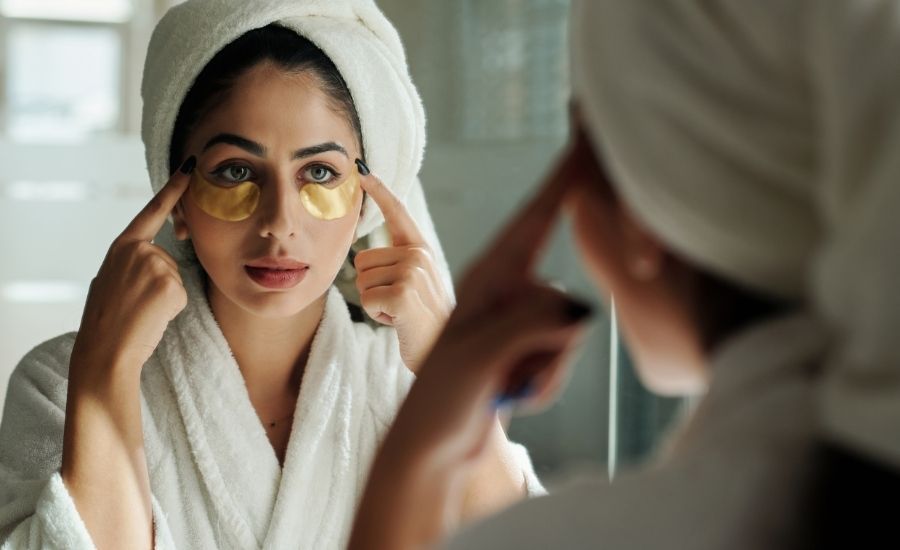
When readers search why are my eyes puffy in the morning, the answer rarely requires deep speculation. Elevated evening sodium intake, a couple of late drinks, prolonged screen exposure before bed, emotional crying, or a mild histamine response to airborne allergens all increase microvascular permeability. Fluids leak into the surrounding interstitial space, lingering until physical movement and upright posture coax them into moving again.
Retiring the Superfluous and Counterproductive
Before reaching for makeshift kitchen remedies, consider their real utility. Balancing chilled spoons or produce slices over the eyes carries an unnecessary risk of bacterial contamination and ocular irritation, while offering minimal thermal stability. Metal silverware warms within ninety seconds, providing little more than a momentary distraction.
It is equally essential to separate temporary fluid accumulation from structural anatomy. True pseudoherniation of the lower orbital fat pads—often driven by genetics and natural tissue laxity—is entirely different from transient morning edema. No cosmetic tool, topical formula, or drainage technique will reposition or dissolve herniated fat tissue; that requires surgical intervention. Knowing the difference saves considerable financial and mental energy.
Furthermore, traditional cosmetics often worsen the very problem they claim to resolve. Reaching for a rich, emollient under eye puffiness cream packed with heavy plant butters and occlusive waxes frequently backfires. The periorbital barrier easily becomes waterlogged under heavy lipid seals, exacerbating surface swelling and occasionally triggering stubborn milia. Lightweight, high-absorption textures should always take priority over dense balms in the morning.
Targeted Clinical Protocols: What Actually Works
Resolving morning fluid retention requires supporting the body’s own vascular and lymphatic architecture. Combining calibrated cold, mechanical movement, and specific vascular actives delivers predictable, visible relief.
Calibrated Cryotherapy and Vasoconstriction
Replacing domestic kitchen hacks with purpose-built tools ensures consistent, safe temperature control. Professional-grade stainless steel tools retain their chill far longer than standard metal, prompting immediate vasoconstriction of superficial capillaries to halt fluid leakage without shocking the delicate skin barrier.
Targeted Occlusive Patches
Well-formulated patches for eye puffiness use a hydrogel matrix to deliver concentrated ingredients directly into the superficial epidermis while providing gentle mechanical support. Utilizing hydrogel matrices encourages rapid fluid displacement while cooling the periorbital zone, making them an ideal step while handling early morning preparation.
Mechanical Lymphatic Mobilization
The lymphatic vessels of the face are delicate and sit just beneath the surface. Aggressive rubbing or deep tissue pressure will only stretch the skin and aggravate inflammation. The technique requires a feather-light sweep starting at the inner canthus of the lower lid, moving steadily outward along the orbital rim toward the preauricular lymph nodes in front of the ears, then tracing gently downward along the cervical chain of the neck. This provides an exit pathway for stagnant fluid.
Vascular-Supportive Actives
Rather than heavy emollients, select water-based serums containing concentrated caffeine, which acts as a reliable topical vasoconstrictor. Paired with peptides engineered to support microvascular integrity, these formulas sink in immediately, leaving no greasy film behind to disrupt daylight makeup or daytime sun protection.
The Tested Formulas: High-Low Product Curation
When selecting formulas to support lymphatic drainage and vascular tone, focus on ingredient delivery and thermal retention rather than decorative branding. Here are four verified tools across price points that target fluid retention without overloading delicate skin:
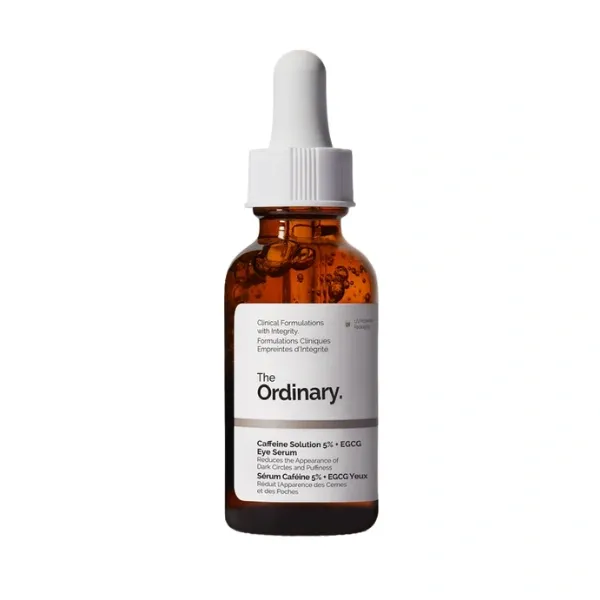
The Budget Solution: The Ordinary Caffeine Solution 5% + EGCG
A straightforward, no-nonsense clinical fluid that pairs high-solubility green tea leaf epigallocatechin gallatyl glucoside (EGCG) with a concentrated 5% direct caffeine dose. Its water-based, non-greasy texture absorbs almost immediately, constricting superficial capillaries without leaving behind the heavy lipid residue that can exacerbate morning swelling.
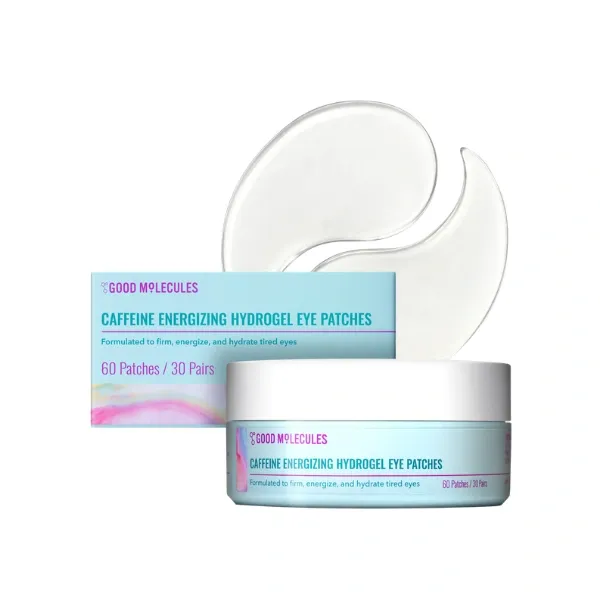
The Accessible Hydrogel Matrix: Good Molecules Caffeine Energizing Hydrogel Eye Patches
An accessible, high-performance daily staple featuring thirty pairs of firm hydrogel patches. Formulated with caffeine, licorice extract, and niacinamide, they provide steady, mechanical surface compression while rapidly lowering skin temperature, forcing stagnant interstitial fluid outward toward the temples.
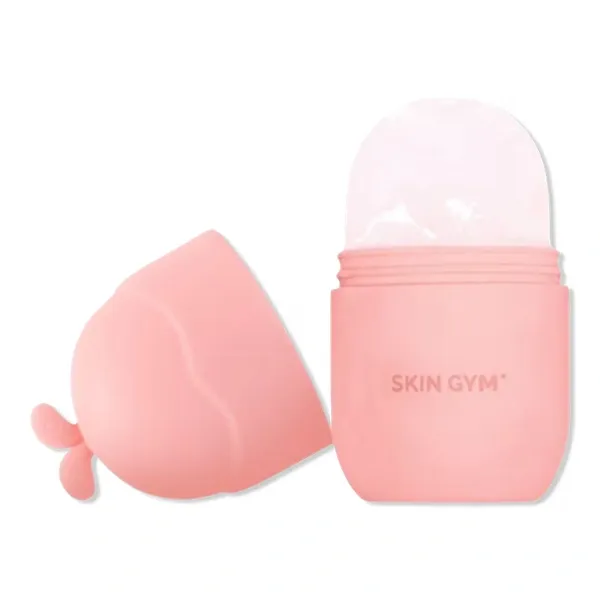
The Ergonomic Cryo Instrument: Skin Gym Cryo Stainless Steel Facial Roller
Constructed from 100% medical-grade stainless steel, this dual-ended tool holds sub-ambient temperatures far longer than domestic metal. The smaller, contoured barrel fits cleanly into the orbital socket, allowing for controlled, feather-light sweeps that manually guide lymphatic fluid toward the preauricular nodes without pinching thin tissue.
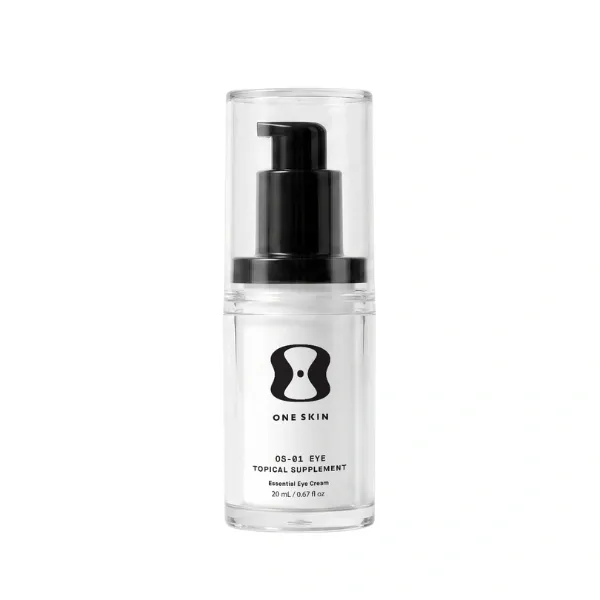
The Longevity & Cellular Investment: OneSkin OS-01 Eye Topical Supplement
Rather than acting as a standard emollient that sits on the surface, this targeted peptide treatment is engineered around the proprietary OS-01 peptide, designed to address cellular senescence and strengthen the structurally fragile skin barrier around the orbital socket. Its texture is notably lightweight and fluid-like, absorbing without creating the heavy occlusive seal that traps morning interstitial fluids. For those looking to support long-term microvascular and dermal resilience while keeping periorbital tissue completely unburdened, it represents the modern intersection of skin longevity and daily maintenance.
The Clinical Threshold: When Swelling Demands an MD
While the majority of morning puffiness stems from simple fluid dynamics or late-night habits, persistent swelling demands clear diagnostic boundaries.
If periorbital edema occurs strictly on one side, is accompanied by visual changes, presents localized heat, pain, or redness, or fails to drain after several hours upright, step away from cosmetic interventions and consult a physician. Similarly, persistent, chronic swelling that remains constant around the clock may point toward underlying systemic variables, including thyroid dysfunction, renal imbalances, or acute allergic contact dermatitis, rather than ordinary lifestyle fluid retention.
The Streamlined Morning Sequence
Managing morning fluid retention does not require an elaborate half-hour routine. A disciplined, three-minute sequence delivers dependable results with zero friction:
Passive Elevation: Sleep with the head slightly elevated on an additional pillow to encourage continuous overnight gravitational drainage.
Targeted Cold Contact: Apply chilled hydrogel patches or smooth, chilled stainless steel tools across the lower orbital bone for two to three minutes to constrict surface vessels.
Outward Drainage: Perform five to ten feather-light sweeps from the inner corners outward to the hairline, directing stagnant fluid toward the preauricular lymph nodes.
Lightweight Topical Seal: Pat a drop of water-based caffeine or peptide gel along the orbital bone, follow with your standard broad-spectrum sunscreen, and step away from the mirror.