The wellness industry loves a neat headline: eat this bowl of ingredients, boost your serotonin, and cure your mental exhaustion.
With mood disorders and chronic burnout at historic highs, the idea that a simple dietary swap could fix your neurochemistry is seductive. But reducing mental health to a single neurotransmitter—or pretending food works like an immediate pharmaceutical fix—is lazy science.
Diet cannot miraculously erase clinical depression, but your nutritional baseline directly dictates whether your brain has the raw materials to function properly.
Here is what the science actually says about the "serotonin diet," the biological mechanics of the gut-brain axis, and how to fuel your neurochemistry without the marketing fluff.
The 90% Gut Paradox: Clearing Up the Science
You have likely heard the headline: 90% of your body’s serotonin is produced in your gut.
While true, most wellness articles omit the most critical biological detail: enteric serotonin produced in your gut cannot cross the blood-brain barrier.
The serotonin made in your digestive tract by enterochromaffin cells is used locally. It regulates gastrointestinal motility, gut inflammation, and signals the brain indirectly through the vagus nerve.
Your brain, on the other hand, must synthesize its own serotonin internally. It does this using an essential amino acid called tryptophan. What you eat does not supply ready-made serotonin to your central nervous system; it supplies the metabolic precursor and the biochemical conditions required to make it.
The Tryptophan Transport Dilemma
If you want to support your brain's serotonin production, simply loading up on pure protein will backfire.
Tryptophan does not travel alone into the brain. It has to compete with other large neutral amino acids (such as leucine, isoleucine, and valine) for transport across the blood-brain barrier via a shared gateway. Because tryptophan is naturally less abundant in food than these competing amino acids, it routinely loses the race.
This is where strategic carbohydrates become biological allies:
The Insulin Mechanism: When you consume unrefined, complex carbohydrates alongside a source of tryptophan, your body releases insulin.
Clearing the Runway: Insulin prompts your muscle tissue to absorb the competing amino acids, effectively pulling them out of your bloodstream.
The Uncontested Entry: With the competition out of the way, tryptophan enters the brain virtually uncontested, where it is converted first into 5-HTP, and ultimately into serotonin.
Eliminating carbohydrates entirely during high-stress periods often leads to irritability, mood instability, and poor sleep—not because of weak willpower, but because your brain is starved of the mechanism required to synthesize mood-regulating neurotransmitters.
Building a Plate for Neurotransmitter Support
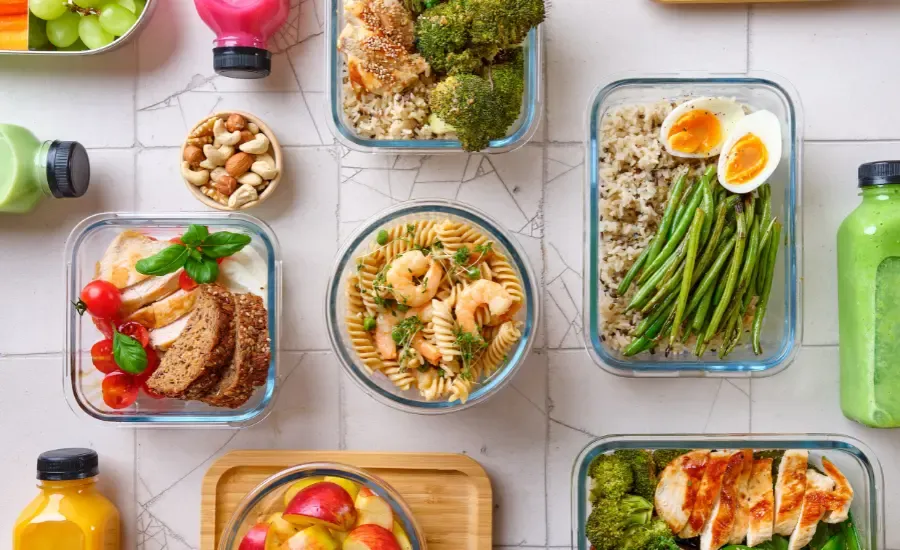
Rather than obsessing over individual "superfoods," focus on the biochemical triad: bioavailable tryptophan, insulin-regulating complex carbs, and microbiome-supportive polyphenols.
1. The Tryptophan Anchors
You need high-quality protein sources to supply the foundational amino acid:
Wild-Caught Salmon: Delivers tryptophan alongside EPA/DHA omega-3 fatty acids, which reduce neuroinflammation and preserve cell membrane fluidity.
Pasture-Raised Eggs: Rich in tryptophan and concentrated choline, essential for acetylcholine production and cognitive sharpness.
Pumpkin & Sesame Seeds: Dense plant-based sources of tryptophan, packed with zinc and magnesium—two co-factors essential for enzymatic neurotransmitter synthesis.
Organic Tofu & Tempeh: Premium plant proteins that support sustained amino acid availability.
2. The Slow-Burn Carbohydrate Catalysts
Avoid refined sugars, which cause sharp insulin spikes followed by reactive hypoglycemia and cortisol surges. Anchor your meals with low-glycemic, unrefined options:
Roasted Sweet Potatoes & Kabocha Squash
Quinoa, Farro, and Sprouted Brown Rice
Lentils and Chickpeas (which double as prebiotic fiber)
3. The Enteric Regulators (Microbiome Fuel)
Because the gut microbiome modulates the vagal nerve and immune pathways that influence mood, your gut flora requires consistent fuel:
Fermented Foods: Unsweetened Greek yogurt, authentic kefir, kimchi, and raw sauerkraut introduce diverse live cultures that support barrier integrity.
Polyphenol-Dense Botanicals: Wild blueberries, dark leafy greens, extra virgin olive oil, and high-percentage dark cacao protect gut lining integrity and lower systemic oxidative stress.
What Food Can (and Cannot) Do
Nutritional psychiatry is one of the most promising frontiers in modern health, but expectations must remain grounded in reality.
A nutrient-dense diet is not a standalone substitute for clinical therapy, targeted psychiatric medication, or resolving deeply toxic life circumstances. What a neurotransmitter-supportive plate does is eliminate preventable biological friction. It ensures that when your brain attempts to regulate mood, manage stress, or transition into deep restorative sleep, it is not working with empty reserves.
Treat food as foundational metabolic infrastructure: fuel the gut, clear the biochemical path for your brain, and let biology do what it was designed to do.