Around thirty-five or thirty-six, the way the body responds to effort begins to shift.
You do the exact same workouts that kept you lean and firm five years ago, but the results look softer. Muscle definition seems harder to maintain, recovery takes an extra day, and lingering fatigue hangs around your lower back and hips after a routine session.
The immediate reaction is usually to push harder: add twenty minutes of intense interval cardio, cut another portion of carbohydrates from dinner, or try a complicated seven-day training split.
None of those changes address what is actually happening beneath the skin.
As estrogen and progesterone begin their subtle, gradual fluctuations and natural growth hormone production dips, the body requires a completely different physical stimulus to maintain dense, lean muscle tissue. The solution is never about exhausting yourself; it comes down to three precise mechanical adjustments that work with your changing physiology.
1. Prioritizing Tension Over Sheer Exhaustion
A common mistake in fitness classes designed for women is confusing breathless fatigue with muscular stimulation.
Hopping around with two-pound hand weights for fifty repetitions makes your lungs burn and leaves you soaked in sweat, but it delivers minimal mechanical tension to deep muscle fibers. Muscle tone is simply the baseline contractile firmness of muscle tissue at rest. To maintain or build that firmness, you have to signal to your nervous system that your muscles need to produce real force.
Focus on slow, controlled resistance movements where the muscle stays under tension through its full range of motion.
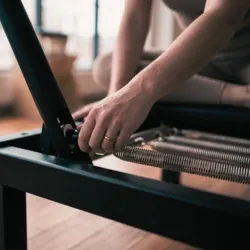
Whether you work on a Pilates reformer, use heavy resistance bands, or pick up moderate dumbbells, the tempo matters more than speed. Spend three slow seconds lowering into a squat or lunging back, pause for a second at the deepest point of the movement, and take two controlled seconds to return.
That time under tension recruits higher-threshold motor units that light, frantic movements completely miss. You stimulate lean density without spiking stress hormones or frying your joints.
2. Eating for Muscle Synthesis Instead of Merely Cutting Calories

Decades of dieting advice taught women to treat food as something to restrict whenever their body composition changes.
In your late thirties, eating too little is the fastest way to lose the exact muscle tone you are trying to keep. When you cut calories too aggressively while exercising regularly, the body breaks down precious muscle tissue for quick fuel, leaving you with lower metabolic output and that frustrating soft look despite working out consistently.
Muscle protein synthesis requires a steady influx of essential amino acids across the day.
Aim for roughly twenty-five to thirty grams of solid protein at every main meal, especially at breakfast. Breaking your overnight fast with real protein—such as pasture-raised eggs, Greek yogurt, or salmon—signals to the muscle tissue that fuel is abundant and repair can begin immediately.
Pair that protein with complex carbohydrates like roasted sweet potatoes, oats, or brown rice around your workouts to replenish muscular glycogen, keeping your muscles full and hydrated rather than flat and depleted.
3. Protecting the Recovery Window Between Sessions
In your twenties, you could get away with five hours of sleep, an espresso for lunch, and an intense workout the next morning.
In your late thirties, muscle repair happens almost exclusively during deep stages of sleep and parasympathetic downtime. If your nervous system stays locked in a continuous state of high alertness from morning to night, chronic cortisol elevation blunts muscle repair and accelerates tissue breakdown.
Treat your recovery with the exact same discipline you bring to your workouts:
Give muscle groups forty-eight hours of breathing room before loading them again. Incorporate dedicated pelvic stability and deep core work that supports your spine, rather than constantly trying to crush your abs with crunches. Spend ten minutes in the evening winding down with dim lighting and warm herbal tea to help your body shift out of fight-or-flight mode.
When you give your body the deep rest, steady nutrition, and mechanical tension it actually needs, maintaining lean strength stops feeling like an uphill battle and becomes a sustainable rhythm you can count on.