She didn't wait for permission or trade in inspirational quotes. Why Gloria Steinem’s structural mechanics still rule.
Modern corporate feminism reduced revolution to inspirational quotes on ceramic mugs and passive networking. Gloria Steinem never waited for an invitation to sit at the table—she built competing institutions and took power on her own terms.
Most women who encounter Gloria Steinem's work today encounter it secondhand: a quote on a poster, a line in a speech, a reference in a documentary they half-watched during lunch. That is a reasonable way to inherit a legacy. It is also a way to miss the point entirely. Steinem was not primarily a producer of quotable lines. She was a structural thinker who understood, earlier than most, that language shapes the institutions people operate within.
She Built the Infrastructure Before She Wrote the Manifesto
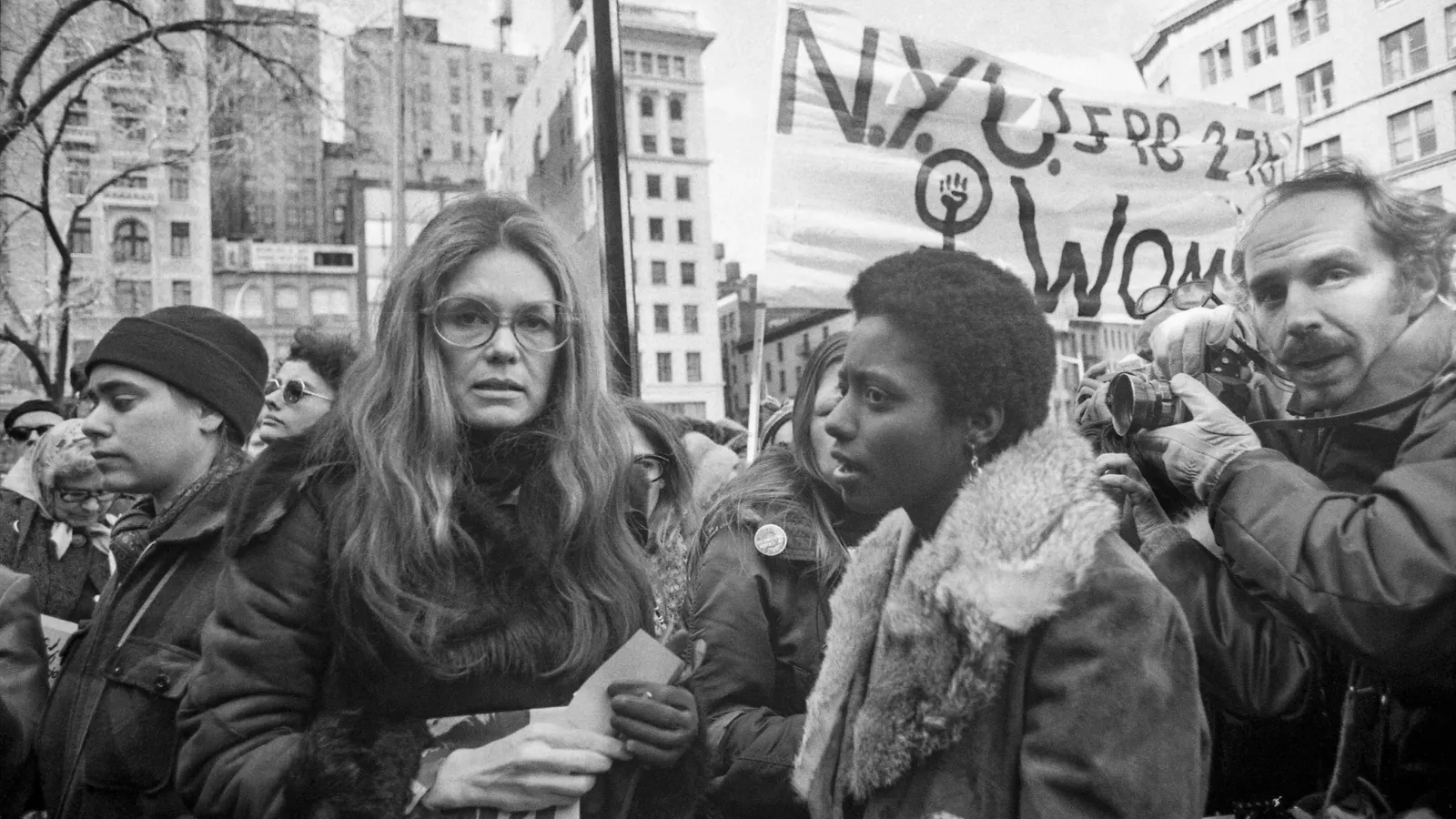
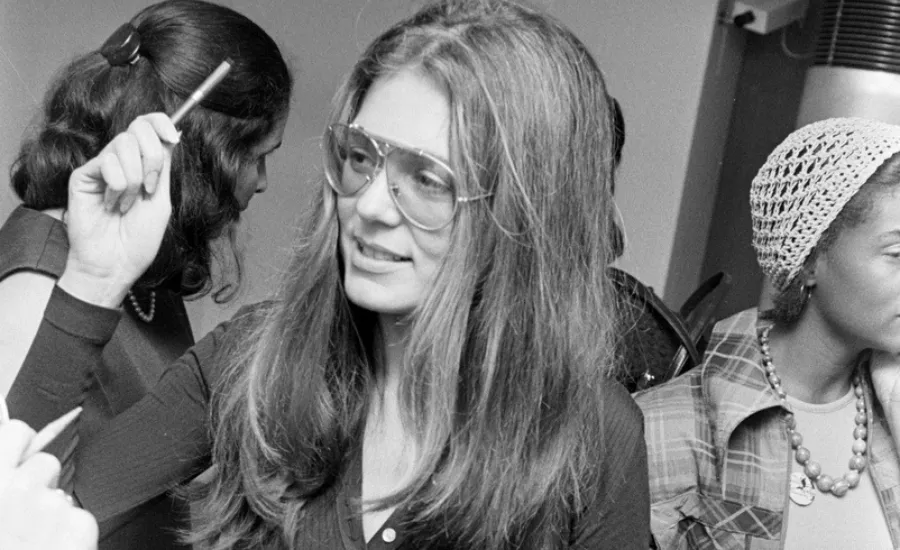
The image of Gloria Steinem that circulates most widely is the photograph: the aviator glasses, the streaked hair, the composed expression of someone who has been in many rooms where she was not expected and has stopped being surprised by it. What the photograph does not show is the organizational record behind the face.
In 1971, Steinem co-founded the National Women's Political Caucus alongside Betty Friedan, Bella Abzug, and Shirley Chisholm, a bipartisan body specifically designed to increase the number of women in elected and appointed office. That same year, she co-founded the Women's Action Alliance, which functioned as a national clearinghouse for feminist organizing. In 1972, she co-founded Ms. magazine, described by Britannica as the first nationally circulated women's magazine to bring feminism into the mainstream. The first preview issue, inserted into New York magazine in December 1971, sold out its 300,000 print run within eight days. In 2005, she co-founded the Women's Media Center with Jane Fonda and Robin Morgan, an organization designed to make women visible and powerful in the media. She was also co-founder of Voters for Choice, the Coalition of Labor Union Women, and the Ms. Foundation for Women.
That is five significant institutions across four decades, each addressing a different structural gap: political representation, information access, media, labor, and philanthropy. The organizational record matters because it is easy to treat a feminist icon as someone who said brave things. Steinem was someone who built durable systems, and the words she is remembered for came out of that builder's sensibility, not despite it.
What She Said About Power Is Still an Accurate Description of How It Works
Steinem's most analytically precise writing concerns the mechanics of power, how it is distributed, how it is maintained, and how it is taken rather than granted. The line that has aged best is not the most frequently quoted. It is this one:
"Power can be taken, but not given. The process of the taking is empowerment in itself."
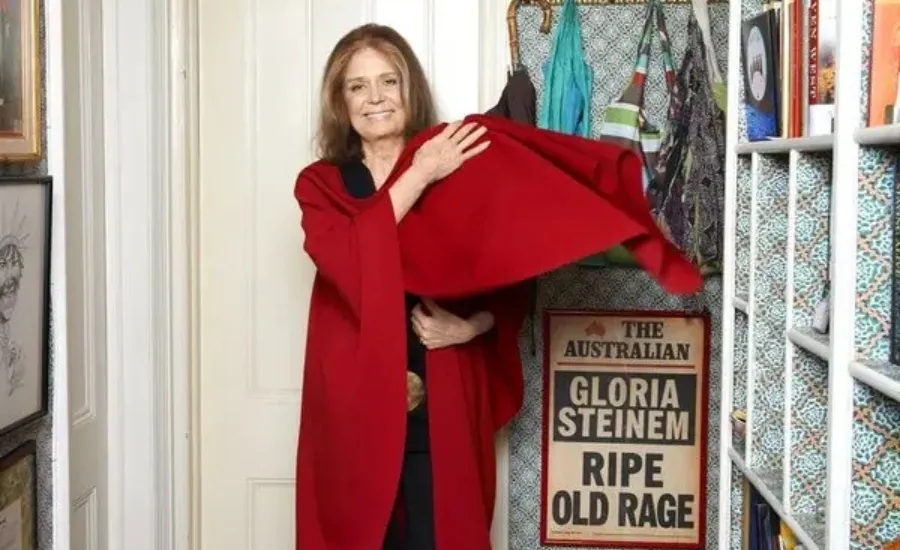
This is not an inspirational statement. It is a structural observation about how access to power actually functions. Giving someone power is not the same as that person having acquired the conditions that make power sustainable. Steinem understood that the difference mattered practically, not just philosophically. She had watched women receive temporary access to rooms and platforms, and then lose that access when the people who granted it changed their minds. What could not be taken away was the capacity that came from having navigated the process of taking it in the first place.
In 1969, delivering what would become one of her most referenced speeches, she addressed the National Women's Political Caucus and said: "Sex and race, because they are easy and visible differences, have been the primary ways of organizing human beings into superior and inferior groups and into the cheap labor on which this system still depends." That sentence was not rhetoric. It was a sociological description of a labor market mechanism that economists now study under the headings of occupational segregation and wage discrimination. She named the mechanism clearly in 1969. The academic literature caught up later.
The Ms. Magazine Decision Was Not Just a Publishing Choice
When Steinem explained her motivation for founding Ms. magazine, she was direct: "I realized as a journalist that there really was nothing for women to read that was controlled by women." The emphasis belongs on the word controlled. The absence she identified was not a content gap. It was a governance gap. Women appeared in publications in 1971. They did not control what appeared.
The institutional consequence of that decision extended well beyond journalism. Ms. was the first publication in the United States to tackle domestic violence, female genital mutilation, and date rape as cover stories, not because editors were radical, but because the people making editorial decisions had different lived reference points than the people who had previously been making them. The magazine's 1972 petition, in which 53 prominent women publicly admitted to having had abortions when the procedure was still illegal in most states, including signatories Billie Jean King, Anaïs Nin, and Susan Sontag, was not primarily a statement. It was a tactic designed to demonstrate the breadth of the issue and the willingness of known women to attach their names to it publicly. That distinction, between statement and tactic, is characteristic of how Steinem approached most problems.
The magazine was flawed. Its focus on white womanhood drew consistent and substantiated criticism, including from contributor Alice Walker, who left in 1986 after twelve years, citing tokenization and a pattern of covers featuring exclusively white women. Steinem herself acknowledged these limitations over time. A flawed institution is still an institution. The question is whether its existence changed the conditions it was designed to address, and in this case, the record is clear that it did.
Why Working Women in 2026 Should Read Her Actual Books, Not Just the Quotes
The Gloria Steinem that circulates on social media is a curated selection of her most portable sentences, stripped of the arguments that give them weight. The actual books are more demanding and more useful than the quote compilations suggest.
Outrageous Acts and Everyday Rebellions, first published in 1983 and updated since, is a collection of essays that covers undercover journalism, reproductive politics, the economics of gender, and the psychology of self-esteem in women, written in the register of a sharp-minded generalist who does not assume the reader needs to be protected from complexity. Revolution from Within, published in 1992, is the book that gets most misread as a self-help text. It is actually a structural argument about why women are systematically conditioned to undervalue their own authority, and what the practical consequences of that conditioning are in workplaces and institutions. My Life on the Road, her 2015 memoir, is the most personal of the three and the most sociologically rich, a record of what she learned about how change actually moves through communities when you are present for it over decades rather than observing it from a distance.
None of these books are about waiting. None of them frame women as people who need permission to act. They are, in the words she kept returning to throughout her career, about what she called becoming: the ongoing process of building the capacity to function as a full participant in the structures you inhabit, with the understanding that those structures will resist you and that the resistance is not personal.
The Sentence That Has Not Aged Out
In 1971, addressing the Women of America, Steinem said: "This is no simple reform. It really is a revolution. We are talking about a society in which there will be no roles other than those chosen or those earned."
That sentence is worth pausing on, not because it is inspiring, but because it is precise. She did not say equal roles. She said no roles other than those chosen or earned. The distinction is between a world reorganized around access and a world reorganized around agency. Equal access to existing roles still means operating within a role structure someone else defined. What she was describing was something more fundamental: the removal of role assignment as the primary mechanism through which women's lives are organized.
In 2024, Steinem said she hoped her legacy would be that her work might help individual people become more fully the person they want to be. That is a quieter formulation than the speeches of the 1970s, but it is the same argument. The external structure is the obstacle. The interior capacity to define oneself outside of that structure is the thing worth building.
Gloria Steinem passed away on September 2, 2026, at the age of 92, leaving behind the enduring blueprint of a woman who never stopped working. Her words still hold because the conditions that produced them have not fundamentally changed, and because the clarity of her analysis never depended on a passing political moment. It depended on a way of looking at institutions and asking, plainly: who benefits from this arrangement, and who built it to work this way? That question outlives the woman who dared to ask it.