A princess title pays no rent.
Diane von Furstenberg knew that at twenty-two, which is a strange thing to know when you have just married a prince. She was Diane Halfin from Brussels, a girl with a mother who had survived Auschwitz and a spine to match. Now she carried a surname that sounded like an inheritance and opened every door in Europe. None of them led to a bank account with her name on it.
So she did something almost nobody in that world did. She got a job in a jersey mill outside Florence, and she learned how fabric is made.
A woman with a title, a villa, and a standing invitation to every good dinner in Rome chose to spend her days among the looms because she wanted to know what a yard of matte jersey cost and what it did on a body. And she wanted, with a hunger that never made it into the glossy profiles, to earn money that nobody could take back at the end of an argument.
That wanting is the whole story. The rest is execution.
One Dress, Priced to Pay for Her Freedom
Look at what she built with it. A dress. One dress, cut from stretch jersey, tied at the waist, no zipper, no buttons, no ironing, and it traveled in a suitcase without a wrinkle. A woman could pull it on in ninety seconds and walk into a boardroom or a dinner on the Upper East Side looking like she had planned the whole day. Women bought it by the hundreds of thousands. Newsweek put her on its cover in 1976. Andy Warhol painted her portrait. She had arrived in New York a couple of years earlier with two small children and a marriage coming apart, and now strangers on Madison Avenue were wearing her idea.
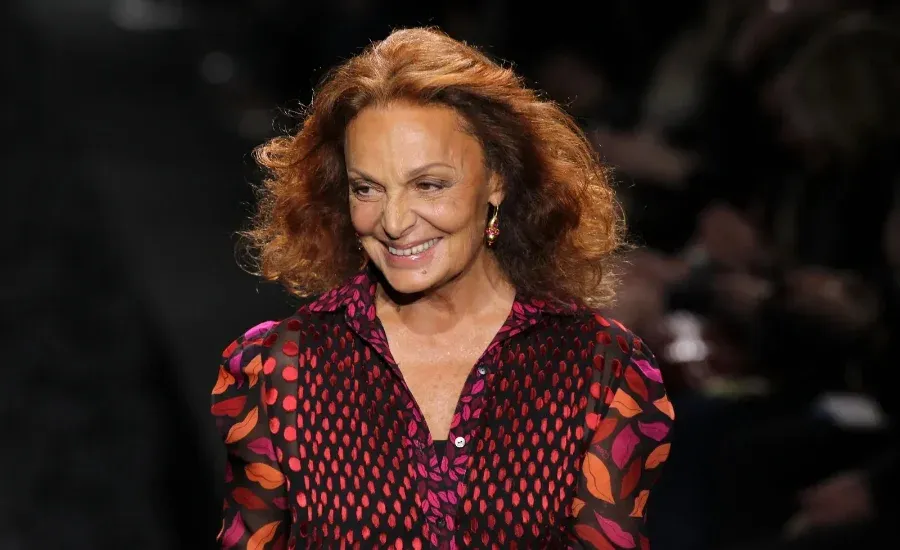
Think about the woman who bought it. She is a secretary in Midtown in 1975, or a young lawyer, or a nurse coming off a double, standing in front of a rack at Bloomingdale’s with a paycheck she earned and a closet full of clothes designed for someone else’s idea of her. The dress said she could look soft and move fast, and that she didn't need to ask permission for either. Von Furstenberg understood her customer because she was her customer: a woman building a life she could afford.
Here is what makes that worth your attention if you work for a living. She didn’t wait to feel ready, and she didn’t work for a mentor, a sponsor, or a perfect plan. She had a skill, a fear of dependence, and a problem worth solving, and the problem was that working women had nothing to wear that moved with them. She solved it for a price, and the price paid for her freedom.
The Decade She Rented Out Her Own Name
Then she made a mistake, and this is the part that deserves the most respect.
She licensed her name. Fragrance, cosmetics, eyewear, luggage, home goods, anything with a willing partner and a check. Licensing is a lovely deal until you notice that the product on the shelf no longer resembles the dress that made your name worth licensing. Quality slid. The label started to look tired. By the mid-1980s she had rented out the most valuable thing she owned, cheaply, to people who didn't love it as she did, and the brand stood on the edge of irrelevance in the department stores that once sold it by the rack. She left for Paris and spent years out of the American conversation she had once led.
Most careers do not survive that chapter. Most people in her position quietly rewrite it, change the subject, and hope the market forgets. She did the opposite. She went to a television shopping channel.
The Shopping Channel Fashion Editors Mocked
In 1992, QVC was the place fashion editors mocked at lunch. She sold silk separates there anyway. She went where the customers were, took real money from real people, and let the reviewers sneer. Pride is expensive when your income depends on it, and she had already paid enough of it. Picture her under studio lights in the early 1990s, a woman with a Newsweek cover in her past, talking silk to a camera while a call counter climbed. Nobody was watching her for glamour anymore. They were watching her for the product, which is the only audience that pays. The line sold, her name started to mean something again, and by 1997 she was ready to relaunch the wrap dress, this time as the owner of her own decisions.
You can read that as a comeback. A better reading is a negotiation she finally won, with her younger self, over who was in charge of the name.
The Version of Her Life With the Allowance
Now picture the other version of her life. She stays the princess. She keeps the title and the invitations and learns to be charming for a living, with an allowance that depends on a mood. Maybe that version is comfortable for a decade. Maybe it is even happy. And then one day the marriage ends, or the family changes its mind, or the woman at the center realizes she has no say in any room she enters. That fear is why she took the mill job. She understood early, and in her bones, that comfort and security are different assets, and that only one of them can be taken away.
When she married Barry Diller in 2001, she had been supporting herself for about thirty years. She walked into that marriage with a business, a reputation, and a bank balance that belonged to her. It is the most romantic thing about the story, and nobody puts it in the romance chapter.
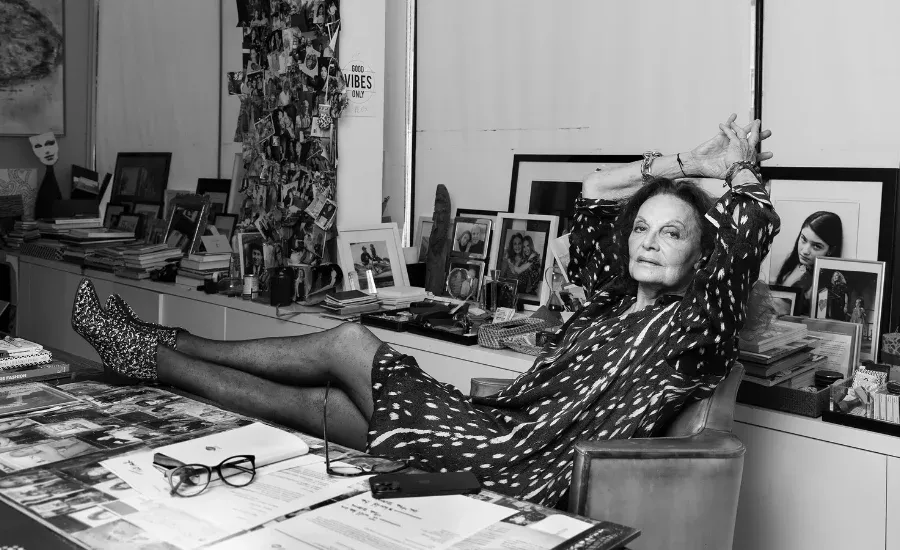
The ledger tells the truer love story. Every year she kept earning was a year she stayed with anyone, in any city, because she wanted to and for no other reason.
Women are taught to find the marriage story more interesting than the money story. Von Furstenberg flipped the order, and you can feel the confidence in it. When she talks about money, there is no apology and no cushioning. She talks about it the way a plumber talks about pipes: necessary, practical, and nobody’s business to be embarrassed about.
What to Take From a Woman Who Learned the Mill First
So what do you take from her, if you do not have a title to leave or a mill to apprentice at?
Take the factory. Learn what your work costs and what it earns before anyone asks. Know your numbers on the day of your review, with a running file of results: the account you saved, the process you rebuilt, the revenue your project touched. A woman who can say a figure out loud is a different negotiator from one who says she hopes to be fairly compensated.
Take the habit of paying yourself first. Move a fixed slice of every raise into a high-yield savings account that sits in your name at a bank your partner does not use, before the lifestyle you can now afford claims it. It will look like nothing for a year. In year five it looks like the freedom to walk out of a bad job on a Tuesday.
Take the ownership. Whatever your name is attached to, whether it is a portfolio, a client list, a reputation inside a small industry, treat it as an asset that someone will try to rent from you cheaply. Ask who holds the exit on every contract. Ask what happens to your work if the relationship ends. She learned that lesson with a decade of her own, and you can learn it for free.
Take the humility about channels. The place you think is beneath you may be exactly where your customers are standing. A freelancer who turns down a smaller client because it looks bad online is making the same mistake the fashion editors made about QVC.
And take the nerve to be seen failing. She talked about the licensing years openly, in books and on camera, and the candor made her more credible, not less. Women tend to bury a bad stretch because we are told one stumble will follow us forever. The market, it turns out, forgives a lost decade faster than it forgives a dull one.
She served as president of the Council of Fashion Designers of America from 2006 to 2019, a position she used to open doors for designers a generation younger. The logic was plain. When someone has handed you a door, you prop it open with your foot. That is what financial independence looks like once it has stopped being a fear and become a position of strength: you have enough to share some of it.
Somewhere in your life there is a mill, a place where the real skills get taught and nobody throws a party. Go there, get paid for what you learn, and keep the name.
The princess is the one who got the title. Diane is the one who got the dress.