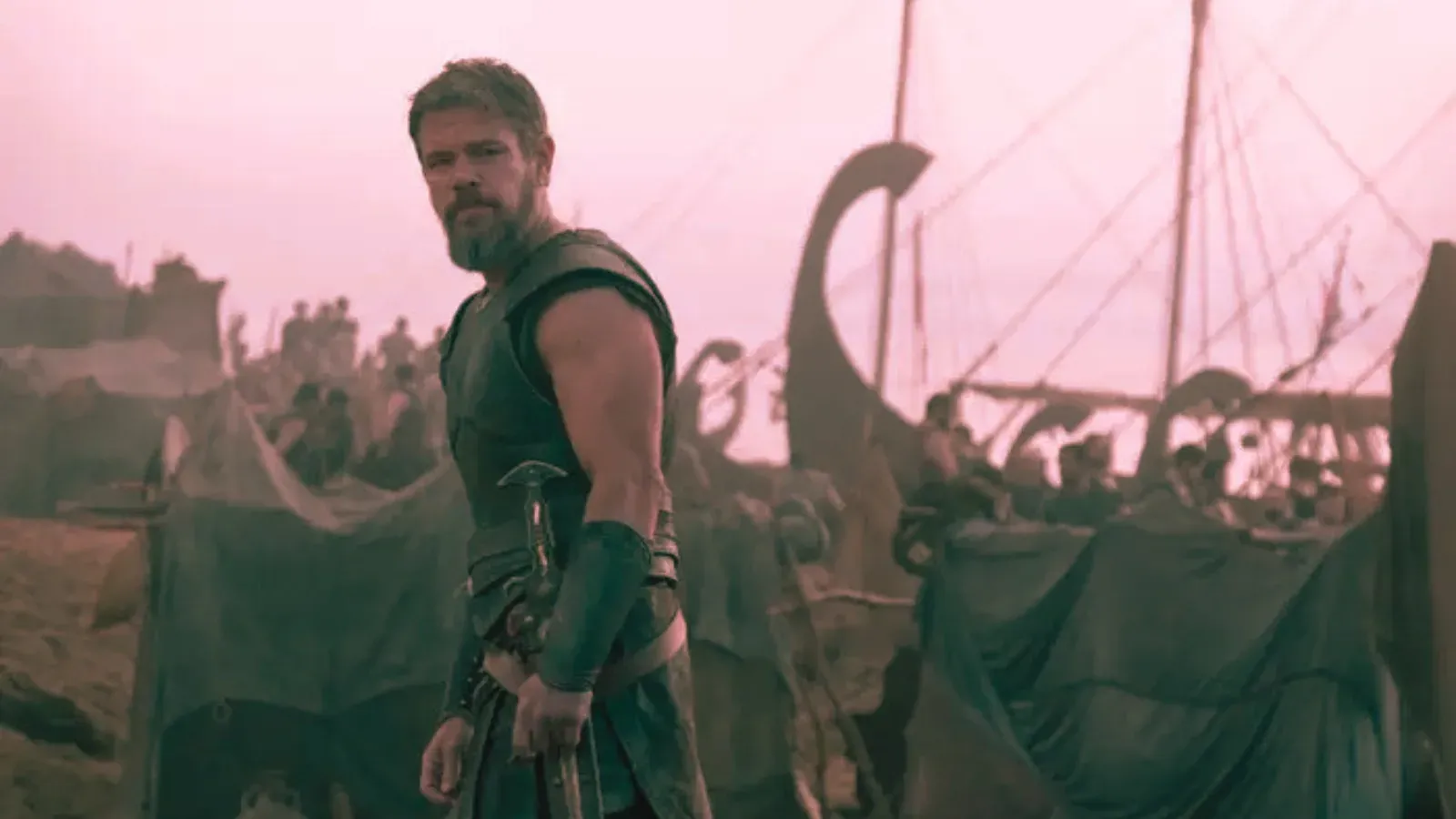
Whenever Hollywood turns its lens back toward Ancient Greece, something really fun happens. With Christopher Nolan’s The Odyssey hitting theaters and blowing up globally, it feels like the whole world has suddenly turned its attention to our little corner of the Mediterranean. All of a sudden, Greek mythology is everywhere again, from linen outfits and moody bronze aesthetics on Pinterest to endless reading lists on TikTok.
Honestly, as someone who grew up in Athens and studied classical philology, I love seeing this. It’s incredible to watch people across the globe fall in love with stories that I spent my childhood and my college years reading in their original ancient syntax. Homer’s narrative architecture is nearly three thousand years old, and the fact that it still holds this much power over our imagination is living proof of its genius.
That said, reading these retellings when you know the original texts can sometimes feel like a mixed bag. A lot of modern pop-culture discourse tends to flatten these massive, complex tragedies into neat little packages—like turning intricate ancient queens into simple "girlboss" tropes, or reducing dark, messy epic poems into light romantic fantasies.
Ancient Greek myths weren't really meant to be cozy bedtime stories or polished moral lessons. They were raw, complicated, and often pretty brutal explorations of human nature: hybris (crossing lines you shouldn't cross), nemesis (the consequences that inevitably catch up with you), nostos (that deep, physical ache for home), and the messy reality of trying to make choices and decisions when the universe seems stacked against you.
When a modern book strips all that friction away just to give us a sweet, easy happy ending, it misses out on what makes these stories so unforgettable in the first place.
If Nolan’s film got you hyped about ancient epic stories, that’s amazing. But instead of just grabbing whatever pastel-covered book is currently trending on your feed, I want to give you a few quick tips on how to get the most out of them, plus a curated list of retellings that actually do justice to the originals.
The Working Gal Salary & Sanity Survey 2026
Anonymous, 3 minutes, for an upcoming Working Gal report on women's work and money.
Take Survey (opens in a new tab)A Quick Guide to Reading Mythology Retellings
Look for complexity over perfection: The best ancient characters aren't blameless victims or flawless heroes. They are messy, tactical, and human. Enjoy the stories that embrace that gray area.
Don't force modern morals onto ancient frameworks: The magic of these myths is how unfamiliar they can feel. Let them be a little weird, dark, and uncomfortable.
Remember the stakes: Ancient tragedy is all about consequence. If a retelling feels too easy or neat, keep digging because the really good stuff usually leaves a bit of a bite.
Here are six books—and one game-changing translation—that respect your intelligence and bring the genuine depth of the canon to life.
The Nuanced Feminine Canon: Beyond Simple Tropes
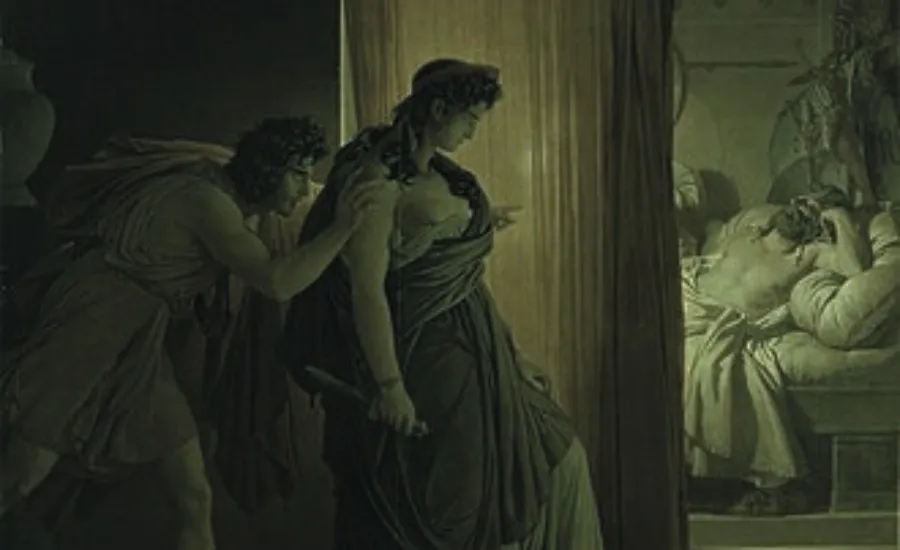
1. Clytemnestra by Costanza Casati
Many modern retellings attempt to make ancient heroines palatable to a modern audience by flattening them into blameless, misunderstood victims. Clytemnestra refuses to make that compromise. Casati presents a queen who is dangerous, fiercely intelligent, highly tactical and strategic, and unapologetically vengeful. It respects the brutal political reality of the Bronze Age and honors the true nature of Greek tragedy, where power always comes at a devastating price.
2. Cassandra by Christa Wolf
Long before the current trend of mythic retellings, East German author Christa Wolf wrote what remains one of the most profound psychological explorations of the Trojan War ever committed to paper. Written from the perspective of the cursed prophetess whose warnings were systematically ignored, this novella is a masterclass in literary depth. It examines how war, state-sponsored propaganda, and patriarchy destroy societal cohesion from within. It is intellectually demanding, deeply moving, and miles ahead of mainstream pop retellings.
3. House of Names by Colm Tóibín
Tóibín takes the tragic narrative of the House of Atreus—the sacrifice of Iphigenia, the murder of Agamemnon, and the subsequent vengeance of his children, Orestes and Electra—and strips it of theatrical melodrama, replacing it with cold, political realism. The prose is sparse, precise, and haunting. It focuses on the psychological weight of generational trauma and the inescapable cycle of violence, offering a brilliant examination of power dynamics that feels remarkably contemporary.
The Uncompromising Epic Scope
4. The Silence of the Girls by Pat Barker
While many retellings romanticize the Trojan War through the glitzy lens of heroic glory, Booker Prize-winner Pat Barker focuses entirely on the human cost paid by those trapped in the muddy encampments behind the battle lines. Narrated by Briseis, the fallen queen reduced to Achilles's captive, this novel offers a sharp, unglamorized look at war. Barker does not rewrite history to provide an artificial happy ending; instead, she gives a voice to the heavy silence of women caught in historic conflicts.
5. Hera by Jennifer Saint
Hera is systematically vilified in mainstream pop culture as merely the "jealous, vengeful wife" of Zeus. Saint’s narrative reconstructs her not as a bitter antagonist, but as an ancient sovereign deity attempting to maintain order within an intensely chaotic, patriarchal pantheon. It explores the quiet frustration of holding supreme divine authority without true operational autonomy, presenting a sophisticated look at divine gender politics.
The Translation That Outshines the Fiction
6. The Odyssey Translated by Emily Wilson
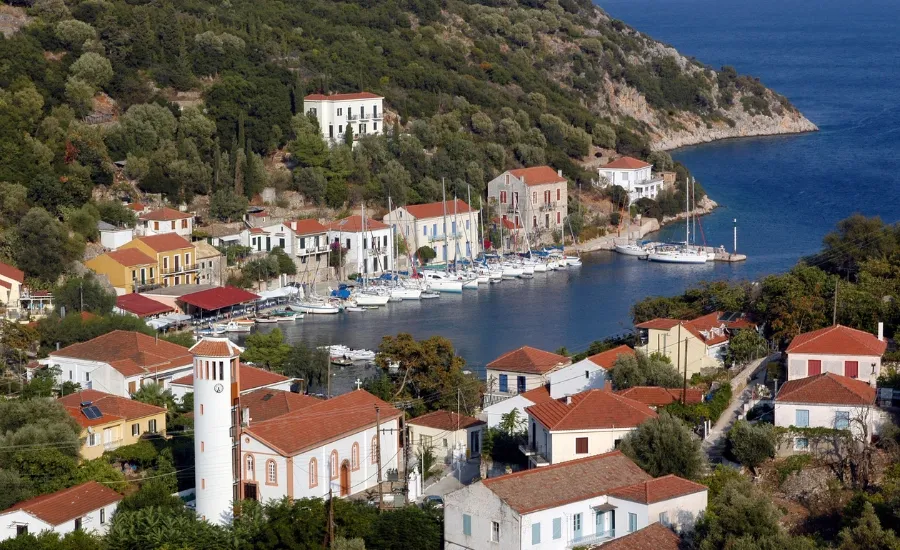
If Nolan’s film has you itching to experience the true power of Homeric epic without reading ancient Greek, skip the fictional spin-offs and pick up Emily Wilson’s landmark translation of The Odyssey. Wilson is the first woman to publish a translation of the poem into English, and her work is an absolute revelation. She preserves the rigorous iambic pentameter while stripping away decades of archaic, Victorian bias that previous male translators injected into the text. It is fast-paced, poetic, ruthlessly accurate, and fundamentally alters how you understand Odysseus, Penelope, and the complex social hierarchy of Ithaca.
Reading Mythology with Cultural Context
At the end of the day, there’s zero shame in enjoying a light, breezy beach read inspired by Mount Olympus. But when you’re ready to dive a little deeper and experience the real psychological weight, political drama, and fierce humanity that made these myths survive for three thousand years, start with these.
Happy reading!